The future of Europe in the world

commonspace.eu is pleased to announce that it is joining the debate in the framework of the ‘Conference on the Future of Europe’ and is the media partner for LINKS Europe Stichting as it launches a series of activities focusing on the theme ‘EU in the world’.

The activities will be hosted from The Hague in the Netherlands, but we will also offer an opportunity for others to participate and contribute virtually. The focus of our discussions and activities will be ‘EU in the world’ and among the topics being discussed are:

  • Foreign policy
  • Security and defence
  • Trade policy
  • Neighbourhood policy and enlarging the European Union
  • Development cooperation
  • Humanitarian aid and civil protection

What is the ‘Conference on the Future of Europe’?

The Conference on the Future of Europe is an initiative being co-ordinated by the leading institutions of the European Union to enable citizens to debate on Europe's challenges and priorities. No matter where you are from or what you do, this is the place to think about what future you want for the European Union. The European Parliament, the Council and the European Commission have committed to listen to Europeans and to follow up, within their sphere of competences, on the recommendations made. By spring 2022, the Conference is expected to reach conclusions and provide guidance on the future of Europe.

Who can take part?

The process is open to all European citizens, from all walks of life and corners of the Union – with young people playing a central role in shaping the future of the European project, and to European, national, regional and local authorities, as well as civil society and other organisations who want to organise events and contribute ideas.

More information about the LINKS Europe program of activities will be announced in early September, together with how commonspace.eu readers and subscribers can contribute their own points of view in the process.

For more information about the ‘Conference on the Future of Europe’ you can visit the dedicated EU website here.
Related articles

Editor's choice
News
Situation in South Yemen strains relations between Saudi Arabia and UAE

Situation in South Yemen strains relations between Saudi Arabia and UAE

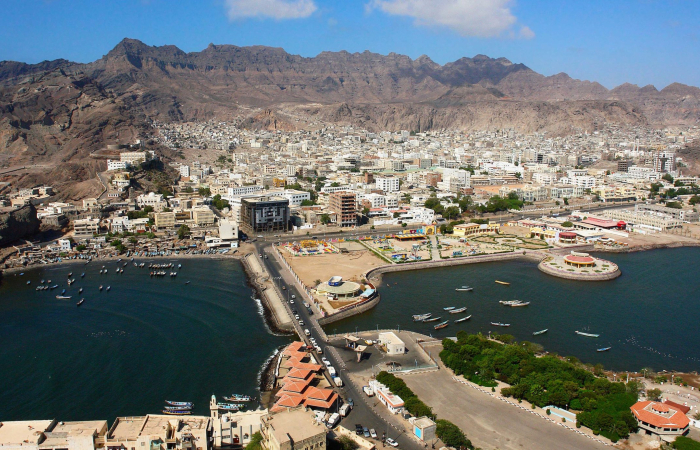
The relations between Saudi Arabia and the United Arab Emirates (UAE) are increasingly strained as a result of the different approach of the two countries towards Yemen. Whilst both countries were initially together in resisting the Houthi take over in Yemen, the UAE subsequently focused on the South of the country, backing the Southern Movement (STC), which seeks to restore the independence of South Yemen. South Yemen became an independent country in 1967, at the end of British rule, and only unified with the north in 1990. The Saudi-led “Coalition to Support Legitimacy in Yemen” on Tuesday, 30 December, said it conducted a “limited” airstrike targeting two ships “that smuggled weapons and other military hardware into Mukalla in southern Yemen”. The ships originated in the UAE port of Furjeirah. In a statement carried by the Saudi Press Agency (SPA), the ’s "continued commitment to de-escalation and enforcing calm in the governorates of Hadramawt and Al-Mahra, and to prevent any military support from any country to any Yemeni faction without coordination with the legitimate Yemeni government and the Coalition. The Southern Transitional Council (STC), launched a sweeping military campaign early in December, seizing the governorates of Hadramaut along the Saudi border and the eastern governorate of Al-Mahra in Yemen’s border with Oman. The UAE-backed STC forces captured the city of Seiyun, including its international airport and the presidential palace. They also took control of the strategic PetroMasila oilfields, which account for a massive portion of Yemen’s remaining oil wealth. (click the image to read the article in full).

Popular

Editor's choice
News
Situation in South Yemen strains relations between Saudi Arabia and UAE

Situation in South Yemen strains relations between Saudi Arabia and UAE

The relations between Saudi Arabia and the United Arab Emirates (UAE) are increasingly strained as a result of the different approach of the two countries towards Yemen. Whilst both countries were initially together in resisting the Houthi take over in Yemen, the UAE subsequently focused on the South of the country, backing the Southern Movement (STC), which seeks to restore the independence of South Yemen. South Yemen became an independent country in 1967, at the end of British rule, and only unified with the north in 1990. The Saudi-led “Coalition to Support Legitimacy in Yemen” on Tuesday, 30 December, said it conducted a “limited” airstrike targeting two ships “that smuggled weapons and other military hardware into Mukalla in southern Yemen”. The ships originated in the UAE port of Furjeirah. In a statement carried by the Saudi Press Agency (SPA), the ’s "continued commitment to de-escalation and enforcing calm in the governorates of Hadramawt and Al-Mahra, and to prevent any military support from any country to any Yemeni faction without coordination with the legitimate Yemeni government and the Coalition. The Southern Transitional Council (STC), launched a sweeping military campaign early in December, seizing the governorates of Hadramaut along the Saudi border and the eastern governorate of Al-Mahra in Yemen’s border with Oman. The UAE-backed STC forces captured the city of Seiyun, including its international airport and the presidential palace. They also took control of the strategic PetroMasila oilfields, which account for a massive portion of Yemen’s remaining oil wealth. (click the image to read the article in full).