


French army kills two terrorist leaders in northeastern Mali

The French minister of the Armed Forces, Florence Parly, announced in a statement on 22 July that France's operation Barkhane had killed two leaders of the Islamic State in the Greater Sahara (IS-GS) during the night of the 21-22 July.

"In co-ordination with the US military, the Barkhane force launched last night, at very short notice, an operation against a camp of the IS-GS, an organisation affiliated with Daesh, in the Ménaka region" in northeastern Mali, the statement said.

On July 23, Parly indicated that the leaders were Issa Al Sahraoui, "logistics and financial co-ordinator of the IS-GS", and Abu Abderahmane Al Sahraoui, "who was responsible for pronouncing judgments".

The first “had been rife in the Sahel for many years. He notably took part in the Inates attack against the Nigerian armed forces in December 2019 and recruited and trained jihadists." The second “was known to order death sentences. This jihadist had been active in armed terrorist groups in Mali for 10 years," she added.

In its statement, the ministry recalled that “several high-ranking IS-GS executives had already been neutralised in June, including one of the group leaders, Dadi Ould Chaib, better known as Abu Dardar, as well as Almahmoud ag Baye alias Ikaray, important executive of the IS-GS, close to the leader of the IS-GS Adnan Abou Walid al Sahraoui”.

Additionally, Parly stated that this new operation falls within the framework of France's strategy to target “terrorist leaders and cadres” and “illustrates [its] determination to continue the fight against armed terrorist groups, alongside [its] Sahelian partners and in co-ordination with [its] European and American allies".

After more than eight years of significant engagement, French President Emmanuel Macron announced in June a reduction of the French military presence in the Sahel and the end of the anti-jihadist operation Barkhane (currently 5,100 soldiers) in favour of a tightened device, refocused on counterterrorism operations and combat support for local armies, around an international alliance associating Europeans within the Takuba Force.


 

source: commonspace.eu with agencies.
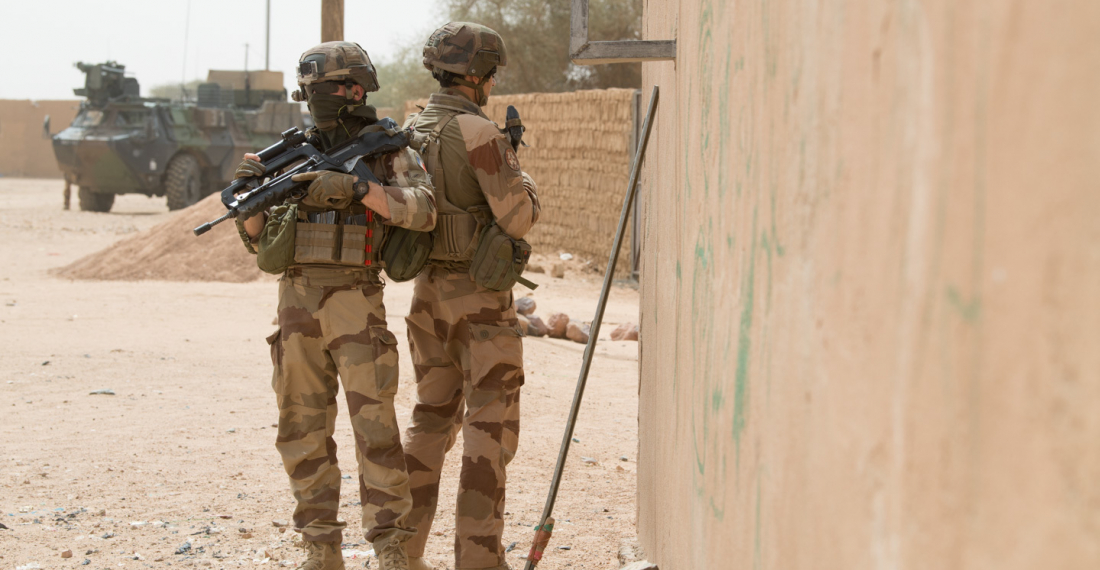
photo: French soldiers from the Barkhane force in Liptako, Mali, 2019; French Ministry of Defence.

Related articles

Editor's choice
News
Borrell tells the European Parliament that the situation in Afghanistan was critical, but the EU will remain engaged

Borrell tells the European Parliament that the situation in Afghanistan was critical, but the EU will remain engaged

Borrell underlined that the European Union will make every effort to support the peace process and to remain a committed partner to the Afghan people. "Of course, we will have to take into account the evolving situation, but disengagement is not an option.  We are clear on that: there is no alternative to a negotiated political settlement, through inclusive peace talks.
Editor's choice
News
Germany accuses Russia of cyberattacks and disinformation campaign

Germany accuses Russia of cyberattacks and disinformation campaign

The German government holds Russia responsible for a cyberattack on German air traffic control, and for targeted disinformation campaigns before the last federal election. According to the German Foreign Office in Berlin, the incidents could be clearly attributed to the Russian military intelligence service, the GRU. In response, the Russian ambassador to Berlin was summoned to the Foreign Ministry. "We have been observing a massive increase in threatening hybrid activities by Russia for some time now," a spokesperson for the Foreign Ministry stated. These range from disinformation campaigns and espionage to cyberattacks and sabotage attempts. The aim is to divide society, sow distrust, and undermine confidence in democratic institutions. The spokesperson added that with these actions, Russia is "very concretely threatening our security, not only through its war of aggression against Ukraine, but also here in Germany."  The Foreign Ministry spokesperson explained that the cyberattack on air traffic control in August 2024 was clearly attributed to the hacker collective "APT28," known as "Fancy Bear," and to the responsibility of the Russian military intelligence service, the GRU. Furthermore, it could now be "conclusively stated" that Russia had attempted "to influence and destabilize both the last Federal election and the ongoing internal affairs of the Federal Republic of Germany." There was "absolutely irrefutable evidence" for this". The so-called "Storm 1516" campaign, which has been running since 2024, is allegedly backed by "reliable information" that the Moscow-based think tank "Center for Geopolitical Expertise" is behind it. The Center is also said to be supported by Russian military intelligence. Its primary aim is to influence democratic elections in the West. (Click the image to read more).

Popular

Editor's choice
News
Germany accuses Russia of cyberattacks and disinformation campaign

Germany accuses Russia of cyberattacks and disinformation campaign

The German government holds Russia responsible for a cyberattack on German air traffic control, and for targeted disinformation campaigns before the last federal election. According to the German Foreign Office in Berlin, the incidents could be clearly attributed to the Russian military intelligence service, the GRU. In response, the Russian ambassador to Berlin was summoned to the Foreign Ministry. "We have been observing a massive increase in threatening hybrid activities by Russia for some time now," a spokesperson for the Foreign Ministry stated. These range from disinformation campaigns and espionage to cyberattacks and sabotage attempts. The aim is to divide society, sow distrust, and undermine confidence in democratic institutions. The spokesperson added that with these actions, Russia is "very concretely threatening our security, not only through its war of aggression against Ukraine, but also here in Germany."  The Foreign Ministry spokesperson explained that the cyberattack on air traffic control in August 2024 was clearly attributed to the hacker collective "APT28," known as "Fancy Bear," and to the responsibility of the Russian military intelligence service, the GRU. Furthermore, it could now be "conclusively stated" that Russia had attempted "to influence and destabilize both the last Federal election and the ongoing internal affairs of the Federal Republic of Germany." There was "absolutely irrefutable evidence" for this". The so-called "Storm 1516" campaign, which has been running since 2024, is allegedly backed by "reliable information" that the Moscow-based think tank "Center for Geopolitical Expertise" is behind it. The Center is also said to be supported by Russian military intelligence. Its primary aim is to influence democratic elections in the West. (Click the image to read more).

