First EU-Central Asia summit to take place in Uzbekistan on 3-4 April

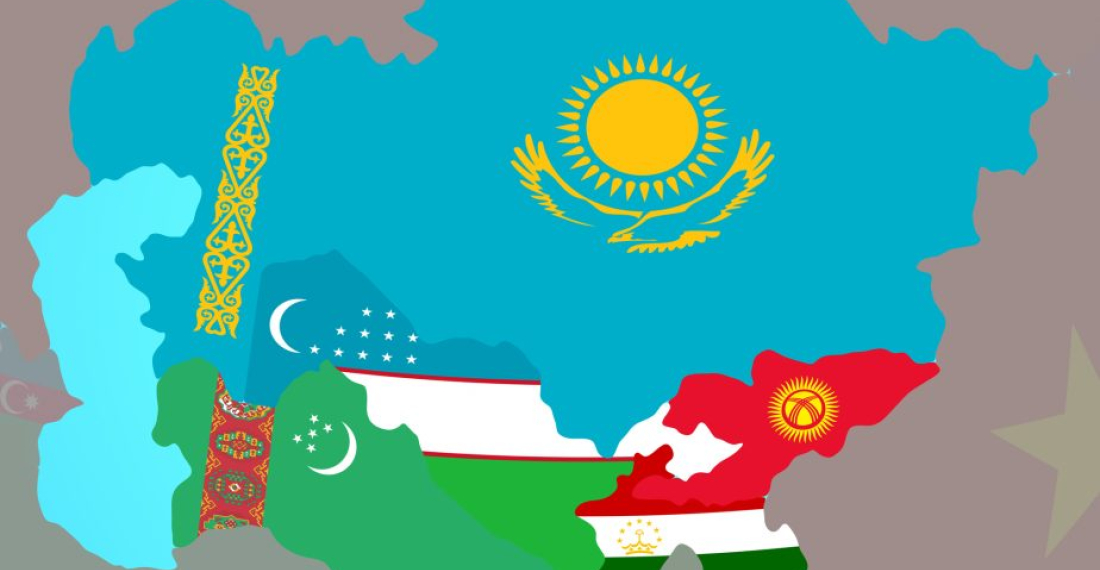
The President of the European Council, António Costa, along with the President of the European Commission Ursula von der Leyen, will be travelling to Uzbekistan for the first EU-Central Asia summit on 3-4 April. The summit will be hosted by Uzbekistan’s President Shavkat Mirziyoyev in Samarkand, with the participation of the leaders of Kazakhstan, Kyrgyzstan, Tajikistan, and Turkmenistan. The summit will present a key opportunity for the EU to demonstrate its geopolitical interest in intensifying bilateral engagement and enhance regional cooperation with Central Asia.

Given the evolving geopolitical landscape, marked by Russia’s illegal war of aggression against Ukraine and ongoing developments in Afghanistan, relations between the EU and Central Asia have become of increased strategic importance over the years.

President Costa said the following: “We are living in a world of disorder and fragmentation where the only viable solution for the EU is to build stronger partnerships to advance peace and prosperity. It is a multipolar world that requires greater and tailored engagement. The very first EU-Central Asia summit will solidify the EU’s commitment to work together for peace, security, and sustainable development, in full respect of international law”.

During the summit, the EU will affirm its commitment to scale up cooperation in areas of mutual interests, which include transport and digital connectivity in the region and with the EU, critical raw materials, economic and security cooperation, and energy transition.

High-level relations between the EU and Central Asia have intensified over the past years, with two leaders’ meetings held in October 2022 in Kazakhstan and in June 2023 in Kyrgyzstan. Additionally, numerous ministerial-level discussions have taken place, with the most recent in Luxembourg in 2023, establishing a joint roadmap for deepening ties between the EU and Central Asia. The roadmap identifies concrete action points to enhance interregional dialogue, including the commitment to hold a summit.

In 2019, the EU adopted a new Strategy on Central Asia, which highlights the growing strategic relevance of the region for EU interests and builds upon the positive developments in regional cooperation over the years. The updated strategy aims to foster a stronger, modern and non-exclusive partnership with the countries of Central Asia so that the region develops as a sustainable, more resilient, prosperous, and closely interconnected economic and political space.

The EU is the second trading partner for the region, as well as the biggest investor with over 40% of the investment in the region originating from the EU. To further deepen bilateral ties, the EU has negotiated enhanced partnership and cooperation agreements (EPCAs) with all Central Asian countries, except Turkmenistan.

The EU-Central Asia leaders’ summit was originally planned for 2024. An April 2024 briefing by the European Parliamentary Research Service stated that “formalizing the C5 + EU cooperation at the highest political level…will be an opportunity to match the EU’s political relevance in the region with its status of major donor and investor.” 

According to an article in The Diplomat, a January 21 post on telegram Saida Mirziyoyeva, assistant to the president of Uzbekistan (her father, Shavkat Mirziyoyev), recounted a meeting with the Ambassador of the European Union to Uzbekistan Toivo Klaar. In their meeting, Mirziyoyeva said that preparations for a summit in Samarkand, to be held in April 2025, were discussed. 

The EU mission confirmed the plans to Gazeta.uz with Klaar stating: “We believe that the upcoming EU-Central Asia summit will significantly strengthen our ties. The new EU leadership is truly committed to expanding relations with Uzbekistan and Central Asia. We are grateful to President Mirziyoyev for proposing Samarkand as the venue for this first-ever EU-Central Asia summit.”

Europe’s approach to the summit to be held in the region itself arguably contrasts with China and the United States. The May 2023 and September 2023 China- and U.S.-Central Asia leaders summits took place in Xi’an, China and New York City, the United States, respectively. The U.S.-Central Asia Leaders Summit was a sideline event during the United Nations General Assembly that year. That the European leadership is traveling to Samarkand for the summit is an important difference

A number of EU leaders have already met, several times, with the Central Asian presidents. For instance, in October 2022 then-European Council President Charles Michel met with the Central Asian presidents in Astana, Kazakhstan. At the time, he congratulated Kazakh President Kassym-Jomart Tokayev “on hosting the first EU-Central Asian leaders’ meeting.” Michel met again with the Central Asian presidents in Cholpon-Ata, Kyrgyzstan in 2023. 

The upcoming meeting has been referred to in Uzbek media as the “first full-scale EU-Central Asia summit.”  European interest in Central Asia has intensified since the 2022 full-scale Russian invasion of Ukraine, but it certainly did not begin there. In 2019, the EU published an updated strategy for Central Asia

Over the last several years, various European leaders have traveled to the region and a number of projects and programs were eventually floated that filled in some of the blank spaces when it came to how Europe would engage with Central Asia. For example, the Global Gateway (GG) – the EU’s response to China’s Belt and Road Initiative was launched in 2021. Global Gateway is the EU's positive offer to reduce the worldwide investment disparity and boost smart, clean and secure connections in digital, energy and transport sectors, and to strengthen health, education and research systems. 
Source: commonspace.eu with agencies. Photo: DepositPhotos

Related articles

Editor's choice
News
Council of Europe launches new International Claims Commission for Ukraine

Council of Europe launches new International Claims Commission for Ukraine

Thirty-four countries and the European Union have signed a new convention establishing an International Claims Commission for Ukraine at a diplomatic conference co-hosted by the 46-nation Council of Europe and the Netherlands in the Hague. The diplomatic conference was attended by leaders and high-level representatives from over 50 states, including the President of Ukraine, Volodymyr Zelenskyy, the President of the Republic of Moldova, Maia Sandu, and the Prime Minister of the Netherlands, Dick Schoof.  “Today marks a major step forward in ensuring accountability for Ukraine. The International Claims Commission represents justice and hope for tens of thousands of victims—our determination that those who have suffered will not be forgotten. I call for quick ratifications so we can get the commission rapidly up and running for the people of Ukraine,” said Council of Europe Secretary General Alain Berset. Ukrainian President Volodymyr Zelenskyy said: “We expect that every mechanism for compensation from the Register of Damage and Claims Commission to the actual payments – will start working and receive strong and sufficient international support, so that people can truly feel that any kind of damage caused by the war can be compensated. This war, and Russia’s responsibility for it, MUST become a clear example – so that others learn not to choose aggression.” “Accountability is about creating the conditions for peace that endures. And therefore, accountability is a condition of security – today and for the future. But accountability is not only about Ukraine. And it is not only about one aggressor and one victim. Accountability is about Europe. About every country in Europe. It is about whether Europe, as a whole, is willing to defend its peace,” said Maia Sandu, President of the Republic of Moldova, which currently holds the Presidency of the Council of Europe’s Committee of Ministers. The Prime Minister of the Netherlands, Dick Schoof, said: “Every day Russia is deliberately bombarding homes, destroying businesses and damaging infrastructure in Ukraine. Russia must compensate Ukraine for the damage caused. That is why we have launched the International Claims Commission for Ukraine and we are honoured to host it.” The International Claims Commission will be the second part of a comprehensive compensation mechanism related to Russia’s war of aggression, building on the existing Register of Damage for Ukraine. The claims commission will be established within the framework of the Council of Europe and will also be open to other countries. The Register of Damage for Ukraine, created in 2023, collects and records compensation claims submitted by individuals, organisations and public bodies in Ukraine. Forty-four states and the European Union have so far joined the Register, which has already received 86,000 claims. The International Claims Commission will review, assess and decide upon claims submitted to the Register of Damage for Ukraine and determine the amount of compensation, if any, which is due in each case. The convention establishing the commission will enter into force once it has been ratified by 25 signatories, as long as sufficient funds have been secured to support its initial work.

Popular

Editor's choice
News
Council of Europe launches new International Claims Commission for Ukraine

Council of Europe launches new International Claims Commission for Ukraine

Thirty-four countries and the European Union have signed a new convention establishing an International Claims Commission for Ukraine at a diplomatic conference co-hosted by the 46-nation Council of Europe and the Netherlands in the Hague. The diplomatic conference was attended by leaders and high-level representatives from over 50 states, including the President of Ukraine, Volodymyr Zelenskyy, the President of the Republic of Moldova, Maia Sandu, and the Prime Minister of the Netherlands, Dick Schoof.  “Today marks a major step forward in ensuring accountability for Ukraine. The International Claims Commission represents justice and hope for tens of thousands of victims—our determination that those who have suffered will not be forgotten. I call for quick ratifications so we can get the commission rapidly up and running for the people of Ukraine,” said Council of Europe Secretary General Alain Berset. Ukrainian President Volodymyr Zelenskyy said: “We expect that every mechanism for compensation from the Register of Damage and Claims Commission to the actual payments – will start working and receive strong and sufficient international support, so that people can truly feel that any kind of damage caused by the war can be compensated. This war, and Russia’s responsibility for it, MUST become a clear example – so that others learn not to choose aggression.” “Accountability is about creating the conditions for peace that endures. And therefore, accountability is a condition of security – today and for the future. But accountability is not only about Ukraine. And it is not only about one aggressor and one victim. Accountability is about Europe. About every country in Europe. It is about whether Europe, as a whole, is willing to defend its peace,” said Maia Sandu, President of the Republic of Moldova, which currently holds the Presidency of the Council of Europe’s Committee of Ministers. The Prime Minister of the Netherlands, Dick Schoof, said: “Every day Russia is deliberately bombarding homes, destroying businesses and damaging infrastructure in Ukraine. Russia must compensate Ukraine for the damage caused. That is why we have launched the International Claims Commission for Ukraine and we are honoured to host it.” The International Claims Commission will be the second part of a comprehensive compensation mechanism related to Russia’s war of aggression, building on the existing Register of Damage for Ukraine. The claims commission will be established within the framework of the Council of Europe and will also be open to other countries. The Register of Damage for Ukraine, created in 2023, collects and records compensation claims submitted by individuals, organisations and public bodies in Ukraine. Forty-four states and the European Union have so far joined the Register, which has already received 86,000 claims. The International Claims Commission will review, assess and decide upon claims submitted to the Register of Damage for Ukraine and determine the amount of compensation, if any, which is due in each case. The convention establishing the commission will enter into force once it has been ratified by 25 signatories, as long as sufficient funds have been secured to support its initial work.