


"Erasmus students are the hope for a Europe 2.0", Italian president tells young Georgians

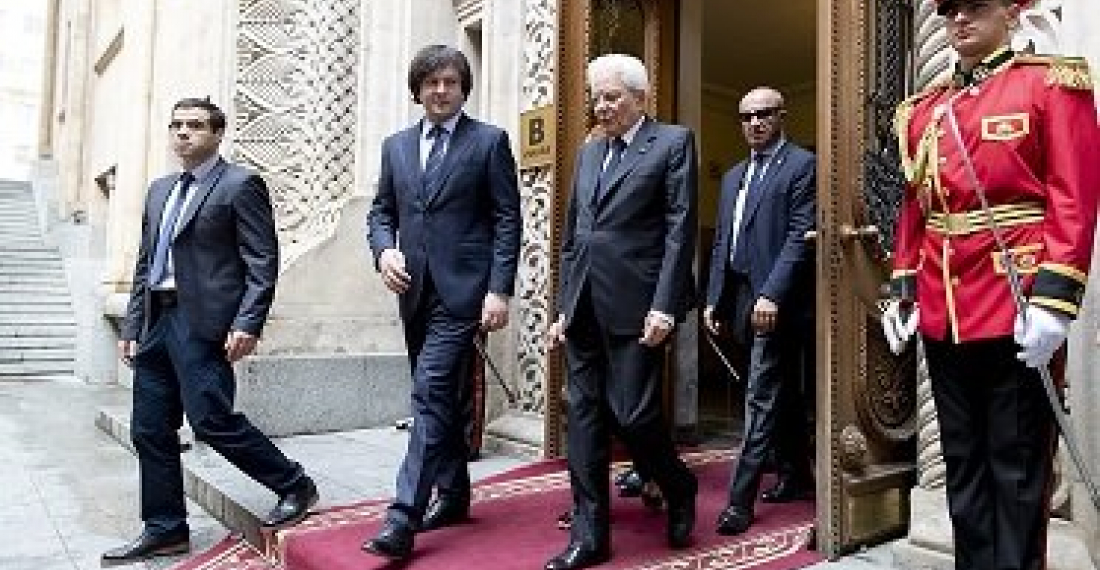
Italian President Sergio Mattarella, currently on a tour of the South Caucasus, on Tuesday (17 July) addressed students at Tbilisi State University about his vision for Europe's future.

The European Union needs "a system that leads to greater stability, integration of concentric, differentiated and open circles, one that synthesis but does not mortify the many identities that represent the riches of our continent", the Italian president told the assembled young Georgians. "In this context, young people and culture play a crucial role: the Erasmus students represent the hope for a Europe 2.0, a Europe without any mental or material boundaries".

The Italian president said that today more than ever "young people and culture play a crucial role in this context". "It is through culture that it is possible to appreciate the respective specificities, and to understand those of others. Only knowledge and respect of history allow us not to retrace roads that lead to dangerous simplifications." "

"Regardless of the difficulties the project that has made the Union a unique success in history, a center of attraction based on the principles of liberal democracy, an area of ​​peace and prosperity, needs to be pursued with determination" added the Italian president.

"The EU maintains the charm of a unique project that pursues ideals, for those who want a system based on shared rules, which requires co-existance, a common commitment, and not to confrontation and opposition".

Referring to the new relationshipm of Georgia with the European Union Matarella said that "Georgia can produce and export without tariffs thanks to the free trade area with Europe, but also with many other regions of the world. Georgians have experienced the extraordinary advantage of freedom of movement : over 250,000 of its citizens have visited the countries of the European Union since the entry into force of visa liberalization, in little more than a year."

Matarella left Georgia on Tuesday evening and is now in Azerbaijan. Duiring hisd visit to the region the Italian president is accomp[anbied by the Minister of Foreign Affairs Enzo Moavero Milanese

source: commonspace.eu with RAI

photo: Italian President Sergio Mattarella accompanied by the Speaker of the Georgian Parliament, Irakli Kobakhidze, in Tbilisi on 17 July 2018 (picture courtesy of the press service of the Italian presidency


Related articles

Editor's choice
News
Borrell tells the European Parliament that the situation in Afghanistan was critical, but the EU will remain engaged

Borrell tells the European Parliament that the situation in Afghanistan was critical, but the EU will remain engaged

Borrell underlined that the European Union will make every effort to support the peace process and to remain a committed partner to the Afghan people. "Of course, we will have to take into account the evolving situation, but disengagement is not an option.  We are clear on that: there is no alternative to a negotiated political settlement, through inclusive peace talks.
Editor's choice
News
Germany accuses Russia of cyberattacks and disinformation campaign

Germany accuses Russia of cyberattacks and disinformation campaign

The German government holds Russia responsible for a cyberattack on German air traffic control, and for targeted disinformation campaigns before the last federal election. According to the German Foreign Office in Berlin, the incidents could be clearly attributed to the Russian military intelligence service, the GRU. In response, the Russian ambassador to Berlin was summoned to the Foreign Ministry. "We have been observing a massive increase in threatening hybrid activities by Russia for some time now," a spokesperson for the Foreign Ministry stated. These range from disinformation campaigns and espionage to cyberattacks and sabotage attempts. The aim is to divide society, sow distrust, and undermine confidence in democratic institutions. The spokesperson added that with these actions, Russia is "very concretely threatening our security, not only through its war of aggression against Ukraine, but also here in Germany."  The Foreign Ministry spokesperson explained that the cyberattack on air traffic control in August 2024 was clearly attributed to the hacker collective "APT28," known as "Fancy Bear," and to the responsibility of the Russian military intelligence service, the GRU. Furthermore, it could now be "conclusively stated" that Russia had attempted "to influence and destabilize both the last Federal election and the ongoing internal affairs of the Federal Republic of Germany." There was "absolutely irrefutable evidence" for this". The so-called "Storm 1516" campaign, which has been running since 2024, is allegedly backed by "reliable information" that the Moscow-based think tank "Center for Geopolitical Expertise" is behind it. The Center is also said to be supported by Russian military intelligence. Its primary aim is to influence democratic elections in the West. (Click the image to read more).

Popular

Editor's choice
News
Germany accuses Russia of cyberattacks and disinformation campaign

Germany accuses Russia of cyberattacks and disinformation campaign

The German government holds Russia responsible for a cyberattack on German air traffic control, and for targeted disinformation campaigns before the last federal election. According to the German Foreign Office in Berlin, the incidents could be clearly attributed to the Russian military intelligence service, the GRU. In response, the Russian ambassador to Berlin was summoned to the Foreign Ministry. "We have been observing a massive increase in threatening hybrid activities by Russia for some time now," a spokesperson for the Foreign Ministry stated. These range from disinformation campaigns and espionage to cyberattacks and sabotage attempts. The aim is to divide society, sow distrust, and undermine confidence in democratic institutions. The spokesperson added that with these actions, Russia is "very concretely threatening our security, not only through its war of aggression against Ukraine, but also here in Germany."  The Foreign Ministry spokesperson explained that the cyberattack on air traffic control in August 2024 was clearly attributed to the hacker collective "APT28," known as "Fancy Bear," and to the responsibility of the Russian military intelligence service, the GRU. Furthermore, it could now be "conclusively stated" that Russia had attempted "to influence and destabilize both the last Federal election and the ongoing internal affairs of the Federal Republic of Germany." There was "absolutely irrefutable evidence" for this". The so-called "Storm 1516" campaign, which has been running since 2024, is allegedly backed by "reliable information" that the Moscow-based think tank "Center for Geopolitical Expertise" is behind it. The Center is also said to be supported by Russian military intelligence. Its primary aim is to influence democratic elections in the West. (Click the image to read more).

