Borrell: Gas cannot be used as a geopolitical weapon

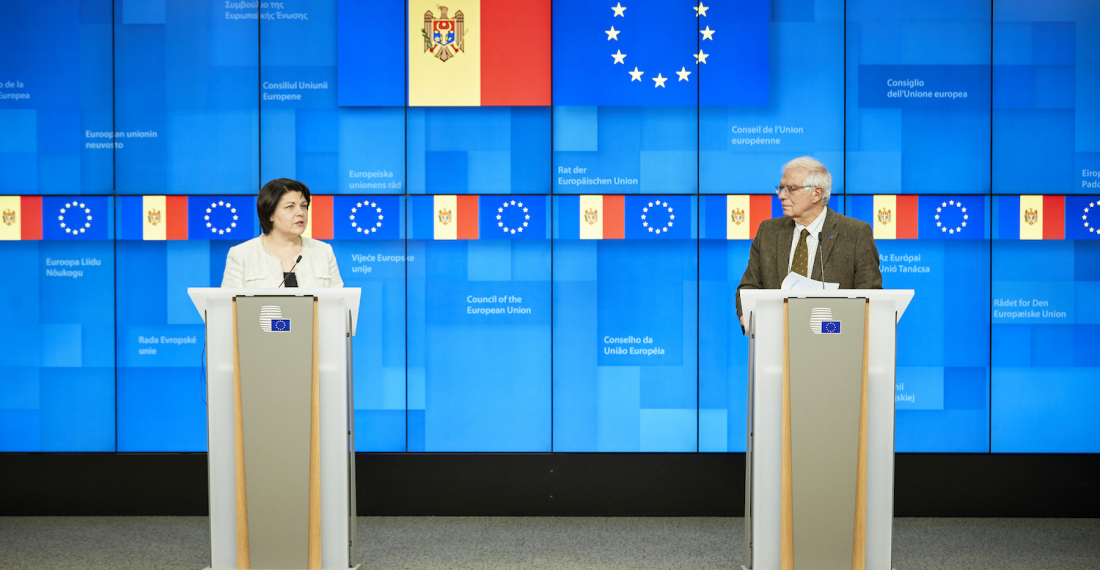
EU High Representative Josep Borrell said in Brussels on Thursday (28 October) that in Moldova the EU sees attempts by Gazprom to put political pressure in return to lower the gas prices. He said he had agreed with the Moldovan prime minister on the importance of strengthening resilience against any potential efforts by third parties to use energy as a geopolitical weapon. "Gas is a commodity. It has been bought and sold, sold and bought but it cannot be used as a geopolitical weapon", Borrell stated.

Borrell was speaking after meeting with Moldovan Prime Minister Natalia Gavrilița in Brussels where both were attending the EU-Moldova Association Council.

Borrell added,

The European Union stands ready to support Moldova to find a way out of this crisis and as an example, a first example, a first step of our support is the announcement done by the President of the Commission [Ursula von der Leyen] of a €60 million budget support programmes announced yesterday. It will enable Moldovan authorities to set up a support scheme for the most vulnerable people affected by this crisis ahead of the winter. 

The second issue that we have been talking about, is reforms. We have assessed the overall progress in this regard. The clear results of the elections gave to you, Madame Prime Minister, a strong mandate to your Government to implement an ambitious anti-corruption agenda, to improve the justice system and fight poverty in line with the obligations under our Association Agreement. 

I want to stress the importance of this comprehensive reform of the justice sector and welcome the first steps already taken by your Government. Here quality is more important than speed and it is always recommended to seek expertise from local as well as recognised international partners in order to rebuild trust in the justice systems. 

Third, foreign and security affairs. In the presence of the Deputy Prime Minister and Minister of Foreign Affairs and European Integration, Mr Popescu, we agreed to launch a high-level political and security dialogue early next year, to have a forum for more in-depth discussion on security, on regional cooperation, as well as cooperation in the area of Common Security and Defence Policy. And the time is especially appropriate for launching such an initiative. 

And fourth and last, is the issue of Transnistria. We reaffirmed our commitment to facilitate a comprehensive, peaceful and sustainable settlement process on the basis of respect for the territorial integrity and sovereignty of the Republic of Moldova, within its internationally recognised borders, with a special status for Transnistria. 

All in all, I am happy to state that today’s positive and forward-looking discussions have set a good basis for our work together. It will be reflected in our updated Association Agenda. These ambitious targets will guide our work and assistance for the next seven years. I am looking forward for the conclusion of these negotiations soon. 
source: commonspace.eu with the press service of the European External Action Service (Brussels)

Related articles

Editor's choice
News
Key European countries back Denmark in the face of Trump's continuing insistence on taking over Greenland

Key European countries back Denmark in the face of Trump's continuing insistence on taking over Greenland

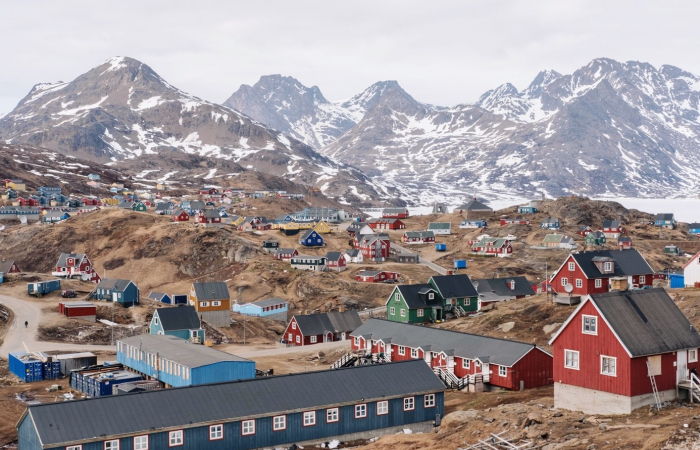
 Six major European countries have declared their support to Denmark following renewed insistence by the US that it must have control over Greenland. "Greenland belongs to its people, and only Denmark and Greenland can decide on matters concerning their relations," said the leaders of the UK, France, Germany, Italy, Poland, and Spain, in a joint statement, issued on Tuesday (6 January), together with Denmark. On Sunday, Donald Trump said the US "needed" Greenland - a semi-autonomous region of fellow Nato member Denmark - for security reasons. He has refused to rule out the use of force to take control of the territory, and Danish Prime Minister Mette Frederiksen warned on Monday that an attack by the US would spell the end of Nato. The issue of Greenland's future resurfaced in the wake of the US military intervention in Venezuela, during which elite troops went in to seize the country's President Nicolás Maduro and take him to face drugs and weapons charges in New York. Following the raid, Trump said the US would "run" Venezuela for an unspecified period of time. He also said the US was returning to an 1823 policy of US supremacy in its sphere of influence in the Western hemisphere - and he warned a number of countries the US could turn its attention to them. The US military raid in Venezuela has reignited fears that the US may consider using force to secure control of Greenland. A day after the raid, Katie Miller - the wife of one of Trump's senior aides - posted on social media a map of Greenland in the colours of the American flag, alongside the word "SOON". On Monday, her husband Stephen Miller said it was "the formal position of the US government that Greenland should be part of the US". In an interview with CNN, he also said the US "is the power of Nato. For the US to secure the Arctic region, to protect and defend Nato and Nato interests, obviously Greenland should be part of the US." Asked repeatedly whether the US would rule out using force to annex it, Miller responded: "Nobody's going to fight the US over the future of Greenland." Stressing they were as keen as the US in Arctic security, the seven European signatories of Tuesday's joint statement said this must be achieved by Nato allies, including the US "collectively" - whilst "upholding the principles of the UN Charter, including sovereignty, territorial integrity and the inviolability of borders". Greenland's Prime Minister Jens-Frederik Nielsen welcomed the statement and called for "respectful dialogue". "The dialogue must take place with respect for the fact that Greenland's status is rooted in international law and the principle of territorial integrity," Nielsen said. Trump has claimed that making Greenland part of the US would serve American security interests due to its strategic location and its abundance of minerals critical to high-tech sectors. Greenland, which has a population of 57,000 people, has had extensive self-government since 1979, though defence and foreign policy remain in Danish hands. While most Greenlanders favour eventual independence from Denmark, opinion polls show overwhelming opposition to becoming part of the US.

Popular