


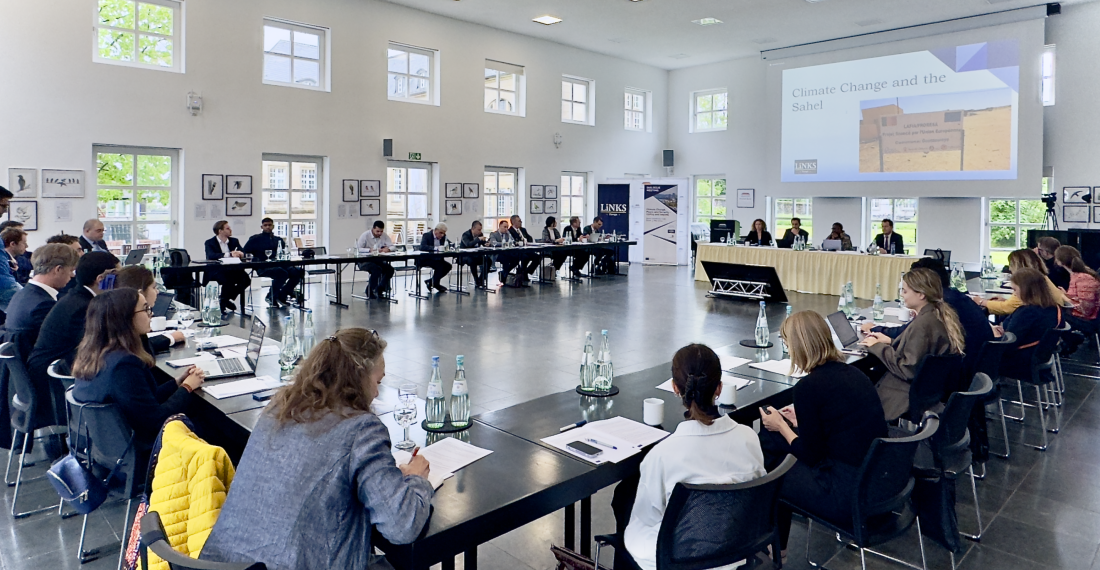
Bonn Dialogue Meeting calls for the theme "Climate Change, Peace and Security" to be included in the agenda of COP29

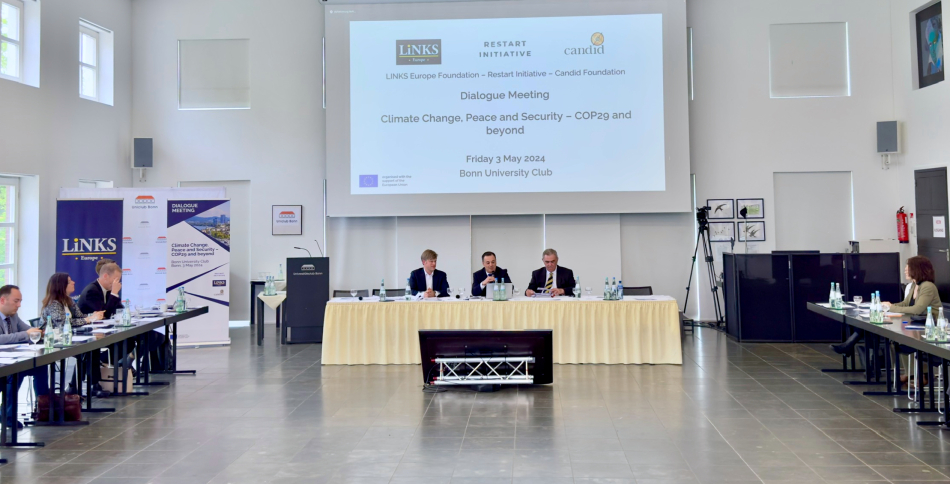
A dialogue meeting on the topic: “Climate Change Peace and Security – COP 29 and Beyond” was held at the Bonn University Club in Bonn, Germany, on Friday, 3 May 2024. Representatives of various state-parties to the Climate Convention and of the UN Climate Secretariat, joined participants from around 30 academic institutions, think tanks and civil society organisations to review the work done on this topic at COP28 in Dubai in December and chart a way forward for ensuring the continuation of the process at the COP29 meeting in Baku in November.

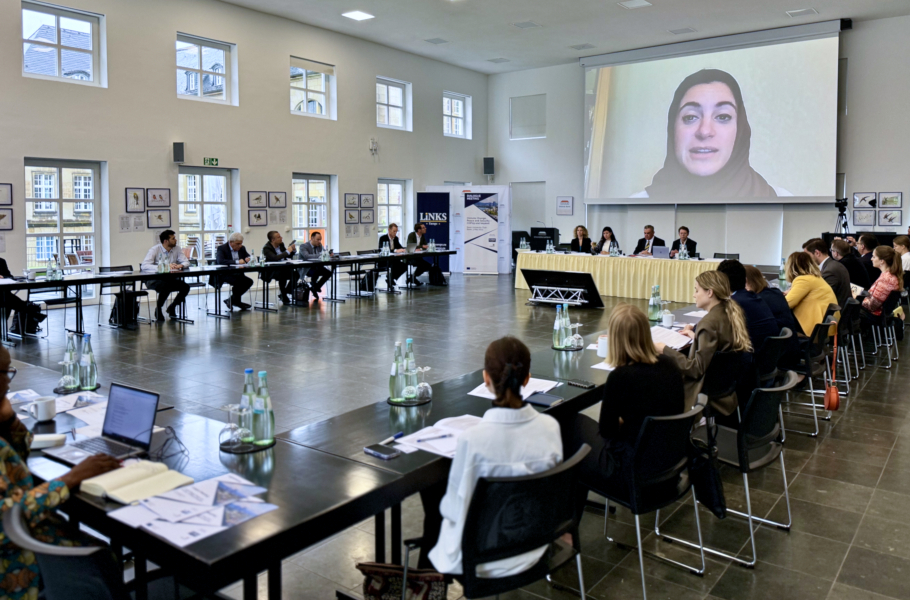
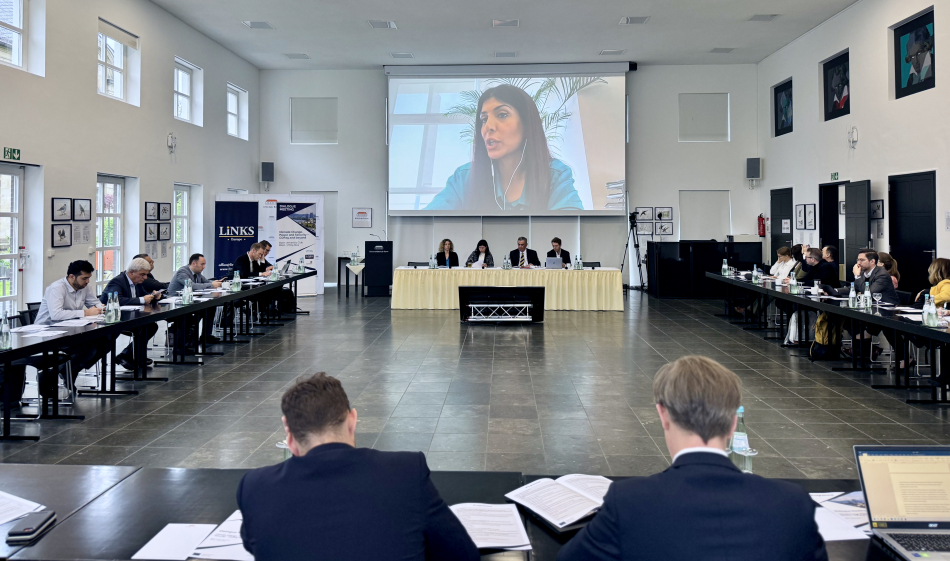
At the opening session, the meeting was addressed by HE Hana al Hashemi, the United Arab Emirates COP28 Chief negotiator, HE Nigar Arpadarai, the UN High-Level Champion for COP29 in Azerbaijan, and Mr Markus Hicken, Director for Energy Foreign Policy, Climate and Security at the German Federal Foreign Office. Also speaking at the opening session was Ms Maria Paloma Noriega Jalil, representing the UN Climate Secretariat. There followed an intensive one-day of discussions on the current state of the COP process, and the ongoing debate on the nexus of Climate Change, Peace and Security within the COP process. The meeting was addressed by world-class experts from leading think tanks and academic institutions, including Chatham House, the German Council on Foreign Relations, ADELPHI, the School of Oriental and African Studies in London, Heidelberg University, The Hertie School in Berlin, amongst others.
Image
Keynote Guest speakers, H.E. Hana al Hashimi, COP28 UAE Chief Negotiator
Keynote Guest speaker, H.E. Hana al Hashimi, COP28 UAE Chief Negotiator
Image
Keynote Guest speaker, H.E. Nigar Arpadarai, UN Climate Change High-Level Champion for COP29

The meeting positively assessed the steps taken in COP28 in Dubai in December, including the inclusion of climate change, peace and security as a theme of the meeting, the holding for the first time of a day on peace in the deliberations, and the “COP28 Declaration on Climate, Relief, Recovery and Peace”. It was felt that it was important that this momentum will not be lost, and similar actions are also included as part of the COP29 meeting in Baku in November. Whilst it was recognised that the nexus between Climate Change Peace and Security was now widely recognised internationally, inserting this in the COP process remained an issue under discussion.

During the meeting three aspects of the Climate Change, Peace and Security agenda were highlighted, namely water scarcity; food insecurity; and landmine contamination and environmental degradation resulting from conflict. Participants called on the State Parties to the Climate Convention meeting in the context of COP 29 to ensure proper discussion and action on these themes that affect millions of people and thousands of communities across the world.
Image
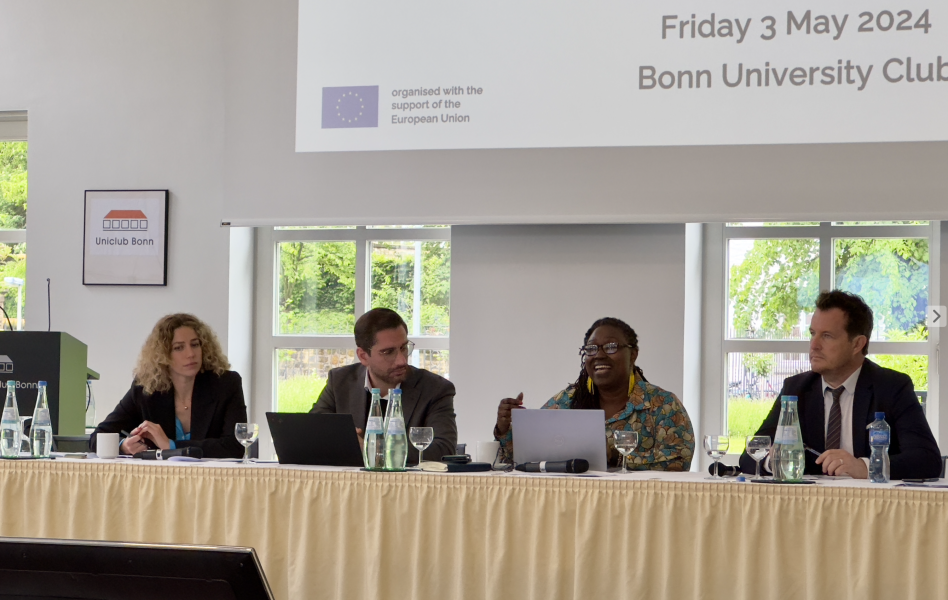
Panel discussion with the participation of Dr Sarah Njeri (School of Oriental and African Studies); Dr Tobias Zumbragel (CARPO, Bonn); Marc Limon (Universal Rights Group)
Panel discussion with the participation of Dr Sarah Njeri (School of Oriental and African Studies); Dr Tobias Zumbragel (CARPO, Bonn); Marc Limon (Universal Rights Group). Chaired by Isabelle McRae (Restart Initiative).

In his concluding remarks at the end of the dialogue meeting, HE Ambassador Elshad Iskanderov, advisor to the COP 29 presidency, said that Azerbaijan was positive to the idea of having Climate Change Peace and Security as a theme at COP29. Ambassador Iskanderov reminded that the decision to hold COP29 in Baku was taken unanimously, and was an unprecedented confidence-building measure in the context of the South Caucasus.  Azerbaijan wanted to build on what had already been achieved in Dubai. He said that these decisions did not depend on Azerbaijan alone since COP was a multilateral process where the 198 state parties had the final say. Ambassador Iskanderov underlined the readiness of the Azerbaijani COP29 presidency to continue the dialogue on this issue with academia, think tanks and civil society as the preparations for COP 29 progress. He highlighted the fact that the discussion needs to focus not only on the potential that climate change will fuel more conflict and insecurity, but also on the impact of conflicts on climate change and environmental degradation.
Image
CONCLUDING REMARKS, H.E. AMBASSADOR ELSHAD ISKANDEROV (COP29 AZERBAIJANI PRESIDENCY)
CONCLUDING REMARKS, H.E. AMBASSADOR ELSHAD ISKANDEROV (COP29 AZERBAIJANI PRESIDENCY) 

Concluding the Bonn Dialogue Meeting, Dr Dennis Sammut, Director of LINKS Europe Foundation, who together with Candid Foundation and ReStart Initiative hosted the Bonn event, said that a lot of work needs to be done between now and November, and particularly the dialogue with the COP Troika countries, the UN Climate Secretariat and interested state parties needs to be continued and intensified. As a concrete step, LINKS Europe will set up an ad hoc working group with other interested non-state actors, to ensure that the conversation continues, and tangible results are achieved.

The Bonn Dialogue Meeting "Climate Change, Peace and Security - COP29 and beyond was organised by LINKS Europe Foundation, Candid Foundation and ReStart Initiative, with the support of the European Union.
You may read or download a compendium of the event here
You may read or download the summary of proceedings of the event here
For more information about the event please contact Maximiliaan van Lange at LINKS Europe (maximiliaan@links-europe.eu)

Related articles

Editor's choice
News
Aden under curfew, as problem in Yemen's south deepens

Aden under curfew, as problem in Yemen's south deepens

The port city of Aden, in Yemen's south, has been put under curfew, as the rift in the country between  the Saudi led coalition which  backs Yemen's presidential governing council, and the southern forces led by the Southern Transitional Council (STC), deepens. Abdul Rahman al-Mahrami, a member of the Yemeni Presidential Governing Council and commander of the al-Amalik brigades, has ordered a curfew in the temporary capital, Aden, "to maintain security". "A curfew has been imposed throughout Aden Governorate from 9:00 p.m. to 6:00 a.m., in accordance with the instructions of Commander Abdul Rahman al-Mahrami, a member of the Presidential Management Council," the statement said. It states that only security and military personnel, as well as medical and technical teams with approved permits, will be allowed to move in the area during these hours. Yemen's presidential council, which is backed by Saudi Arabia and which already is in a struggle with the Houthi Movement in the north of the country who also occupy the capital Sanaa, two days ago issued an order for the arrest of the head of the Southern Transitional Council (STC),, Aidarous al Zubaidi. The STC have wide support among people in the South, and advocate that South Yemen restores its independence. The coalition warned of further escalation in Aden, long regarded as an STC stronghold, as the Presidential Leadership Council (PLC) chief accused STC leader Aidarous Al Zubaidi of “high treason” and announced the revocation of his membership in the governing body. The moves mark a sharp escalation in tensions within the anti-Houthi camp, despite National Shield Forces, rivals of the STC and former allies, having recently retaken control of Hadhramaut and Mahra from southern fighters. The STC’s takeover of the two regions last month angered Saudi Arabia and contributed to igniting the current internal conflict. (click the picture to read more)

Popular

Editor's choice
Interview
Thursday Interview: Murad Muradov

Thursday Interview: Murad Muradov

Today, commonspace.eu starts a new regular weekly series. THURSDAY INTERVIEW, conducted by Lauri Nikulainen, will host  persons who are thinkers, opinion shapers, and implementors in their countries and spheres. We start the series with an interview with Murad Muradov, a leading person in Azerbaijan's think tank community. He is also the first co-chair of the Action Committee for a new Armenian-Azerbaijani Dialogue. Last September he made history by being the first Azerbaijani civil society activist to visit Armenia after the 44 day war, and the start of the peace process. Speaking about this visit Murad Muradov said: "My experience was largely positive. My negative expectations luckily didn’t play out. The discussions were respectful, the panel format bringing together experts from Armenia, Azerbaijan, and Turkey was particularly valuable during the NATO Rose-Roth Seminar in Yerevan, and media coverage, while varied in tone, remained largely constructive. Some media outlets though attempted to represent me as more of a government mouthpiece than an independent expert, which was totally misleading.  Overall, I see these initiatives as important steps in rebuilding trust and normalising professional engagement. The fact that soon a larger Azerbaijani civil society visits to Armenia followed, reinforces the sense that this process is moving in the right direction." (click the image to read the interview in full)

