


Azerbaijani MP supports move to parliamentary republic, but says current constitutional amendments are necessary for stability

Gudrat Hassanguliev leader of the small WAPFP and himself a presidential candidate in the  2008 presidential elections said Karabakh could also be a factor given Russian eagerness to push for a solution but warned that  "A free piece of cheese can only be found on a bait".

A prominent Azerbaijani MP, who heads a small political party - WAPFP, - and was himself a candidate in the 2008 presidential election, stated in a statement carried by the news agency APA that the constitutional changes that will be voted on in a national referendum on 26 September were part of an effort to ensure the country's stability.

"We see some countries, even the ones that are close to us, being engulfed in chaos one after another. For example, the situation in Ukraine, a country close to Azerbaijan, is a clear case. We also see terrorist acts, internal strife, and arrests shaking Turkey since the coup attempt. I think the primary goal behind the proposed amendments and additions to the constitution is to ensure security and lasting stability in Azerbaijan. For this particular reason, the term of the presidency is going to be prolonged," he said.

Hasanguliyev said that the newly created vice-presidents will not be authorized to make decisions.

"Under the current law in Azerbaijan, decisions are made by the Cabinet of Ministers. That is, the Cabinet of Ministers and the prime minister remain in place, and if the first vice president is missing, presidential powers are passed on to the prime minister. Had any of the powers of prime minister been taken away, we could think in a different way. So I think the institute of vice presidents is going to be created in order to strengthen control on different areas. For now, it's the prime minister who has control over the execution of decisions. The number of ministries in Azerbaijan is extremely high. The Cabinet of Ministers has up to 40 members. Vice presidents will work on presidential instructions or with the president. That will allow the president to get quickly information, give swifter reactions and make swifter decisions, and have stronger control. Vice presidents will surely be divided into positions," he said.

He noted that the second factor that necessitates the reforms is the Karabakh problem.

"The way Russia acts as to the Nagorno-Karabakh problem tells us that they now want this problem solved by any means. It's a bit difficult for me to analyze what they really intend to achieve. Is it possible that Russia truly wants peace in the Caucasus and in this way be known in the world as a peacemaker? If Russia does it without expecting anything in return, it means this country has some plan for the stage to come," Hasanguliyev stressed, using an old Azerbaijani proverb: "A free piece of cheese can only be found on a bait"

The WAPFP chairman says it is necessary to strengthen the institute of presidency in order to protect Azerbaijan against any danger.

"In one word, the main factor necessitating the referendum is the bloody and horrible developments raging across the world. On the other hand, there is a need for some real steps to be taken towards the Nagorno-Karabakh problem. In case such a step is taken, either peacefully or militarily, the central government needs strengthening," he stressed.

As for the WAPFP position on state model in Azerbaijan, Hasanguliyev said he favors Azerbaijan shifting to the model of parliamentary republic in the future.

source: commonspace.eu with APA

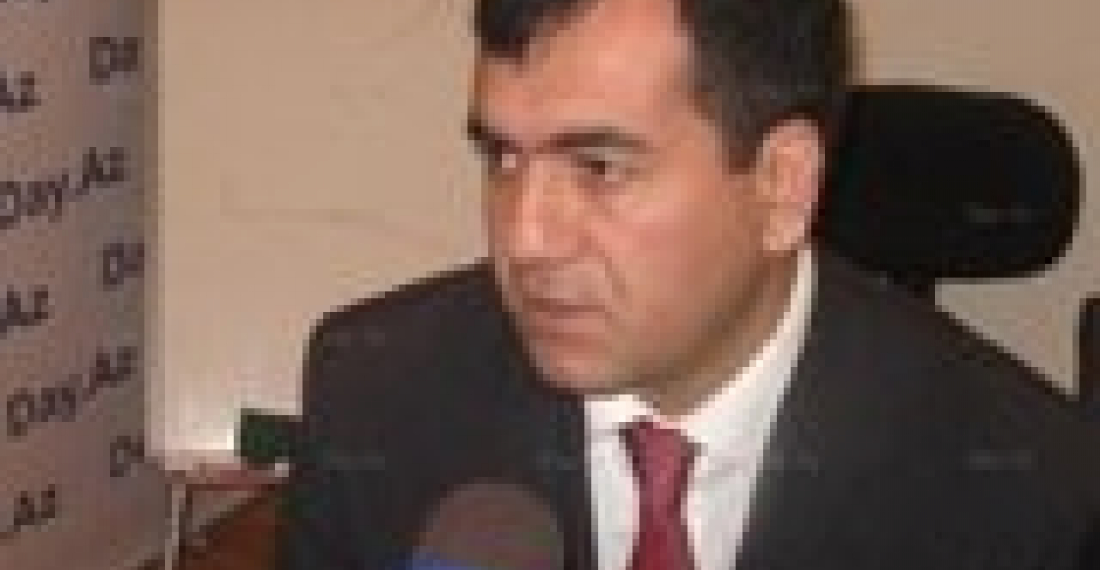
Photo Azerbaijani MP Gudrat Hasanguliev (archive picture)
Related articles

Editor's choice
News
Pope on Christmas Day: "Peace is a shared responsibility"

Pope on Christmas Day: "Peace is a shared responsibility"

In his Christmas address on St Peter's Square, Pope Leo XIV renewed his plea for peace, reminding the world that it is both God’s gift and humanity’s shared responsibility. Pope Leo XIV renewed his appeal for peace, dialogue, and responsibility, turning to those regions where violence and instability continue to claim innocent lives. The Pope prayed for “justice, peace, and stability for Lebanon, Palestine, Israel, and Syria,” and urged that the promise of peace rooted in righteousness be renewed. He appealed in a particular way for Ukraine, asking that “the clamor of weapons cease,” and that all those involved, with the support of the international community, find the courage to engage in “sincere, direct, and respectful dialogue.” Remembering conflicts that risk being forgotten, Pope Leo XIV expressed closeness to the victims of war and violence in Sudan, South Sudan, Mali, Burkina Faso, and the Democratic Republic of Congo, as well as to all those who suffer as a result of injustice, political instability, religious persecution, and terrorism. The Pope also prayed for Haiti, calling for an end to violence and progress along the path of peace and reconciliation. He also invoked peace for Myanmar, asking that the country be guided towards reconciliation and hope, especially for its younger generations. Turning to Latin America, he encouraged those with political responsibilities to give space to dialogue for the common good, rather than to ideological and partisan divisions. The Pope also prayed for the restoration of the "ancient friendship" between Thailand and Cambodia, and entrusted to God the peoples of South Asia and Oceania, who have been severely affected by recent natural disasters, calling for renewed commitment to assisting those who suffer.

Popular

Editor's choice
News
Pope on Christmas Day: "Peace is a shared responsibility"

Pope on Christmas Day: "Peace is a shared responsibility"

In his Christmas address on St Peter's Square, Pope Leo XIV renewed his plea for peace, reminding the world that it is both God’s gift and humanity’s shared responsibility. Pope Leo XIV renewed his appeal for peace, dialogue, and responsibility, turning to those regions where violence and instability continue to claim innocent lives. The Pope prayed for “justice, peace, and stability for Lebanon, Palestine, Israel, and Syria,” and urged that the promise of peace rooted in righteousness be renewed. He appealed in a particular way for Ukraine, asking that “the clamor of weapons cease,” and that all those involved, with the support of the international community, find the courage to engage in “sincere, direct, and respectful dialogue.” Remembering conflicts that risk being forgotten, Pope Leo XIV expressed closeness to the victims of war and violence in Sudan, South Sudan, Mali, Burkina Faso, and the Democratic Republic of Congo, as well as to all those who suffer as a result of injustice, political instability, religious persecution, and terrorism. The Pope also prayed for Haiti, calling for an end to violence and progress along the path of peace and reconciliation. He also invoked peace for Myanmar, asking that the country be guided towards reconciliation and hope, especially for its younger generations. Turning to Latin America, he encouraged those with political responsibilities to give space to dialogue for the common good, rather than to ideological and partisan divisions. The Pope also prayed for the restoration of the "ancient friendship" between Thailand and Cambodia, and entrusted to God the peoples of South Asia and Oceania, who have been severely affected by recent natural disasters, calling for renewed commitment to assisting those who suffer.


