Azerbaijan parades captured "saboteur", but Armenians say he does not exist

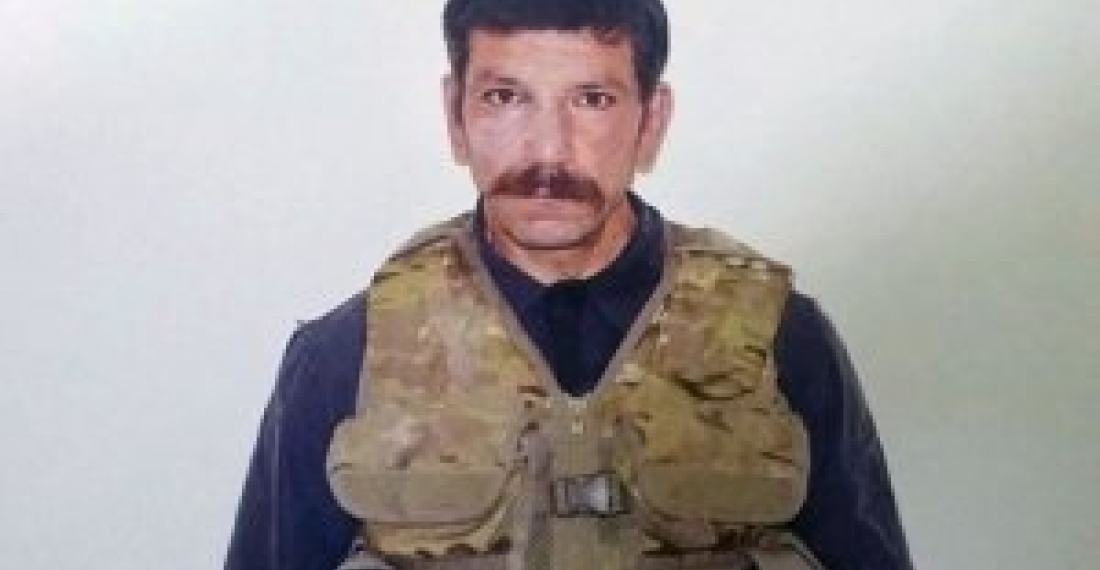
Azerbaijan on Wednesday released the video of an Armenian that it says was captured whilst participating in a reconnaisance/sabotage group that it intercepted the night before.The person identified himself on video as Zaver Hovanis Karapetyan, and said he was born in the Dovekh village of Armenia's Noyemberyan district on November 16th, 1974. "I currently live in the Dovekh village", he said.

The person on the video stated: "I'm a villager. I was recruited for paid combat duty. Taking advantage of the adverse weather conditions, we advanced towards the combat outposts of the Azerbaijani Armed Forces. Our aim was to carry out an assault on an outpost of the Azerbaijani Armed Forces and kill the soldiers. Two members of our group were wounded and the others picked up the wounded and retreated to their Armenian outposts. I didn't manage to flee. I decided to hide. After that, I was captured by soldiers of the Azerbaijani Armed Forces", the video showed him saying.

Armenia however not only disputes that the incident has taken place, but says that no person with that name lives in Dovekh village at all. Later Armenian media quoted a spokesperson for the Ministry of Defence as saying that the man was clearly a civilian and was not serving in the Armenian Armed Forces. Other media reports cited the Mayor of the Armenian town of Vanadzor as saying that the man was known in the town but was homeless and had some mental problems.

Regardless of which version is true, Zaver Hovanis Karapetyan has now become another piece in a complicated chess game. It is likely that the International Committee of the Red Cross will get interested in the case, and may eventually facilitate his return.

source: commonspace.eu with agencies

photo: Zaver Hovanis Karapetyan speaking on camera after his captivity by Azerbaijani forces.
 

Related articles

Editor's choice
News
The British prime minister says Europe must "stand on its own two feet" when it comes to defence

The British prime minister says Europe must "stand on its own two feet" when it comes to defence

The UK will deploy a carrier strike group, led by the aircraft carrier HMS Prince of Wales to the Arctic and the High North as part of efforts to bolster security against Russian threats. British prime minister, Sir Keir Starmer announced the deployment in a speech on Saturday (14 February) at the Munich Security Conference. Europe must be ready to fight to protect its people, values, and way of life,  Sir Keir told the Conference. Starmer also called for deeper links and cooperation, including economic ties, between the UK and EU. The PM stressed the continent must "stand on its own two feet" when it comes to defence commitments. "We must build our hard power, because that is the currency of the age," he told the conference. (Click image to read the full story).

Popular

Editor's choice
Interview
Thursday Interview: Murad Muradov

Thursday Interview: Murad Muradov

Today, commonspace.eu starts a new regular weekly series. THURSDAY INTERVIEW, conducted by Lauri Nikulainen, will host  persons who are thinkers, opinion shapers, and implementors in their countries and spheres. We start the series with an interview with Murad Muradov, a leading person in Azerbaijan's think tank community. He is also the first co-chair of the Action Committee for a new Armenian-Azerbaijani Dialogue. Last September he made history by being the first Azerbaijani civil society activist to visit Armenia after the 44 day war, and the start of the peace process. Speaking about this visit Murad Muradov said: "My experience was largely positive. My negative expectations luckily didn’t play out. The discussions were respectful, the panel format bringing together experts from Armenia, Azerbaijan, and Turkey was particularly valuable during the NATO Rose-Roth Seminar in Yerevan, and media coverage, while varied in tone, remained largely constructive. Some media outlets though attempted to represent me as more of a government mouthpiece than an independent expert, which was totally misleading.  Overall, I see these initiatives as important steps in rebuilding trust and normalising professional engagement. The fact that soon a larger Azerbaijani civil society visits to Armenia followed, reinforces the sense that this process is moving in the right direction." (click the image to read the interview in full)