Azerbaijan has a new prime minister (updated)

Updated at 1030 GMT

The Azerbaijan Parliament, the Milli Meclis, on Tuesday morning (8 October) approved the nomination of Ali Asadov as the country's new prime minister. The nomination was sent to the parliament by president Ilham Aliyev following the resignation of Novruz Mammadov who held the position of prime minister for the last eighteen months.

There were no official explanations of Novruz Mammadov's resignation, but the website Haqqin Az, which is closely connected to Azerbaijani ruling circles, ran a commentary by its founding editor Eynulla Fatulayev which claimed that Mammadov had failed in the task of turning round the Azerbaijani economy. It said:

"For one and a half years, the prime minister was unable to reorganize the work of the government and increase its effectiveness, to turn the Cabinet of Ministers into a locomotive of economic reforms initiated by the president. Economic and financial reforms stalled and called for constant personal intervention from the president. Without the president, things did not move. Moreover, N. Mammadov could not achieve an improvement in macroeconomic indicators, in particular, an increase in the growth rate of the gross domestic product, as the president repeatedly insisted."

Haqqin.az said that Novruz Mammadov "will remain ïn the ranks of the ruling team".

The new prime minister, Ali Asadov, thanked the members of parliament for approving his candidacy and promised to do his utmost to justify their trust.

Biography of the new prime minister

Asadov Ali Khidayat oglu was born on November 30, 1956 in Nakhchivan. In 1974 he graduated from secondary school No. 134 in Baku, and in 1978 he graduated from the Moscow Institute of National Economy. He began his career in 1978 as a senior laboratory assistant at the Institute of Economics of the Academy of Sciences of the Azerbaijan SSR. He served in the army in 1978-1980.

In 1980-1989, he worked at the Institute of Economics of the Academy of Sciences of the Azerbaijan SSR as a senior laboratory assistant, graduate student, junior researcher, research associate, and in 1989-1995 - assistant professor, head of the department of the Baku Institute of Social Management and Political Science.

In 1995-2000 he was a deputy of the Milli Majlis of the Republic of Azerbaijan.

By the decree of the President of the Republic of Azerbaijan dated April 17, 1998 he was appointed Assistant to the President of the Republic of Azerbaijan on economic issues. By a presidential decree of November 29, 2012, he was appointed deputy head of the Presidential Administration of the Republic of Azerbaijan.


----

The prime minister of Azerbaijan, Novruz Mammadov has resigned. Azerbaijani media reported the resignation on Tuesday morning without further explanation.

Shortly afterwards it was reported that the Assistant to the President for Economic Affairs, Ali Asadov, has been nominated for the post. His appointment was sent to the Azerbaijani parliament for approval by president Ilham Aliyev.

source: commonspace.eu with agencies

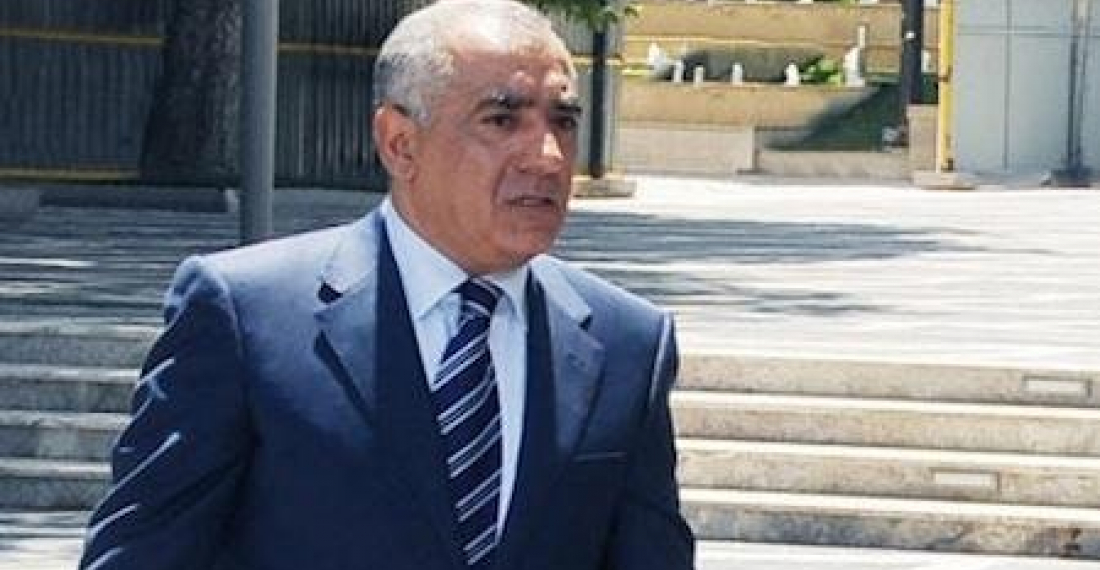
photo: Ali Asadov (archive picture)

Related articles

Editor's choice
News
Borrell tells the European Parliament that the situation in Afghanistan was critical, but the EU will remain engaged

Borrell tells the European Parliament that the situation in Afghanistan was critical, but the EU will remain engaged

Borrell underlined that the European Union will make every effort to support the peace process and to remain a committed partner to the Afghan people. "Of course, we will have to take into account the evolving situation, but disengagement is not an option.  We are clear on that: there is no alternative to a negotiated political settlement, through inclusive peace talks.
Editor's choice
News
Germany accuses Russia of cyberattacks and disinformation campaign

Germany accuses Russia of cyberattacks and disinformation campaign

The German government holds Russia responsible for a cyberattack on German air traffic control, and for targeted disinformation campaigns before the last federal election. According to the German Foreign Office in Berlin, the incidents could be clearly attributed to the Russian military intelligence service, the GRU. In response, the Russian ambassador to Berlin was summoned to the Foreign Ministry. "We have been observing a massive increase in threatening hybrid activities by Russia for some time now," a spokesperson for the Foreign Ministry stated. These range from disinformation campaigns and espionage to cyberattacks and sabotage attempts. The aim is to divide society, sow distrust, and undermine confidence in democratic institutions. The spokesperson added that with these actions, Russia is "very concretely threatening our security, not only through its war of aggression against Ukraine, but also here in Germany."  The Foreign Ministry spokesperson explained that the cyberattack on air traffic control in August 2024 was clearly attributed to the hacker collective "APT28," known as "Fancy Bear," and to the responsibility of the Russian military intelligence service, the GRU. Furthermore, it could now be "conclusively stated" that Russia had attempted "to influence and destabilize both the last Federal election and the ongoing internal affairs of the Federal Republic of Germany." There was "absolutely irrefutable evidence" for this". The so-called "Storm 1516" campaign, which has been running since 2024, is allegedly backed by "reliable information" that the Moscow-based think tank "Center for Geopolitical Expertise" is behind it. The Center is also said to be supported by Russian military intelligence. Its primary aim is to influence democratic elections in the West. (Click the image to read more).

Popular

Editor's choice
News
Germany accuses Russia of cyberattacks and disinformation campaign

Germany accuses Russia of cyberattacks and disinformation campaign

The German government holds Russia responsible for a cyberattack on German air traffic control, and for targeted disinformation campaigns before the last federal election. According to the German Foreign Office in Berlin, the incidents could be clearly attributed to the Russian military intelligence service, the GRU. In response, the Russian ambassador to Berlin was summoned to the Foreign Ministry. "We have been observing a massive increase in threatening hybrid activities by Russia for some time now," a spokesperson for the Foreign Ministry stated. These range from disinformation campaigns and espionage to cyberattacks and sabotage attempts. The aim is to divide society, sow distrust, and undermine confidence in democratic institutions. The spokesperson added that with these actions, Russia is "very concretely threatening our security, not only through its war of aggression against Ukraine, but also here in Germany."  The Foreign Ministry spokesperson explained that the cyberattack on air traffic control in August 2024 was clearly attributed to the hacker collective "APT28," known as "Fancy Bear," and to the responsibility of the Russian military intelligence service, the GRU. Furthermore, it could now be "conclusively stated" that Russia had attempted "to influence and destabilize both the last Federal election and the ongoing internal affairs of the Federal Republic of Germany." There was "absolutely irrefutable evidence" for this". The so-called "Storm 1516" campaign, which has been running since 2024, is allegedly backed by "reliable information" that the Moscow-based think tank "Center for Geopolitical Expertise" is behind it. The Center is also said to be supported by Russian military intelligence. Its primary aim is to influence democratic elections in the West. (Click the image to read more).