Azerbaijan Deputy Foregin Minister argues against Azerbaijan leaving Council of Europe

The future of Azerbaijan as a member of the Council of Europe is currently a matter of discussion in both Strasbourg and Baku. 

In the Parliamentary Assembly of the Council of Europe (PACE), and in the organisations Committee of Ministers, Azerbaijan has been criticised for failing to adhere with some of the Council of Europe's criteria, and of not implementing decisions of the European Court of Human Rights. Informally, there have been suggestions that Azerbaijan's membership of the Council or the Parliamentary Assembly may be suspended.

read more here

In Baku, there have been accusations of a campaign against Azerbaijan in European circles, and some have suggested that Azerbaijan should leave the Council of Europe unilaterally.

Azerbaijan's veteran deputy Foreign Minister Mahmoud Mammedguliev, who is also responsible for relations with the European Union, has stepped into the discussion with an exclusive interview carried on the influential web portal Haqqin.az, arguing against leaving, and reminding of some of the history of the relations between Azerbaijan and the Council.   

"I do not think that Azerbaijan's withdrawal from the Council of Europe is the right idea. Despite double standards and injustice towards Azerbaijan, I believe that we must remain in this organisation and continue to defend our position".

Mahmud Mammadguliyev noted that even before Azerbaijan joined the Council of Europe as a full member, he headed the Azerbaijani delegation in this structure for many years.

"The late Heydar Aliyev attached great importance to relations with the Council of Europe. It was on his instructions that we held long negotiations on joining this organisation. I do not think that simply because there are several anti-Azerbaijani elements, we should surrender our positions". Referring to recent statements by Council of Europe Secretary-General, Jagland, Mahmud Mammadguliev said he was not the entire organization. "Today he is there, tomorrow he will not be. But in the Council of Europe there are 47 states, with which Azerbaijan has established excellent relations".

According to Deputy Minister, Azerbaijan has the same rights in the Council of Europe as all the other members.

"We entered this organization voluntarily and consciously. My position is that we must remain in it and defend our positions. No one can interfere with the activities of Azerbaijan in the Council of Europe", he said.

source: commonspace.eu with haqqin.az

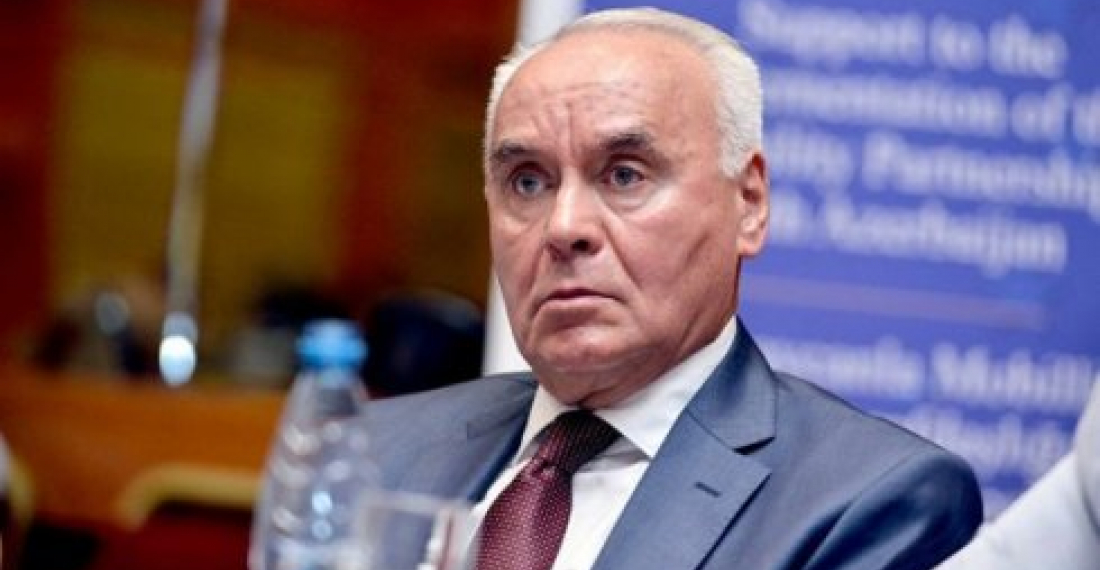
photo: Azerbaijan Deputy Foreign Minister Mahmud Mammedguliev
 

Related articles

Editor's choice
News
Aden under curfew, as problem in Yemen's south deepens

Aden under curfew, as problem in Yemen's south deepens

The port city of Aden, in Yemen's south, has been put under curfew, as the rift in the country between  the Saudi led coalition which  backs Yemen's presidential governing council, and the southern forces led by the Southern Transitional Council (STC), deepens. Abdul Rahman al-Mahrami, a member of the Yemeni Presidential Governing Council and commander of the al-Amalik brigades, has ordered a curfew in the temporary capital, Aden, "to maintain security". "A curfew has been imposed throughout Aden Governorate from 9:00 p.m. to 6:00 a.m., in accordance with the instructions of Commander Abdul Rahman al-Mahrami, a member of the Presidential Management Council," the statement said. It states that only security and military personnel, as well as medical and technical teams with approved permits, will be allowed to move in the area during these hours. Yemen's presidential council, which is backed by Saudi Arabia and which already is in a struggle with the Houthi Movement in the north of the country who also occupy the capital Sanaa, two days ago issued an order for the arrest of the head of the Southern Transitional Council (STC),, Aidarous al Zubaidi. The STC have wide support among people in the South, and advocate that South Yemen restores its independence. The coalition warned of further escalation in Aden, long regarded as an STC stronghold, as the Presidential Leadership Council (PLC) chief accused STC leader Aidarous Al Zubaidi of “high treason” and announced the revocation of his membership in the governing body. The moves mark a sharp escalation in tensions within the anti-Houthi camp, despite National Shield Forces, rivals of the STC and former allies, having recently retaken control of Hadhramaut and Mahra from southern fighters. The STC’s takeover of the two regions last month angered Saudi Arabia and contributed to igniting the current internal conflict. (click the picture to read more)

Popular

Editor's choice
Analysis
Analysis: Why what happens in Greenland matters

Analysis: Why what happens in Greenland matters

The snap elections for the parliament of Greenland last Tuesday (6 April 2021) attracted unusual interest from major powers who have been watching the political and economic impact of the election results on their interests in the Arctic region. Among them, the Chinese, who have invested in the Kvanefjeld mine on the island. Maximiliaan van Lange analyses the background to the recent Greenlandic general elections, and the Island's geostrategic position in the Arctic in this article for commonspace.eu.