


Apathy is proving to be the biggest obstacle in the forthcoming Constitutional referendum that will be held in Azerbaijan on 26 September. With two weeks to go before the people of Azerbaijan go to the polls to vote in the referendum, it seems many are likely not to go at all.
The referendum was called when in a surprise move during the summer, president Ilham Aliev sent a package of constitutional amendments for the consideration of the constitutional court in order that they may be submitted for popular approval. The Court endorsed the proposals and the process for holding the referendum started. There has been speculation as to why the President initiated the constitutional changes in the first place. The government holds a tight grip on the country's leverages of power anyway, regardless of the constitutional niceties. Some argued that the proposals were part of the government's efforts to consolidate control, others see them as heralding possible political opening.
The government of Azerbaijan refused to refer the constitutional amendments to the Venice Commission for an opinion. The Commission is a mechanism of the Council of Europe that assists member states to review important laws and constitutional changes in order to ensure that they abide by the Council of Europe's principles and agreements. However, last week the Parliamentary Assembly of the Council of Europe took the initiative of referring the constitutional changes to the Venice Commission itself. A preliminary opinion is now expected next week, although the final position of the commission will only be confirmed in October.
In the meantime, in another surprise move, the leader of one of the opposition forces, the Executive Secretary of REAL Movement Natig Jafarli, was released from detention. He was arrested on 12 August and put under administrative detention on charges of tax evasion. Despite his release the case against him continues. Jafarli's arrest in August caused an outcry in the international community. His release yesterday was on the other hand welcomed by the US State department and other western governments. The REAL movement was expecting to campaign actively in the referendum campaign but the arrest of another one of its leaders seriously hampered its efforts.
Many Azerbaijanis remain aloof from politics, and have little interest in the constitutional referendum, and little trust in the electoral process. Apathy may therefore be the biggest factor in the referendum in two weeks' time.
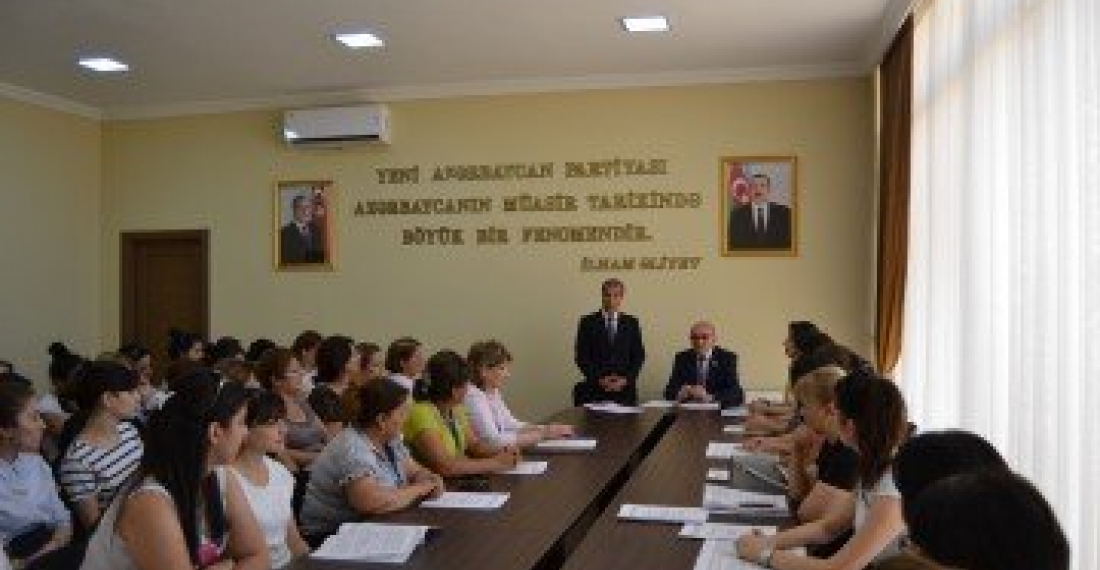
The ruling party of President Aliev, New Azerbaijan Party (YAP) has in response initiated a campaign in the country's regions in an effort to mobilise public support. Political observers watching the process see the campaign as artificial. Participants in the meetings are mainly teachers and civil servants "specially invited" for the meetings. But on the other hand there is little sign that the opposition is doing any better in mobilising support for its position. Things may pick up later this week, once the bayram holidays of Aid el Audha are out of the way. But it is unlikely that they will be enough to instil public enthusiasm in the process. Azerbaijan has a very bad record of electoral malpractises, and trust in the process inside and outside Azerbaijan is very low. In the last parliamentary elections the leading international election observation organisation, ODIHR, refused to monitor the election when it was not allowed to deploy enough monitors to oversee the process properly. This time round they have not been invited.
The referendum is therefore likely to be another disappointment for those wanting to see serious political reforms in Azerbaijan, and who have been waiting patiently for many years to see a signal that the process has started.
source: commonspace.eu
photo: Members of the New Azerbaijan Party in Siyazan region prepare for the Constitutional referendum scheduled for 26 September (picture courtesy of www.yap.az)



