


KARABAKH-ENERGY

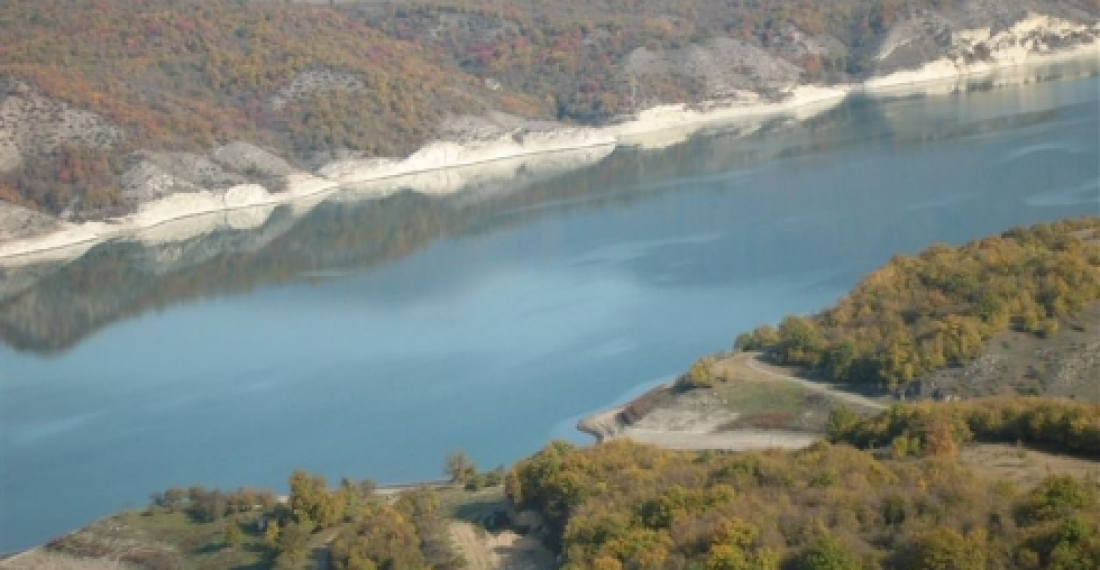
Within the next 3-4 years Karabakh will not only ensure its energy independence, but will also become an electric power exporter. According to experts, the effective use of rich water resources of Karabakh, particularly, the water of the mountain rivers will allow fulfilling all the outlined plans. 

ArmInfo correspondent in Stepanakert reports with reference to the NKR Prime Minister Ara Haroutyunyan that the total potential of the republic allows generating up to 700 mln KW/h electric power per annum. Today the domestic energy consumption is about 250 mln KW/h.  Sansang hydropower plant in Martakert region with 50 MW capacity, which generated 90-140 mln KW/h electric power annually, only satisfied up to 50% of the republic's needs. The rest of the necessary power was imported from Armenia.  The small Trge-1 hydropower plant in the same region annually generates 16.5 mln KW/h electric power.  This is the first of the three hydropower plants to be set up on the River Trge. The three hydropower plants will generate a total of 65.5 mln KW/h electric power. With the launch of 3 more small hydropower plants - Trge-2, Madaghis-1 and Madaghis-2, about 80% of the electric energy input in the NKR will be ensured.  In 2011 the total investment in construction of the hydropower plants will be about 1 bln 700 mln AMD (about 4 mln 700 thsd USD).

It is also envisaged to build hydropower plants with the capacity of about 30 MW in Kashatagh region.  Approximately 200 job positions will be opened with the launch of these plants. Two years ago relevant personnel training started on the basis the Artsakh State University. 

For consistent implementation of the energy supply program, Artsakh HPP OJSC was set up in November 2007 by the decision of the NKR government. Under an investment program, the joint-stock company issues shares and sells them to both individuals and legal entities at an affordable price of 1050 AMD per share (the nominal price is 1000 AMD).

By participating in the program, the citizens become co-owners of the hydropower plant and receive a profit of up to 15%. Thus, the population of Artsakh, Armenia and Diaspora is directly involved in development of the NKR energy sphere.   

The NKR government also approved a concept for using alternative energy resources. The state program to be implemented under this concept aims to develop the production of electric and thermal power on the basis of its own resources, reduce the negative impact of the imported energy resources fluctuation, etc.

The NKR Premier Ara Haroutyunyan thinks that the republic's domestic needs in thermal power will be satisfied due to biofuel, and many populated areas will have autonomous electric power supply. The development of the biofuel system envisages opening of heat entities and hundreds of new job positions. 

In addition, Bioenergetika LLC has been set up. It invites foreign specialists to Karabakh, who study the republic's opportunities and discuss the development prospects with the local specialists. Experts say that Karabakh has enough forest resources, and the timber reserves can not only be used to supply the republic with thermal and electric power, but can also be exported to other countries. 

According to preliminary estimations, due to the timber waste in the NKR, it is possible to obtain 330 MW of thermal power, 85 MW of electric power; and additional 80 MW of thermal power and 20 MW of electric power can be obtained from the wheat and corn stems.    

A new woodworking enterprise has been opened in Avetaranots village of Askeran region of Karabakh.  The enterprise is equipped with Swedish and Finnish facilities. Within the next few years the NKR will take measures to create solar power systems.
Related articles

Editor's choice
News
Germany accuses Russia of cyberattacks and disinformation campaign

Germany accuses Russia of cyberattacks and disinformation campaign

The German government holds Russia responsible for a cyberattack on German air traffic control, and for targeted disinformation campaigns before the last federal election. According to the German Foreign Office in Berlin, the incidents could be clearly attributed to the Russian military intelligence service, the GRU. In response, the Russian ambassador to Berlin was summoned to the Foreign Ministry. "We have been observing a massive increase in threatening hybrid activities by Russia for some time now," a spokesperson for the Foreign Ministry stated. These range from disinformation campaigns and espionage to cyberattacks and sabotage attempts. The aim is to divide society, sow distrust, and undermine confidence in democratic institutions. The spokesperson added that with these actions, Russia is "very concretely threatening our security, not only through its war of aggression against Ukraine, but also here in Germany."  The Foreign Ministry spokesperson explained that the cyberattack on air traffic control in August 2024 was clearly attributed to the hacker collective "APT28," known as "Fancy Bear," and to the responsibility of the Russian military intelligence service, the GRU. Furthermore, it could now be "conclusively stated" that Russia had attempted "to influence and destabilize both the last Federal election and the ongoing internal affairs of the Federal Republic of Germany." There was "absolutely irrefutable evidence" for this". The so-called "Storm 1516" campaign, which has been running since 2024, is allegedly backed by "reliable information" that the Moscow-based think tank "Center for Geopolitical Expertise" is behind it. The Center is also said to be supported by Russian military intelligence. Its primary aim is to influence democratic elections in the West. (Click the image to read more).
Editor's choice
News
NATO Chief says war is on Europe's doorstep, and warns against complacency

NATO Chief says war is on Europe's doorstep, and warns against complacency

Russia could attack a NATO country within the next five years, the Secretary General of NATO, Mark Rutte, said in a stark new warning. "NATO's own defences can hold for now," Rutte warned in Berlin, but conflict was "next door" to Europe, and he feared "too many are quietly complacent, and too many don't feel the urgency, too many believe that time is on our side. "Russia is already escalating its covert campaign against our societies," Rutte said in a speech in Germany. "We must be prepared for the scale of war our grandparents or great-grandparents endured." Earlier this month, Russia's President Vladimir Putin said his country was not planning to go to war with Europe, but it was ready "right now" if Europe wanted to - or started a war. But similar reassurances were given by Moscow in 2022, just before 200,000 Russian troops crossed the border and invaded Ukraine. Putin has accused European countries of hindering US efforts to bring peace in Ukraine - a reference to the role Ukraine's European allies have recently played in trying to change a US peace plan to end the war, whose initial draft was seen as favouring Russia. But Putin was not sincere, Nato's secretary-general said in the German capital, Berlin. Supporting Ukraine, he added, was a guarantee for European security. "Just imagine if Putin got his way; Ukraine under the boot of Russian occupation, his forces pressing against a longer border with Nato, and the significantly increased risk of an armed attack against us." Russia's economy has been on a war footing for more than three years now - its factories churn out ever more supplies of drones, missiles and artillery shells. According to a recent report by the Kiel Institute for the World Economy, Russia has been producing each month around 150 tanks, 550 infantry fighting vehicles, 120 Lancet drones and more than 50 artillery pieces. The UK, and most of its Western allies, are simply not anywhere near this point. Analysts say it would take years for Western Europe's factories to come close to matching Russia's mass-production of weapons. "Allied defence spending and production must rise rapidly, our armed forces must have what they need to keep us safe," the Nato chief said.

Popular

Editor's choice
News
Germany accuses Russia of cyberattacks and disinformation campaign

Germany accuses Russia of cyberattacks and disinformation campaign

The German government holds Russia responsible for a cyberattack on German air traffic control, and for targeted disinformation campaigns before the last federal election. According to the German Foreign Office in Berlin, the incidents could be clearly attributed to the Russian military intelligence service, the GRU. In response, the Russian ambassador to Berlin was summoned to the Foreign Ministry. "We have been observing a massive increase in threatening hybrid activities by Russia for some time now," a spokesperson for the Foreign Ministry stated. These range from disinformation campaigns and espionage to cyberattacks and sabotage attempts. The aim is to divide society, sow distrust, and undermine confidence in democratic institutions. The spokesperson added that with these actions, Russia is "very concretely threatening our security, not only through its war of aggression against Ukraine, but also here in Germany."  The Foreign Ministry spokesperson explained that the cyberattack on air traffic control in August 2024 was clearly attributed to the hacker collective "APT28," known as "Fancy Bear," and to the responsibility of the Russian military intelligence service, the GRU. Furthermore, it could now be "conclusively stated" that Russia had attempted "to influence and destabilize both the last Federal election and the ongoing internal affairs of the Federal Republic of Germany." There was "absolutely irrefutable evidence" for this". The so-called "Storm 1516" campaign, which has been running since 2024, is allegedly backed by "reliable information" that the Moscow-based think tank "Center for Geopolitical Expertise" is behind it. The Center is also said to be supported by Russian military intelligence. Its primary aim is to influence democratic elections in the West. (Click the image to read more).

