Interview: Juliet Schofield talks to commonspace.eu about peace activism in the South Caucasus

Commonspace.eu interviewed Juliet Schofield Caucasus and Central Asia Programme Manager at International Alert about the work of peace activists in the South Caucasus and the role of civil society in the process of peace building in the region.   

What challenges do peace activists working on the Nagorno-Karabakh conflict face ?

There are many challenges, and a lot depends on what you mean by peace activism. For example, working with media poses different challenges to working with young women or political analysts. If pressed, I would say the main challenge is time.

The longer the societies remain divided, isolated from and in confrontation with each other, the deeper and more entrenched their respective positions and deeply held beliefs become. With each escalation on the front line, it gets harder to talk of 'peace' as emotions are high, and people feel under threat.

All this raises the barrier for potential new peace activists to make that first step towards the other side, especially when the overwhelming weight of public opinion discourages contact with 'the enemy'.

It is also fair to say that the younger generation now growing up, who have not known any other situation in their lifetime , have completely different incentives and motivations to their elders, the 'veteran' peace activists who still remember the pre-war situation and a time of co-existence.

How can people in the region help bring about peace?

It may seem to many impossible that an 'ordinary person' could influence the political peace process, but on the other hand, we know peace deals agreed in complete isolation from public opinion run the risk of failure.

It is therefore essential to broaden the idea of a peace process beyond what happens at the negotiating table, and include all layers of society in informed discussions and debates so their voice is heard and their opinion taken into account, and so people feel part of the solution.

How can people outside the region help bring about peace?

External actors can offer a safe space and a neutral platform where different conflicting sides can meet to exchange information and analysis, and discuss ways to promote peace. At the very least, they can reduce the level of tension back in their own societies.

It is important that external actors do not impose their own ideas on the conflicting sides, and that they remain absolutely impartial and not get drawn into the narratives of one side or another.

At the same time, third parties can, in theory, take a step back and provide a more objective analysis, and bring in an international perspective, including lessons of what has and has not worked in other conflict contexts.

Ultimately, however, it is down to the people from the conflicting sides themselves - and not only the politicians - to be the driving force behind peace.

What role do NGOs play?

NGOs are just organised groups of like-minded citizens who come together to pursue a shared vision of social change, hopefully for the better, and without a particular political agenda. Non-profit and non-governmental, ranging from small community based organisations to large international ones, NGOs can play a myriad of roles - informational, educational, analytical, developmental, or even providing essential services.

If properly rooted in local societies, they can become an extremely useful communication channel between communities and authorities, and often work in partnership not opposition to government.

Different NGOs have different approaches, but a peacebuilding approach is a collaborative one that engages in dialogue to promote better understanding , and to find mutually acceptable solutions to problems as they arise.

What is EPNK?

EPNK stands for The European Partnership for the Peaceful Settlement of the Conflict over Nagorno-Karabakh. It is a civil society programme funded by the European Union, aiming to support peacebuilding efforts concerning the conflict over Nagorno-Karabakh. It is a partnership of five European NGOs (International Alert, Conciliation Resources, Crisis Management Initiative, Kvinna till Kvinna and LINKS).

EPNK has been working together since 2010 with Armenians and Azeris from diverse backgrounds, including young people, women, displaced people, policymakers, analysts, civil society activists and journalists, to improve the longer term prospects for peace.

Within the partnership there have been a wide variety of initiatives promoting dialogue and confidence between sides, engaging in research and analysis which is oriented towards challenging existing discourses, and engaging civil society, including media, in public debate, and active participation in attempts to peacefully transform of the conflict.

Are you optimistic about the prospect of peace in the Nagorno-Karabakh context?

Cautious optimism is an essential quality for a peacebuilder! Without vision or conviction it would be hard indeed, and without caution, foolhardy. Even if a political settlement could be reached tomorrow, it would still take a lot of painstaking work, possibly generations, to implement any deal and build a 'positive peace'.

Peace needs constant work, even in societies that have not recently experienced the same levels of violent conflict as in the Caucasus. Personally, I put my confidence in the capacities of the Armenian and Azerbaijani peoples to reject war, especially those that already lived through it.

Those who agitate for war tend to be further away from the firing line. When you talk to ordinary people, it is clear that ultimately most want the same thing: to be able to live without fear of violence and to be able to live in dignity and fulfil their own potential.

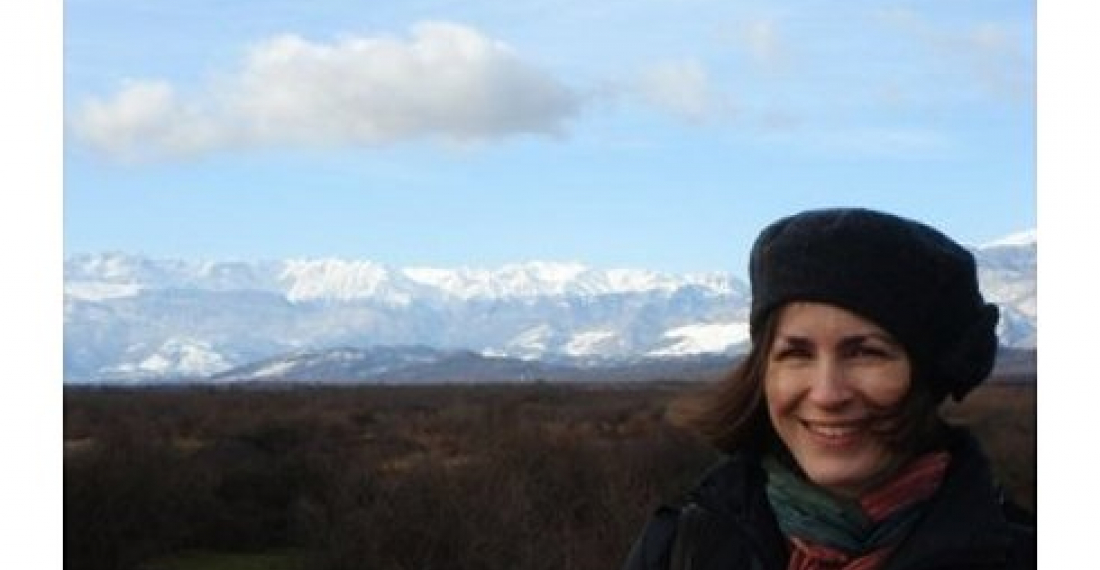
Juliet Schofield is Caucasus and Central Asia Programme Manager at International Alert. She has worked in development and peacebuilding in the former Soviet Union since 1993.

source: commonspace.eu

photo: Juliet Schofield



Related articles

Editor's choice
News
Germany accuses Russia of cyberattacks and disinformation campaign

Germany accuses Russia of cyberattacks and disinformation campaign

The German government holds Russia responsible for a cyberattack on German air traffic control, and for targeted disinformation campaigns before the last federal election. According to the German Foreign Office in Berlin, the incidents could be clearly attributed to the Russian military intelligence service, the GRU. In response, the Russian ambassador to Berlin was summoned to the Foreign Ministry. "We have been observing a massive increase in threatening hybrid activities by Russia for some time now," a spokesperson for the Foreign Ministry stated. These range from disinformation campaigns and espionage to cyberattacks and sabotage attempts. The aim is to divide society, sow distrust, and undermine confidence in democratic institutions. The spokesperson added that with these actions, Russia is "very concretely threatening our security, not only through its war of aggression against Ukraine, but also here in Germany."  The Foreign Ministry spokesperson explained that the cyberattack on air traffic control in August 2024 was clearly attributed to the hacker collective "APT28," known as "Fancy Bear," and to the responsibility of the Russian military intelligence service, the GRU. Furthermore, it could now be "conclusively stated" that Russia had attempted "to influence and destabilize both the last Federal election and the ongoing internal affairs of the Federal Republic of Germany." There was "absolutely irrefutable evidence" for this". The so-called "Storm 1516" campaign, which has been running since 2024, is allegedly backed by "reliable information" that the Moscow-based think tank "Center for Geopolitical Expertise" is behind it. The Center is also said to be supported by Russian military intelligence. Its primary aim is to influence democratic elections in the West. (Click the image to read more).
Editor's choice
News
NATO Chief says war is on Europe's doorstep, and warns against complacency

NATO Chief says war is on Europe's doorstep, and warns against complacency

Russia could attack a NATO country within the next five years, the Secretary General of NATO, Mark Rutte, said in a stark new warning. "NATO's own defences can hold for now," Rutte warned in Berlin, but conflict was "next door" to Europe, and he feared "too many are quietly complacent, and too many don't feel the urgency, too many believe that time is on our side. "Russia is already escalating its covert campaign against our societies," Rutte said in a speech in Germany. "We must be prepared for the scale of war our grandparents or great-grandparents endured." Earlier this month, Russia's President Vladimir Putin said his country was not planning to go to war with Europe, but it was ready "right now" if Europe wanted to - or started a war. But similar reassurances were given by Moscow in 2022, just before 200,000 Russian troops crossed the border and invaded Ukraine. Putin has accused European countries of hindering US efforts to bring peace in Ukraine - a reference to the role Ukraine's European allies have recently played in trying to change a US peace plan to end the war, whose initial draft was seen as favouring Russia. But Putin was not sincere, Nato's secretary-general said in the German capital, Berlin. Supporting Ukraine, he added, was a guarantee for European security. "Just imagine if Putin got his way; Ukraine under the boot of Russian occupation, his forces pressing against a longer border with Nato, and the significantly increased risk of an armed attack against us." Russia's economy has been on a war footing for more than three years now - its factories churn out ever more supplies of drones, missiles and artillery shells. According to a recent report by the Kiel Institute for the World Economy, Russia has been producing each month around 150 tanks, 550 infantry fighting vehicles, 120 Lancet drones and more than 50 artillery pieces. The UK, and most of its Western allies, are simply not anywhere near this point. Analysts say it would take years for Western Europe's factories to come close to matching Russia's mass-production of weapons. "Allied defence spending and production must rise rapidly, our armed forces must have what they need to keep us safe," the Nato chief said.

Popular

Editor's choice
News
Germany accuses Russia of cyberattacks and disinformation campaign

Germany accuses Russia of cyberattacks and disinformation campaign

The German government holds Russia responsible for a cyberattack on German air traffic control, and for targeted disinformation campaigns before the last federal election. According to the German Foreign Office in Berlin, the incidents could be clearly attributed to the Russian military intelligence service, the GRU. In response, the Russian ambassador to Berlin was summoned to the Foreign Ministry. "We have been observing a massive increase in threatening hybrid activities by Russia for some time now," a spokesperson for the Foreign Ministry stated. These range from disinformation campaigns and espionage to cyberattacks and sabotage attempts. The aim is to divide society, sow distrust, and undermine confidence in democratic institutions. The spokesperson added that with these actions, Russia is "very concretely threatening our security, not only through its war of aggression against Ukraine, but also here in Germany."  The Foreign Ministry spokesperson explained that the cyberattack on air traffic control in August 2024 was clearly attributed to the hacker collective "APT28," known as "Fancy Bear," and to the responsibility of the Russian military intelligence service, the GRU. Furthermore, it could now be "conclusively stated" that Russia had attempted "to influence and destabilize both the last Federal election and the ongoing internal affairs of the Federal Republic of Germany." There was "absolutely irrefutable evidence" for this". The so-called "Storm 1516" campaign, which has been running since 2024, is allegedly backed by "reliable information" that the Moscow-based think tank "Center for Geopolitical Expertise" is behind it. The Center is also said to be supported by Russian military intelligence. Its primary aim is to influence democratic elections in the West. (Click the image to read more).