Theme

Domestic Politics

Stories related to the internal politics of states and various domestic issues. 

Editor's choice
News
Germany accuses Russia of cyberattacks and disinformation campaign

Germany accuses Russia of cyberattacks and disinformation campaign

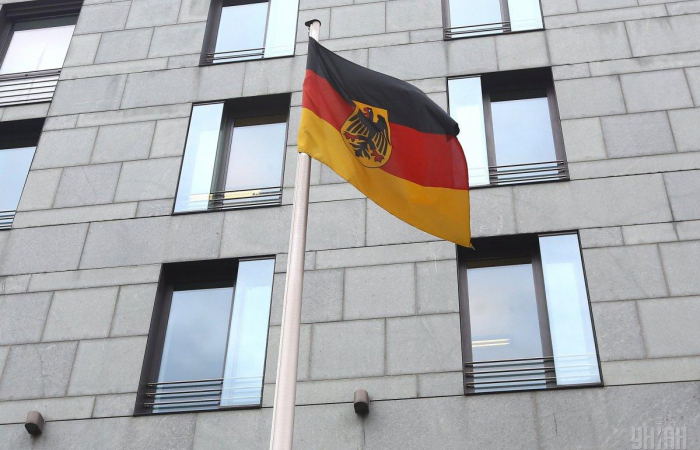
The German government holds Russia responsible for a cyberattack on German air traffic control, and for targeted disinformation campaigns before the last federal election. According to the German Foreign Office in Berlin, the incidents could be clearly attributed to the Russian military intelligence service, the GRU. In response, the Russian ambassador to Berlin was summoned to the Foreign Ministry. "We have been observing a massive increase in threatening hybrid activities by Russia for some time now," a spokesperson for the Foreign Ministry stated. These range from disinformation campaigns and espionage to cyberattacks and sabotage attempts. The aim is to divide society, sow distrust, and undermine confidence in democratic institutions. The spokesperson added that with these actions, Russia is "very concretely threatening our security, not only through its war of aggression against Ukraine, but also here in Germany."  The Foreign Ministry spokesperson explained that the cyberattack on air traffic control in August 2024 was clearly attributed to the hacker collective "APT28," known as "Fancy Bear," and to the responsibility of the Russian military intelligence service, the GRU. Furthermore, it could now be "conclusively stated" that Russia had attempted "to influence and destabilize both the last Federal election and the ongoing internal affairs of the Federal Republic of Germany." There was "absolutely irrefutable evidence" for this". The so-called "Storm 1516" campaign, which has been running since 2024, is allegedly backed by "reliable information" that the Moscow-based think tank "Center for Geopolitical Expertise" is behind it. The Center is also said to be supported by Russian military intelligence. Its primary aim is to influence democratic elections in the West. (Click the image to read more).
Filter archive

Publication date
Editor's choice
Analysis
Consolidating relations between Georgia and Azerbaijan

Consolidating relations between Georgia and Azerbaijan

The working visit by the Prime Minister of Georgia Irakli Kobakhidze to Azerbaijan on January 17 suggests that both countries recognise that close cooperation is essential for ensuring stability and fostering prosperity in the region. During the visit, Kobakhidze met with Azerbaijani Prime Minister Ali Asadov and participated in a session of the joint intergovernmental commission, which included delegations from both countries. The discussions revolved around the partnership between the two countries, bolstering trade and economic ties, as well as expanding cooperation in the energy and transportation sectors.
Editor's choice
News
Human Rights Watch releases World Report 2025, says Georgian Government has driven country to a crisis

Human Rights Watch releases World Report 2025, says Georgian Government has driven country to a crisis

The  Georgian government has driven the country toward a human rights crisis in 2024, Human Rights Watch said in its World Report 2025. The report published Thursday stated that the Georgian government has adopted new repressive laws, unleashed brutal police violence against mostly peaceful protesters, and pivoted away from the European Union accession process and the human rights reforms this would have required.
Editor's choice
News
Georgian opposition leader hospitalised after assault, blames members of the party in government

Georgian opposition leader hospitalised after assault, blames members of the party in government

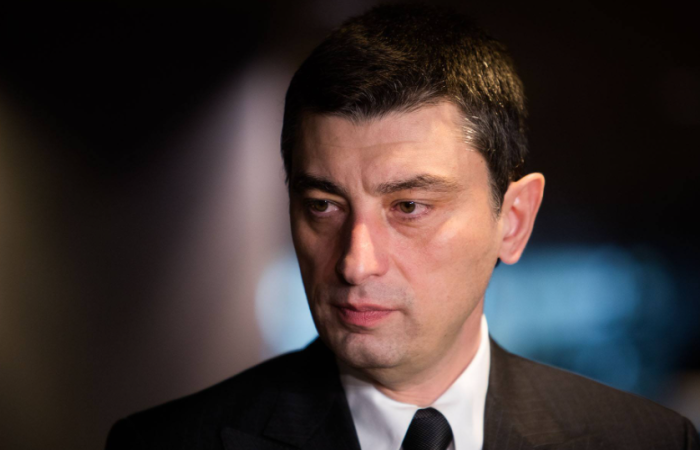
Giorgi Gakharia, a former prime minister of Georgia who now leads one of the country's main opposition groups, was hospitalised after being severely beaten. Acording to media reports he sustained injuries on his face and head during an assault by several men at a hotel lobby in Batumi. In a Facebook post on Wednesday, Gakharia said his health was stable. His party, For Georgia, called the assault a "brutal, coordinated group attack" and said the government was to blame. Party in government has denied any wrongdoing.
Editor's choice
News
Armenia starts long road towards joining the European Union

Armenia starts long road towards joining the European Union

Armenia's government has approved legislation calling for the country to launch the process that will open the path to discussions with Brussels for eventual membership in the European Union. A bill was drafted in response to a petition that called for the country to submit an application to join the EU. Prime Minister Nikol Pashinyan emphasised to the cabinet on Thursday that the public should not expect a rapid accession to the EU, and that it would in any case require public approval. “Adopting the law doesn’t literally mean Armenia is joining the EU because that cannot be done through a law or government decision, the decision on that can only be made through a referendum,” Pashinyan said after the decision.
Editor's choice
Commentary
Georgia: Two presidents; one crises

Georgia: Two presidents; one crises

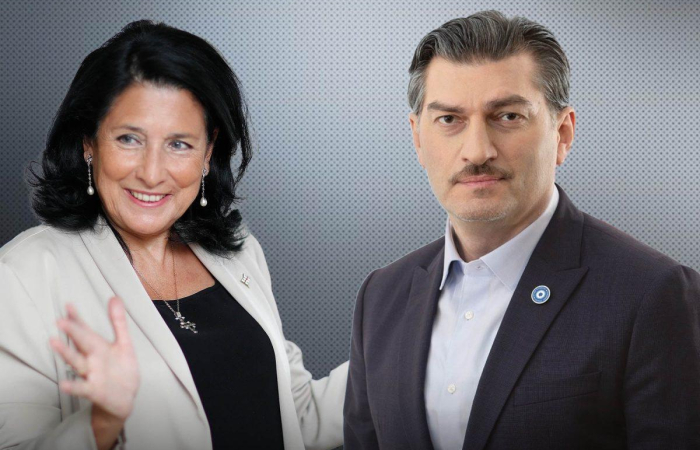
If there is one thing that strikes out from the events in Georgia in the last five weeks it is Salome Zurabishvili and the role she has played in keeping together the disparate Georgian Opposition. She has risen to the occasion in a way few thought she has the capacity to do. Georgian Dream never took her seriously, in all the time she was president. That had little consequence. But their failure to take her seriously now is a fatal mistake which will cost them dearly. Salome Zurabishvili left the Orbeliani Palace on 29 December, saying she was taking her legitimacy with her. Most Georgians still see her as the president. In any case, Salome Zurabishvili has become a phenomena. She will be a part of any future solution for Georgia Georgian Dream were very keen to replace Salome Zurabishvili. But their choice is unfortunate. Most Georgians had not heard of Mikheil Kavelashvili before he was nominated to the post of president. Those that did, remembered him as an ex-footballer. In parliament his role was completely undistinguished: one of a cohort of men that Georgian Dream wheels out whenever it needs the numbers to pass a law or some other administrative measure. Under the Georgian constitution, the president is a symbolic figurehead. But Kavelashvili cannot even be that. His time as president is likely to be a short and unhappy one. Crises? What crises? That Georgia is in the middle of its most serious crises since independence is recognised by most. But the Georgian Dream government is in complete denial. It is treating events on the streets of Tbilisi and other Georgian cities as temporary aberrations which will soon blow away and are forgotten. It is completely indifferent to the calls of the international community. This is an example of how cut-off the Georgian Dream government is from reality. It was left to Gia Volski, the ascetic 1st Deputy Speaker of Parliament, to articulate a response to the accusation that the Georgian government was ignoring a major crises. Speaking at a press briefing on 30 December, Volski said: “The situation is difficult, but it does not indicate the existence of a political crisis”. Volski than explained what in his view constitutes a crises: “a political crisis is a situation when the government cannot be approved, the budget cannot be adopted or a vote of no confidence is expressed in the government!” Until they admit there is a crisis the Georgian Dream will not take measures that would contribute to its solution. Ivanishvili must get real In all this, a central figure is the de facto leader of Georgian Dream and ruler of Georgia, Bidzina Ivanishvili. This week he was included on a US sanction list. But many think it could have been worse – and some think it should have been worse. But it seems what the Americans tried to do is to bring Bidzina to his senses. Ivanishvili must get real for his sake, and for the sake of Georgia. There is still a small chance that he will. Georgians need to draw lessons from present events in order to build a future that is both honourable and sustainable.
Editor's choice
News
New President of Georgia sworn in: Outgoing President says he is not legitimate

New President of Georgia sworn in: Outgoing President says he is not legitimate

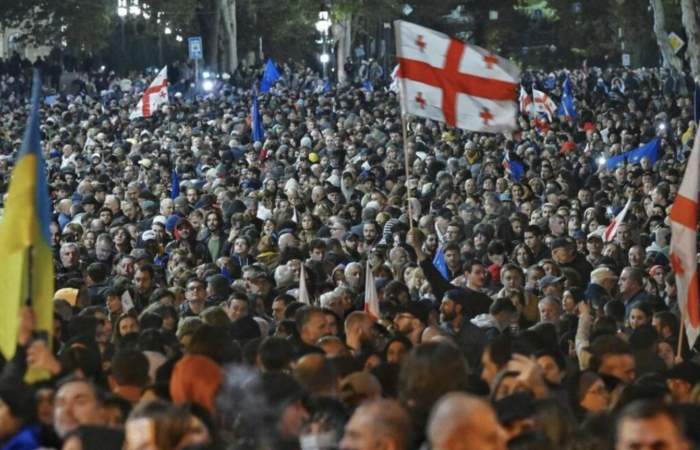
Mikheil Kavelashvili was sworn in as president of Georgia on Sunday as thousands of protesters gathered in the capital Tbilisi to demonstrate against his inauguration. Outgoing President Salome Zourabichvili, an opponent of the ruling Georgian Dream party said in a defiant speech to supporters outside the presidential palace that she was leaving the residence but that Kavelashvili had no legitimacy as president.
Editor's choice
News
Azerbaijan mourns crash of Azal plane and death of 38 persons

Azerbaijan mourns crash of Azal plane and death of 38 persons

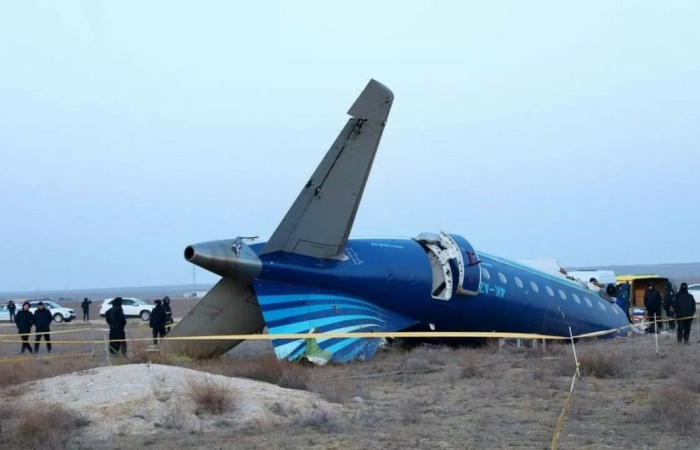
n Baku, flags on official buildings and embassies of foreign countries flew at half mast Thursday (26 December) as Azerbaijan observed a day of mourning following the crash of an AZAL plane which resulted in the death of 38 passengers and crew. The plane was on  a scheduled flight from Baku to Grozny, but was diverted to Kazakhstan because of bad weather. President Ilham Aliyev was informed of the crash whilst on his way to St Petersburg where he was to attend the informal CIS summit hosted by President Putin. He ordered his plan to return to Baku to lead the Azerbaijani response to the crash. Azerbaijani media speculated about the causes  of the crash, with some outlets saying that it was hit by a Chechen missile whilst approaching Grozny.
Editor's choice
News
Georgia takes centre stage in Brussels and Strasbourg

Georgia takes centre stage in Brussels and Strasbourg

Events in Georgia are in the spotlight in Brussels this week with European leaders putting the political situation in Tbilisi on their agenda during the EU Council meeting for Heads of Government on Thursday. On Wednesday, the President of Georgia Salome Zourabichvili delivered a speech to the European Parliament in Strasbourg.
Editor's choice
Opinion
Opinion: Breaking the Present Deadlock in the Armenia-Azerbaijan Peace Process Will Remain a Formidable Task in 2025

Opinion: Breaking the Present Deadlock in the Armenia-Azerbaijan Peace Process Will Remain a Formidable Task in 2025

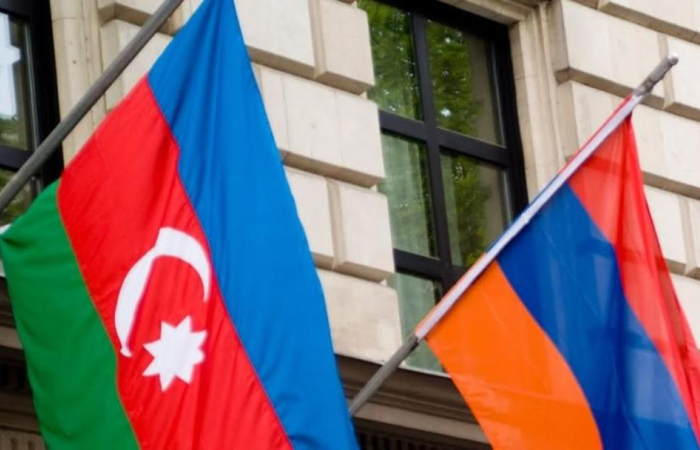
On 10 December, the Center for Analysis of International Relations (AIR Center), a Baku-based political think tank closely affiliated with the Azerbaijani government, held a high-level international conference titled “The Main Obstacle to a Peace Agreement Between Azerbaijan and Armenia.” The conference identified the territorial claims in Armenia’s constitution against Azerbaijan as the primary obstacle to peace.