Theme

Diplomacy

Editor's choice
News
Council of Europe launches new International Claims Commission for Ukraine

Council of Europe launches new International Claims Commission for Ukraine

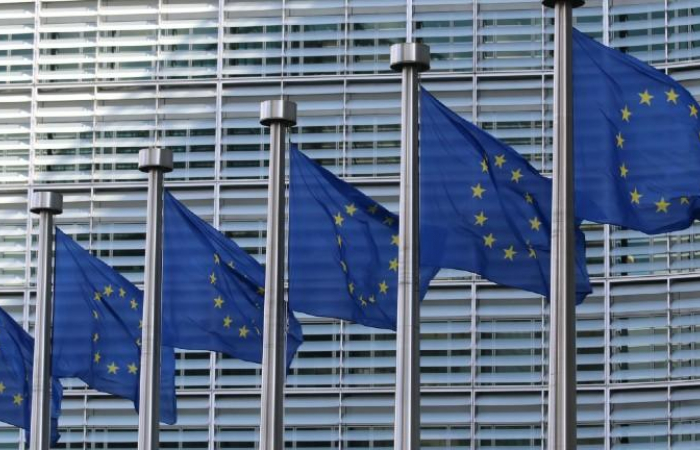
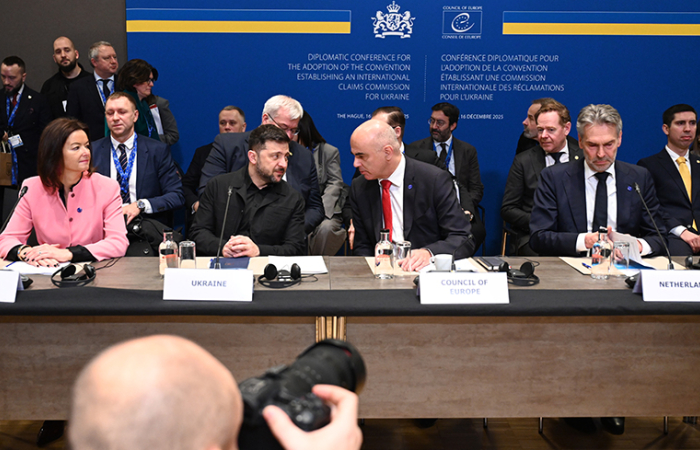
Thirty-four countries and the European Union have signed a new convention establishing an International Claims Commission for Ukraine at a diplomatic conference co-hosted by the 46-nation Council of Europe and the Netherlands in the Hague. The diplomatic conference was attended by leaders and high-level representatives from over 50 states, including the President of Ukraine, Volodymyr Zelenskyy, the President of the Republic of Moldova, Maia Sandu, and the Prime Minister of the Netherlands, Dick Schoof.  “Today marks a major step forward in ensuring accountability for Ukraine. The International Claims Commission represents justice and hope for tens of thousands of victims—our determination that those who have suffered will not be forgotten. I call for quick ratifications so we can get the commission rapidly up and running for the people of Ukraine,” said Council of Europe Secretary General Alain Berset. Ukrainian President Volodymyr Zelenskyy said: “We expect that every mechanism for compensation from the Register of Damage and Claims Commission to the actual payments – will start working and receive strong and sufficient international support, so that people can truly feel that any kind of damage caused by the war can be compensated. This war, and Russia’s responsibility for it, MUST become a clear example – so that others learn not to choose aggression.” “Accountability is about creating the conditions for peace that endures. And therefore, accountability is a condition of security – today and for the future. But accountability is not only about Ukraine. And it is not only about one aggressor and one victim. Accountability is about Europe. About every country in Europe. It is about whether Europe, as a whole, is willing to defend its peace,” said Maia Sandu, President of the Republic of Moldova, which currently holds the Presidency of the Council of Europe’s Committee of Ministers. The Prime Minister of the Netherlands, Dick Schoof, said: “Every day Russia is deliberately bombarding homes, destroying businesses and damaging infrastructure in Ukraine. Russia must compensate Ukraine for the damage caused. That is why we have launched the International Claims Commission for Ukraine and we are honoured to host it.” The International Claims Commission will be the second part of a comprehensive compensation mechanism related to Russia’s war of aggression, building on the existing Register of Damage for Ukraine. The claims commission will be established within the framework of the Council of Europe and will also be open to other countries. The Register of Damage for Ukraine, created in 2023, collects and records compensation claims submitted by individuals, organisations and public bodies in Ukraine. Forty-four states and the European Union have so far joined the Register, which has already received 86,000 claims. The International Claims Commission will review, assess and decide upon claims submitted to the Register of Damage for Ukraine and determine the amount of compensation, if any, which is due in each case. The convention establishing the commission will enter into force once it has been ratified by 25 signatories, as long as sufficient funds have been secured to support its initial work.

Filter archive

Publication date
Editor's choice
News
Ukrainian parliament recognises independence of Chechnya

Ukrainian parliament recognises independence of Chechnya

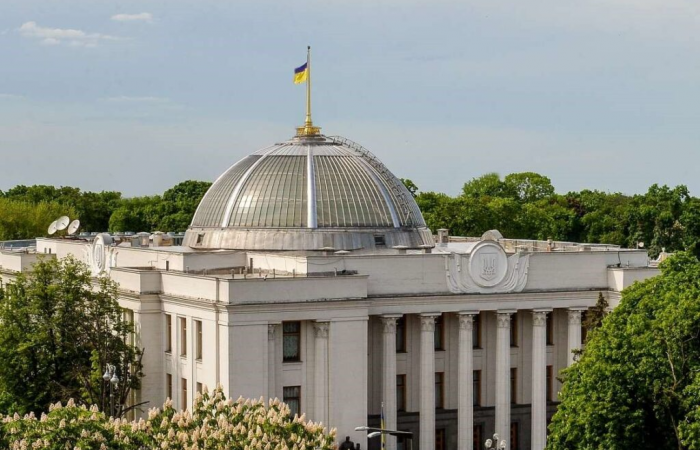
In a move likely to create further animosity between Kyiv and Moscow, on Tuesday (18 October), the Ukrainian parliament, known as the Verkhovna Rada, recognised the independence of the Chechen Republic of Ichkeria, declaring it 'temporarily occupied by Russia'. The Rada also condemned the 'commission of genocide against the Chechen people'. The resolution reads: ‘We declare the recognition of the Chechen Republic of Ichkeria as temporarily occupied by the Russian Federation as a result of armed aggression committed in violation of the UN Charter’. The Ukrainian parliament also called on UN member states and international organisations to carry out an independent and impartial investigation into purported crimes committed in Chechnya over the last three decades, to 'ensure that the guilty are brought to justice'. Out of 351 members present, 287 voted for, and 0 voted against or abstained. The remaining 64 did not vote. Chechens have been playing a prominent role in the fighting in Ukrainian, with groups supporting either the Ukrainian government or Moscow.
Editor's choice
Commentary
Monday Commentary: Comrade Xi's party

Monday Commentary: Comrade Xi's party

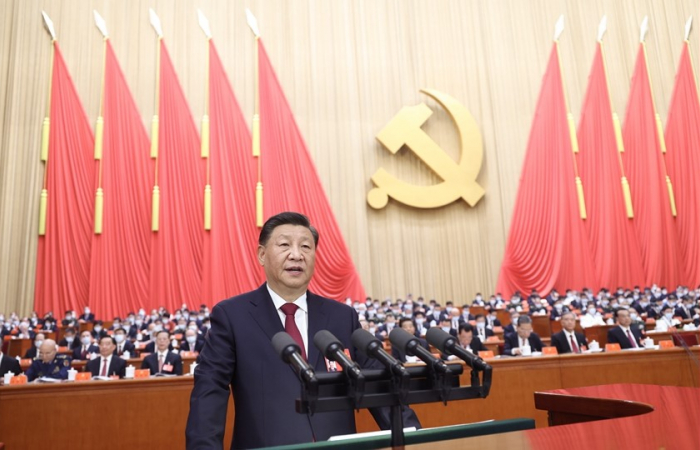
An event on the other side of the world that started on Sunday has huge global importance and will define international politics for decades to come. The 20th Congress of the Communist Party of China (CPC) is perhaps not the most important ever in terms of its impact within China itself, but when it comes to China’s role in the world it certainly is. This is not only because China is today stronger than it has ever been in modern times, but also because the congress gives the seal of approval to a Chinese global posture that is assertive, ambitious and with as yet an undefined end-game. That end-game is being defined by Xi Jinping, who during this congress is expected to be confirmed in his post as  Party leader for an unprecedented third term. President Xi has been making speeches both at the main session of the Congress and at side events. This morning he told a meeting of Communist activists on the fringe of the main event, that Chinese people should stay united as "a piece of hard steel" under the leadership of the Communist Party of China (CPC) and “pull together with one mind to power the giant ship of national rejuvenation through the wind and waves to reach its destination.” In a more formal speech to the Congress plenum a day before Xi had given an indication of what that destination is: “Incomparable glory’ awaits China on world stage”, Xi Jinping told the party congress. By 2049, when the People’s Republic will hold centennial celebrations, China should become a leading power in all aspects, the leader stated So no modesty or lack of ambition here. But what does this mean for the rest of the world?
Editor's choice
News
EU monitors will arrive on the Armenia-Azerbaijan border within two weeks

EU monitors will arrive on the Armenia-Azerbaijan border within two weeks

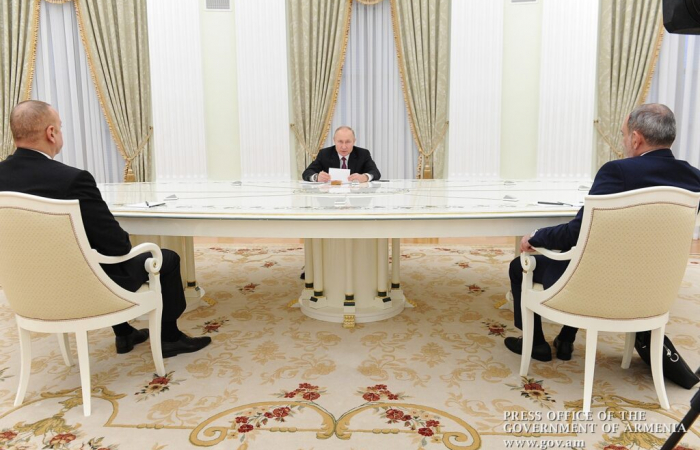
It is expected that European Union monitors will arrive on the Armenian side of the Armenia-Azerbaijan border before the end of this month. An EU technical assessment mission arrived in Yerevan on Friday (14 October), and EU foreign ministers are expected to discuss the matter and endorse a mandate and a budget for the mission on Monday (17 October). A statement from the European External Action Service on Friday evening stated: Following the request by Armenia, an EU technical assessment mission has today arrived in Yerevan. The task of this mission is to prepare for the deployment of EU monitors to the Armenian side of the Armenia-Azerbaijan border later this month, in line with the agreement reached on the 6 October at the quadrilateral meeting between President Aliyev, Prime Minister Pashinyan, President Macron and President Michel. EU Member States will further discuss at the Foreign Affairs Council on Monday 17 October the proposal of High Representative Josep Borrell to deploy a monitoring mission, which will have as its primary aims contributing to stability and building confidence as well as supporting the work of the border commissions to improve security along the bilateral border.
Editor's choice
Opinion
Opinion: Russia fears it is being elbowed out of the South Caucasus, and prepares to react

Opinion: Russia fears it is being elbowed out of the South Caucasus, and prepares to react

Russia is worried that the success of European diplomacy in approximating the positions of Armenia and Azerbaijan, and the prospect of a peace agreement before the end of the year, would see it elbowed out of the South Caucasus. Russia may use its presence in Karabakh to throw spokes in the wheel, writes Vasif Huseynov in this op-ed for commonspace.eu. "This situation seriously threatens peace and stability in the South Caucasus. The region would  descend into a catastrophic escalations if the present peace efforts fail, and the Armenia-Azerbaijan conflict becomes another theater of the Russia-West confrontation. Baku and Yerevan, having declared their willingness to recognize each other’s territorial integrity and sovereignty, would suffer the most from such a situation. Hence, both should make efforts to reach a deal with a delicate geopolitical balance", he writes.
Editor's choice
News
Greek and Turkish defence ministers met in Brussels

Greek and Turkish defence ministers met in Brussels

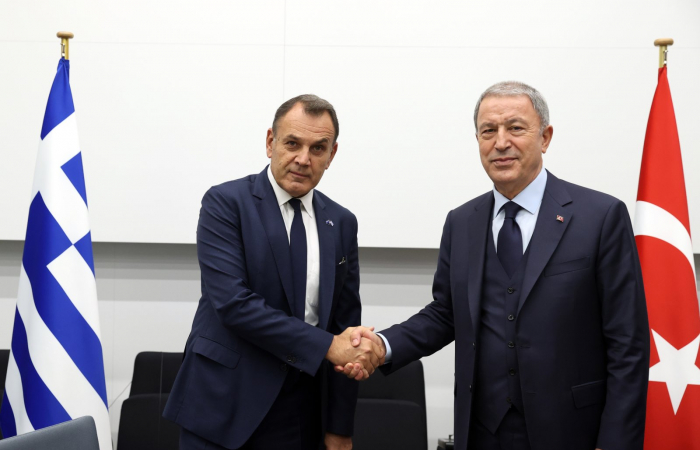
Turkish Defense Minister Hulusi Akar and his Greek counterpart Nikolaos Panagiotopoulos, met on Thursday (13 October) on the sidelines of a NATO meeting in Brussels, amid ongoing tensions between their two countries. The meeting between the two ministers comes as the two countries amid ongoing disagreements between Athens and Ankara on a range of issues, including the Eastern Mediterranean, Cyprus, migrant pushbacks and more. Both ministers were in Brussels to attend the Meeting of NATO Ministers of Defence. The two uneasy NATO neighbors have long-standing sea and air boundary disputes which lead to near-daily air force patrols and interception missions mostly around Greek islands near Turkey's coastline. The situation exacerbated recently as both sides started deploying troops on small islands in the Aegean that up to now have been largely demilitarised.
Editor's choice
News
Russia isolated

Russia isolated

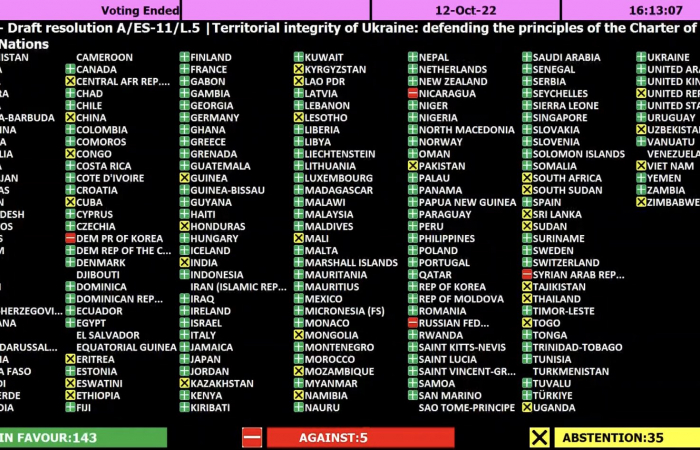
Russia found itself in the company of only four other countries at a vote at the UN General Assembly on Wednesday (12 October) which condemned its annexation of Ukrainian territory The resolution calls on all States, the UN and international organisations not to recognize any of Russia’s annexation claim and demands the immediate reversal of its annexation declaration. 143 courties supported the resolution that condemned Russia's annexations. The four countries that supported Russia were Belarus, Nicaragua, North Korea, and Syria 35 countries abstained, namely: Algeria, Armenia, Bolivia, Burundi, Central African Republic, China, Republic of the Congo, Cuba, Eritrea, Eswatini, Ethiopia, Guinea, Honduras, India, Kazakhstan, Kyrgyzstan, Laos, Lesotho, Mali, Mongolia, Mozambique, Namibia, Pakistan, South Africa, South Sudan, Sri Lanka, Sudan, Tajikistan, Tanzania, Thailand, Togo, Uganda, Uzbekistan, Vietnam, Zimbabwe. Ten countries were absent and so their vote was not recorded. They were: Azerbaijan, Burkina Faso, Cameroon, Djibouti, El Salvador, Equatorial Guinea, Iran, Sao Tome and Principle, Turkmenistan and Venezuela.
Editor's choice
News
6th CICA summit opens in Astana

6th CICA summit opens in Astana

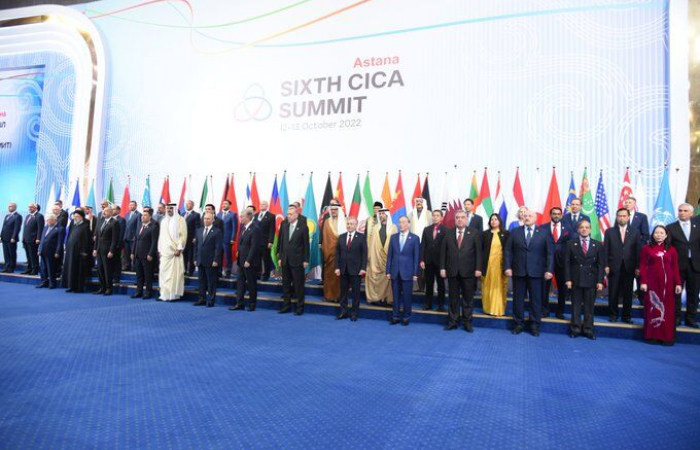
The sixth summit of the Conference on Interaction and Confidence-Building Measures in Asia (CICA) started on Wednesday (12 October) in Astana. The summit marks the 30th anniversary of CICA, and the end of Kazakhstan’s two-year chairmanship of the conference. The summit is also expected to agree the transformation of the process into a fully fledged international organisation. According to the spokesperson of the Kazakh Foreign Ministry Aibek Smadiyarov, the summit will welcome 11 heads of state, including the leaders of Azerbaijan, Iraq, Iran, Qatar, Kyrgyzstan, Palestine, Russia, Tajikistan, Turkey, and Uzbekistan. President of Belarus Alexander Lukashenko will participate as an observer and the Vice Presidents of Vietnam and China will also attend the summit. 
Editor's choice
News
G7 countries issue tough statement on Ukraine in response to Russian missile attacks against Ukrainian cities

G7 countries issue tough statement on Ukraine in response to Russian missile attacks against Ukrainian cities

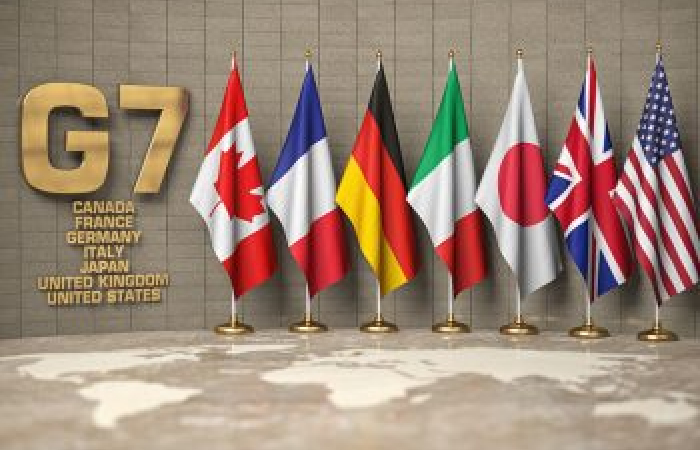
Leaders of the G7 countries (Canada, France, Germany, Italy, Japan, United States, United Kingdom, together with the European Union) met virtually in extraordinary session on Monday to discuss developments in the Ukraine situation, and particularly the recent Russian missile attacks against Ukrainian cities and civilian infrastructure. The meeting was convened by Germany which holds the current chairmanship of the Group. In a tough statement, the G7 leaders said that Russia has blatantly violated the principles enshrined in the UN Charter and called upon all countries to unequivocally reject these violations of international law and demand that Russia cease all hostilities and immediately, completely and unconditionally withdraw all of its troops and military equipment from Ukraine. The statement also had a word of warning for Russia: "We deplore deliberate Russian escalatory steps, including the partial mobilisation of reservists and irresponsible nuclear rhetoric, which is putting global peace and security at risk. We reaffirm that any use of chemical, biological or nuclear weapons by Russia would be met with severe consequences". Ukrainian president Volodymyr Zelensky also attended the virtual summit and he was assured that the G7 countries are undeterred and steadfast in their commitment to provide the support Ukraine needs to uphold its sovereignty and territorial integrity.