Theme

Diplomacy

Editor's choice
News
Council of Europe launches new International Claims Commission for Ukraine

Council of Europe launches new International Claims Commission for Ukraine

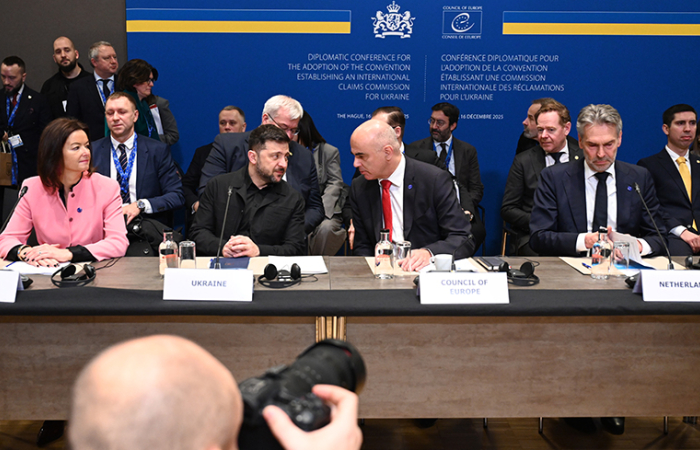
Thirty-four countries and the European Union have signed a new convention establishing an International Claims Commission for Ukraine at a diplomatic conference co-hosted by the 46-nation Council of Europe and the Netherlands in the Hague. The diplomatic conference was attended by leaders and high-level representatives from over 50 states, including the President of Ukraine, Volodymyr Zelenskyy, the President of the Republic of Moldova, Maia Sandu, and the Prime Minister of the Netherlands, Dick Schoof.  “Today marks a major step forward in ensuring accountability for Ukraine. The International Claims Commission represents justice and hope for tens of thousands of victims—our determination that those who have suffered will not be forgotten. I call for quick ratifications so we can get the commission rapidly up and running for the people of Ukraine,” said Council of Europe Secretary General Alain Berset. Ukrainian President Volodymyr Zelenskyy said: “We expect that every mechanism for compensation from the Register of Damage and Claims Commission to the actual payments – will start working and receive strong and sufficient international support, so that people can truly feel that any kind of damage caused by the war can be compensated. This war, and Russia’s responsibility for it, MUST become a clear example – so that others learn not to choose aggression.” “Accountability is about creating the conditions for peace that endures. And therefore, accountability is a condition of security – today and for the future. But accountability is not only about Ukraine. And it is not only about one aggressor and one victim. Accountability is about Europe. About every country in Europe. It is about whether Europe, as a whole, is willing to defend its peace,” said Maia Sandu, President of the Republic of Moldova, which currently holds the Presidency of the Council of Europe’s Committee of Ministers. The Prime Minister of the Netherlands, Dick Schoof, said: “Every day Russia is deliberately bombarding homes, destroying businesses and damaging infrastructure in Ukraine. Russia must compensate Ukraine for the damage caused. That is why we have launched the International Claims Commission for Ukraine and we are honoured to host it.” The International Claims Commission will be the second part of a comprehensive compensation mechanism related to Russia’s war of aggression, building on the existing Register of Damage for Ukraine. The claims commission will be established within the framework of the Council of Europe and will also be open to other countries. The Register of Damage for Ukraine, created in 2023, collects and records compensation claims submitted by individuals, organisations and public bodies in Ukraine. Forty-four states and the European Union have so far joined the Register, which has already received 86,000 claims. The International Claims Commission will review, assess and decide upon claims submitted to the Register of Damage for Ukraine and determine the amount of compensation, if any, which is due in each case. The convention establishing the commission will enter into force once it has been ratified by 25 signatories, as long as sufficient funds have been secured to support its initial work.

Filter archive

Publication date
Editor's choice
News
Xi in Saudi Arabia as China woos Gulf Arabs

Xi in Saudi Arabia as China woos Gulf Arabs

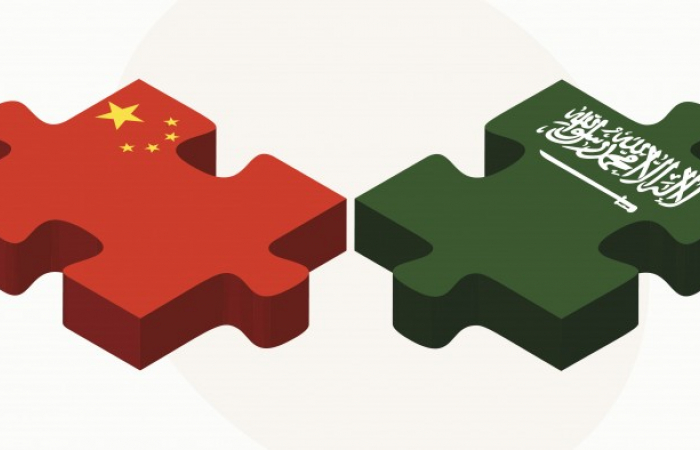
China's president Xi Jinping on Wednesday (7 December) starts a three-day visit to Saudi Arabia where he will meet Saudi and other Arab leaders in a series of summits. Three summits will take place during his trip: the Saudi-Chinese Summit, the Riyadh Gulf-China Summit for Cooperation and Development, and the Riyadh Arab-China Summit for Cooperation and Development. The participants will include more than 30 leaders and officials, highlighting the importance of the gatherings and their high regional and international profile, the Saudi Press Agency reported. Xi’s visit reflects the desire of the leaderships of Saudi Arabia and China to strengthen the bilateral relationship, enhance their strategic partnership and realize the political and economic potential it offers to serve their common interests, the SPA added. Reporting the visit, the New York Times said the trip sends a message that Beijing’s clout in the region is growing at a time when U.S. officials say that they want to make the Middle East less of a priority, focusing diplomatic and military resources on Asia and Europe.
Editor's choice
News
Türkiye warned Greece to stop militarizing the Aegean islands

Türkiye warned Greece to stop militarizing the Aegean islands

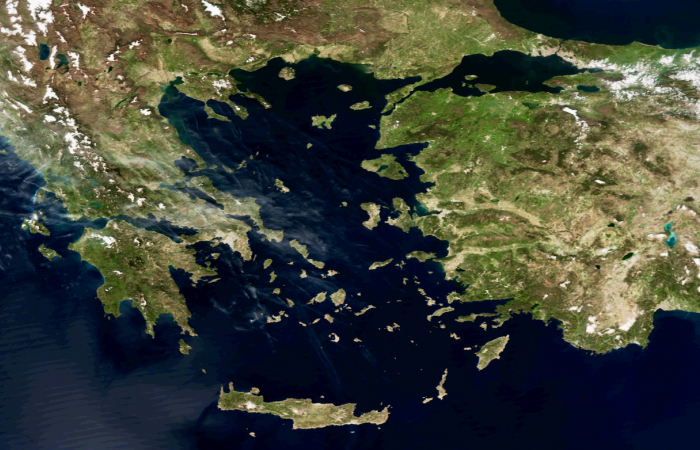
Türkiye's Foreign Minister Mevlüt Çavuşoğlu has warned Greece on Tuesday (6 December) to stop militarizing the Aegean islands, or Ankara “will take the necessary steps on the ground.” He said Türkiye had sent a letter to the United Nations in July 2021 laying out its arguments against Athens, which he said had violated the agreements of Lausanne and Paris. Greece denied these accusations, saying it has not provoked its neighbour nor amassed a large landing fleet on its shores.
Editor's choice
Monday Commentary
 Monday Commentary: NATO’s new sense of purpose well reflected during last week’s Bucharest Ministerial Meeting

Monday Commentary: NATO’s new sense of purpose well reflected during last week’s Bucharest Ministerial Meeting

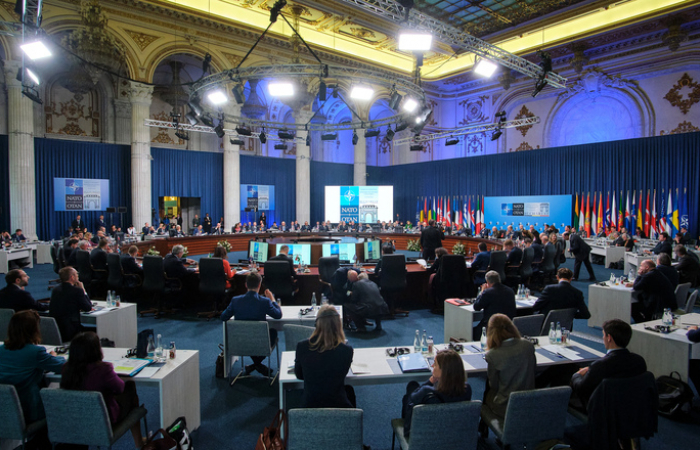
The Foreign ministers of NATO member states met in Bucharest on Tuesday and Wednesday,  (29 – 30 November), at a time when, as a result of the Russian invasion of Ukraine, Europe faces one of the most serious security challenges since the alliance came into being in 1949. It was not NATO that triggered the Ukraine crisis. Indeed NATO, in its’ past quest not to alienate Russia, is sometimes accused of being overcautious in its relations with Ukraine prior to February. The Russian invasion has tested the alliance in many ways – the political will and unity of the member states; the capability of the alliance to support an ally who is not a member through a hybrid response; and the speed with which it could bolster its military capability on its Eastern flank to reassure member states. So far one can say that NATO has performed well, writes Dennis Sammut in today's Monday Commentary on commonspace.eu. This response however needs to be sustained. NATO comes out from the Bucharest Ministerial meeting strengthened and resolute. It is an alliance that is on the move as it responds to new challenges. But NATO also remains rooted in its principles. As the foreign ministers declared in their final statement, NATO is a defensive alliance. “We will continue to strive for peace, security and stability in the whole of the Euro-Atlantic area”, they declared.
Editor's choice
News
Borrell: Russia is waging total war against Ukraine; we must respond with total support

Borrell: Russia is waging total war against Ukraine; we must respond with total support

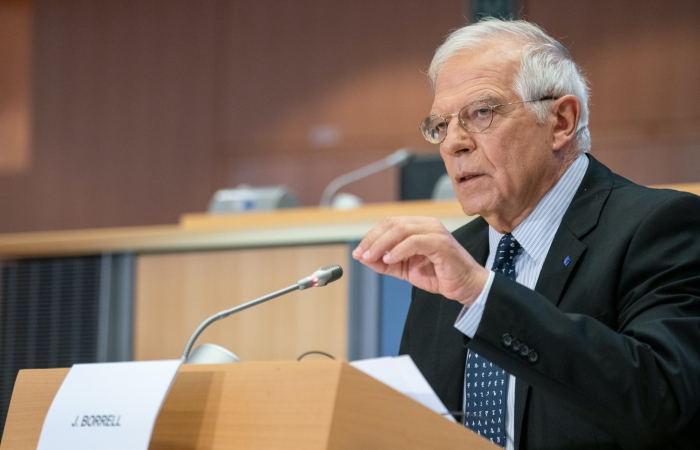
On Thursday (1 December) EU High Representative for Foreign and Security Policy, Josep Borrell, addressed the annual Ministerial Council of the OSCE, which this year is meeting in Poland. Speaking about the conflict in Ukraine, Borell said that Russia was waging total war against Ukraine, and this requires total support for Ukraine in response. Borrell said that Russia has brought the war back in Europe. Russia is now turning this into a purely punitive campaign, trying to inflict as much pain as possible on Ukrainian citizens, using winter as a weapon, putting them into the darkness and the cold. The Russian army is deliberately targeting energy and water infrastructure on which normal Ukrainian citizens depend
Editor's choice
Interview
Nikoloz Samkharadze: "Georgia does not have any hidden agenda other than having peace and stability in the South Caucasus"

Nikoloz Samkharadze: "Georgia does not have any hidden agenda other than having peace and stability in the South Caucasus"

Prof. Dr. Nikoloz Samkharadze is the Chairperson of the Foreign Affairs Committee of the Parliament of Georgia. On 21 November 2022, during his visit to The Hague, Prof. Dr. Samkharadze spoke to commonspace.eu about Georgia's Euro-Atlantic trajectory, the Armenia-Azerbaijan peace process, Georgia's relations with Russia and Ukraine, and recent successes in Georgian rugby. On the Armenia-Azerbaijan peace process, Prof. Dr. Samkharadze says, "Georgia has a very big asset in its hands, and this is trust and credibility in both the Azeri and Armenian capitals. Georgia is equally respected in Yerevan and in Baku, and equally trusted by Yerevan and Baku. And no other player around us, no big regional power, has the same trust and credibility. This is very important in the South Caucasus. As you know, we came up with the Peaceful Caucasus initiative, and this initiative is supported by both Armenia and Azerbaijan. Recently we have had very productive visits of high-level Armenian and Azerbaijani delegations in Georgia, and I believe that there is room for reaching a comprehensive peace treaty between Armenia and Azerbaijan. We will do our most, we will facilitate, we will mediate, because it is in Georgia’s interests to finally have long-lasting peace and stability in the region. I believe that our partners in Yerevan and Baku also know that we don’t have any hidden agenda other than having peace and stability in the South Caucasus. So we will play a very active role despite the fact that some of our neighbours might not like our activity in that regard."