Theme

Diplomacy

Editor's choice
News
Council of Europe launches new International Claims Commission for Ukraine

Council of Europe launches new International Claims Commission for Ukraine

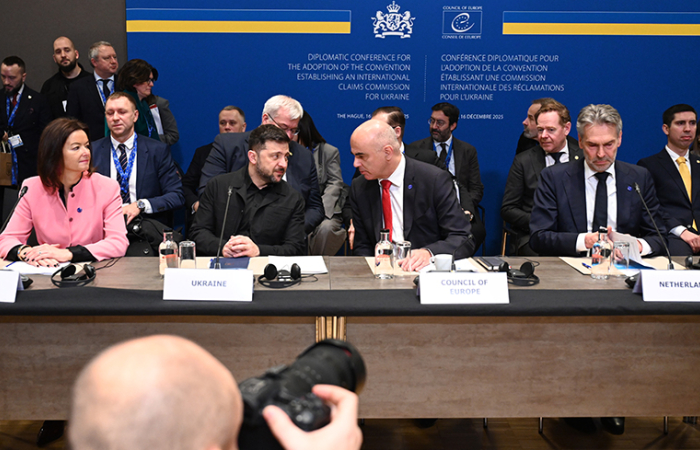
Thirty-four countries and the European Union have signed a new convention establishing an International Claims Commission for Ukraine at a diplomatic conference co-hosted by the 46-nation Council of Europe and the Netherlands in the Hague. The diplomatic conference was attended by leaders and high-level representatives from over 50 states, including the President of Ukraine, Volodymyr Zelenskyy, the President of the Republic of Moldova, Maia Sandu, and the Prime Minister of the Netherlands, Dick Schoof.  “Today marks a major step forward in ensuring accountability for Ukraine. The International Claims Commission represents justice and hope for tens of thousands of victims—our determination that those who have suffered will not be forgotten. I call for quick ratifications so we can get the commission rapidly up and running for the people of Ukraine,” said Council of Europe Secretary General Alain Berset. Ukrainian President Volodymyr Zelenskyy said: “We expect that every mechanism for compensation from the Register of Damage and Claims Commission to the actual payments – will start working and receive strong and sufficient international support, so that people can truly feel that any kind of damage caused by the war can be compensated. This war, and Russia’s responsibility for it, MUST become a clear example – so that others learn not to choose aggression.” “Accountability is about creating the conditions for peace that endures. And therefore, accountability is a condition of security – today and for the future. But accountability is not only about Ukraine. And it is not only about one aggressor and one victim. Accountability is about Europe. About every country in Europe. It is about whether Europe, as a whole, is willing to defend its peace,” said Maia Sandu, President of the Republic of Moldova, which currently holds the Presidency of the Council of Europe’s Committee of Ministers. The Prime Minister of the Netherlands, Dick Schoof, said: “Every day Russia is deliberately bombarding homes, destroying businesses and damaging infrastructure in Ukraine. Russia must compensate Ukraine for the damage caused. That is why we have launched the International Claims Commission for Ukraine and we are honoured to host it.” The International Claims Commission will be the second part of a comprehensive compensation mechanism related to Russia’s war of aggression, building on the existing Register of Damage for Ukraine. The claims commission will be established within the framework of the Council of Europe and will also be open to other countries. The Register of Damage for Ukraine, created in 2023, collects and records compensation claims submitted by individuals, organisations and public bodies in Ukraine. Forty-four states and the European Union have so far joined the Register, which has already received 86,000 claims. The International Claims Commission will review, assess and decide upon claims submitted to the Register of Damage for Ukraine and determine the amount of compensation, if any, which is due in each case. The convention establishing the commission will enter into force once it has been ratified by 25 signatories, as long as sufficient funds have been secured to support its initial work.

Filter archive

Publication date
Editor's choice
News
President Zelensky addresses US Congress

President Zelensky addresses US Congress

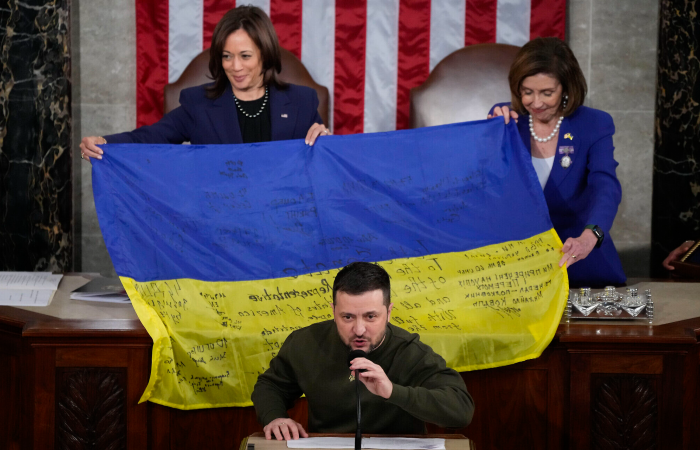
The Ukrainian President Volodymyr Zelensky, on his first foreign visit since the start of Russia's full-scale invasion of Ukraine on 24th February 2022, has addressed the US Congress in person. This followed being welcomed to the White House by US President Joe Biden and the First Lady Dr. Jill Biden, and a wider American-Ukrainian discussion on the ongoing war during which US Vice-President Kamala Harris and Secretary of Defence Lloyd J. Austin III were also present. During his address to the US Congress, President Zelensky delivered a defiant speech in which he said that "against all odds and doom and gloom scenarios, Ukraine did not fall. Ukraine is alive and kicking", adding that his country would never surrender. Referring to other conflicts in Russia's so-called "near abroad", Zelensky said that "this battle cannot be frozen or postponed. It cannot be ignored hoping that the ocean or something else will provide a protection." Zelensky's visit comes amid concerns from Republicans over the cost of American military aid to Ukraine. His address can be seen in large part as an attempt to assuage those worries and make the case for long-term American support for Ukraine's military. He notably said that "Your money is not charity, it's an investment in the global security and democracy that we handle in the most responsible way."
Editor's choice
News
EU continues to develop its tools in support of its objective to contribute to peace in the South Caucasus.

EU continues to develop its tools in support of its objective to contribute to peace in the South Caucasus.

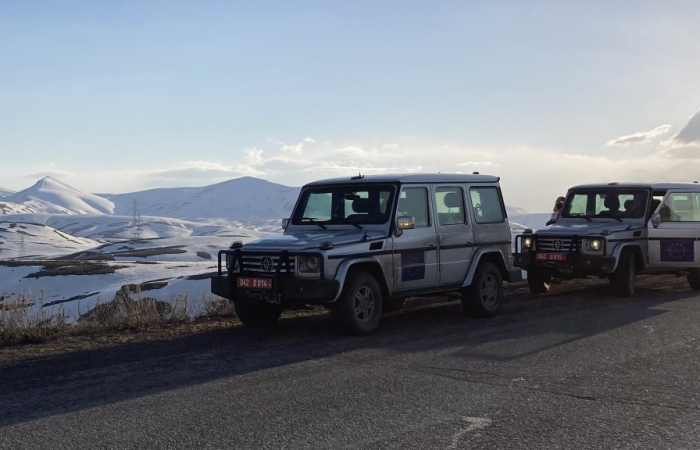
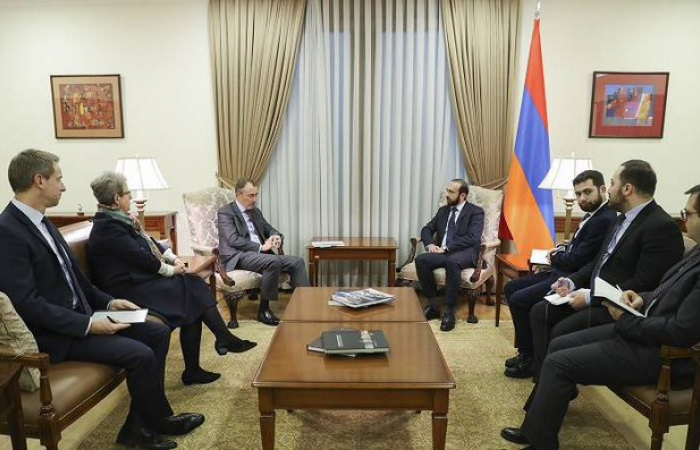
The European Union continues to develop its tools in support of its objective to contribute to peace and security in the South Caucasus.  On Monday (19 December), the EU Monitoring Capacity in Armenia (EUMCAP), launched in October, completed its mandate. Based on the agreement between the leaders of Armenia, Azerbaijan, European Council and France, the EUMCAP was deployed on 20 October along the Armenian side of the international border with Azerbaijan with the objective of monitoring, analysing and reporting on the situation on the ground. EU leaders, meeting in Brussels last week, assessed the wotk of the mission and the way forward. A statement by the European External Action Service on Monday stated that, "the Council – in agreement with Armenia’s authorities - decided that the existing EU Monitoring Mission in Georgia (EUMM Georgia) will deploy a transitional planning assistance team in Armenia to enhance the EU’s awareness of the security situation, and contribute to the planning and preparation of a possible civilian CSDP mission in the country. The transitional planning assistance team is also expected to support the President of the European Council, Charles Michel, in the EU-facilitated normalisation process between Armenia and Azerbaijan."
Editor's choice
News
Biden hosts Africa at the White House

Biden hosts Africa at the White House

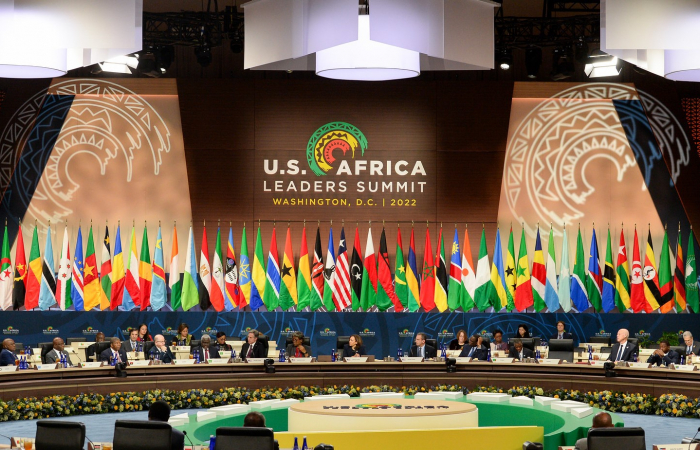
US president Joe Biden hosted the leaders of 49 African nations in Washington DC 13-15 December sending a strong signal of US determination to increase its engagement with the African continent A read-out from the US State Department said that "the 3-day summit continued efforts to  strenghten ties with African partners based on principles of mutual respect and shared interests and values. It also served as an opportunity to listen to and collaborate with African counterparts on key areas the United States and Africa define as critical for the future of the continent and our global community. "   Delegations from all 49 invited African countries and the African Union, alongside members of civil society and the private sector attended the summit. The President, Vice President, and members of the US government engaged extensively with leaders throughout the Summit. The summit has received a lot of attention across the world, as many see it as an expression of US will to challenge the creeping influence of China and Russia on the African continent.
Editor's choice
News
EU seeks new enhanced partnership agreement with Tajikistan as it pursues a more assertive role in Central Asia

EU seeks new enhanced partnership agreement with Tajikistan as it pursues a more assertive role in Central Asia

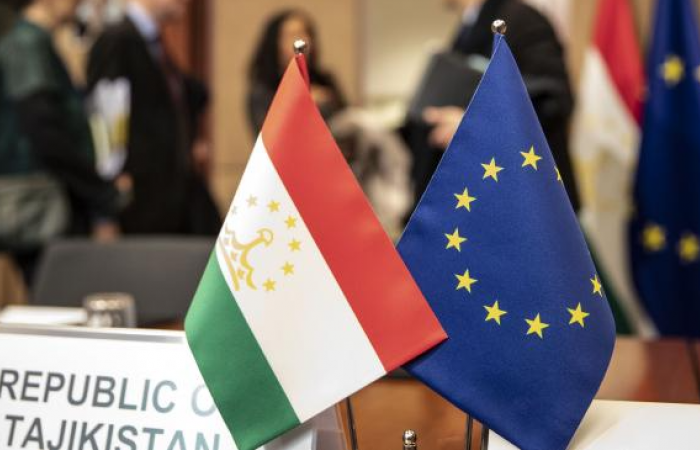
The Council of the European Union on 8 December adopted guidelines for the European Commission and the High Representative for Foreign Affairs and Security Policy to negotiate, on behalf of the EU and its member states, a new Enhanced Partnership and Cooperation Agreement (EPCA) with Tajikistan. Tajikistan is a landlocked country in Central Asia. It has an area of 143,100 km2 and an estimated population of 9,749,625 people. It is bordered by Afghanistan to the south, Uzbekistan to the west, Kyrgyzstan to the north, and China to the east. Like other Central Asian republics, Tajikistan is currently seeking to diversify its international relations, including by strengthening its relations with the European Union. A statement posted on the website of the Council of the European Union said that the EU is determined to deepen its relations with the Central Asian countries, even more so in the current geopolitical environment. The negotiation of an Enhanced Partnership and Cooperation Agreement with Tajikistan will be a significant step forward in this regard. It will provide a platform for improved political cooperation, trade and investment between the EU and Tajikistan, incentivising and supporting reforms. Progress in these negotiations will also depend on tangible improvements in Tajikistan’s human rights situation, including with regard to the freedom of expression, media and assembly.
Editor's choice
Monday Commentary
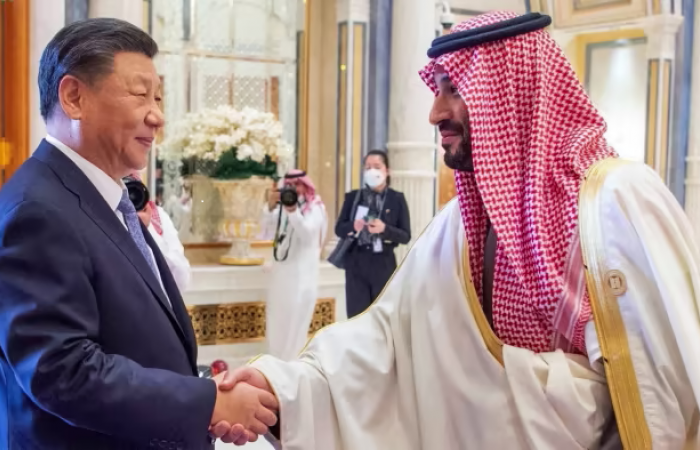
The free market in foreign policy on display as Xi meets the Arabs

The free market in foreign policy on display as Xi meets the Arabs

It appears that the principles of the free market now dominate the international system, not only in areas of trade, but also in defence, security and foreign policy, writes Dennis Sammut in today's Monday Commentary on commonspace.eu. Bigger countries are wooing smaller countries, unashamedly displaying their goods, and dismissing those of others. China’s president Xi was in Saudi Arabia last week, to seal China’s new partnership with the Arabs. This week, it will Joe Biden’s turn to host African leaders at the White House. "For the moment small countries are making the most out of this new free market atmosphere in the international system. But they must also keep in mind that, as in the market, demand sometimes slumps abruptly. It is at this point countries will not need just customers, but also friends."
Editor's choice
News
Problem? What problem?

Problem? What problem?

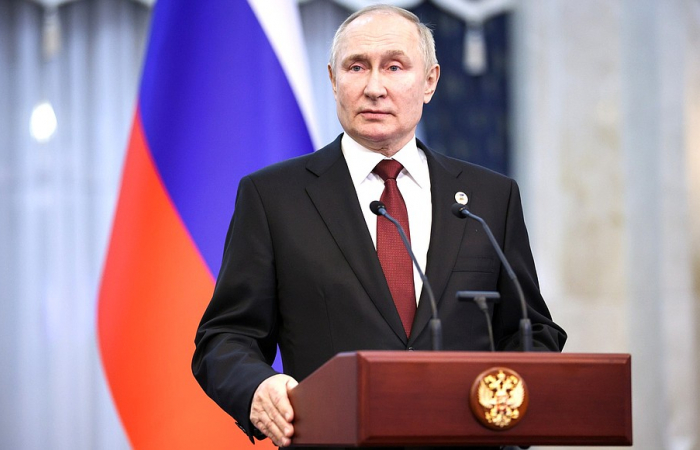
Vladimir Putin attended the summit of the Eurasian Economic Union that was held in Bishkek on Friday (9 December), and was upbeat afterwards when addressing a press conference before he departed back for Moscow. Answering questions from mainly Russian journalists Putin shrugged off all concerns, and expressed satisfaction with the performance of the Russian economy, the Russian Army and the Russian judicial system.  Perhaps the most striking comment came when Putin was asked about the war in Ukraine, which he insists on calling a "special operation". "The special operation is going on normally, everything is stable there with us - there are no questions there and there are no problems today. As you can see, the Ministry of Defense is behaving quite transparently. Everything that happens in reality, on the ground, everything is reflected in the daily reports of the Ministry of Defense. So everything is actually objective and the situation is, I have nothing to add here. As for the settlement process as a whole, yes, it will probably not be easy and will take some time. But one way or another, all participants in this process will have to agree with the realities that are taking shape on the ground." The summit brought together the leaders of Russia, Kyrgyzstan, Kazakhstan, Belarus and Armenia. A number of agreements were also signed by the five countries during the summit. The next formal summit will be held in Moscow in the Spring. But Mr Putin, always keen to keep his allies in his sight, will be meeting the leaders of the EEAS countries together with those of the other CIS countries in St Petersburg before New Year.
Editor's choice
News
UAE and Saudi Arabia instrumental in prisoner exchange between US and Russia

UAE and Saudi Arabia instrumental in prisoner exchange between US and Russia

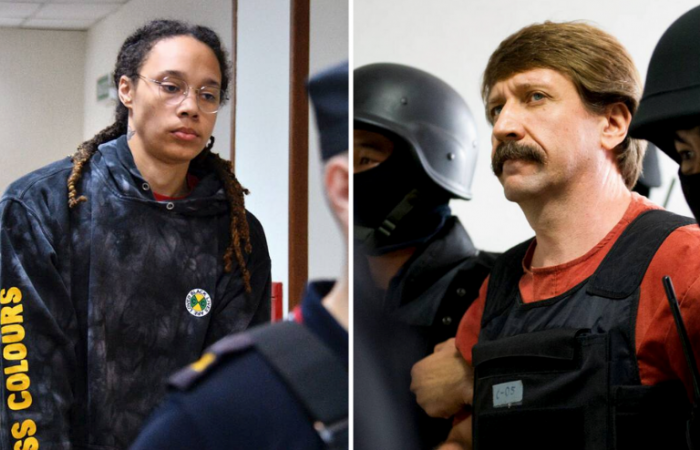
The governments of the United Arab Emirates and Saudi Arabia confirmed on Thursday a joint role in facilitating the prisoner exchange between the United States and Russia, leading to the release of US basketball star Brittney Griner after nearly nine months in detention.  Griner, 32, who was arrested in Russia in February on drug charges, and Viktor Bout, 55, who was serving a 25-year sentence in a US prison, were exchanged at an airport in Abu Dhabi. In a statement, the UAE and Saudi foreign affairs ministries said the mediation was led by UAE President Mohamed bin Zayed and Saudi Crown Prince Mohamed bin Salman.  "The success of the mediation efforts was a reflection of the mutual and solid friendship between their two countries and the United States of America and the Russian Federation," the statement read.  The statement confirmed that following her release by Russia, Abu Dhabi received on Thursday Griner by private plane from Moscow. Another plane arrived from the United States to the UAE carrying Russian citizen Victor Bout, an arms dealer convicted in the United States. Officials from the UAE and Saudi Arabia were present at the airbase. The source confirmed that Abu Dhabi and Riyadh facilitated the "details of the exchange," but stressed that the negotiations on the release were strictly handled by Moscow and Washington. US President Joe Biden thanked the UAE on Thursday for helping Griner return home from Russia.  “I also want to the thank the UAE for helping us facilitate Brittney’s return, cause that’s where she landed,” the US president said.