Theme

Diplomacy

Editor's choice
Monday Commentary
Monday Commentary: 2025 was a momentous year for the South Caucasus

Monday Commentary: 2025 was a momentous year for the South Caucasus

The year 2025 has ended up being a momentous year for the South Caucasus, writes Dennis Sammut in his Monday Commentary. Armenia-Azerbaijan relations have been redefined, with consequences for the whole region and beyond. That huge development overshadowed key moments in the domestic trajectory of the two countries, which however have deep consequences for the two countries, and even beyond. It has also been a tumultuous year for Georgia too. The country has been gripped in a political crisis throughout 2025, with no obvious end in sight. Whatever the domestic arguments, on the international stage Georgia is today a shadow of what it used to be until recently. It not only has lost the chance of joining the European Union any time soon, but it has also lost its position as the leading South Caucasus country. Today, in the new reality of the region, it lags as a tired third. Important as 2025 was, it ended with a lot of unfinished business. So 2026 will also be crucial for the three countries. Since regaining its statehood in 1991 after the dissolution of the Soviet Union, Armenia-Azerbaijan relations have been defined by war. The two fought open wars, wars of attrition, and propaganda wars, incessantly. Tens of thousands of people lost their lives, and hundreds of thousands were displaced. Many had lost hope that the two could try the alternative – i.e. peaceful co-existence. Yet in 2025 they were proven wrong.
Editor's choice
News
Germany accuses Russia of cyberattacks and disinformation campaign

Germany accuses Russia of cyberattacks and disinformation campaign

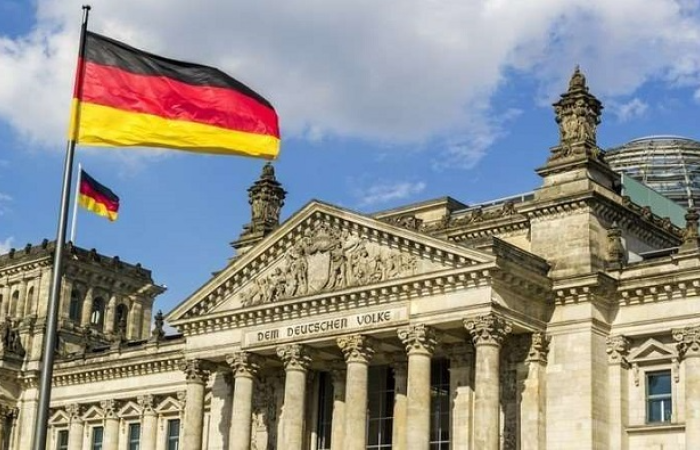
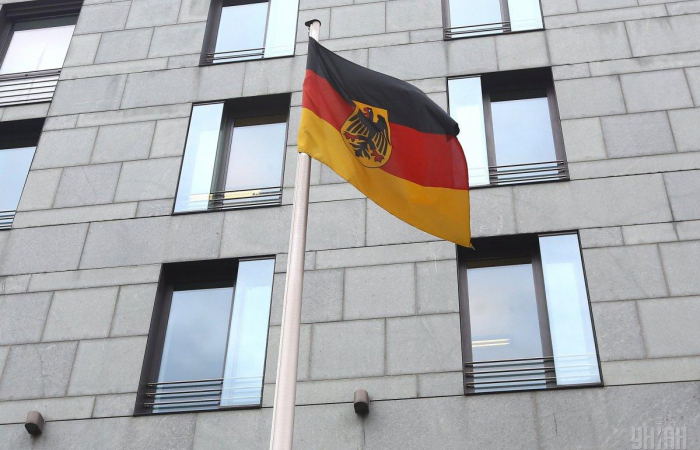
The German government holds Russia responsible for a cyberattack on German air traffic control, and for targeted disinformation campaigns before the last federal election. According to the German Foreign Office in Berlin, the incidents could be clearly attributed to the Russian military intelligence service, the GRU. In response, the Russian ambassador to Berlin was summoned to the Foreign Ministry. "We have been observing a massive increase in threatening hybrid activities by Russia for some time now," a spokesperson for the Foreign Ministry stated. These range from disinformation campaigns and espionage to cyberattacks and sabotage attempts. The aim is to divide society, sow distrust, and undermine confidence in democratic institutions. The spokesperson added that with these actions, Russia is "very concretely threatening our security, not only through its war of aggression against Ukraine, but also here in Germany."  The Foreign Ministry spokesperson explained that the cyberattack on air traffic control in August 2024 was clearly attributed to the hacker collective "APT28," known as "Fancy Bear," and to the responsibility of the Russian military intelligence service, the GRU. Furthermore, it could now be "conclusively stated" that Russia had attempted "to influence and destabilize both the last Federal election and the ongoing internal affairs of the Federal Republic of Germany." There was "absolutely irrefutable evidence" for this". The so-called "Storm 1516" campaign, which has been running since 2024, is allegedly backed by "reliable information" that the Moscow-based think tank "Center for Geopolitical Expertise" is behind it. The Center is also said to be supported by Russian military intelligence. Its primary aim is to influence democratic elections in the West. (Click the image to read more).

Filter archive

Publication date
Editor's choice
Editorial
Editorial: the moment of truth

Editorial: the moment of truth

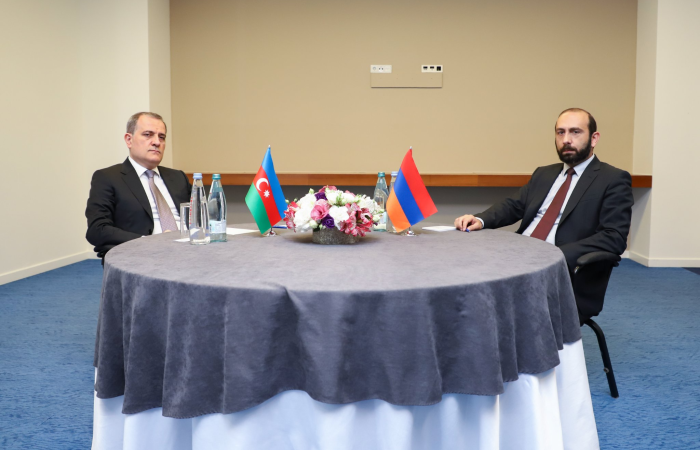
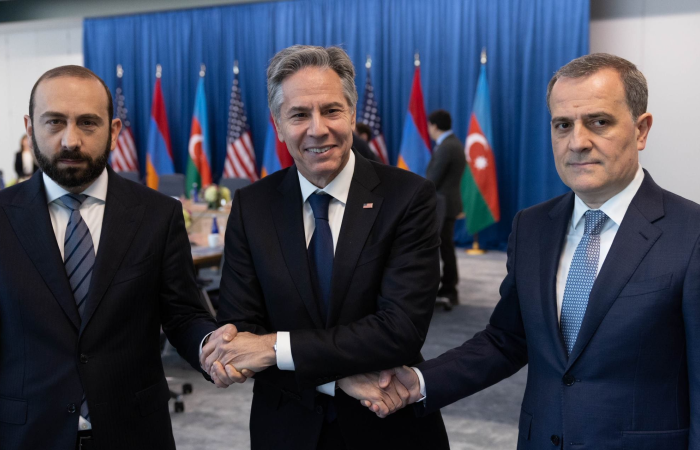
"The signing of an agreement – it is still not clear if it will be called a Peace Agreement, or something else – will certainly not mean that all issues between Armenia and Azerbaijan are resolved," writes commonspace.eu in this editorial. "There is also much that still needs to be done to build enough trust and confidence for any agreement to not simply be a piece of paper. But an agreement will certainly be the sign of the end of an era of war and hostilities which has also poisoned the atmosphere between the two neighbouring nations." The foreign ministers of Armenia and Azerbaijan, accompanied by large delegations, were in Washington this week for face to face negotiations on the future relations between their countries. After a hiatus of several months, during which contact was relegated to exchange of emails, the two sides, with some US prodding, on Monday engaged in what many consider to be the most detailed exercise yet in trying to chart the future relations between the two countries.
Editor's choice
News
Armenia and Azerbaijan meet in Washington D.C. for a week of talks

Armenia and Azerbaijan meet in Washington D.C. for a week of talks

On Monday (1 May) the foreign ministers of Armenia and Azerbaijan met with the US Secretary of State Antony Blinken for the first day of talks understood to be taking place until latest Friday (5 May). AFP have reported that the talks will last four days. Armenian Foreign Minister Ararat Mirzoyan and Azerbaijani Foreign Minister Jeyhun Bayramov, along with their delegations, are meeting at the George P. Schultz National Foreign Affairs Training Center in Arlington, Virginia, a short distance south-west of Washington D.C. Mirzoyan, Bayramov and Blinken are understood to have sat down for negotiations at 09:45 local time yesterday, after both foreign ministers had their own individual meetings with Blinken beforehand. Statements issued by both Armenia and Azerbaijan said that issues of the security situation in the region and the process of normalisation of relations between the two countries were discussed in the meeting hosted by Blinken. Radio Free Europe/Radio Liberty's Armenian Service report that the talks are more aimed at "an agreement on the normalisation of relations" rather than a peace treaty, citing a U.S. official speaking to reporters on the condition of anonymity.
Editor's choice
Opinion
Opinion: The Armenian government needs to communicate better to the public what the EUMA is about

Opinion: The Armenian government needs to communicate better to the public what the EUMA is about

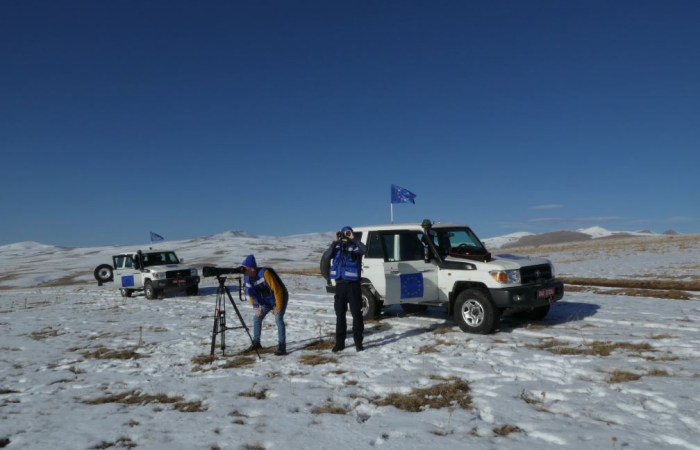
Efficient strategic communication has become necessary in the South Caucasus as the governments of the region and outside regional and global powers vie for influence in the current highly complex geo-political realities. In this op-ed for commonspace.eu Benyamin Poghosyan argues that one for the priorities for the Armenian government is to explain clearly to public opinion what the recently deployed EU Monitoring Mission is and is not about. Otherwise the same disappointment that emerged towards Russia earlier will surely appear as regards the European Union also.
Editor's choice
News
Garibashvili and Michel discuss Georgia EU accession in Brussels

Garibashvili and Michel discuss Georgia EU accession in Brussels

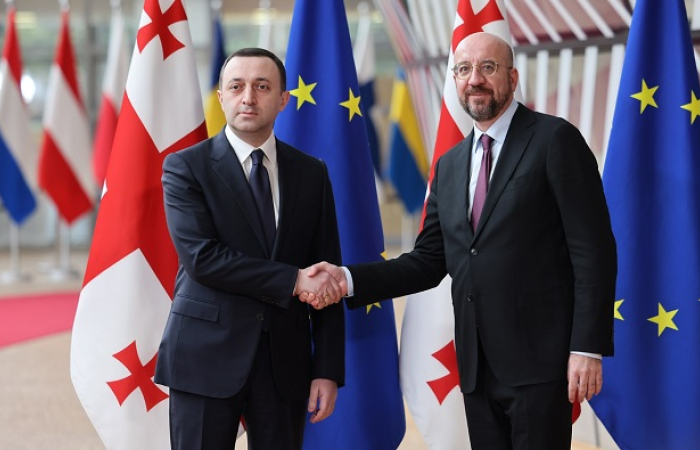
The Prime Minister of Georgia Irakli Garibashvili and the President of the European Council Charles Michel met in Brussels on Tuesday (25 April) to review Georgia's progress towards membership of the EU. According to a press release from the Georgian government, "Irakli Garibashvili briefed the President of the European Council about Georgia’s efforts toward fulfilling the European Commission’s 12 priorities and pointed out that, in this process, the authorities maintain continuous consultations with EU institutions and member states, also the Venice Commission and OSCE/ODIHR." Garibashvili also stressed the importance of granting Georgia candidate status by the end of the year because "a large portion of the recommendations has been fulfilled". The Georgian Prime Minister also argued that EU-Georgia Association Agreement, the Deep and Comprehensive Free Trade Agreement (DCFTA) with the EU, visa-free travel, and the recently granted European perspective "demonstrate Georgia’s progress toward European integration".