Theme

Diplomacy

Editor's choice
News
Germany accuses Russia of cyberattacks and disinformation campaign

Germany accuses Russia of cyberattacks and disinformation campaign

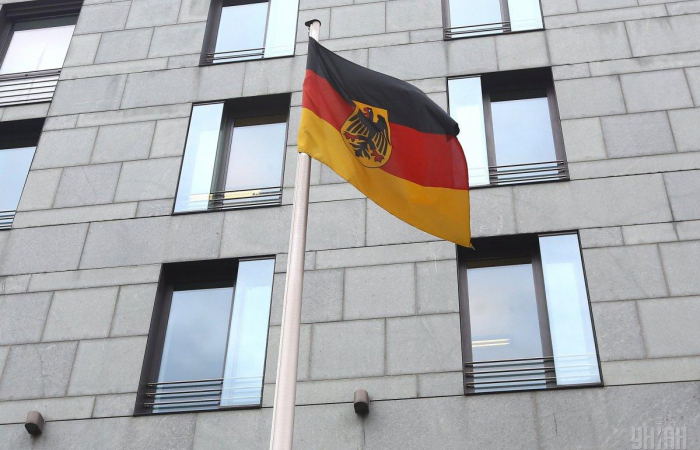
The German government holds Russia responsible for a cyberattack on German air traffic control, and for targeted disinformation campaigns before the last federal election. According to the German Foreign Office in Berlin, the incidents could be clearly attributed to the Russian military intelligence service, the GRU. In response, the Russian ambassador to Berlin was summoned to the Foreign Ministry. "We have been observing a massive increase in threatening hybrid activities by Russia for some time now," a spokesperson for the Foreign Ministry stated. These range from disinformation campaigns and espionage to cyberattacks and sabotage attempts. The aim is to divide society, sow distrust, and undermine confidence in democratic institutions. The spokesperson added that with these actions, Russia is "very concretely threatening our security, not only through its war of aggression against Ukraine, but also here in Germany."  The Foreign Ministry spokesperson explained that the cyberattack on air traffic control in August 2024 was clearly attributed to the hacker collective "APT28," known as "Fancy Bear," and to the responsibility of the Russian military intelligence service, the GRU. Furthermore, it could now be "conclusively stated" that Russia had attempted "to influence and destabilize both the last Federal election and the ongoing internal affairs of the Federal Republic of Germany." There was "absolutely irrefutable evidence" for this". The so-called "Storm 1516" campaign, which has been running since 2024, is allegedly backed by "reliable information" that the Moscow-based think tank "Center for Geopolitical Expertise" is behind it. The Center is also said to be supported by Russian military intelligence. Its primary aim is to influence democratic elections in the West. (Click the image to read more).
Editor's choice
Opinion
Opinion: A sustainable peace requires consistent long-term European involvement

Opinion: A sustainable peace requires consistent long-term European involvement

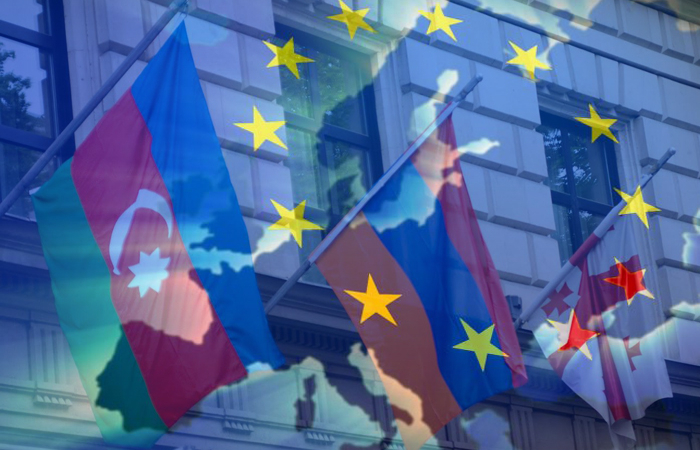
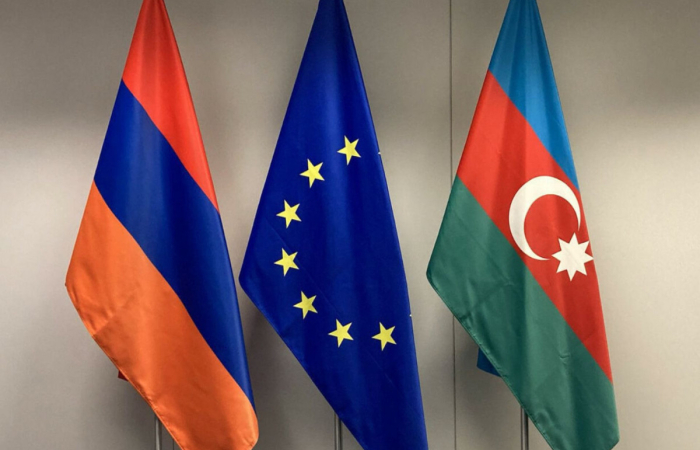
There is no denying that the EU, especially key member states acting in support, helped bring Baku and Yerevan closer to the Washington Declaration of August 8, 2025. But a declaration is not a treaty. Turning principles into a peace deal and eventually to a sustainable peace requires consistent long-term European involvement, writes Yalchin Mammadov in this-op-ed for commonspace.eu Before facilitating trust between Armenia and Azerbaijan, the EU is first expected to address its own credibility gap with Baku. A more balanced approach—such as including Azerbaijan, alongside Armenia, in the European Peace Facility—could be a useful first step. Diplomats can negotiate peace; societies must build peace. In this context, the EU can do what it does the best: long-term societal engagement. By expanding youth and academic exchange programmes, investing in cross-border civil society initiatives, and fostering people-to-people cooperation, Brussels can help shape a new generation equipped to sustain peace beyond political cycles. Such tools are slow and unglamorous, but if ignored, even the strongest treaty risks collapse. And obviously, these aspects require two-way engagement and genuine willingness by both governments to facilitate contact. If Brussels wants to remain influential, it needs to replace outdated one-size-fits-all policies with ambitious, interest-driven and differentiated approaches. Without a clear regional strategy, which appears to be the current situation, the South Caucasus will continue to sit at the margins of Europe’s security architecture—leaving space for other powers to take the lead. (You can read the op-ed in full by clicking the image.)

Filter archive

Publication date
Editor's choice
News
 UN General Assembly vote highlights Israel's isolation

UN General Assembly vote highlights Israel's isolation

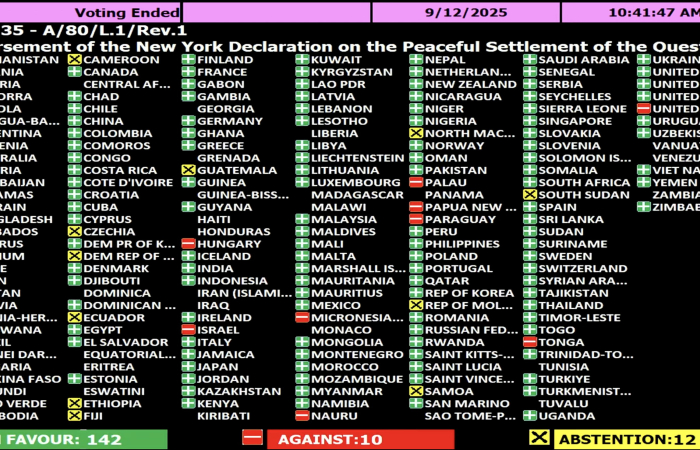
Applause rang out in the UN General Assembly Hall on Friday as countries endorsed a declaration on the peaceful settlement of the question of Palestine and implementation of the two-State solution with Israel.  The New York Declaration is the outcome of an international conference held in July at UN Headquarters, organized by France and Saudi Arabia, which resumes later this month. The General Assembly comprises all 193 UN Member States and 142 countries voted in favour of a resolution backing the document. Israel voted against it, alongside nine other countries – Argentina, Hungary, Micronesia, Nauru, Palau, Papua New Guinea, Paraguay, Tonga and the United States – while 12 nations abstained. The vote highlights the current Israeli international isolation as a result of its current policies. Prior to the vote, French Ambassador Jérôme Bonnafont recalled that the New York Declaration “lays out a single roadmap to deliver the two-State solution”. This involves an immediate ceasefire in Gaza, release of all hostages held there, and the establishment of a Palestinian State that is both viable and sovereign. The roadmap further calls for the disarmament of Hamas and its exclusion from governance in Gaza, normalization between Israel and the Arab countries, as well as collective security guarantees.
Editor's choice
News
EU to push for sanctions on Israel ministers and suspend bilateral support

EU to push for sanctions on Israel ministers and suspend bilateral support

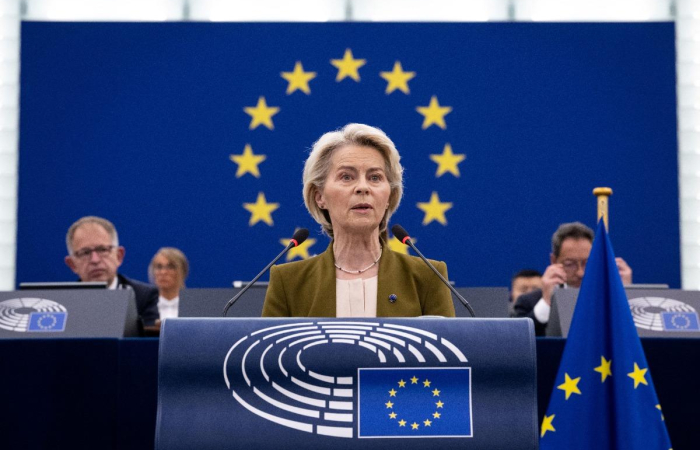
The President of the European Commission Ursula von der Leyen stated she would push to sanction "extremist" Israeli ministers and curb trade ties over Gaza, as she warned famine should not be used as a "weapon of war". Addressing the European Parliament on 10 September in the annual State of the Union, von der Leyen lamented that divisions among member states were holding back a European response but insisted the European Commission "will do all that it can on its own". "What is happening in Gaza has shaken the conscience of the world. People killed while begging for food. Mothers holding lifeless babies. These images are simply catastrophic," von der Leyen said. The German politician said the Commission would put its bilateral support to Israel on hold, stopping all payments, but without affecting work with civil society groups and Israel's Yad Vashem Holocaust memorial.
Editor's choice
Opinion
What role for the EU in the post-Washington South Caucasus?

What role for the EU in the post-Washington South Caucasus?

The agreements reached in the US-mediated summit of the Armenian and Azerbaijani leaders in Washington on August 8 are poised to fundamentally reshape the region's future. Particularly, the deal concerning the Zangezur corridor – rebranded as the “Trump Route for Peace and Prosperity” (TRIPP) – holds significant geopolitical importance. If implemented, the TRIPP agreement would deal a severe blow to the regional standing of Russia and Iran. More importantly, it would pave the way for a strategic U.S. presence in this critical geography. This outcome represents a success that few would have predicted for the United States, especially for the Trump administration, given the region's notoriously complex and volatile geopolitics.
Editor's choice
News
Stumbling blocks for Armenia and Azerbaijan on the Road to SCO Membership

Stumbling blocks for Armenia and Azerbaijan on the Road to SCO Membership

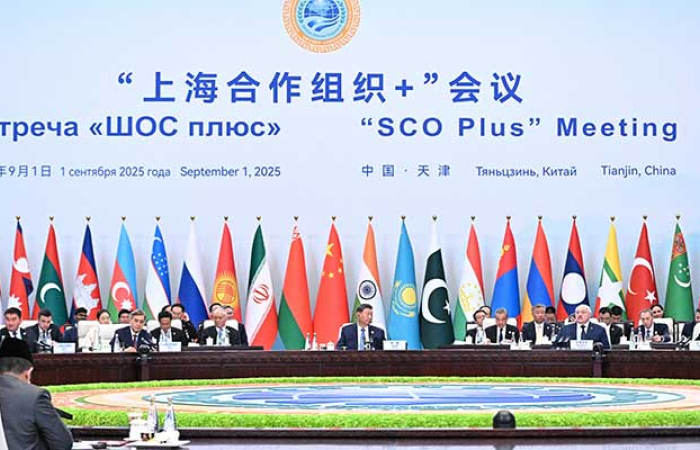
The Shanghai Cooperation Organisation (SCO) Summit, held on August 31–September 1, 2025, in Tianjin, China, brought together leaders of the 10 member states, as well as representatives from over 20 countries and 10 international organisations. The summit resulted in the adoption of the Tianjin Declaration and the SCO Development Strategy until 2035, outlining key directions for cooperation and security. Armenia officially announced its intention to join the SCO on July 3, 2025, emphasising its commitment to the organisation’s core principles, territorial integrity, non-use of force, and inviolability of borders. Azerbaijan submitted its application later, in August. Currently, the process of admitting Armenia and Azerbaijan to the SCO is in the preliminary co-ordination stage, involving the attainment of partner status with the prospect of transitioning to full membership in the future.
Editor's choice
News
 Military parade to be held in Beijing as China and Russia reaffirm close ties

Military parade to be held in Beijing as China and Russia reaffirm close ties

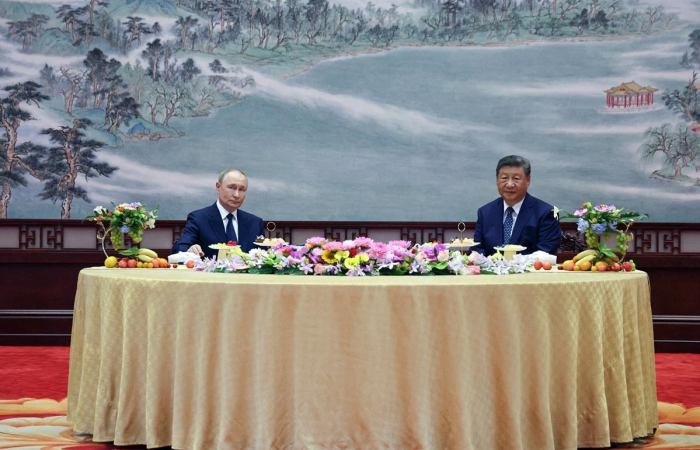
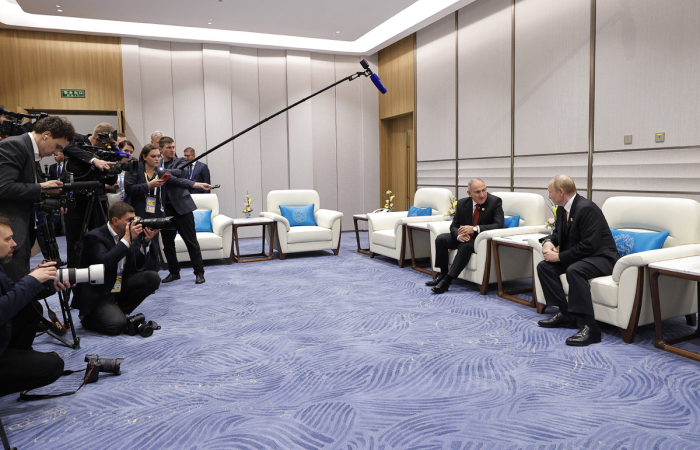
Chinese leader Xi Jinping welcomed Russian President Vladimir Putin as an “old friend” as the two began a series of meetings Tuesday at a time when their countries face both overlapping and differing challenges from the United States. Relations between China and Russia have deepened in recent years, particularly after the Russian invasion of Ukraine in early 2022. According to AP, Putin addressed Xi as “dear friend” and said that Moscow’s ties with Beijing are “at an unprecedentedly high level.” Following their formal talks, they planned to have another meeting over tea with some of their top aides. The talks come the day after both attended a summit of the Shanghai Cooperation Organization in the nearby Chinese city of Tianjin, and the day before a grand Chinese military parade in Beijing to mark the 80th anniversary of the end of World War II.
Editor's choice
News
OSCE Minsk Process and related structures disbanded

OSCE Minsk Process and related structures disbanded

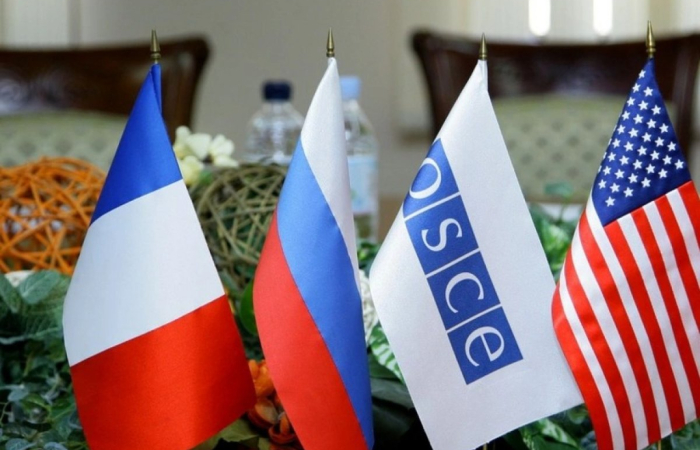
The OSCE Minsk Group has been disbanded. The decision was taken by the OSCE Permanent Council at its meeting in Vienna on Monday, 1 September. Following the adoption of this decision, the OSCE will take steps to implement the closure of the Minsk Process and its related structures. Only administrative functions, such as the handover of assets and equipment, will continue until the process is completed no later than 1 December 2025. The OSCE Chairperson-in-Office, Foreign Minister of Finland Elina Valtonen, and OSCE Secretary General Feridun H. Sinirlioğlu welcome the adoption of a Ministerial Council decision closing the Minsk process and related structures following a Joint Appeal from Armenia and Azerbaijan.
Editor's choice
News
US refusing visas to Palestinian passport holders, in unannounced policy

US refusing visas to Palestinian passport holders, in unannounced policy

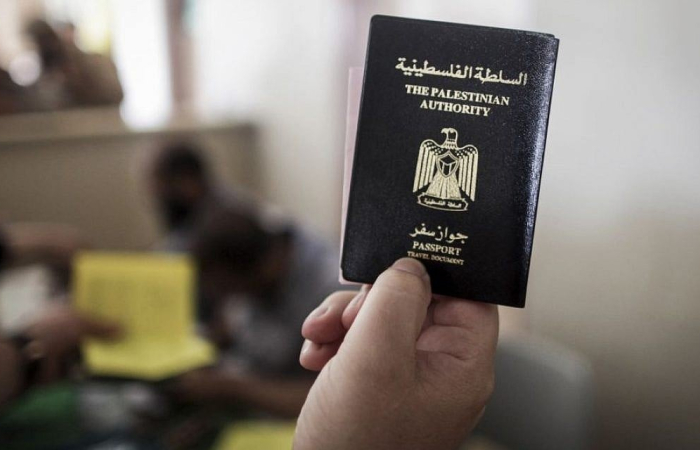
The Trump administration will no longer grant visas to Palestinian passport holders wishing to visit the United States, according to a report in The New York Times citing multiple sources within the administration. While there has been no official confirmation yet, if true, this decision represents a significant extension of an earlier announcement to bar a group of Palestinians, including the President of the State of Palestine, Mahmoud Abbas, from attending the UN General Assembly in New York.