Theme

Diplomacy

Editor's choice
News
Germany accuses Russia of cyberattacks and disinformation campaign

Germany accuses Russia of cyberattacks and disinformation campaign

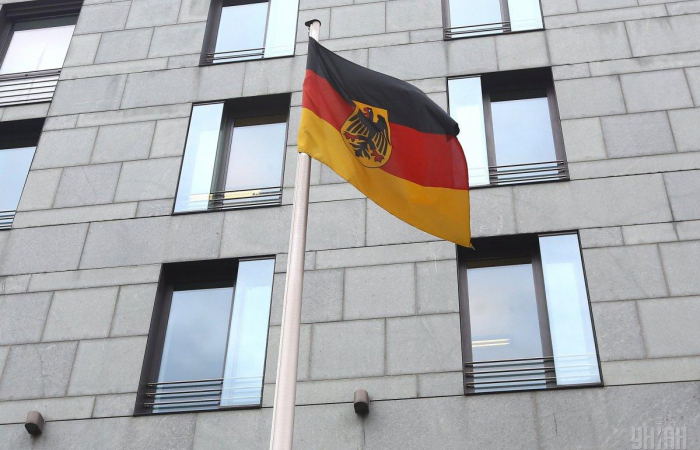
The German government holds Russia responsible for a cyberattack on German air traffic control, and for targeted disinformation campaigns before the last federal election. According to the German Foreign Office in Berlin, the incidents could be clearly attributed to the Russian military intelligence service, the GRU. In response, the Russian ambassador to Berlin was summoned to the Foreign Ministry. "We have been observing a massive increase in threatening hybrid activities by Russia for some time now," a spokesperson for the Foreign Ministry stated. These range from disinformation campaigns and espionage to cyberattacks and sabotage attempts. The aim is to divide society, sow distrust, and undermine confidence in democratic institutions. The spokesperson added that with these actions, Russia is "very concretely threatening our security, not only through its war of aggression against Ukraine, but also here in Germany."  The Foreign Ministry spokesperson explained that the cyberattack on air traffic control in August 2024 was clearly attributed to the hacker collective "APT28," known as "Fancy Bear," and to the responsibility of the Russian military intelligence service, the GRU. Furthermore, it could now be "conclusively stated" that Russia had attempted "to influence and destabilize both the last Federal election and the ongoing internal affairs of the Federal Republic of Germany." There was "absolutely irrefutable evidence" for this". The so-called "Storm 1516" campaign, which has been running since 2024, is allegedly backed by "reliable information" that the Moscow-based think tank "Center for Geopolitical Expertise" is behind it. The Center is also said to be supported by Russian military intelligence. Its primary aim is to influence democratic elections in the West. (Click the image to read more).
Editor's choice
Opinion
Opinion: A sustainable peace requires consistent long-term European involvement

Opinion: A sustainable peace requires consistent long-term European involvement

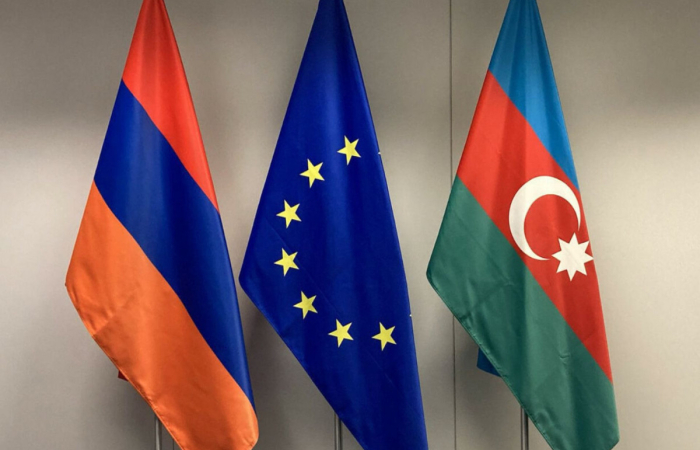
There is no denying that the EU, especially key member states acting in support, helped bring Baku and Yerevan closer to the Washington Declaration of August 8, 2025. But a declaration is not a treaty. Turning principles into a peace deal and eventually to a sustainable peace requires consistent long-term European involvement, writes Yalchin Mammadov in this-op-ed for commonspace.eu Before facilitating trust between Armenia and Azerbaijan, the EU is first expected to address its own credibility gap with Baku. A more balanced approach—such as including Azerbaijan, alongside Armenia, in the European Peace Facility—could be a useful first step. Diplomats can negotiate peace; societies must build peace. In this context, the EU can do what it does the best: long-term societal engagement. By expanding youth and academic exchange programmes, investing in cross-border civil society initiatives, and fostering people-to-people cooperation, Brussels can help shape a new generation equipped to sustain peace beyond political cycles. Such tools are slow and unglamorous, but if ignored, even the strongest treaty risks collapse. And obviously, these aspects require two-way engagement and genuine willingness by both governments to facilitate contact. If Brussels wants to remain influential, it needs to replace outdated one-size-fits-all policies with ambitious, interest-driven and differentiated approaches. Without a clear regional strategy, which appears to be the current situation, the South Caucasus will continue to sit at the margins of Europe’s security architecture—leaving space for other powers to take the lead. (You can read the op-ed in full by clicking the image.)

Filter archive

Publication date
Editor's choice
News
Swedish negotiators head to Ankara for renewed talks on NATO membership

Swedish negotiators head to Ankara for renewed talks on NATO membership

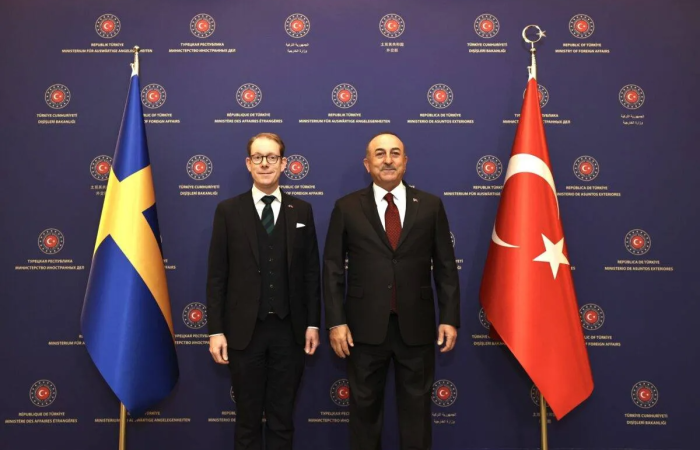
Swedish negotiators are in the Turkish capital city of Ankara today, on Wednesday (14 June), for the first set of talks with Turkey on its NATO membership bid since President Erdogan's election victory on 28 May. Sweden applied for NATO membership alongside Finland on 18 May 2022, almost three months after Russia launched its full-scale invasion of Ukraine on 24 February. While Finland joined the military alliance on 4 April, Sweden's bid continues to be held up by objections from Turkey and Hungary. Sweden's chief NATO negotiator Oscar Stenström and top civil servant in the Swedish foreign ministry, Jan Knutsson, are expected to meet Akif Cagatay Kilic, the new security advisor appointed by President Erdogan following his 28 May victory. The two sides will discuss Sweden's membership of NATO, and the extent to which the country has fulfilled its promises in the so-called "trilateral memorandum" between Turkey, Sweden and Finland signed at NATO's summit in Madrid on 28 June last year. Last Sunday (4 June), NATO Secretary-General Jens Stoltenberg urged Turkey to approve Sweden's membership ahead of the bloc's summit in Vilnius, Lithuania, on 11-12 July.
Editor's choice
News
Liechtenstein FM makes first official visit to Georgia

Liechtenstein FM makes first official visit to Georgia

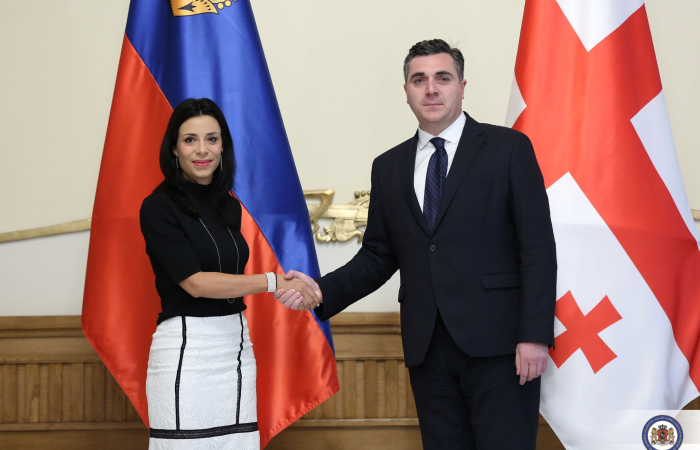
Liechtenstein's Minister for Foreign Affairs, Education and Sports Dominique Hasler is making her first official visit to Georgia from Sunday (11 June) to Tuesday (13 June). Immediately after arriving on Sunday, Hasler visited Odzisi, the closest village to the administrative line separating Russian-occupied South Ossetia from the rest of Georgia "to get acquainted with the ongoing situation in areas adjacent to the line", according to agenda.ge. The First Deputy Minister of Foreign Affairs of Georgia, Lasha Darsalia, accompanied Hasler to the occupation line. On Monday (12 June), Hasler also met with her Georgian counterpart Ilia Darchiashvili, as well as with the Speaker of the Georgian Parliament, Shalva Papuashvili, and the Georgian Prime Minister, Irakli Garibashvili. Describing Hasler's first official visit to Georgia as "historic", Darchiashvili highlighted the two states had potential to further strengthen economic ties through Georgia’s agreements via the European Free Trade Association, of which Liechtenstein - the six smallest country in the world - is a member. 
Editor's choice
Analysis
Briefing: intensive diplomatic efforts around the Armenia-Azerbaijan peace process

Briefing: intensive diplomatic efforts around the Armenia-Azerbaijan peace process

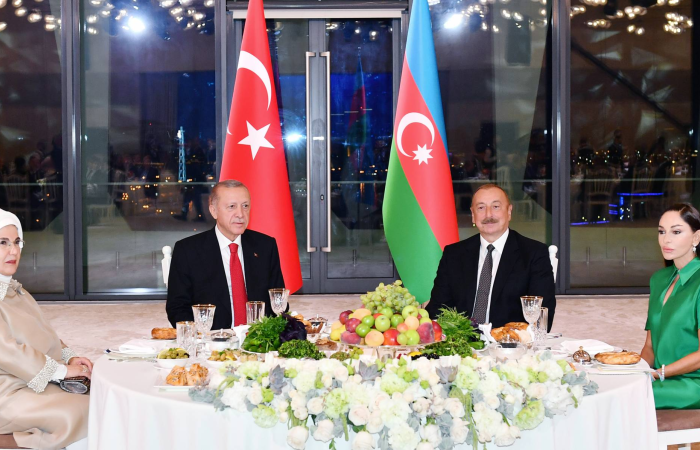
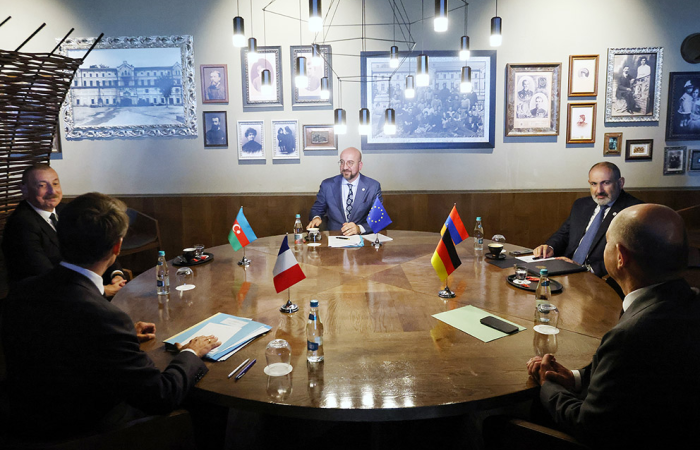
Intense diplomatic efforts over the last month are a good reflection of a sustained determination on the part of Armenia and Azerbaijan to bring their decades-old conflict to an end, and sign a peace agreement, writes commonspace.eu. Meetings between president Ilham Aliyev of Azerbaijan and prime minister Nikol Pashinyan of Armenia were held in Brussels on 15 May, with the mediation of EU Council president Charles Michel. The three leaders met again on 1 June in Chisinau, this time also with the participation of French President Emmanuel Macron and German Chancellor Olaf Scholz. Aliyev and Pashinyan met, together with president Putin of Russia, in Moscow on 25 May. And on 4 June the leaders of both Armenia and Azerbaijan were in Ankara for the inauguration of President Recep Tayyip Erdogan’s new term in office, where they also met informally. The next formal meeting is now set to be held in July in Brussels. A lot is also going on behind the scenes with European and American envoys travelling in the region.
Editor's choice
News
EU interior ministers reach "historic" agreement on migration, but significant opposition remains

EU interior ministers reach "historic" agreement on migration, but significant opposition remains

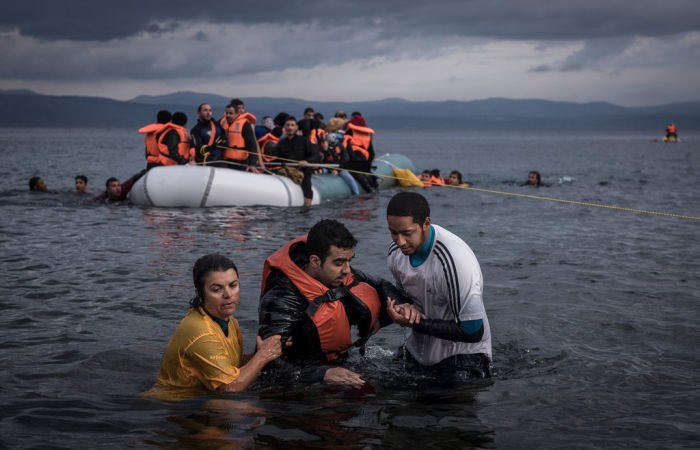
Interior ministers from the European Union's 27 member states reached a deal on the bloc's migration policy yesterday (8 June) after some 12 hours of negotiations at a meeting in Luxembourg. The agreement outlines how responsibility for looking after migrants and refugees who arrive in the EU without authorisation is shared out among member states, a topic which has been the source of much disagreement since 2015, when well over 1 million migrants and refugees entered the EU, many of them fleeing the war in Syria. Under the deal agreed yesterday and set to be finalised ahead of a 2024 EU election, each country would be responsible for a set number of people, but would not necessarily have to take them in. Countries unwilling to receive irregular migrants and refugees arriving ad hoc to the EU would be able to help their hosting peers through cash - around 20,000 euros per person - equipment or personnel, reports Reuters. The agreement would introduce a new expedited border procedure for those deemed unlikely to win asylum to prevent them from lingering inside the bloc for years.
Editor's choice
News
Iran reopens embassy in Saudi Arabia, consulate opening Wednesday

Iran reopens embassy in Saudi Arabia, consulate opening Wednesday

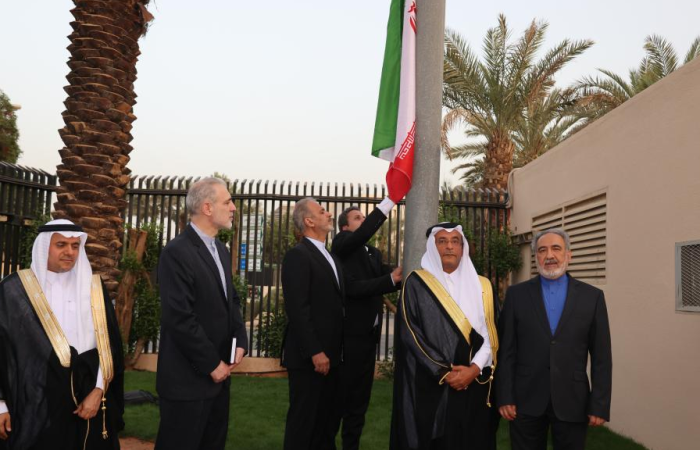
Iran has reopened its embassy in the Saudi capital of Riyadh on Tuesday (6 June), the Saudi outlet Al Arabiya reported on Tuesday. The agreement to reopen embassies in each other's respective capitals was struck on 10 March in Beijing, re-establishing diplomatic ties that had been broken for years. You can read more about the 10 March agreement here. “We consider today an important day in the relations of the Islamic Republic of Iran and the Kingdom of Saudi Arabia,” Iranian Deputy Foreign Minister Alireza Bigdeli told a flag-raising ceremony, adding that “the cooperation between the countries is entering a new era.” At a meeting with his Saudi counterpart Prince Faisal bin Farhan Al Saud in Cape Town last Friday (2 June), Iranian Foreign Minister Hossein Amir-Abdollahian expressed satisfaction with the "good progress made in bilateral ties". The two foreign ministers were meeting in South Africa on the sidelines of the “Friends of BRICS” summit. The next BRICS summit between Brazil, Russia, India, China and South Africa will take place in Johannesburg in August. Meanwhile, the opening of the Iranian consulate in Jeddah is expected to take place on Wednesday (7 June).