Theme

Diplomacy

Editor's choice
News
Germany accuses Russia of cyberattacks and disinformation campaign

Germany accuses Russia of cyberattacks and disinformation campaign

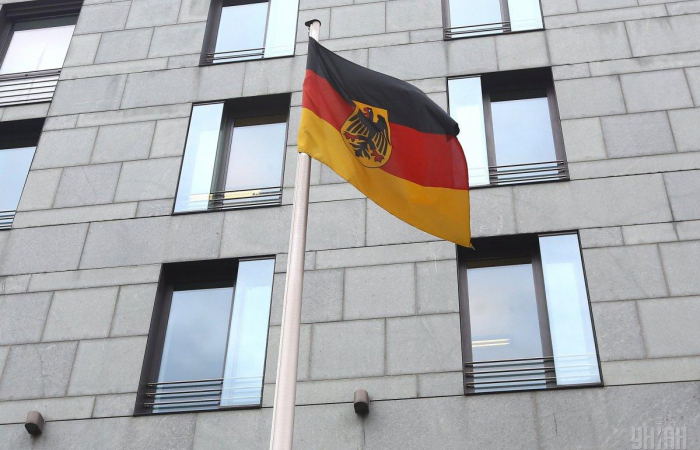
The German government holds Russia responsible for a cyberattack on German air traffic control, and for targeted disinformation campaigns before the last federal election. According to the German Foreign Office in Berlin, the incidents could be clearly attributed to the Russian military intelligence service, the GRU. In response, the Russian ambassador to Berlin was summoned to the Foreign Ministry. "We have been observing a massive increase in threatening hybrid activities by Russia for some time now," a spokesperson for the Foreign Ministry stated. These range from disinformation campaigns and espionage to cyberattacks and sabotage attempts. The aim is to divide society, sow distrust, and undermine confidence in democratic institutions. The spokesperson added that with these actions, Russia is "very concretely threatening our security, not only through its war of aggression against Ukraine, but also here in Germany."  The Foreign Ministry spokesperson explained that the cyberattack on air traffic control in August 2024 was clearly attributed to the hacker collective "APT28," known as "Fancy Bear," and to the responsibility of the Russian military intelligence service, the GRU. Furthermore, it could now be "conclusively stated" that Russia had attempted "to influence and destabilize both the last Federal election and the ongoing internal affairs of the Federal Republic of Germany." There was "absolutely irrefutable evidence" for this". The so-called "Storm 1516" campaign, which has been running since 2024, is allegedly backed by "reliable information" that the Moscow-based think tank "Center for Geopolitical Expertise" is behind it. The Center is also said to be supported by Russian military intelligence. Its primary aim is to influence democratic elections in the West. (Click the image to read more).
Editor's choice
Opinion
Opinion: A sustainable peace requires consistent long-term European involvement

Opinion: A sustainable peace requires consistent long-term European involvement

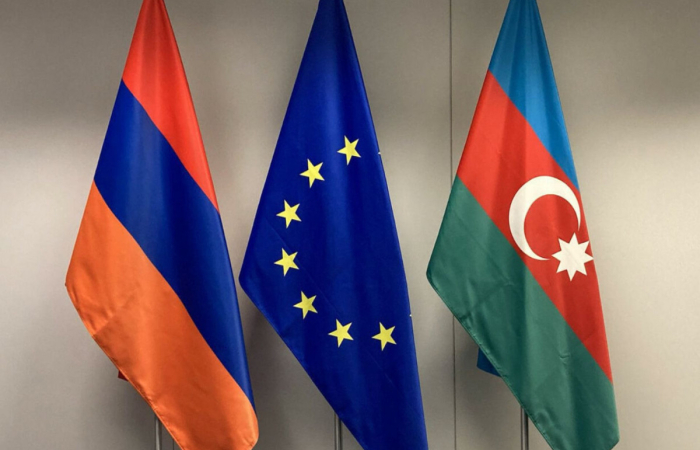
There is no denying that the EU, especially key member states acting in support, helped bring Baku and Yerevan closer to the Washington Declaration of August 8, 2025. But a declaration is not a treaty. Turning principles into a peace deal and eventually to a sustainable peace requires consistent long-term European involvement, writes Yalchin Mammadov in this-op-ed for commonspace.eu Before facilitating trust between Armenia and Azerbaijan, the EU is first expected to address its own credibility gap with Baku. A more balanced approach—such as including Azerbaijan, alongside Armenia, in the European Peace Facility—could be a useful first step. Diplomats can negotiate peace; societies must build peace. In this context, the EU can do what it does the best: long-term societal engagement. By expanding youth and academic exchange programmes, investing in cross-border civil society initiatives, and fostering people-to-people cooperation, Brussels can help shape a new generation equipped to sustain peace beyond political cycles. Such tools are slow and unglamorous, but if ignored, even the strongest treaty risks collapse. And obviously, these aspects require two-way engagement and genuine willingness by both governments to facilitate contact. If Brussels wants to remain influential, it needs to replace outdated one-size-fits-all policies with ambitious, interest-driven and differentiated approaches. Without a clear regional strategy, which appears to be the current situation, the South Caucasus will continue to sit at the margins of Europe’s security architecture—leaving space for other powers to take the lead. (You can read the op-ed in full by clicking the image.)

Filter archive

Publication date
Editor's choice
News
 Armenians and Azerbaijanis discuss how to shape a dialogue best suited for today's realities as LINKS Europe kicks off new initiative

Armenians and Azerbaijanis discuss how to shape a dialogue best suited for today's realities as LINKS Europe kicks off new initiative

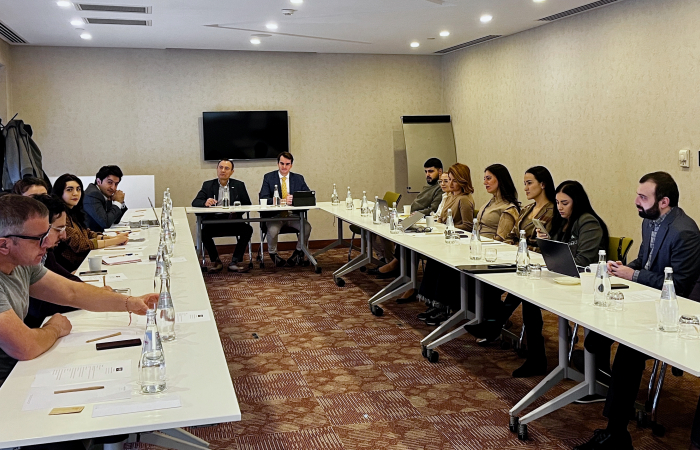
LINKS Europe held its first event within the recently launched EU4Peace III programme in Tbilisi on Thursday 30 January. Armenian and Azerbaijani participants engaged in an open and constructive discussion on how to shape a dialogue best suited to today's realities. As part of the initiative, LINKS Europe will shortly launch five thematic groups: The thematic groups, with Armenian and Azerbaijani participants will discuss the following topics: (1) Climate Change & the Green Economy; (2) Peace & Security; (3) Governance; (4) Regional Connectivity; (5) Gender and Diversity . On 2nd April, at a meeting in The Hague, LINKS Europe will launch the Armenia-Azerbaijan Expert Political Dialogue Platform. The platform is a parallel, mutually reenforcing initiative bringing together experienced Armenian and Azerbaijani experts and stakeholders. It is expected that one of the main tasks of the platform in 2025 will be to support the thematic groups, particularly in the phase of preparation of their reports. The EU4Peace III action, supported and funded by the European Union, aims to contribute to the sustainable normalisation of relations between Armenia and Azerbaijan. By broadening the engagement of social groups, the initiative aims to link political processes to wider societal transformation.
Editor's choice
News
Georgia suspends participation in the Council of Europe Parliamentary Assembly

Georgia suspends participation in the Council of Europe Parliamentary Assembly

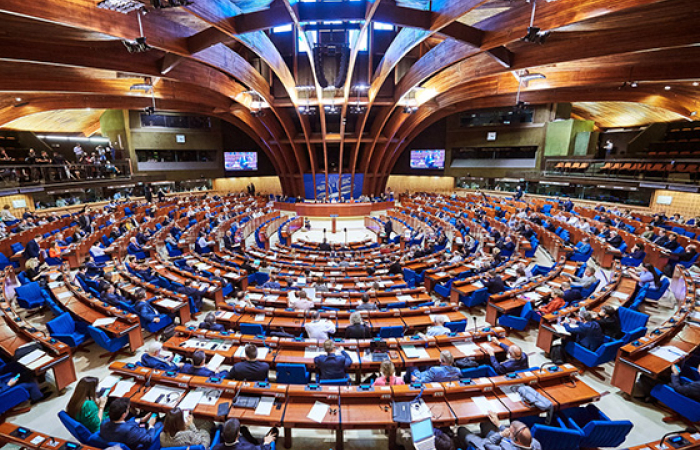
Georgia’s delegation to the Parliamentary Assembly of the Council of Europe (PACE) has announced that it will immediately halt its participation in the assembly after the plenary voted to impose strict conditions for ratifying the delegation’s credentials. Among the conditions is a rerun of the contested October 2024 parliamentary elections, which Georgia’s governing party, Georgian Dream, is accused of rigging, and the release of all political prisoners detained at ongoing pro-EU protests in the country. According to the resolution, which was passed on January 29 by 114 votes to 13 with seven abstaining, should the conditions be met, the assembly would revisit the ratification of the Georgian delegation’s credentials in April.
Editor's choice
News
Russia threatens economic consequences for Armenia if it pursues membership of the European Union

Russia threatens economic consequences for Armenia if it pursues membership of the European Union

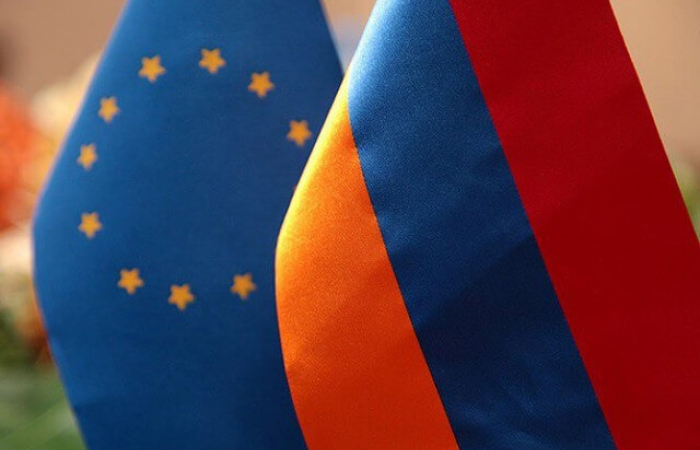
Russia has warned the Armenian government of severe economic consequences if it pursued plans to move towards membership of the European Union. Russian Deputy Prime Minister Alexei Overchuk insisted on Wednesday that the EU accession process will mark the beginning of Armenia’s withdrawal from the Eurasian Economic (EEU), a Russian-led trade bloc that gives Armenia tariff-free access to Russia’s vast market. “The outcome here is obvious: opening markets with the European Union will mean closing markets with the Eurasian Economic Union,” Russian news agencies quoted him as telling journalists.
Editor's choice
Opinion
Opinion: Trump’s new era and Azerbaijan - strategy and expectations

Opinion: Trump’s new era and Azerbaijan - strategy and expectations

In his interview to Azerbaijani media on January 7 this year, President Aliyev touched upon the issue of the upcoming Trump administration, notably speaking about his positive expectations, up to the prospects of establishing strategic partnership relations. This statement was rather unexpected, given many recent tensions between Baku and Washington, including the spat with the U.S. Embassy and the Azerbaijani side’s refusal to hold a US-mediated meeting of foreign ministers with Armenia during the OSCE Summit in Malta. Back then, Azerbaijani MFA issued a statement saying that the four years of the Biden administration were “lost years” for the Azerbaijan-US relations.
Editor's choice
News
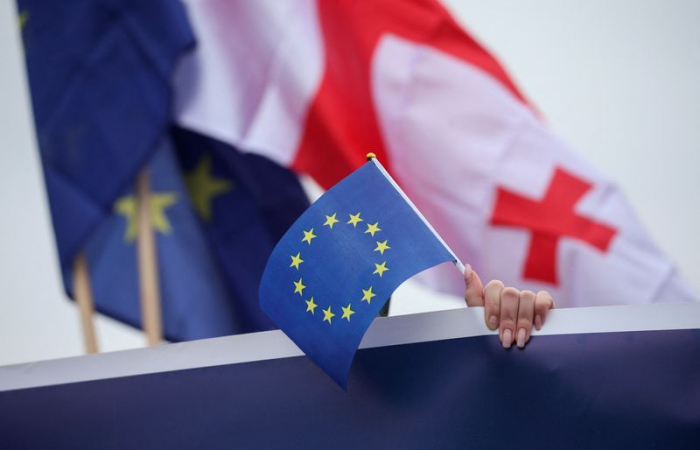
EU suspends visa-free travel for Georgian diplomats and officials

EU suspends visa-free travel for Georgian diplomats and officials

The Council of the European Union has decided to suspend parts of the EU-Georgia visa facilitation agreement leading to Georgian diplomats and officials having to apply for visa when travelling to the EU. "For travels to a member state which has reintroduced visa requirements, Georgian diplomats and officials will also no longer benefit from shorter application times, lower visa fees, and the possibility to submit fewer supporting documents," a Council statement announced on Monday.
Editor's choice
Opinion
Opinion: In Armenia, Strategic Diversification Clashes With Geographic Realities

Opinion: In Armenia, Strategic Diversification Clashes With Geographic Realities

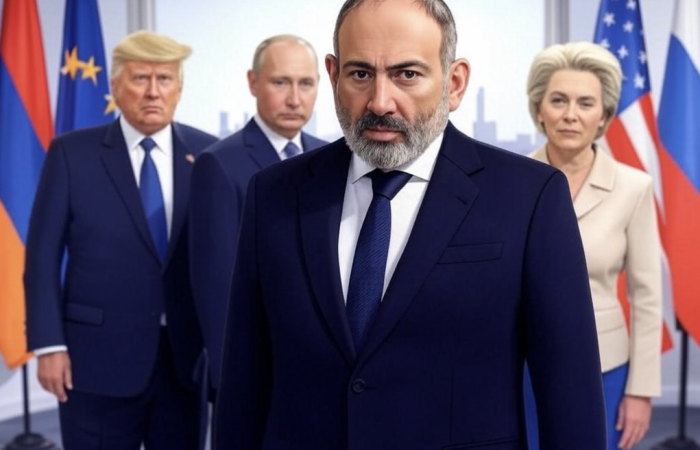
Armenian Prime Minister Nikol Pashinyan has signalled plans to seek European Union (EU) membership. Though framed as an attempt to diversify away from decades of dependency on Russia, Moscow instead sees it as a western attempt to simply oust it from the region. Such a move is supported by some in Armenia amid disillusionment with Russia and the Collective Security Treaty Organisation (CSTO) following the 2020 war with Azerbaijan and a 2022 incursion into Armenia itself.
Editor's choice
News
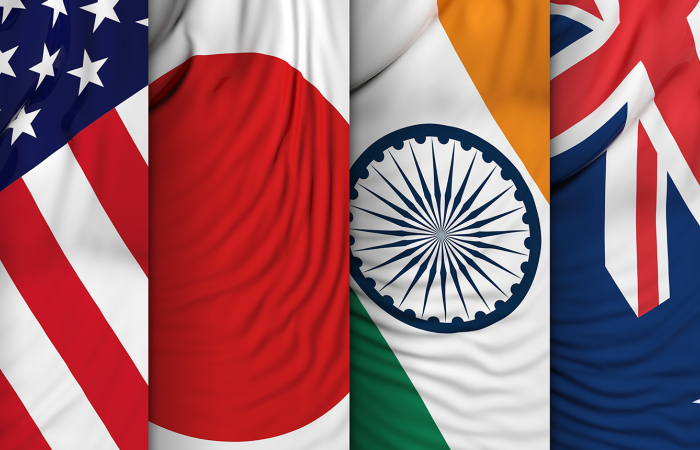
Quad countries meet in Washington in first event  hosted by new Secretary of State, Marko Rubio

Quad countries meet in Washington in first event hosted by new Secretary of State, Marko Rubio

In his first engagement with the international community after being sworn in as Secretary of State, Marko Rubio hosted the foreign ministers of India, Japan and Australia, for a meeting of the quad, the mechanism that unites the four countries and that is becoming increasingly important. At the end of the meeting the four foreign ministers issued a short statement:
Editor's choice
News
Pashinyan in Davos: Armenia’s foreign policy a balancing act between the West and Russia

Pashinyan in Davos: Armenia’s foreign policy a balancing act between the West and Russia

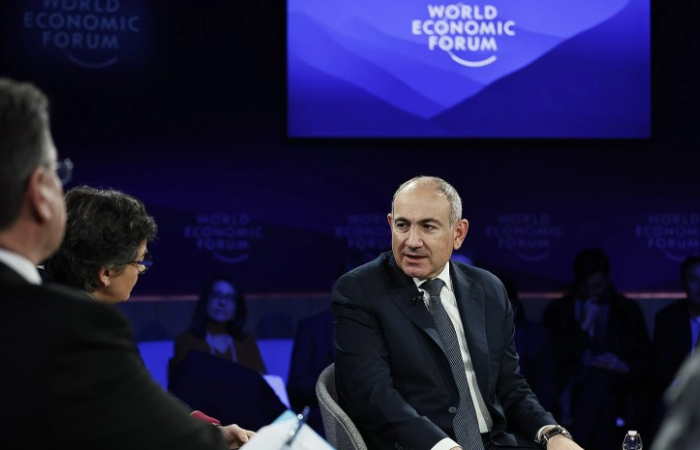
Speaking at the World Economic Forum in Davos, Switzerland, Armenian Prime Minister Nikol Pashinyan said Armenia has decided to adopt a foreign policy that is balanced between relations with the European Union and Russia. He added that balanced relations are also being created at the regional level notably with Iran, by establishing diplomatic relations with Turkey and concluding a peace deal with Azerbaijan. Pashinyan said this approach is not easy but also not impossible adding that Armenia is being transparent with all its international partners about its intentions. “Yes, we have decided to get closer to the European Union, but we are very intensively trying to share our position with Iran and Russia and with all our partners”, Pashinyan stated.
Editor's choice
Analysis
Analysis: How Trump’s US presidency may impact the South Caucasus

Analysis: How Trump’s US presidency may impact the South Caucasus

A second Trump presidency is unlikely to bring a sharp focus to the South Caucasus and American policy for the region will hinge on existing bipartisan frameworks and congressional initiatives rather than direct presidential involvement, according to an analysis by Vita van Dreven of The Hague Institute for Eastern Europe, the South Caucasus and Central Asia. She explores how the Trump presidency might impact the South Caucasus, analysing potential policy directions and their implications for the region: