Theme

Diplomacy

Editor's choice
News
Germany accuses Russia of cyberattacks and disinformation campaign

Germany accuses Russia of cyberattacks and disinformation campaign

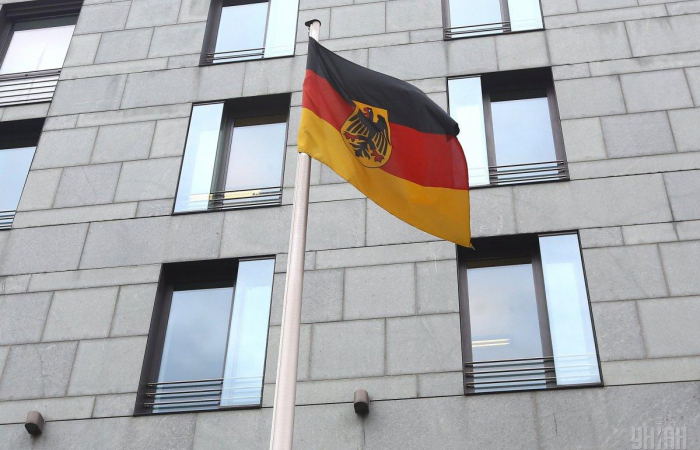
The German government holds Russia responsible for a cyberattack on German air traffic control, and for targeted disinformation campaigns before the last federal election. According to the German Foreign Office in Berlin, the incidents could be clearly attributed to the Russian military intelligence service, the GRU. In response, the Russian ambassador to Berlin was summoned to the Foreign Ministry. "We have been observing a massive increase in threatening hybrid activities by Russia for some time now," a spokesperson for the Foreign Ministry stated. These range from disinformation campaigns and espionage to cyberattacks and sabotage attempts. The aim is to divide society, sow distrust, and undermine confidence in democratic institutions. The spokesperson added that with these actions, Russia is "very concretely threatening our security, not only through its war of aggression against Ukraine, but also here in Germany."  The Foreign Ministry spokesperson explained that the cyberattack on air traffic control in August 2024 was clearly attributed to the hacker collective "APT28," known as "Fancy Bear," and to the responsibility of the Russian military intelligence service, the GRU. Furthermore, it could now be "conclusively stated" that Russia had attempted "to influence and destabilize both the last Federal election and the ongoing internal affairs of the Federal Republic of Germany." There was "absolutely irrefutable evidence" for this". The so-called "Storm 1516" campaign, which has been running since 2024, is allegedly backed by "reliable information" that the Moscow-based think tank "Center for Geopolitical Expertise" is behind it. The Center is also said to be supported by Russian military intelligence. Its primary aim is to influence democratic elections in the West. (Click the image to read more).
Editor's choice
Opinion
Opinion: A sustainable peace requires consistent long-term European involvement

Opinion: A sustainable peace requires consistent long-term European involvement

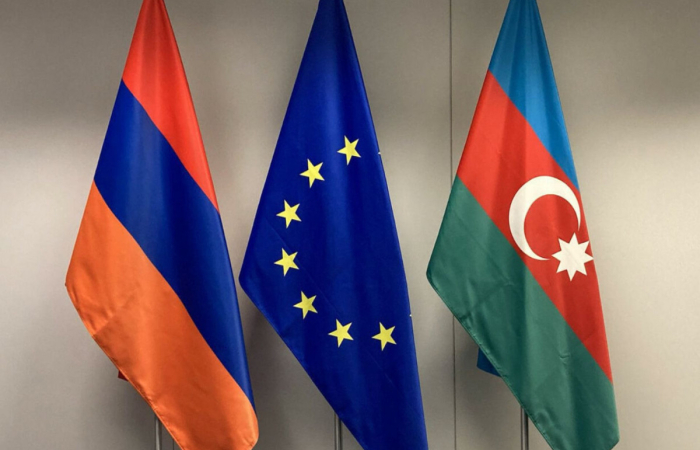
There is no denying that the EU, especially key member states acting in support, helped bring Baku and Yerevan closer to the Washington Declaration of August 8, 2025. But a declaration is not a treaty. Turning principles into a peace deal and eventually to a sustainable peace requires consistent long-term European involvement, writes Yalchin Mammadov in this-op-ed for commonspace.eu Before facilitating trust between Armenia and Azerbaijan, the EU is first expected to address its own credibility gap with Baku. A more balanced approach—such as including Azerbaijan, alongside Armenia, in the European Peace Facility—could be a useful first step. Diplomats can negotiate peace; societies must build peace. In this context, the EU can do what it does the best: long-term societal engagement. By expanding youth and academic exchange programmes, investing in cross-border civil society initiatives, and fostering people-to-people cooperation, Brussels can help shape a new generation equipped to sustain peace beyond political cycles. Such tools are slow and unglamorous, but if ignored, even the strongest treaty risks collapse. And obviously, these aspects require two-way engagement and genuine willingness by both governments to facilitate contact. If Brussels wants to remain influential, it needs to replace outdated one-size-fits-all policies with ambitious, interest-driven and differentiated approaches. Without a clear regional strategy, which appears to be the current situation, the South Caucasus will continue to sit at the margins of Europe’s security architecture—leaving space for other powers to take the lead. (You can read the op-ed in full by clicking the image.)

Filter archive

Publication date
Editor's choice
News
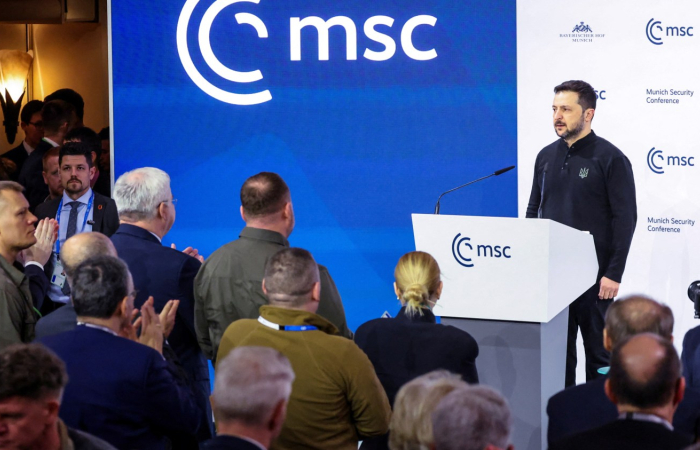
Ukrainian President Volodymyr Zelensky calls for European army

Ukrainian President Volodymyr Zelensky calls for European army

Ukraine's President Volodymyr Zelensky has called for the creation of an "army of Europe" to guard against Russia as he suggested the US may no longer come to the continent's aid. Speaking at the Munich Security Conference on Saturday, he also said that Ukraine would "never accept deals made behind our backs without our involvement" after US President Donald Trump and Russian President Vladimir Putin agreed to start peace talks.
Editor's choice
News
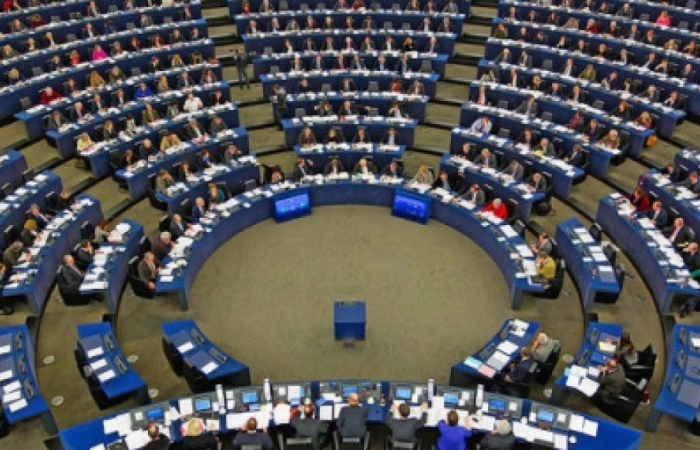
European Parliament adopts resolution on Georgia, calls for sanctions and new elections

European Parliament adopts resolution on Georgia, calls for sanctions and new elections

The European Parliament adopted a resolution on Thursday regarding the political crisis in Georgia with 400 votes in favour, 63 against and 81 abstentions. The resolution called for sanctions against former Prime Minister Bidzina Ivanishvili, his associates, government officials and media figures linked to the ruling Georgian Dream party, while urging the EU to withhold recognition of the current government and call for new elections.
Editor's choice
News
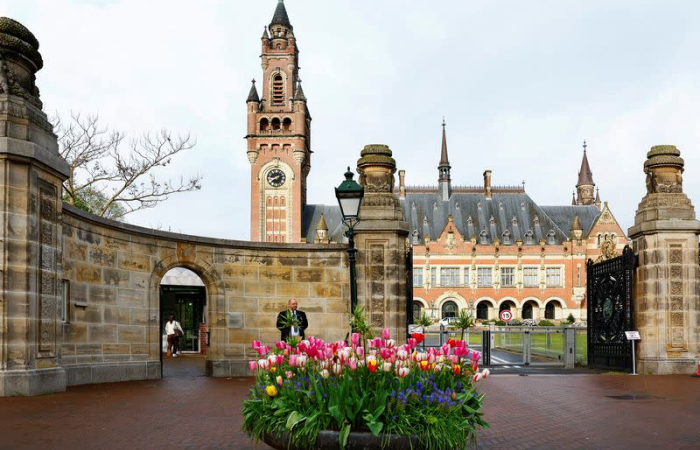
Azerbaijan sues Armenia for environmental damage in Court of Arbitration in The Hague

Azerbaijan sues Armenia for environmental damage in Court of Arbitration in The Hague

Azerbaijan has filed a lawsuit against Armenia in the Permanent Court of Arbitration in The Hague over what it says is evidence of extensive environmental destruction in areas of Azerbaijan once controlled by Yerevan. The Azerbaijani Foreign Ministry said in a statement on Thursday that Armenia had engaged in "widespread deforestation, environmentally unsustainable logging, mining, and construction of hydropower plants" in regions Baku retook from Armenia following a series of wars stretching back to the late 1980s. The affected areas include the Basut-Chay State Reserve, a protected forested zone near Azerbaijan's southern border, home to the rare Oriental plane tree.
Editor's choice
News
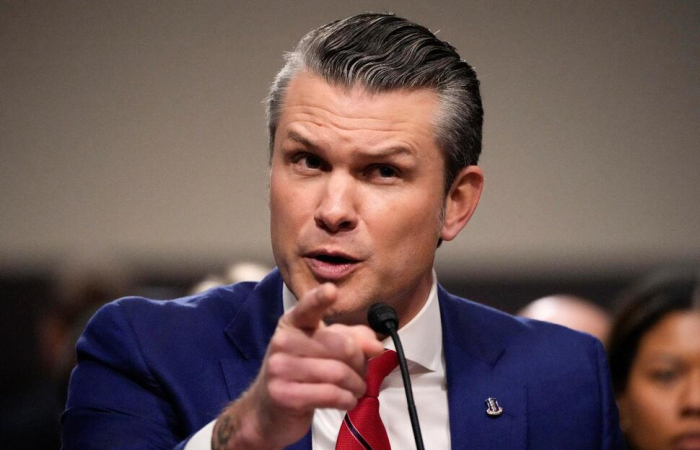
US tells its NATO allies that European security is no longer top priority

US tells its NATO allies that European security is no longer top priority

U.S. Defense Secretary Pete Hegseth has told Washington's NATO allies that they would have to step up and assume greater responsibility for Europe's security since the U.S. no longer remains "primarily focused on the security of Europe". He said "stark strategic realities", such as U.S. border security issues and threats posed by China are a greater priority. Hegseth also said that a return to Ukraine's pre-2014 borders was unrealistic and the Trump administration does not see NATO membership for Kyiv as part of a solution to the war triggered by Russia's invasion.
Editor's choice
News
USAID and Russian House shut down by Azerbaijan on the same day

USAID and Russian House shut down by Azerbaijan on the same day

Azerbaijan’s Foreign Ministry has declared the activities of both the U.S. Agency for International Development (USAID) and Russian House illegal in the country giving equal treatment to both the U.S. and Russia in relation to the operations of significant soft power organisations for both countries. USAID’s closure comes after comments by U.S. President Donald Trump , who told reporters that USAID is “run by a bunch of radical lunatics” and that his administration is “dealing with the situation.” Speculation is growing in Washington about the possibility of integrating USAID into the U.S. State Department’s structure. On the other hand, by expelling Russian House, Azerbaijan appears to be pressuring Russia into admitting responsibility for the downing of an AZAL passenger plane.
Editor's choice
News
European Commission calls for the release of journalists and political detainees in Georgia

European Commission calls for the release of journalists and political detainees in Georgia

The High Representative and Vice-President of the European Commission Kaja Kallas, and Commissioner for Enlargement Marta Kos said in a statement on Friday that the Georgian Dream authorities have taken “further steps away from democratic standards” and called on them to “release all journalists, activists and political detainees.” The statement by Kallas and Kos says that the rushed adoption of amendments to the Code on Administrative Offences, Criminal Code and the Law on Assemblies and Manifestations by Georgian Dream will have far-reaching effects on Georgian society and will significantly undermine the rights to freedom of expression, freedom of assembly, and media freedom.
Editor's choice
Opinion
Opinion: Disordered Interregnum: Threats to the South Caucasus?

Opinion: Disordered Interregnum: Threats to the South Caucasus?

The policy decisions made by the new President of the United States, Donald Trump, have triggered tectonic shifts in the international political order. The post-World War II, U.S.-led system is unraveling before our eyes, and paradoxically, this process has been accelerated by the United States itself. The new Secretary of State, Marco Rubio, described the post-Cold War order, characterized by unipolarity, as an “anomaly” and stated, “It was a product of the end of the Cold War, but eventually, you were going to reach back to a point where you had a multipolar world, with multiple great powers in different parts of the planet.” The United States appears to have abandoned its post-World War II role as the leader of the free world, established through Pax Americana and its commitment to providing security for allies in Europe, East Asia, and beyond.
Editor's choice
Opinion
Opinion: Musical Outcry in Yerevan Echoes Urgency of Armenia-Azerbaijan People-to-People Contact

Opinion: Musical Outcry in Yerevan Echoes Urgency of Armenia-Azerbaijan People-to-People Contact

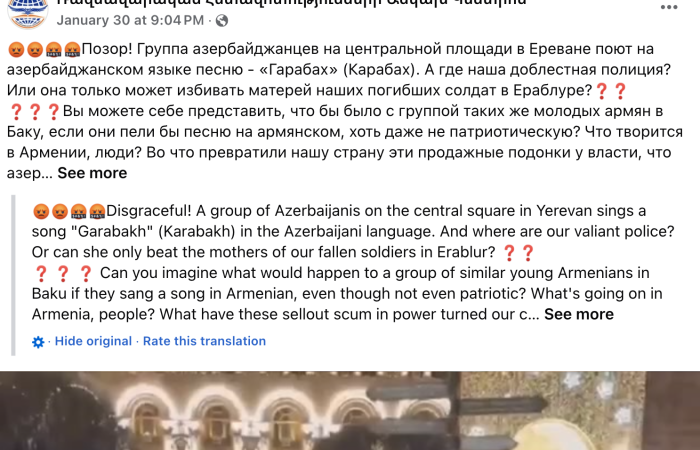
On the evening of 30 January, a Facebook post by the Independent Centre for Strategic Studies sparked outrage in Armenia. The post featured a 29-second video showing a group of men singing a 1972 Azerbaijani song with the chorus, Jan Karabakh, in Yerevan’s Republic Square. Though a song has been performed in the Armenian language with the same phrase actually in Karabakh, this short recent public rendition triggered a wave of anger on social media in the country.
Editor's choice
News
Prime Ministers of Georgia and Armenia meet in Yerevan

Prime Ministers of Georgia and Armenia meet in Yerevan

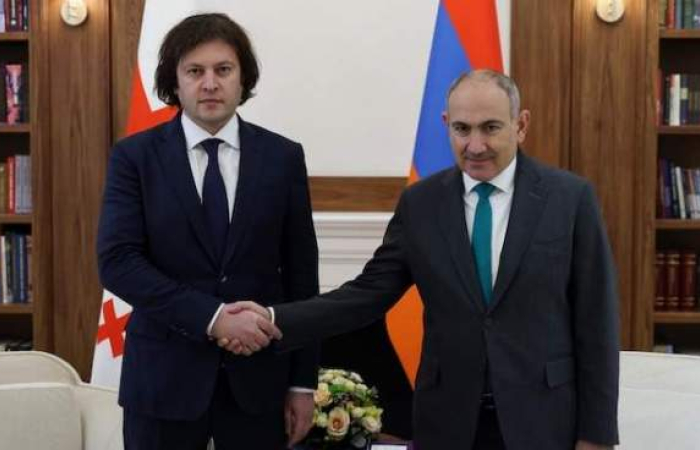
Georgian Prime Minister Irakli Kobakhidze met with his Armenian counterpart Nikol Pashinyan in Yerevan on Thursday. According to media reports,  they discussed the importance of the strategic partnership between the two countries as well as the issues to be discussed at the 14th Meeting of the Intergovernmental Commission for Economic Cooperation. They also gave attention to the situation in the region including progress in the peace process.