Theme

Diplomacy

Editor's choice
News
Germany accuses Russia of cyberattacks and disinformation campaign

Germany accuses Russia of cyberattacks and disinformation campaign

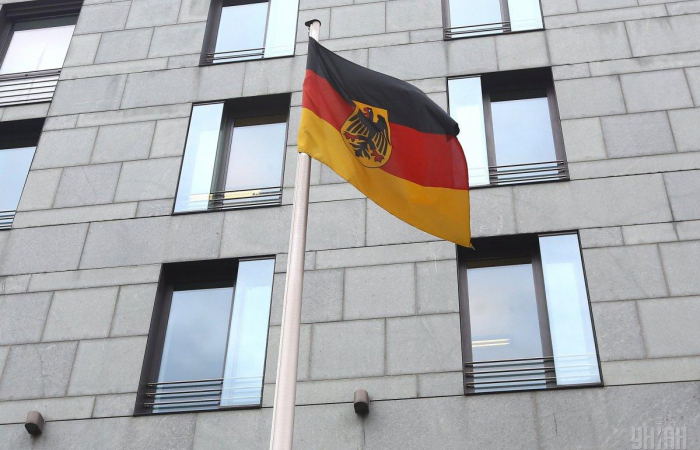
The German government holds Russia responsible for a cyberattack on German air traffic control, and for targeted disinformation campaigns before the last federal election. According to the German Foreign Office in Berlin, the incidents could be clearly attributed to the Russian military intelligence service, the GRU. In response, the Russian ambassador to Berlin was summoned to the Foreign Ministry. "We have been observing a massive increase in threatening hybrid activities by Russia for some time now," a spokesperson for the Foreign Ministry stated. These range from disinformation campaigns and espionage to cyberattacks and sabotage attempts. The aim is to divide society, sow distrust, and undermine confidence in democratic institutions. The spokesperson added that with these actions, Russia is "very concretely threatening our security, not only through its war of aggression against Ukraine, but also here in Germany."  The Foreign Ministry spokesperson explained that the cyberattack on air traffic control in August 2024 was clearly attributed to the hacker collective "APT28," known as "Fancy Bear," and to the responsibility of the Russian military intelligence service, the GRU. Furthermore, it could now be "conclusively stated" that Russia had attempted "to influence and destabilize both the last Federal election and the ongoing internal affairs of the Federal Republic of Germany." There was "absolutely irrefutable evidence" for this". The so-called "Storm 1516" campaign, which has been running since 2024, is allegedly backed by "reliable information" that the Moscow-based think tank "Center for Geopolitical Expertise" is behind it. The Center is also said to be supported by Russian military intelligence. Its primary aim is to influence democratic elections in the West. (Click the image to read more).
Editor's choice
Opinion
Opinion: A sustainable peace requires consistent long-term European involvement

Opinion: A sustainable peace requires consistent long-term European involvement

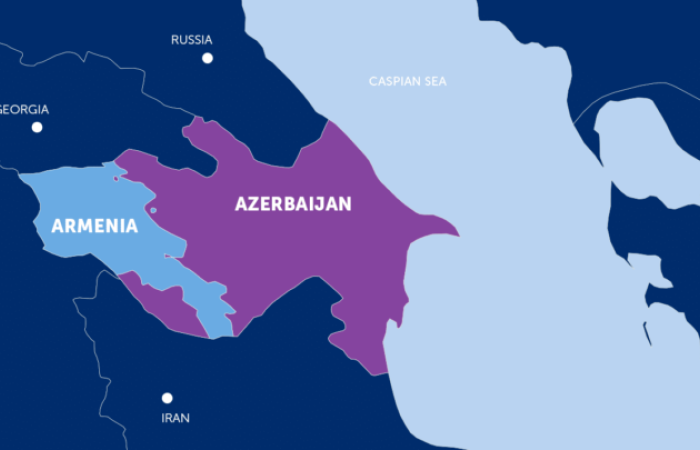
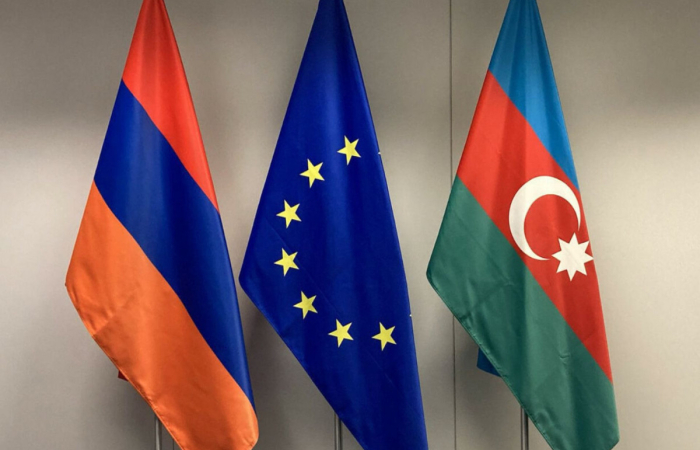
There is no denying that the EU, especially key member states acting in support, helped bring Baku and Yerevan closer to the Washington Declaration of August 8, 2025. But a declaration is not a treaty. Turning principles into a peace deal and eventually to a sustainable peace requires consistent long-term European involvement, writes Yalchin Mammadov in this-op-ed for commonspace.eu Before facilitating trust between Armenia and Azerbaijan, the EU is first expected to address its own credibility gap with Baku. A more balanced approach—such as including Azerbaijan, alongside Armenia, in the European Peace Facility—could be a useful first step. Diplomats can negotiate peace; societies must build peace. In this context, the EU can do what it does the best: long-term societal engagement. By expanding youth and academic exchange programmes, investing in cross-border civil society initiatives, and fostering people-to-people cooperation, Brussels can help shape a new generation equipped to sustain peace beyond political cycles. Such tools are slow and unglamorous, but if ignored, even the strongest treaty risks collapse. And obviously, these aspects require two-way engagement and genuine willingness by both governments to facilitate contact. If Brussels wants to remain influential, it needs to replace outdated one-size-fits-all policies with ambitious, interest-driven and differentiated approaches. Without a clear regional strategy, which appears to be the current situation, the South Caucasus will continue to sit at the margins of Europe’s security architecture—leaving space for other powers to take the lead. (You can read the op-ed in full by clicking the image.)

Filter archive

Publication date
Editor's choice
News
Majority of Georgians believe EU membership would be positive for Georgian-Abkhaz and Georgian-Ossetian relations

Majority of Georgians believe EU membership would be positive for Georgian-Abkhaz and Georgian-Ossetian relations

61 per cent of Georgians believe that the country’s integration into the European Union would have a positive impact on Georgian-Abkhaz and Georgian-Ossetian relations according to a new study by the Caucasus Research Resource Center on conflicts in Georgia. Additionally, 56 per cent think that NATO membership would also be a positive development. When it comes to Georgia’s rapprochement with Russia, 31 per cent of respondents believe it would have positive consequences. The study, “Conflicts in Georgia: Perceptions, Attitudes, and Expectations”, was commissioned by the Institute for Nationalism and Conflict Studies, the Levan Mikeladze Foundation, and the Caucasian House and conducted by the Caucasus Research Resource Center in 2024.
Editor's choice
Opinion
Opinion: Below the radars: Growing Gulf Presence in the South Caucasus

Opinion: Below the radars: Growing Gulf Presence in the South Caucasus

The past five years have marked a growing Gulf economic presence in the South Caucasus. Saudi Arabia and the United Arab Emirates have expanded their regional footprint through equity investments in Azerbaijan and Georgia’s transport and renewable energy sectors. Armenia has been a weak link in interregional chains due to conflict with Azerbaijan and its isolation from regional connectivity frameworks. Yet recently, Yerevan managed to establish profitable trade links to the Gulf, largely thanks to Western sanctions on Russia. The South Caucasus trio sees financial flows from the Gulf as necessary for successful economic diversification. For the Gulf countries, the South Caucasus provides an alternative market for strategic investments, which aligns with their long-term goals of projecting geo-economic influence and boosting trade.
Editor's choice
News
Georgian and Turkish Foreign Ministers meet in Ankara to discuss “strategic partnership”

Georgian and Turkish Foreign Ministers meet in Ankara to discuss “strategic partnership”

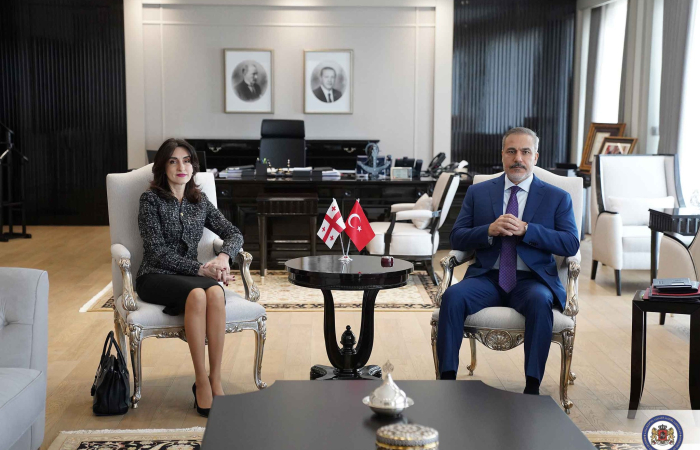
Maka Botchorishvili, the Foreign Minister of Georgia, on Wednesday praised her country’s “strategic partnership” with Turkey as being “based on friendship and strong mutual respect”, following a meeting with her Turkish counterpart Hakan Fidan in Ankara. In her comments, she highlighted the partnership was “further reinforced by continuous political dialogue and high-level engagements”. 
Editor's choice
News
MEP Nils Ušakovs in Armenia: Reforms linked to EU accession will strengthen country

MEP Nils Ušakovs in Armenia: Reforms linked to EU accession will strengthen country

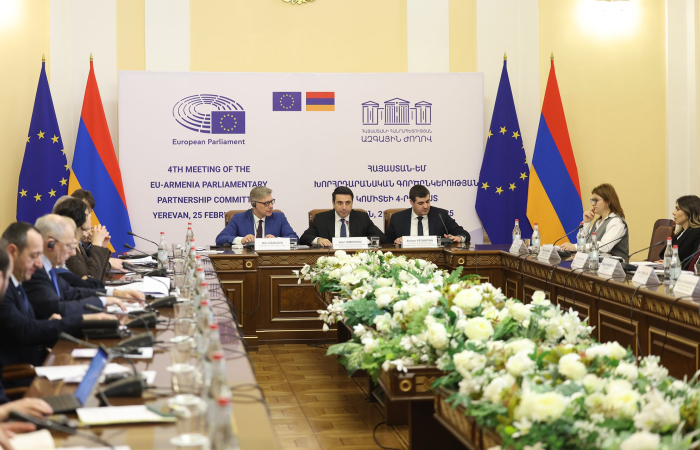
Speaking at a press conference after the 4th Meeting of EU-Armenia Parliamentary Partnership Committee in Yerevan, MEP Nils Ušakovs said that the process of Armenia’s accession to the European Union will require significant reforms over a long time. Ušakovs, co-chair of the committee, said that the reforms will strengthen the country and enable it to make more confident decisions regarding its future.
Editor's choice
News
US votes with Russia in United Nations resolutions on Ukraine

US votes with Russia in United Nations resolutions on Ukraine

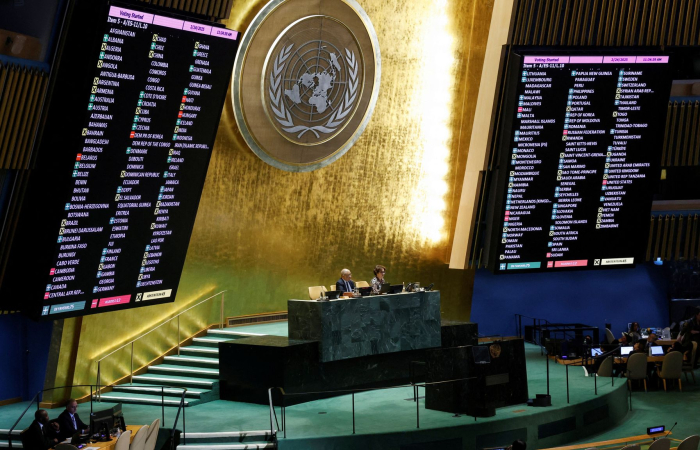
The US has twice sided with Russia in votes at the United Nations to mark the third anniversary of the Russian invasion of Ukraine, highlighting the Trump administration's change of stance on the war. First the US opposed a European-drafted resolution condemning Moscow's actions and supporting Ukraine's territorial integrity, voting the same way as Russia and countries including North Korea and Belarus at the UN General Assembly (UNGA) in New York. Then the US drafted and voted for a resolution at the UN Security Council which called for an end to the conflict but contained no criticism of Russia. The Security Council passed the resolution but two key US allies, the UK and France, abstained after their attempts to amend the wording were vetoed.
Editor's choice
Opinion
From Activist to Prime Minister, From Historical to Real Armenia: Pashinyan’s Bold New Gamble

From Activist to Prime Minister, From Historical to Real Armenia: Pashinyan’s Bold New Gamble

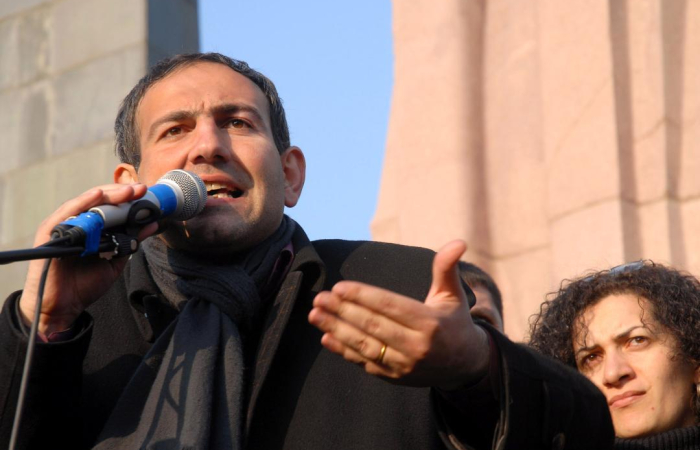
When Nikol Pashinyan embarked on a march from Gyumri to Yerevan at the end of March 2018 to prevent then President Serzh Sargsyan from clinging onto power, few believed he would succeed. Pashinyan was joined by a small group of allies as they made their way to the Armenian capital. Against all odds, Pashinyan’s gambit worked and is the country's premier today. For those that have followed his career to date, that shouldn't have come as a surprise.
Editor's choice
News
Italian Senate adopts resolution supporting Armenia-Azerbaijan peace process

Italian Senate adopts resolution supporting Armenia-Azerbaijan peace process

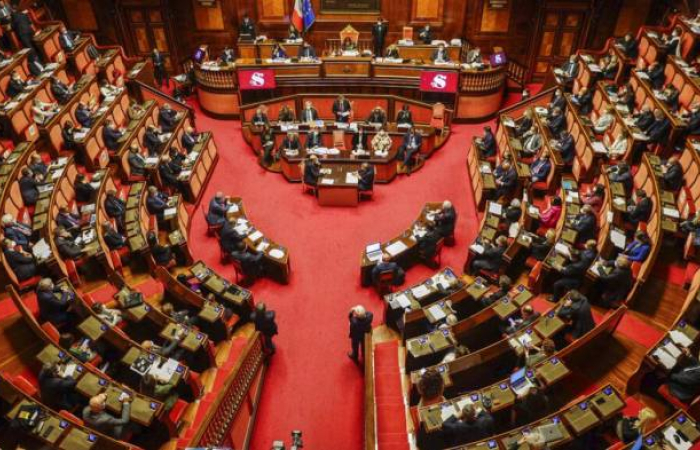
The Italian Senate has adopted a resolution supporting the Armenia-Azerbaijan peace process, calling on the government of Italy to strengthen its commitment for both countries to abandon the use of force in the future and maintain peaceful, constructive and open dialogue. The resolution titled ‘On Initiatives to Support the Peace Process Between Armenia and Azerbaijan’ was adopted unanimously on the 19th of February.
Editor's choice
Opinion
Opinion: The World Must Know More about the Khojaly Genocide

Opinion: The World Must Know More about the Khojaly Genocide

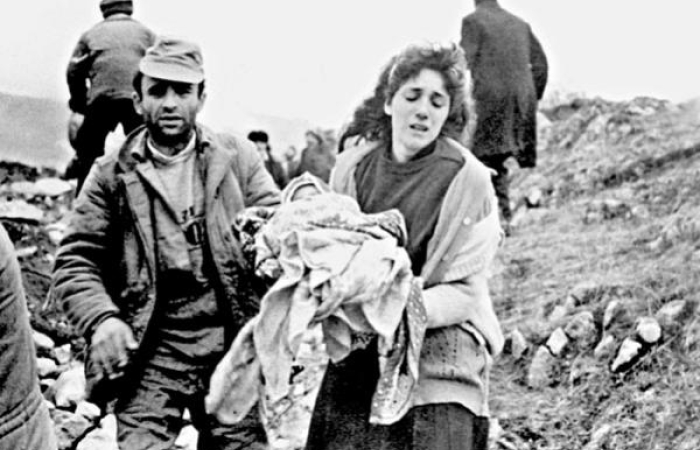
The occupation and ethnic cleansing of Azerbaijan’s Karabakh region and seven surrounding districts in the early 1990s by the armed forces of Armenia involved immeasurable atrocities and extreme violence. Realizing that more than 700,000 people in the region would not easily flee their homes, Armenian leaders resorted to force. The ethnic cleansing carried out by the Armenian armed forces resulted in numerous humanitarian tragedies over the years, but the most devastating was the massacre of civilians in Khojaly, a town in Azerbaijan’s Karabakh region, in the bitterly cold morning of February 26, 1992.
Editor's choice
News
Russia and US agree without Ukraine to press ahead on path to peace

Russia and US agree without Ukraine to press ahead on path to peace

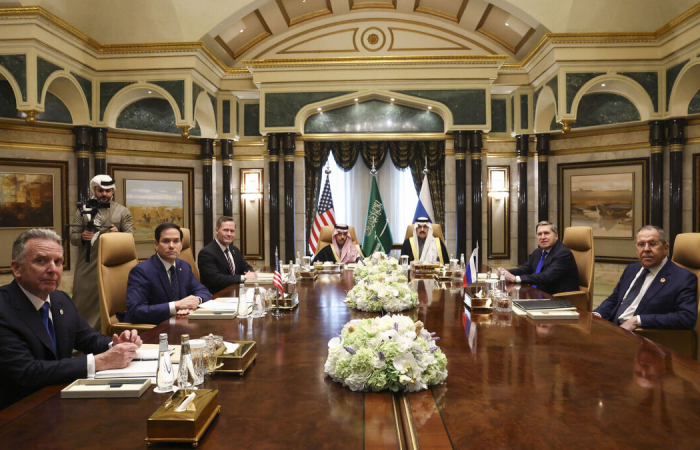
The United States and Russia agreed in Riyadh on Tuesday to press ahead with efforts to end the war in Ukraine, a US official said, as Kyiv and its European allies watched anxiously from the sidelines and Moscow raised a major new demand. US State Department spokesperson Tammy Bruce said the two sides agreed to appoint "respective high-level teams to begin working on a path to ending the conflict in Ukraine as soon as possible in a way that is enduring, sustainable, and acceptable to all sides".