Theme

Defence

Stories related to defence, strategy and cooperation. 

Editor's choice
News
NATO Chief says war is on Europe's doorstep, and warns against complacency

NATO Chief says war is on Europe's doorstep, and warns against complacency

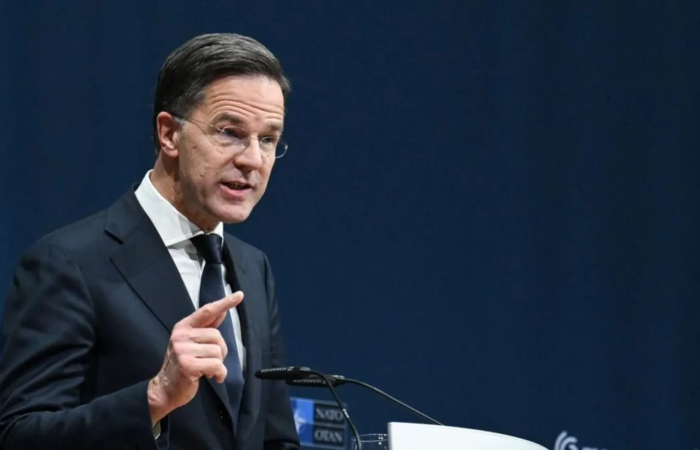
Russia could attack a NATO country within the next five years, the Secretary General of NATO, Mark Rutte, said in a stark new warning. "NATO's own defences can hold for now," Rutte warned in Berlin, but conflict was "next door" to Europe, and he feared "too many are quietly complacent, and too many don't feel the urgency, too many believe that time is on our side. "Russia is already escalating its covert campaign against our societies," Rutte said in a speech in Germany. "We must be prepared for the scale of war our grandparents or great-grandparents endured." Earlier this month, Russia's President Vladimir Putin said his country was not planning to go to war with Europe, but it was ready "right now" if Europe wanted to - or started a war. But similar reassurances were given by Moscow in 2022, just before 200,000 Russian troops crossed the border and invaded Ukraine. Putin has accused European countries of hindering US efforts to bring peace in Ukraine - a reference to the role Ukraine's European allies have recently played in trying to change a US peace plan to end the war, whose initial draft was seen as favouring Russia. But Putin was not sincere, Nato's secretary-general said in the German capital, Berlin. Supporting Ukraine, he added, was a guarantee for European security. "Just imagine if Putin got his way; Ukraine under the boot of Russian occupation, his forces pressing against a longer border with Nato, and the significantly increased risk of an armed attack against us." Russia's economy has been on a war footing for more than three years now - its factories churn out ever more supplies of drones, missiles and artillery shells. According to a recent report by the Kiel Institute for the World Economy, Russia has been producing each month around 150 tanks, 550 infantry fighting vehicles, 120 Lancet drones and more than 50 artillery pieces. The UK, and most of its Western allies, are simply not anywhere near this point. Analysts say it would take years for Western Europe's factories to come close to matching Russia's mass-production of weapons. "Allied defence spending and production must rise rapidly, our armed forces must have what they need to keep us safe," the Nato chief said.
Editor's choice
Analysis
Mehman Aliyev on what "peace" can look like for Ukraine

Mehman Aliyev on what "peace" can look like for Ukraine

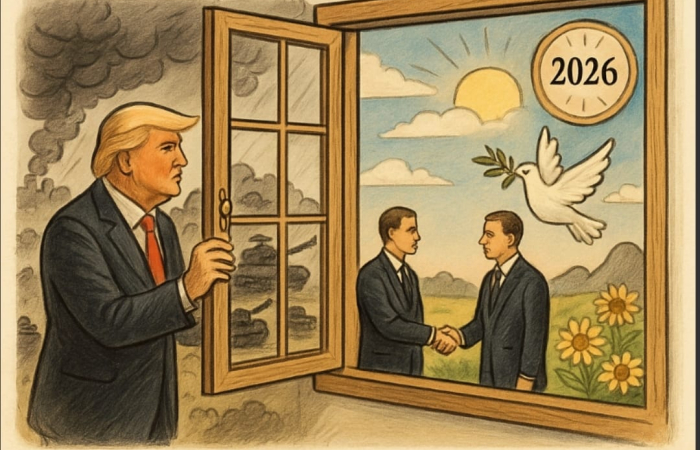
In this analysis,  veteran Azerbaijani journalist and political commentator, Mehman Aliyev, draws lessons from the 1994 Armenia-Azerbaijan ceasefire, to assess what can be possible impact of ceasefire in Ukraine. According to diplomats, a negotiating format or a partial ceasefire based on a modified version of the twenty-eight points is entirely plausible in 2026. A frozen line of contact, monitored by international mechanisms while talks drag on, is more likely than a fully implemented peace treaty by early that same year. “This document opens a window,” said political commentator Farid Gakhramanov. “Whether it means the end of the war or the beginning of a new frozen conflict will depend on the decisions of Moscow, Kyiv, Washington, and Brussels — not on the document itself.” (You can read the full analysis by clicking the image)

Filter archive

Publication date
Editor's choice
News
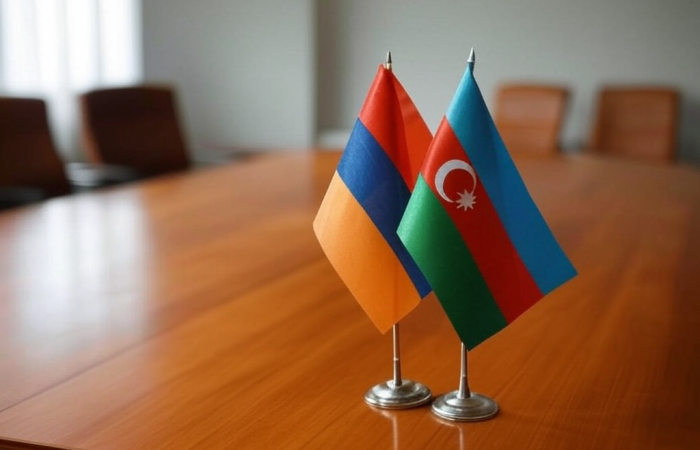
European Union welcomes conclusion of Armenia-Azerbaijan peace talks

European Union welcomes conclusion of Armenia-Azerbaijan peace talks

The European Union has congratulated the leaders of Armenia and Azerbaijan for finalising a peace deal and urged them to sign the treaty soon. The South Caucasus neighbours said on Thursday 13 March that they had concluded talks aimed at resolving their decades-old conflict, with both sides agreeing on the text of a possible treaty. European Council chief Antonio Costa wrote on X that it was "a decisive step towards the full normalisation of relations between Armenia and Azerbaijan and the opening of the region."
Editor's choice
News
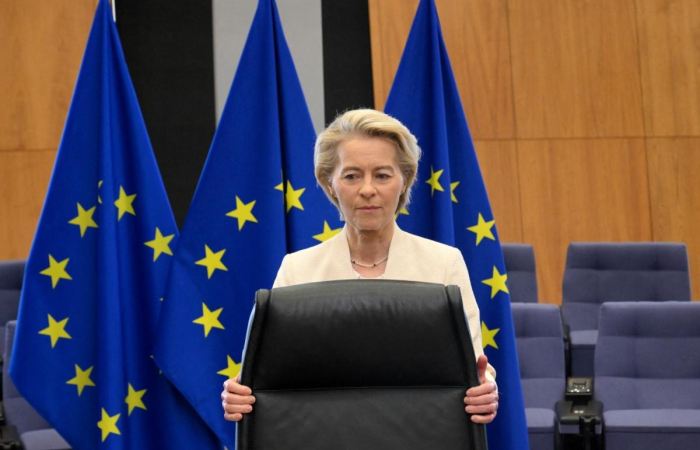
European leaders agree on defense spending surge at crucial EU summit on Ukraine

European leaders agree on defense spending surge at crucial EU summit on Ukraine

European Union leaders agreed to significantly boost defense spending to ensure Europe’s security and voiced near-unanimous support for Ukraine at an extraordinary meeting on Thursday, after the United States dramatically pulled back its assistance to the continent in a historic upending of transatlantic relations. At the summit in Brussels, 26 European leaders signed a text calling for a peace deal that respects “Ukraine’s independence, sovereignty and territorial integrity,” while including Ukraine in the negotiations. Hungary abstained.
Editor's choice
Opinion
Opinion: Baku Trials Expose Armenia’s Role in the Karabakh Conflict

Opinion: Baku Trials Expose Armenia’s Role in the Karabakh Conflict

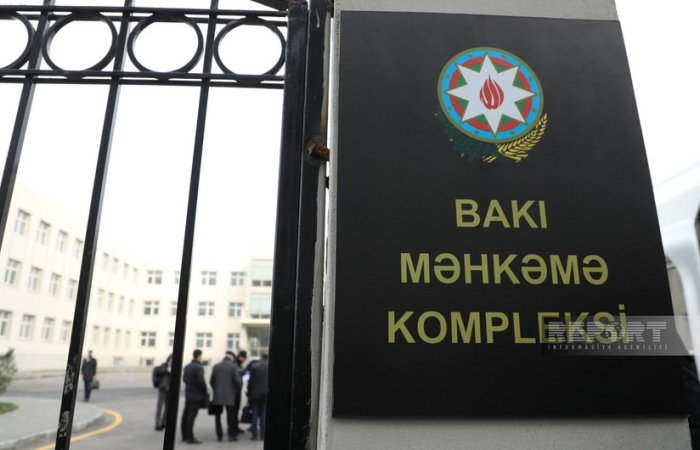
The trials of former Armenian separatist leaders in Baku mark a long-overdue moment of accountability for decades of aggression, occupation, and destruction in the Karabakh region of Azerbaijan. The proceedings in the Baku Military Court are more than a legal exercise – they are a public affirmation of Azerbaijan’s sovereignty over its internationally recognized territory, a sovereignty that Armenia sought to undermine for over 30 years through both overt and covert support for the separatist regime. Courtroom testimonies of the former separatist leaders have reinforced what Azerbaijan has long maintained: Armenia was not a bystander but the architect of the separatist military apparatus that inflicted immense suffering on Azerbaijanis.
Editor's choice
News
US votes with Russia in United Nations resolutions on Ukraine

US votes with Russia in United Nations resolutions on Ukraine

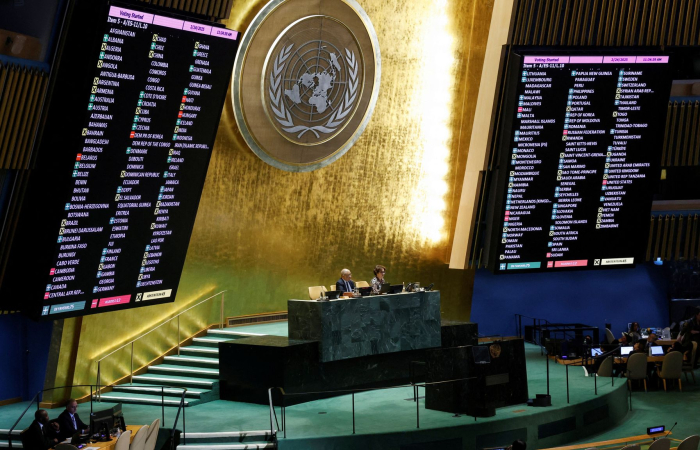
The US has twice sided with Russia in votes at the United Nations to mark the third anniversary of the Russian invasion of Ukraine, highlighting the Trump administration's change of stance on the war. First the US opposed a European-drafted resolution condemning Moscow's actions and supporting Ukraine's territorial integrity, voting the same way as Russia and countries including North Korea and Belarus at the UN General Assembly (UNGA) in New York. Then the US drafted and voted for a resolution at the UN Security Council which called for an end to the conflict but contained no criticism of Russia. The Security Council passed the resolution but two key US allies, the UK and France, abstained after their attempts to amend the wording were vetoed.
Editor's choice
News
Russia and US agree without Ukraine to press ahead on path to peace

Russia and US agree without Ukraine to press ahead on path to peace

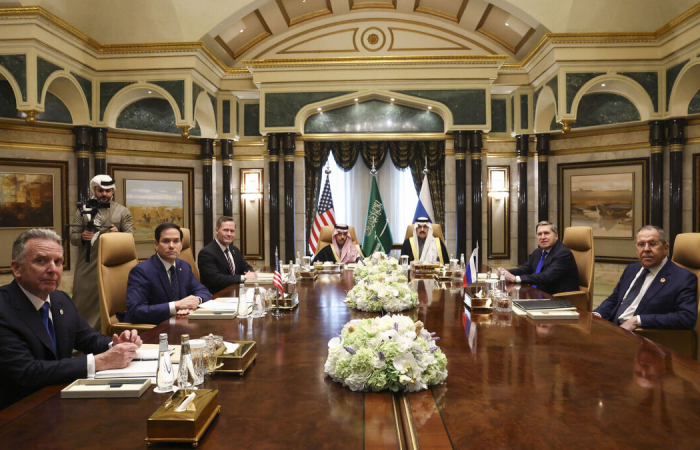
The United States and Russia agreed in Riyadh on Tuesday to press ahead with efforts to end the war in Ukraine, a US official said, as Kyiv and its European allies watched anxiously from the sidelines and Moscow raised a major new demand. US State Department spokesperson Tammy Bruce said the two sides agreed to appoint "respective high-level teams to begin working on a path to ending the conflict in Ukraine as soon as possible in a way that is enduring, sustainable, and acceptable to all sides".
Editor's choice
News
Ukrainian President Volodymyr Zelensky calls for European army

Ukrainian President Volodymyr Zelensky calls for European army

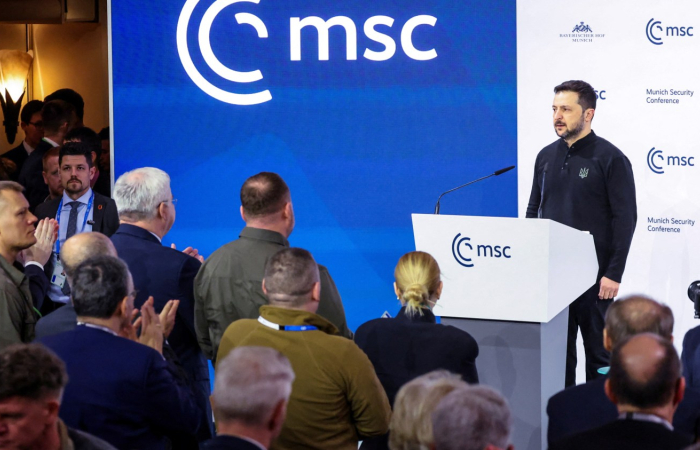
Ukraine's President Volodymyr Zelensky has called for the creation of an "army of Europe" to guard against Russia as he suggested the US may no longer come to the continent's aid. Speaking at the Munich Security Conference on Saturday, he also said that Ukraine would "never accept deals made behind our backs without our involvement" after US President Donald Trump and Russian President Vladimir Putin agreed to start peace talks.
Editor's choice
News
US tells its NATO allies that European security is no longer top priority

US tells its NATO allies that European security is no longer top priority

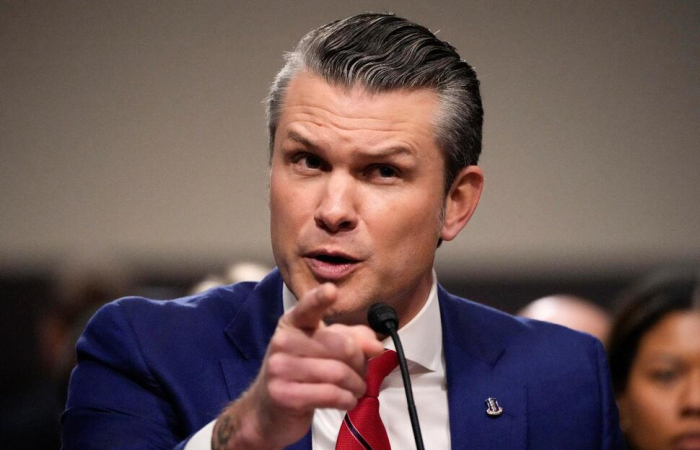
U.S. Defense Secretary Pete Hegseth has told Washington's NATO allies that they would have to step up and assume greater responsibility for Europe's security since the U.S. no longer remains "primarily focused on the security of Europe". He said "stark strategic realities", such as U.S. border security issues and threats posed by China are a greater priority. Hegseth also said that a return to Ukraine's pre-2014 borders was unrealistic and the Trump administration does not see NATO membership for Kyiv as part of a solution to the war triggered by Russia's invasion.
Editor's choice
News
New Strategic Partnership signed between the U.S. and Armenia

New Strategic Partnership signed between the U.S. and Armenia

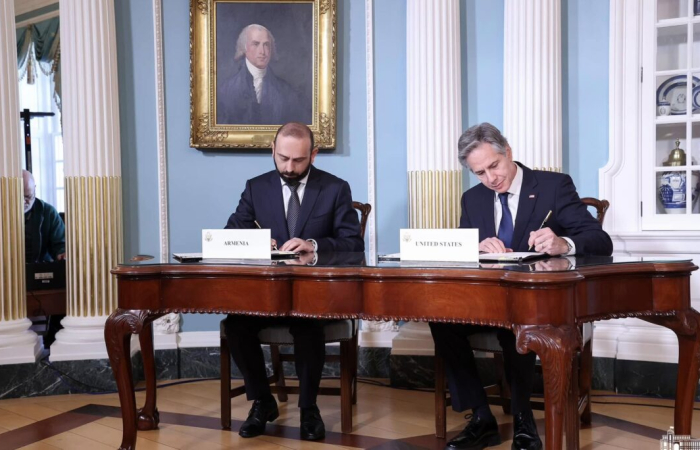
US Secretary of State Antony Blinken and Armenian Foreign Minister Ararat Mirzoyan launched the U.S.-Armenia Strategic Partnership Commission on January 14 marking the latest milestone in the bilateral relationship between the two countries.  The United States and Armenia signed the strategic partnership agreement at the State Department in Washington expanding cooperation in security and several of areas as Yerevan appears to distance itself from Russia, a traditional. The United States is "working with Armenia in the realm of security and defense, and in particular, to support its efforts to assert its independence and sovereignty over its own territory," Blinken said at the signing ceremony.
Editor's choice
News
Azerbaijan-NATO event focused on energy security and climate change challenges

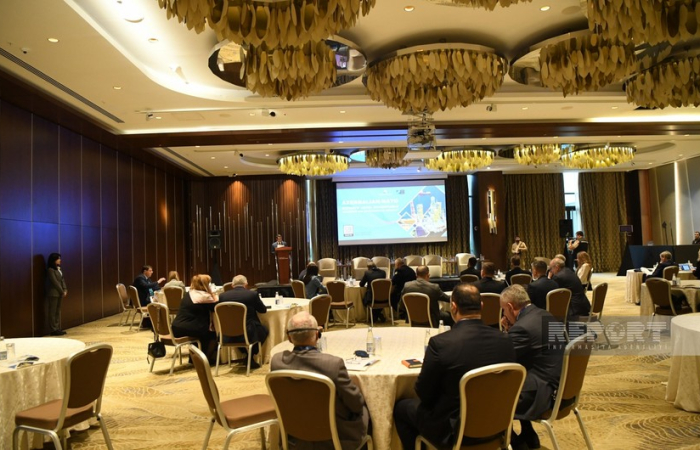
Azerbaijan-NATO event focused on energy security and climate change challenges

On Monday (28 October), Azerbaijan held a meeting in Baku with NATO's Climate and Energy Security Sector representatives from the Innovation, Hybrid Issues and Cybersecurity Division and representatives from NATO member and partner countries to discuss energy security and climate change.