Theme

Defence

Stories related to defence, strategy and cooperation. 

Editor's choice
News
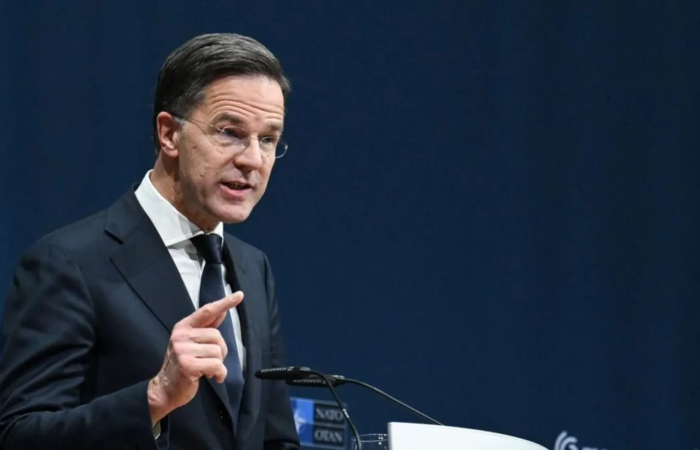
NATO Chief says war is on Europe's doorstep, and warns against complacency

NATO Chief says war is on Europe's doorstep, and warns against complacency

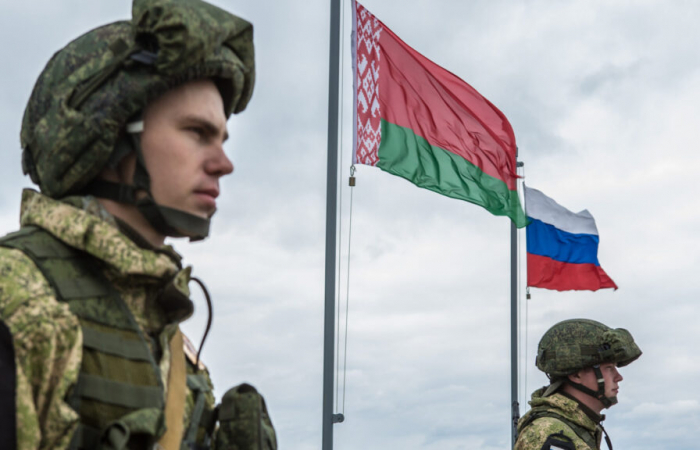
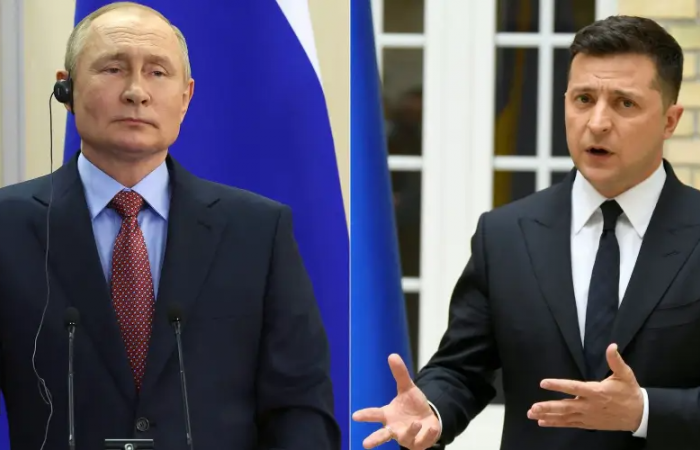
Russia could attack a NATO country within the next five years, the Secretary General of NATO, Mark Rutte, said in a stark new warning. "NATO's own defences can hold for now," Rutte warned in Berlin, but conflict was "next door" to Europe, and he feared "too many are quietly complacent, and too many don't feel the urgency, too many believe that time is on our side. "Russia is already escalating its covert campaign against our societies," Rutte said in a speech in Germany. "We must be prepared for the scale of war our grandparents or great-grandparents endured." Earlier this month, Russia's President Vladimir Putin said his country was not planning to go to war with Europe, but it was ready "right now" if Europe wanted to - or started a war. But similar reassurances were given by Moscow in 2022, just before 200,000 Russian troops crossed the border and invaded Ukraine. Putin has accused European countries of hindering US efforts to bring peace in Ukraine - a reference to the role Ukraine's European allies have recently played in trying to change a US peace plan to end the war, whose initial draft was seen as favouring Russia. But Putin was not sincere, Nato's secretary-general said in the German capital, Berlin. Supporting Ukraine, he added, was a guarantee for European security. "Just imagine if Putin got his way; Ukraine under the boot of Russian occupation, his forces pressing against a longer border with Nato, and the significantly increased risk of an armed attack against us." Russia's economy has been on a war footing for more than three years now - its factories churn out ever more supplies of drones, missiles and artillery shells. According to a recent report by the Kiel Institute for the World Economy, Russia has been producing each month around 150 tanks, 550 infantry fighting vehicles, 120 Lancet drones and more than 50 artillery pieces. The UK, and most of its Western allies, are simply not anywhere near this point. Analysts say it would take years for Western Europe's factories to come close to matching Russia's mass-production of weapons. "Allied defence spending and production must rise rapidly, our armed forces must have what they need to keep us safe," the Nato chief said.
Editor's choice
Analysis
Mehman Aliyev on what "peace" can look like for Ukraine

Mehman Aliyev on what "peace" can look like for Ukraine

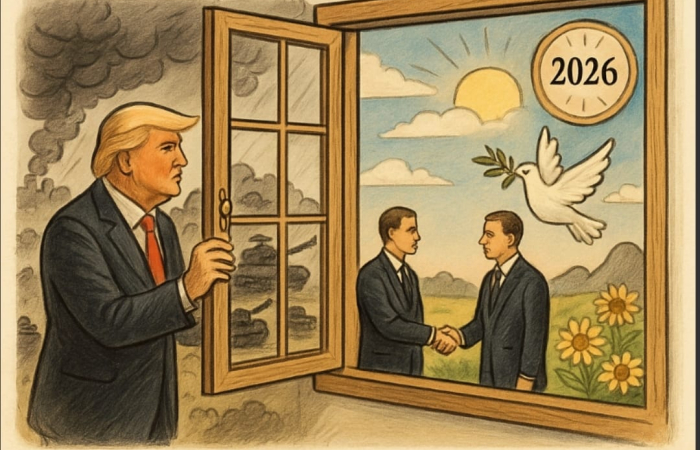
In this analysis,  veteran Azerbaijani journalist and political commentator, Mehman Aliyev, draws lessons from the 1994 Armenia-Azerbaijan ceasefire, to assess what can be possible impact of ceasefire in Ukraine. According to diplomats, a negotiating format or a partial ceasefire based on a modified version of the twenty-eight points is entirely plausible in 2026. A frozen line of contact, monitored by international mechanisms while talks drag on, is more likely than a fully implemented peace treaty by early that same year. “This document opens a window,” said political commentator Farid Gakhramanov. “Whether it means the end of the war or the beginning of a new frozen conflict will depend on the decisions of Moscow, Kyiv, Washington, and Brussels — not on the document itself.” (You can read the full analysis by clicking the image)

Filter archive

Publication date
Editor's choice
News
Did Russia give Iran the technology for a hypersonic ballistic missile?

Did Russia give Iran the technology for a hypersonic ballistic missile?

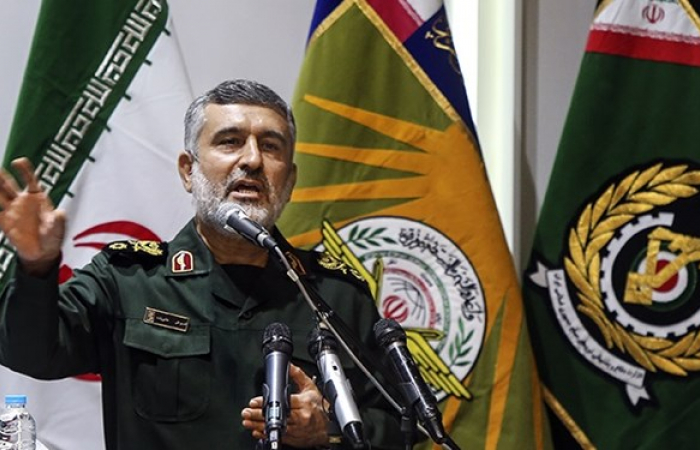
Iran has announced that it has developed a hypersonic ballistic missile Iran’s Fars news agency quoted the Islamic Revolution Guards Corps (IRGC) Aerospace Commander Brigadier General Amir Ali Hajizadeh as saying on Thursday (10 November) that the country has manufactured a hypersonic ballistic missile with advanced technologies that can penetrate all types of advanced air defence systems. Speaking to reporters Brig. Gen. Hajizadeh said “The missile can target the enemy’s anti-missile systems and is a great generational leap in the missile field”. “I don’t think any technology would be found for tens of years capable of countering it,” the IRGC commander declared. The announcement appears to have taken defence analysts by surprise, and concern has been expressed in different quarters Hypersonic missiles can deliver nuclear weapons in the same way as traditional ballistic missiles, but they can fly at more than five times the speed of sound and are highly maneuverable, making them impossible to track and defend against. Unlike ballistic missiles, hypersonic missiles fly on a low trajectory in the atmosphere, and are able to reach targets more quickly. Several countries have developed systems designed to defend against cruise and ballistic missiles, but the ability to track and take down a hypersonic missile remains elusive. Iran’s claim to have developed such a missile raises the question of where Tehran obtained the technology.
Editor's choice
News
Russia holds first major nuclear drill since invasion of Ukraine

Russia holds first major nuclear drill since invasion of Ukraine

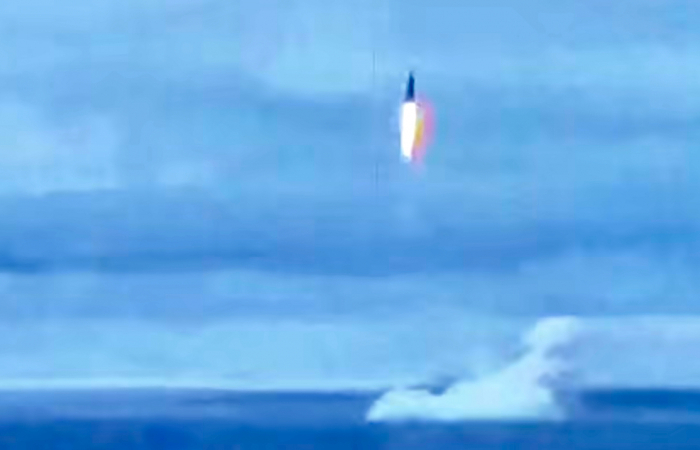
Russian armed forces conducted a major nuclear drill on Wednesday (October 26), the first since Russia launched its invasion of Ukraine in February. The last Russian nuclear drill took place five days before it invaded Ukraine. President Vladimir Putin monitored the drill from a control centre. The exercise, which Russia says is an "annual routine", worries western countries because Putin has hinted he may be ready to use nuclear weapons in Ukraine Russian Minister of Defence Sergei Shoigu called the drill a simulation of a “mass nuclear strike with strategic attack forces in response to a nuclear attack by our adversary”. According to Shoigu, the army practised a 'massive nuclear strike' in preparation for a possible nuclear attack by an enemy. The exercise included firing long-range cruise missiles at practice targets. The missile-carrying K-114 Tula submarine and two Tu-95 long-range strategic nuclear bombers were also used, the Kremlin reported. The missiles were fired from the Kamchatka Peninsula, in the far east of Russia. Cruise missiles from a nuclear-powered submarine were fired in the Barents Sea, in the north of Russia.
Editor's choice
News
Greek and Turkish defence ministers met in Brussels

Greek and Turkish defence ministers met in Brussels

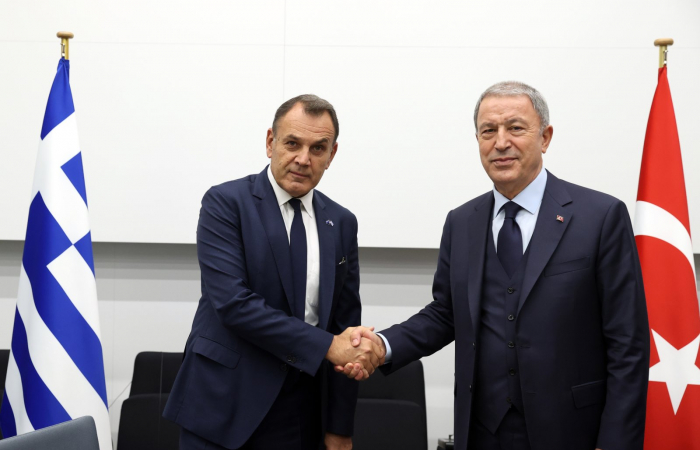
Turkish Defense Minister Hulusi Akar and his Greek counterpart Nikolaos Panagiotopoulos, met on Thursday (13 October) on the sidelines of a NATO meeting in Brussels, amid ongoing tensions between their two countries. The meeting between the two ministers comes as the two countries amid ongoing disagreements between Athens and Ankara on a range of issues, including the Eastern Mediterranean, Cyprus, migrant pushbacks and more. Both ministers were in Brussels to attend the Meeting of NATO Ministers of Defence. The two uneasy NATO neighbors have long-standing sea and air boundary disputes which lead to near-daily air force patrols and interception missions mostly around Greek islands near Turkey's coastline. The situation exacerbated recently as both sides started deploying troops on small islands in the Aegean that up to now have been largely demilitarised.
Editor's choice
News
Taiwanese President reiterates island's sovereignty on national day

Taiwanese President reiterates island's sovereignty on national day

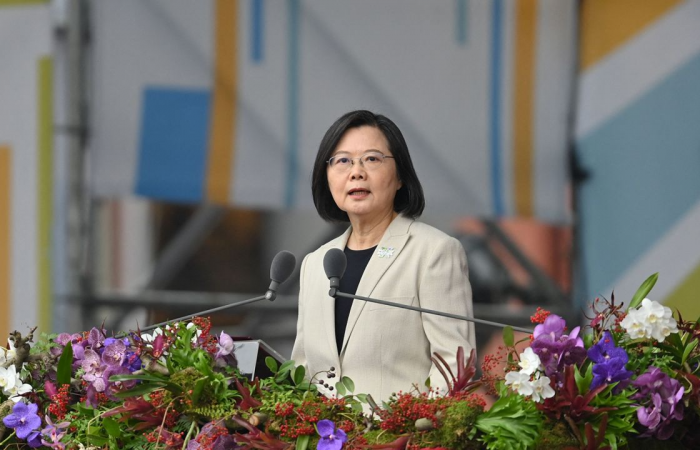
As Taiwan celebrated “Double Ten”, the island’s national day on Monday (10 October), President Tsai Ing-wen reiterated Taiwan’s sovereignty in an address to the people of Taiwan. During a ceremonial speech, President Tsai said that the Taiwanese people “must defend our national sovereignty and our free and democratic way of life. On this point, we have no room for compromise”.  Tsai Ing-wen said it was “regrettable” that China has increased its military and political presence thereby threatening peace and stability in the Taiwan Strait and region. President Tsai continued to say that they would be willing to have talks with Beijing in order to keep the peace, but only if the negotiations were conducted with “rationality, equality and mutuality”. On top of that, she emphasised that Beijing must not think there is any space for compromise in Taiwan’s commitment to democracy and freedom. 
Editor's choice
Opinion
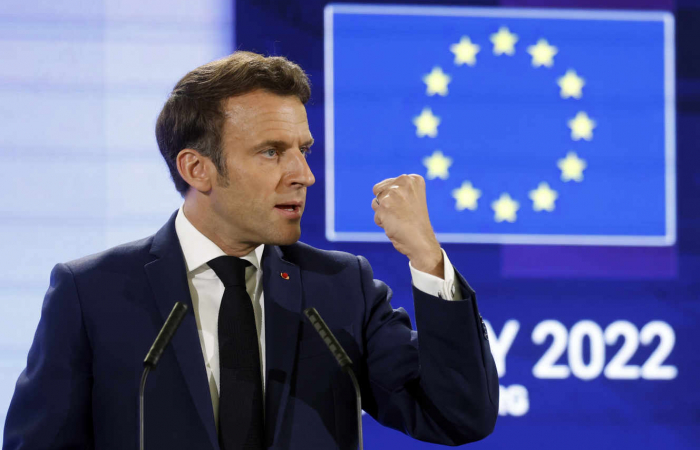
Opinion: Macron's 'European Political Community' offers an opportunity for a continent-wide approach to critical security issues

Opinion: Macron's 'European Political Community' offers an opportunity for a continent-wide approach to critical security issues

French President Emmanuel Macron's proposal to create a "European Political Community" can, if handled correctly, provide a permanent framework where EU countries and other European states can interact on critical political and security issues. However, for the community to succeed it must not simply become an extension of the EU. It must be designed to ensure that all countries involved have a voice in fostering political dialogue and cooperation in order to address issues of common interest, writes Maximiliaan van Lange in this op-ed for commonspace.eu. Overall the idea of a European Political Community is a positive one. Ensuring that countries like Türkiye and the UK can be equal partners in the discussion on the future of Europe's security, is an important and positive step. Making sure that smaller countries in the Balkans and the Caucasus can also be part of the conversation is equally relevant. But for the Community to succeed it must quickly carve a niche for itself in the crowded field of European institutions, which apart from NATO and the EU, also includes the Council of Europe, the OSCE, the Western European Union, not to mention multiple sub regional entities. The best option for the new community is to focus on security, and the security threats poised by the new Russian and Chinese assertivness.