Theme

Defence

Stories related to defence, strategy and cooperation. 

Editor's choice
News
NATO Chief says war is on Europe's doorstep, and warns against complacency

NATO Chief says war is on Europe's doorstep, and warns against complacency

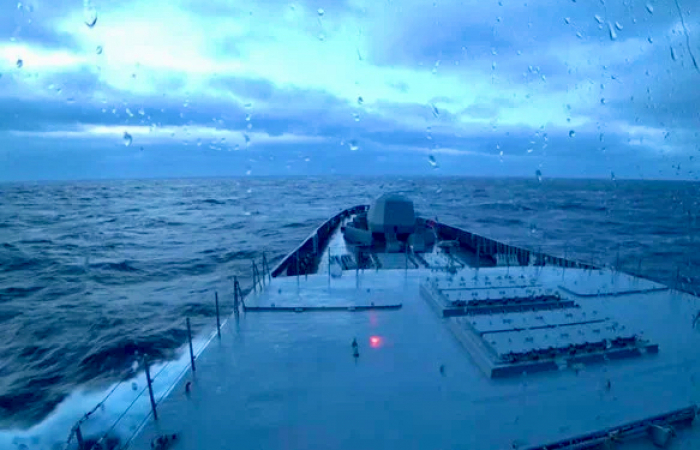
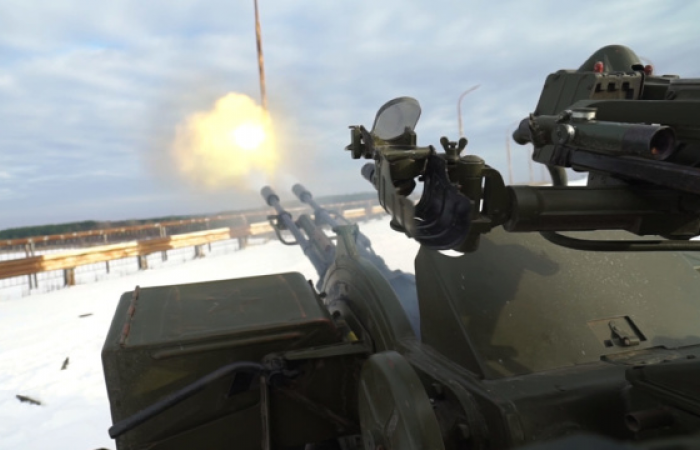
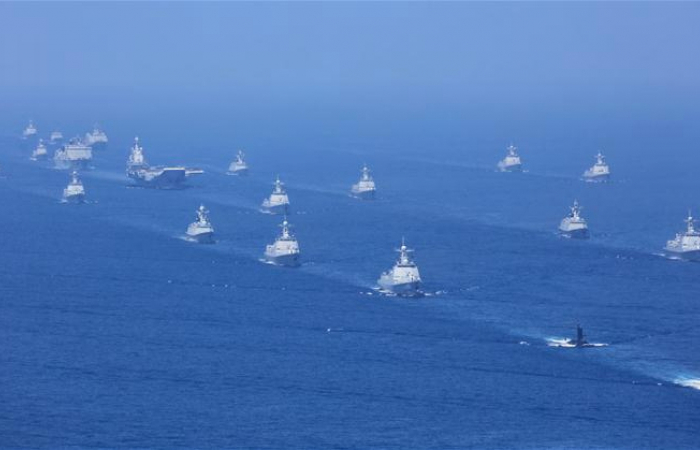
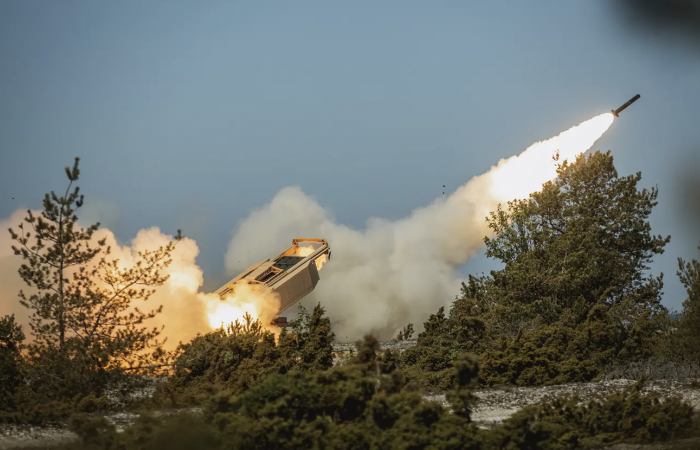
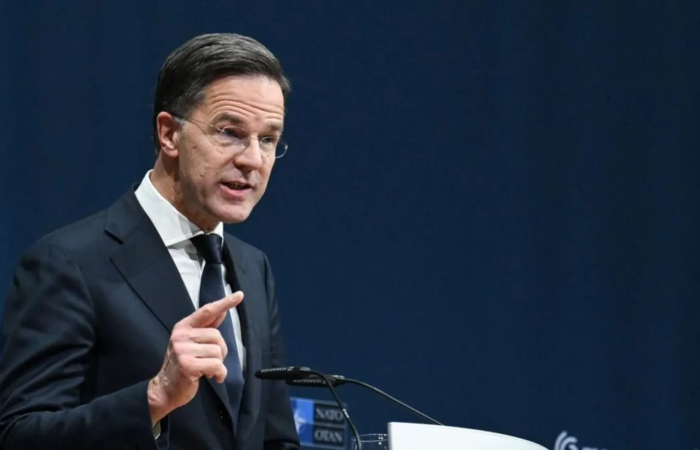
Russia could attack a NATO country within the next five years, the Secretary General of NATO, Mark Rutte, said in a stark new warning. "NATO's own defences can hold for now," Rutte warned in Berlin, but conflict was "next door" to Europe, and he feared "too many are quietly complacent, and too many don't feel the urgency, too many believe that time is on our side. "Russia is already escalating its covert campaign against our societies," Rutte said in a speech in Germany. "We must be prepared for the scale of war our grandparents or great-grandparents endured." Earlier this month, Russia's President Vladimir Putin said his country was not planning to go to war with Europe, but it was ready "right now" if Europe wanted to - or started a war. But similar reassurances were given by Moscow in 2022, just before 200,000 Russian troops crossed the border and invaded Ukraine. Putin has accused European countries of hindering US efforts to bring peace in Ukraine - a reference to the role Ukraine's European allies have recently played in trying to change a US peace plan to end the war, whose initial draft was seen as favouring Russia. But Putin was not sincere, Nato's secretary-general said in the German capital, Berlin. Supporting Ukraine, he added, was a guarantee for European security. "Just imagine if Putin got his way; Ukraine under the boot of Russian occupation, his forces pressing against a longer border with Nato, and the significantly increased risk of an armed attack against us." Russia's economy has been on a war footing for more than three years now - its factories churn out ever more supplies of drones, missiles and artillery shells. According to a recent report by the Kiel Institute for the World Economy, Russia has been producing each month around 150 tanks, 550 infantry fighting vehicles, 120 Lancet drones and more than 50 artillery pieces. The UK, and most of its Western allies, are simply not anywhere near this point. Analysts say it would take years for Western Europe's factories to come close to matching Russia's mass-production of weapons. "Allied defence spending and production must rise rapidly, our armed forces must have what they need to keep us safe," the Nato chief said.
Editor's choice
Analysis
Mehman Aliyev on what "peace" can look like for Ukraine

Mehman Aliyev on what "peace" can look like for Ukraine

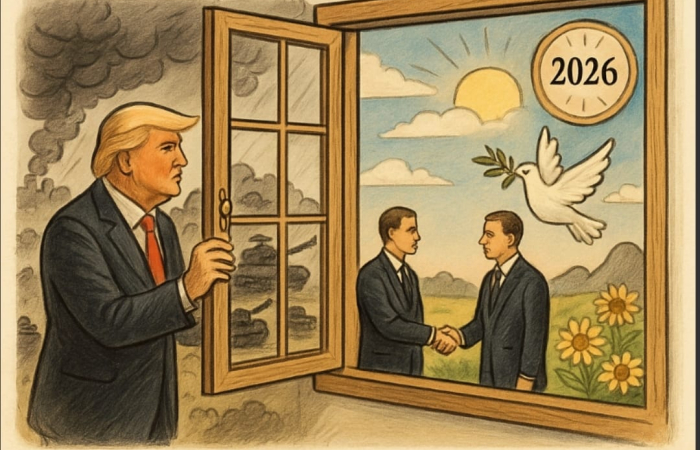
In this analysis,  veteran Azerbaijani journalist and political commentator, Mehman Aliyev, draws lessons from the 1994 Armenia-Azerbaijan ceasefire, to assess what can be possible impact of ceasefire in Ukraine. According to diplomats, a negotiating format or a partial ceasefire based on a modified version of the twenty-eight points is entirely plausible in 2026. A frozen line of contact, monitored by international mechanisms while talks drag on, is more likely than a fully implemented peace treaty by early that same year. “This document opens a window,” said political commentator Farid Gakhramanov. “Whether it means the end of the war or the beginning of a new frozen conflict will depend on the decisions of Moscow, Kyiv, Washington, and Brussels — not on the document itself.” (You can read the full analysis by clicking the image)

Filter archive

Publication date
Editor's choice
News
Third Joint Declaration on NATO-EU cooperation

Third Joint Declaration on NATO-EU cooperation

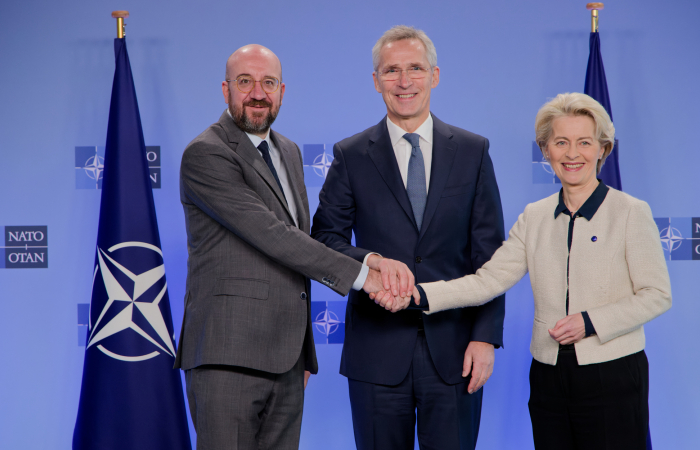
On 10 January 2023, the EU and NATO signed a Joint Declaration in Brussels. They condemned in the strongest possible terms Russia’s aggression against Ukraine and reiterated their unwavering support to the country. The declaration also sets out a shared vision of how the EU and NATO will act together against common security threats. The EU and NATO will expand and deepen their cooperation on areas such as: the growing geostrategic competition resilience and the protection of critical infrastructure emerging and disruptive technologies space the security implications of climate change foreign information manipulation and interference. NATO Secretary General Jens Stoltenberg, the President of the European Council, Charles Michel, and the President of the European Commission, Ursula von der Leyen, met on Tuesday (10 January 2023) at NATO Headquarters to sign the third Joint Declaration on NATO-European Union cooperation. Speaking at a joint press conference, Mr Stoltenberg said: “we are determined to take the partnership between NATO and the European Union to the next level.” The Joint Declaration aims to further strengthen and expand the strategic partnership between NATO and the EU, building on unprecedented progress in cooperation between the two organisations since previous declarations were signed in 2016 and 2018.
Editor's choice
News
President Zelensky addresses US Congress

President Zelensky addresses US Congress

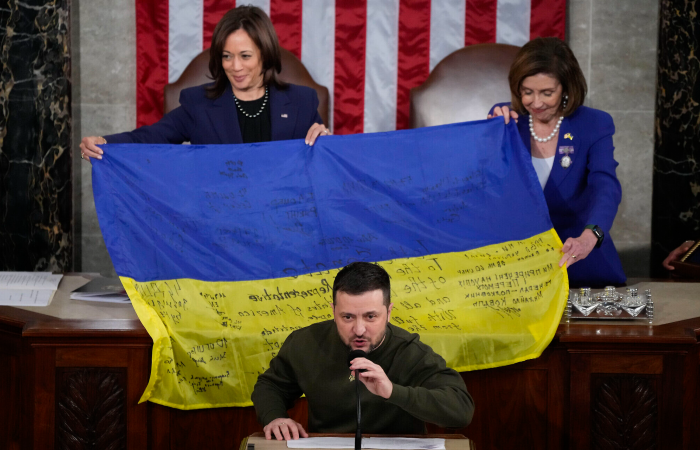
The Ukrainian President Volodymyr Zelensky, on his first foreign visit since the start of Russia's full-scale invasion of Ukraine on 24th February 2022, has addressed the US Congress in person. This followed being welcomed to the White House by US President Joe Biden and the First Lady Dr. Jill Biden, and a wider American-Ukrainian discussion on the ongoing war during which US Vice-President Kamala Harris and Secretary of Defence Lloyd J. Austin III were also present. During his address to the US Congress, President Zelensky delivered a defiant speech in which he said that "against all odds and doom and gloom scenarios, Ukraine did not fall. Ukraine is alive and kicking", adding that his country would never surrender. Referring to other conflicts in Russia's so-called "near abroad", Zelensky said that "this battle cannot be frozen or postponed. It cannot be ignored hoping that the ocean or something else will provide a protection." Zelensky's visit comes amid concerns from Republicans over the cost of American military aid to Ukraine. His address can be seen in large part as an attempt to assuage those worries and make the case for long-term American support for Ukraine's military. He notably said that "Your money is not charity, it's an investment in the global security and democracy that we handle in the most responsible way."
Editor's choice
Monday Commentary
 Monday Commentary: NATO’s new sense of purpose well reflected during last week’s Bucharest Ministerial Meeting

Monday Commentary: NATO’s new sense of purpose well reflected during last week’s Bucharest Ministerial Meeting

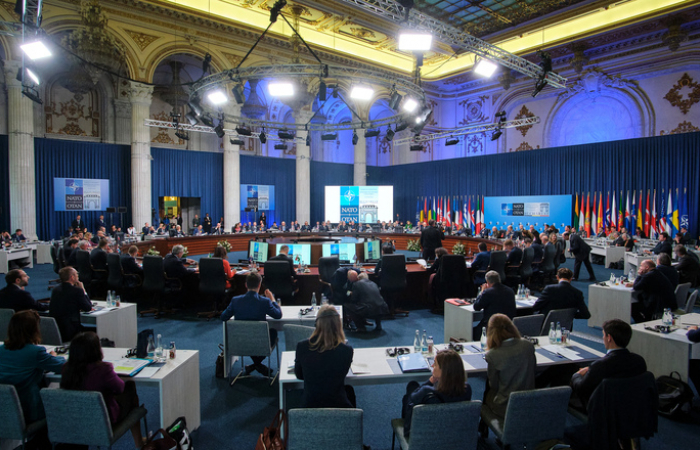
The Foreign ministers of NATO member states met in Bucharest on Tuesday and Wednesday,  (29 – 30 November), at a time when, as a result of the Russian invasion of Ukraine, Europe faces one of the most serious security challenges since the alliance came into being in 1949. It was not NATO that triggered the Ukraine crisis. Indeed NATO, in its’ past quest not to alienate Russia, is sometimes accused of being overcautious in its relations with Ukraine prior to February. The Russian invasion has tested the alliance in many ways – the political will and unity of the member states; the capability of the alliance to support an ally who is not a member through a hybrid response; and the speed with which it could bolster its military capability on its Eastern flank to reassure member states. So far one can say that NATO has performed well, writes Dennis Sammut in today's Monday Commentary on commonspace.eu. This response however needs to be sustained. NATO comes out from the Bucharest Ministerial meeting strengthened and resolute. It is an alliance that is on the move as it responds to new challenges. But NATO also remains rooted in its principles. As the foreign ministers declared in their final statement, NATO is a defensive alliance. “We will continue to strive for peace, security and stability in the whole of the Euro-Atlantic area”, they declared.
Editor's choice
News
Putin discusses with CSTO leaders in Yerevan the future of the alliance

Putin discusses with CSTO leaders in Yerevan the future of the alliance

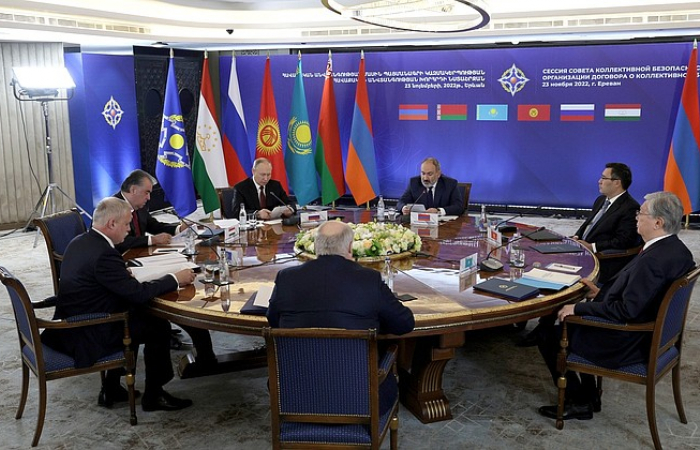
President Vladimir Putin of Russia travelled to the Armenian capital Yerevan on Wednesday for a meeting of the heads of state and government of the Collective Security Treaty Organisation (CSTO). At Yerevan airport Putin was welcomed by Armenian prime minister Nikol Pashinyan, with who he held discussions soon  after on the situation around Nagorno-Karabakh.  Apart from Putin and Pashinyan also attending the summit are the leaders of the other four CSTO members,   Belarus, Kazakhstan, the Kyrgyz Republic and Tajikistan. Relations between Armenia and Azerbaijan, the situation in Afghanistan and Ukraine dominated the talks. A report on the Kremlin website said that a number of documents were agreed. At the end of the meeting the chairmanship of the CSTO for the next year passed on from Armenia to Belarus.