Theme

Defence

Stories related to defence, strategy and cooperation. 

Editor's choice
News
NATO Chief says war is on Europe's doorstep, and warns against complacency

NATO Chief says war is on Europe's doorstep, and warns against complacency

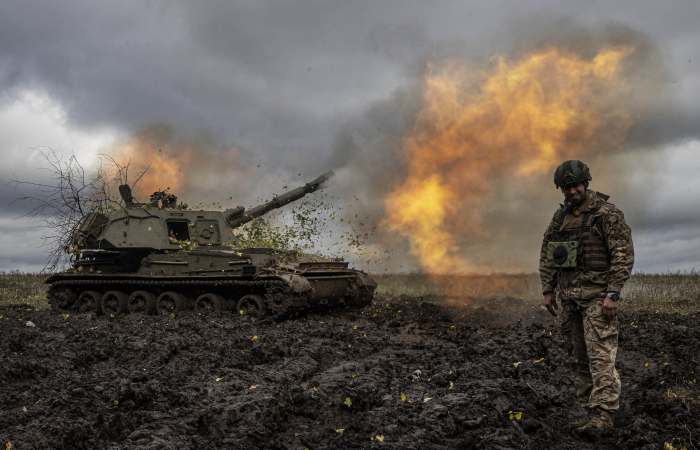
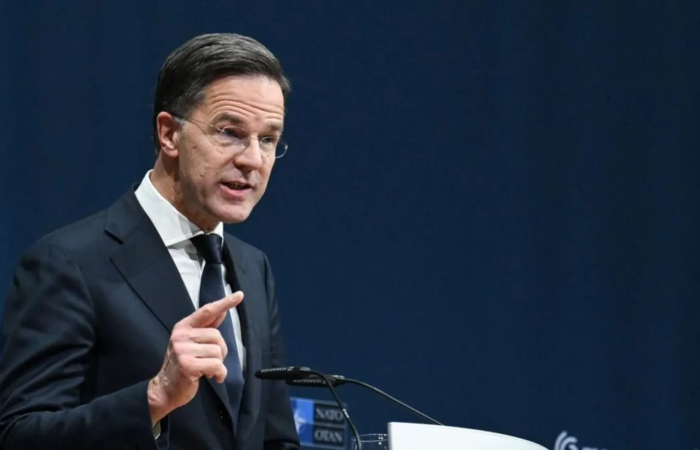
Russia could attack a NATO country within the next five years, the Secretary General of NATO, Mark Rutte, said in a stark new warning. "NATO's own defences can hold for now," Rutte warned in Berlin, but conflict was "next door" to Europe, and he feared "too many are quietly complacent, and too many don't feel the urgency, too many believe that time is on our side. "Russia is already escalating its covert campaign against our societies," Rutte said in a speech in Germany. "We must be prepared for the scale of war our grandparents or great-grandparents endured." Earlier this month, Russia's President Vladimir Putin said his country was not planning to go to war with Europe, but it was ready "right now" if Europe wanted to - or started a war. But similar reassurances were given by Moscow in 2022, just before 200,000 Russian troops crossed the border and invaded Ukraine. Putin has accused European countries of hindering US efforts to bring peace in Ukraine - a reference to the role Ukraine's European allies have recently played in trying to change a US peace plan to end the war, whose initial draft was seen as favouring Russia. But Putin was not sincere, Nato's secretary-general said in the German capital, Berlin. Supporting Ukraine, he added, was a guarantee for European security. "Just imagine if Putin got his way; Ukraine under the boot of Russian occupation, his forces pressing against a longer border with Nato, and the significantly increased risk of an armed attack against us." Russia's economy has been on a war footing for more than three years now - its factories churn out ever more supplies of drones, missiles and artillery shells. According to a recent report by the Kiel Institute for the World Economy, Russia has been producing each month around 150 tanks, 550 infantry fighting vehicles, 120 Lancet drones and more than 50 artillery pieces. The UK, and most of its Western allies, are simply not anywhere near this point. Analysts say it would take years for Western Europe's factories to come close to matching Russia's mass-production of weapons. "Allied defence spending and production must rise rapidly, our armed forces must have what they need to keep us safe," the Nato chief said.
Editor's choice
Analysis
Mehman Aliyev on what "peace" can look like for Ukraine

Mehman Aliyev on what "peace" can look like for Ukraine

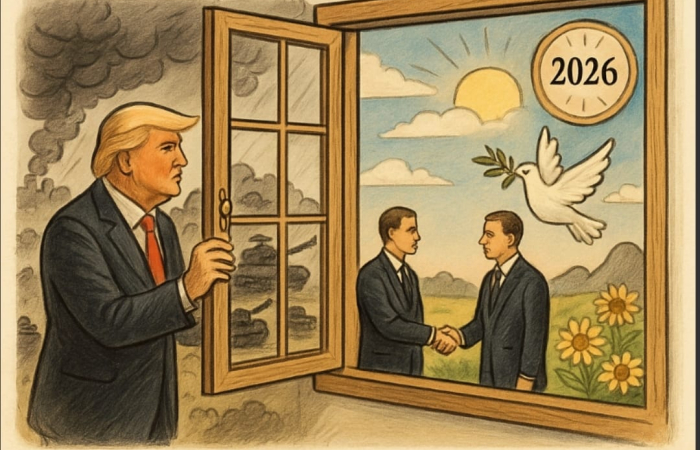
In this analysis,  veteran Azerbaijani journalist and political commentator, Mehman Aliyev, draws lessons from the 1994 Armenia-Azerbaijan ceasefire, to assess what can be possible impact of ceasefire in Ukraine. According to diplomats, a negotiating format or a partial ceasefire based on a modified version of the twenty-eight points is entirely plausible in 2026. A frozen line of contact, monitored by international mechanisms while talks drag on, is more likely than a fully implemented peace treaty by early that same year. “This document opens a window,” said political commentator Farid Gakhramanov. “Whether it means the end of the war or the beginning of a new frozen conflict will depend on the decisions of Moscow, Kyiv, Washington, and Brussels — not on the document itself.” (You can read the full analysis by clicking the image)

Filter archive

Publication date
Editor's choice
News
The United States to give Ukraine priority for new Patriot missiles

The United States to give Ukraine priority for new Patriot missiles

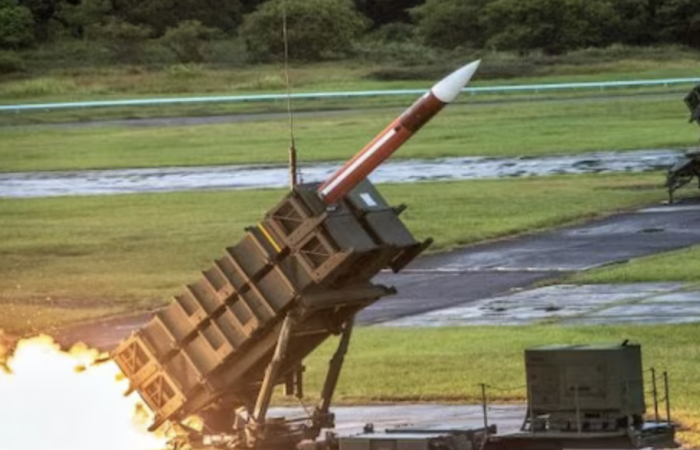
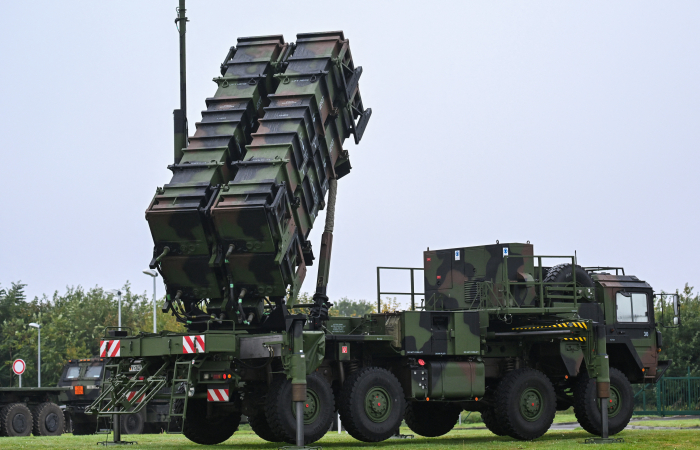
The United States is moving Ukraine to the top of the list to receive air defence interceptors to protect its cities from the onslaught of Russian missile attacks. The policy decision applies to interceptors used by the Patriot and other air defence systems to shoot down incoming missiles and drones. As a result, the US will give priority to Ukraine for Patriot surface-to-air missiles. Deliveries to other countries will be delayed to allow Ukraine to build up a sufficient stockpile.
Editor's choice
News
New report reveals climate impact of Russia's war in Ukraine: $32 billion damage over two years

New report reveals climate impact of Russia's war in Ukraine: $32 billion damage over two years

Russia's ongoing full-scale war in Ukraine, initiated on 24 February 2022, has caused significant environmental and climate damage, severely impacting global efforts to combat climate change. This is highlighted in the latest report from the Initiative on Greenhouse Gas Accounting of War (IGGAW), which analyses the environmental costs over the past two years. The report was published Thursday (13 June) by the Ministry for Environmental Protection and Natural Resources of Ukraine in collaboration with climate advocacy groups. The IGGAW report estimates climate-related damages at $32 billion, attributed to activities such as the extensive use of military fuels and the destruction of landscapes and infrastructure. Over 24 months, the conflict resulted in the emission of 175 million tonnes of carbon dioxide - more than the annual emissions of a developed country like the Netherlands.
Editor's choice
News
In Yerevan, Stoltenberg says that stability in the South Caucasus matters for NATO

In Yerevan, Stoltenberg says that stability in the South Caucasus matters for NATO

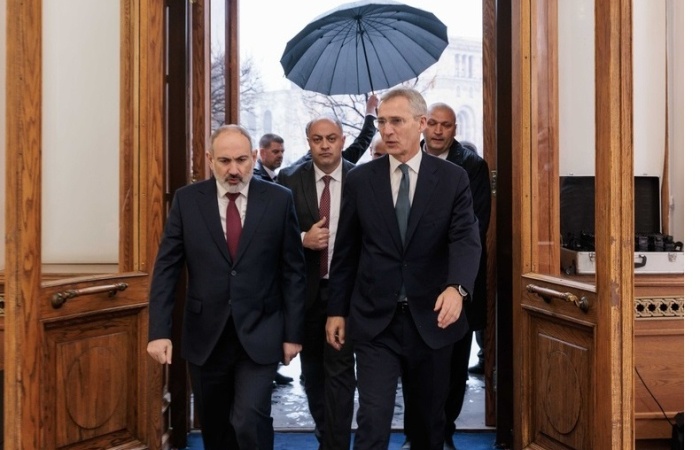
The Secretary General urged Armenia and Azerbaijan to reach an agreement to pave the way for the normalisation of relations and a durable peace. “This matters for Euro-Atlantic security as we face a more dangerous world,” he emphasised, reiterating that “NATO supports Armenian sovereignty and territorial integrity, and your peaceful aspirations.”  Mr Stoltenberg praised Armenia for its long-standing partnership and contributions to NATO operations, including increased troop numbers in KFOR’s peacekeeping mission. “For nearly 20 years, Armenia has been a key partner in NATO’s KFOR peacekeeping mission, helping to ensure a safe and secure environment for all communities in Kosovo,” he said. During his visit, the Secretary General discussed the progress in Armenia’s domestic reforms. He highlighted Armenia’s commitment to ensuring democratic control of its armed forces, including by participating in NATO’s building integrity programme. “You have also shown a real commitment to tackling corruption, strengthening your democratic institutions, and upholding the rule of law,” he stated. The Secretary General warned that “Russia’s war in Ukraine is a sobering reminder that we cannot take peace for granted… If Putin succeeds in Ukraine, there is a real risk that his aggression will not stop there and other authoritarian actors will be emboldened,” he said. Mr Stoltenberg called on all NATO partners to “do what they can to ensure Putin does not win his war of aggression.” “The situation on the battlefield remains difficult, but this is a reason to step up, not to scale back our support,” he said. NATO Secretary General Jens Stoltenberg visited the three South Caucasus countries from 17-19 March for meetings with the leadership of the three countries and as an expression of support for their independence, sovereignty and territorial integrity.
Editor's choice
News
In Tbilisi, Stoltenberg reaffirms NATO support for Georgia's territorial integrity

In Tbilisi, Stoltenberg reaffirms NATO support for Georgia's territorial integrity

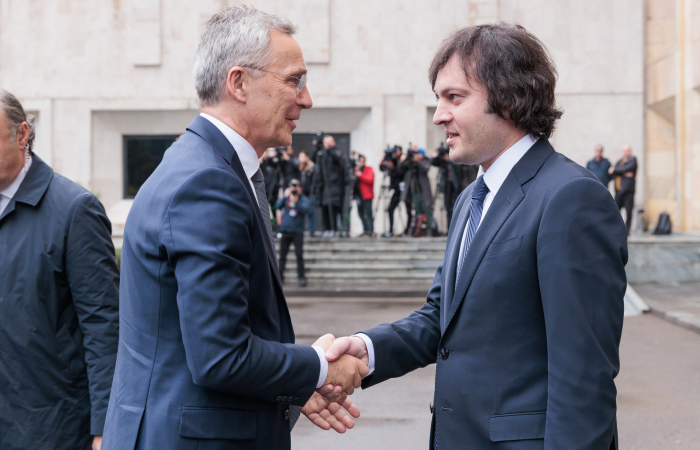
NATO Secretary General Jens Stoltenberg continued his tour of the South Caucasus on Monday (18 March 2024), meeting with President Salome Zourabichvili and Prime Minister Irakli Kobakhidze of Georgia in Tbilisi. “Georgia is one of NATO’s closest partners. We highly appreciate your substantial contributions to NATO missions and operations and we fully support Georgia’s sovereignty and territorial integrity. South Ossetia and Abkhazia are part of Georgia,” Mr Stoltenberg said. He called on Russia to reverse the recognition of Georgian territories South Ossetia and Abkhazia as independent states and added that Russia’s organisation of elections in occupied parts of Georgia and Ukraine is completely illegal. “Russia’s presidential election was clearly neither free nor fair,” Mr Stoltenberg said. The Secretary General welcomed Georgia’s substantial contributions to NATO operations and support to Ukraine. Georgia is hosting thousands of Ukrainian refugees and providing crucial humanitarian and financial aid. “Russia persists in its pursuit of imperial ambitions. And in Ukraine, the situation on the battlefield remains difficult,” he said. “But, with our support, Ukraine has pushed back - destroying or damaging a significant part of Russia’s Black Sea fleet,” allowing Ukraine to re-open grain shipping that is vital for their economy and for global food security. The Secretary General will conclude his three day visit to the South Caucasus in Yerevan on Tuesday, meeting with President Vahagn Khachaturyan and Prime Minister Nikol Pashinyan of Armenia. On Sunday and Monday, he met Azerbaijan’s leadership in Baku.
Editor's choice
News
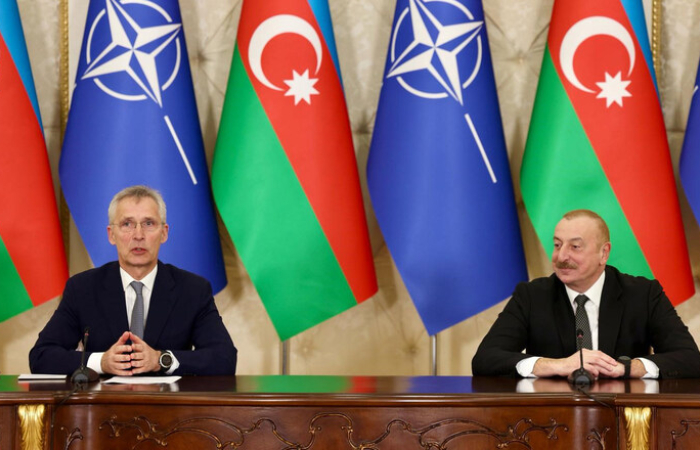
NATO Secretary General in Baku at the start of South Caucasus tour

NATO Secretary General in Baku at the start of South Caucasus tour

NATO Secretary General Jens Stoltenberg arrived in Baku in Sunday (17 March) at the start of a three-day, tri-nation tour of the South Caucasus. Meeting with President Ilham Aliyev, the Secretary-General welcomed Azerbaijan’s long-standing collaboration with the Alliance, saying he looked forward to further strengthening the partnership. On the situation in the South Caucasus, the Secretary-General underlined that “peace and stability is not only important here but for security more broadly”. He said: “Armenia and Azerbaijan now have an opportunity to achieve an enduring peace after years of conflict.”  He added: “I can just encourage you to seize this opportunity to reach a lasting peace agreement with Armenia”. On Ukraine, Mr Stoltenberg welcomed the much-needed support provided by Azerbaijan, and called on all countries in the region to step up: “more support is needed because the situation in Ukraine is extremely difficult.” The Secretary-General called the upcoming COP29 Global Climate Summit in Azerbaijan an important milestone: “It is important for everyone concerned about climate change but also important for our security because those issues are closely interlinked.”