


Russian leadership makes cautious comments on 5th anniversary of war with Georgia.

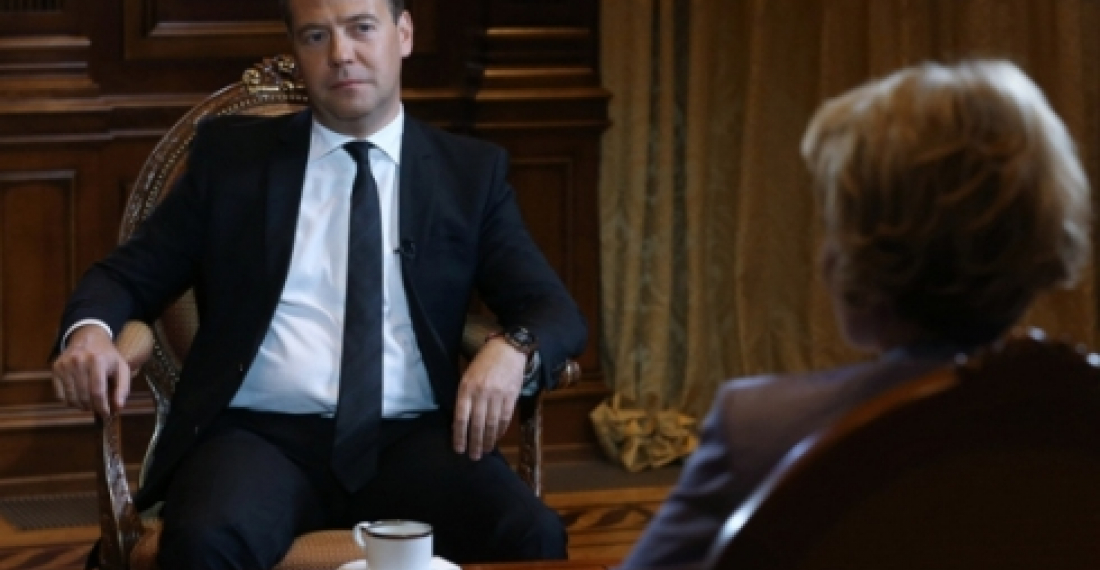
The Russian leadership has over the last few days made cautious comments on the 5th anniversary of its war with Georgia in 2008. The most extensive comments were made by Prime Minister Dimitri Medvedev on Sunday to the Russian international broadcaster RT. The Russian News Agency RIA Novosti carried this report of the interview:

Russian Prime Minister Dmitry Medvedev said on Sunday he looked optimistic about the prospects of bilateral relations between Russia and Georgia five years after a brief war between the two countries.

"In this regard, I'm a total optimist. I'm convinced that everything will be fine. Our peoples aren't enemies," Medvedev said in an interview with Russia Today international news TV Channel.

"Of course, the conflict didn't help but it wasn't based on deep-running disagreements. Again, that was a criminal mistake of certain leaders. But these days the situation is indeed a bit different. The country's new leadership that was brought in by the political and constitutional reforms is taking a more pragmatic stance... We welcome that," Medvedev said.

Russia and Georgia severed diplomatic ties in 2008 after Moscow recognized de-facto independent Georgian republics of South Ossetia and Abkhazia as independent states following a brief military conflict over South Ossetia.

The Georgian Dream coalition led by current Prime Minister Bidzina Ivanishvili won the October 1, 2012, parliamentary election, forcing the United National Movement, which had ruled Georgia since the Rose Revolution in 2003 and is led by President Mikheil Saakashvili, into the opposition.

The elections were vital in the light of a law passed in 2010 transferring the majority of the president's executive powers to the prime minister when Saakashvili's second term ends in the fall of 2013.

Georgia's new government, elected in the October 1, 2012 polls, said normalizing ties with Russia was among its top priorities.

Medvedev said it was not Moscow that had cut diplomatic relations with Georgia.

"We are ready to reaffirm them on certain conditions. And those conditions are simple - just recognizing what happened. This process may be very delicate and complex. But I'm sure there's no going back, and when Saakashvili and some other people who participated in taking this criminal decision [to launch an offensive on South Ossetia] are gone, we will turn the page and close this sad chapter in our relations."

Medvedev also said the peoples of Georgia, Abkhazia and South Ossetia would themselves decide how to develop their relations.

"The choice lies with the people who live there, the people of Georgia and the leaders they elect.  The people of Abkhazia and the people of South Ossetia have the power to give their leaders any kind of mandate, and this will be constitutional and in line with universally-recognized  international practices," Medvedev said.

"We want them to live in peace. But it's up to them to decide what relations they will have with each other. We will not interfere with these processes. But of course, we will defend Russia's national interests."


Source: RIA Novosti

Photo: Russian Prime Minister Dimitri Medvedev


Related stories on commonspace.eu:

Op-ed: Dennis Sammut: A war without winners that copuld have been avoided and that must not be repeated. (published  on 8 August 2013)

Interview with Dimitri Medoev, South Ossetia's envoy in Moscow (published on 7 August 2013)

Georgia marks fifth anniversary of war with Russia; Foreign Ministry Statement (published on 7 August 2013)

Never Again! Ten questions about the August 2008 Georgia-Russia War (published on 6 August 2013)

Russia builds an artificial fence in the heart of the Caucasus (published 5 August 2013)



Related articles

Editor's choice
News
Council of Europe launches new International Claims Commission for Ukraine

Council of Europe launches new International Claims Commission for Ukraine

Thirty-four countries and the European Union have signed a new convention establishing an International Claims Commission for Ukraine at a diplomatic conference co-hosted by the 46-nation Council of Europe and the Netherlands in the Hague. The diplomatic conference was attended by leaders and high-level representatives from over 50 states, including the President of Ukraine, Volodymyr Zelenskyy, the President of the Republic of Moldova, Maia Sandu, and the Prime Minister of the Netherlands, Dick Schoof.  “Today marks a major step forward in ensuring accountability for Ukraine. The International Claims Commission represents justice and hope for tens of thousands of victims—our determination that those who have suffered will not be forgotten. I call for quick ratifications so we can get the commission rapidly up and running for the people of Ukraine,” said Council of Europe Secretary General Alain Berset. Ukrainian President Volodymyr Zelenskyy said: “We expect that every mechanism for compensation from the Register of Damage and Claims Commission to the actual payments – will start working and receive strong and sufficient international support, so that people can truly feel that any kind of damage caused by the war can be compensated. This war, and Russia’s responsibility for it, MUST become a clear example – so that others learn not to choose aggression.” “Accountability is about creating the conditions for peace that endures. And therefore, accountability is a condition of security – today and for the future. But accountability is not only about Ukraine. And it is not only about one aggressor and one victim. Accountability is about Europe. About every country in Europe. It is about whether Europe, as a whole, is willing to defend its peace,” said Maia Sandu, President of the Republic of Moldova, which currently holds the Presidency of the Council of Europe’s Committee of Ministers. The Prime Minister of the Netherlands, Dick Schoof, said: “Every day Russia is deliberately bombarding homes, destroying businesses and damaging infrastructure in Ukraine. Russia must compensate Ukraine for the damage caused. That is why we have launched the International Claims Commission for Ukraine and we are honoured to host it.” The International Claims Commission will be the second part of a comprehensive compensation mechanism related to Russia’s war of aggression, building on the existing Register of Damage for Ukraine. The claims commission will be established within the framework of the Council of Europe and will also be open to other countries. The Register of Damage for Ukraine, created in 2023, collects and records compensation claims submitted by individuals, organisations and public bodies in Ukraine. Forty-four states and the European Union have so far joined the Register, which has already received 86,000 claims. The International Claims Commission will review, assess and decide upon claims submitted to the Register of Damage for Ukraine and determine the amount of compensation, if any, which is due in each case. The convention establishing the commission will enter into force once it has been ratified by 25 signatories, as long as sufficient funds have been secured to support its initial work.

Popular

Editor's choice
News
Council of Europe launches new International Claims Commission for Ukraine

Council of Europe launches new International Claims Commission for Ukraine

Thirty-four countries and the European Union have signed a new convention establishing an International Claims Commission for Ukraine at a diplomatic conference co-hosted by the 46-nation Council of Europe and the Netherlands in the Hague. The diplomatic conference was attended by leaders and high-level representatives from over 50 states, including the President of Ukraine, Volodymyr Zelenskyy, the President of the Republic of Moldova, Maia Sandu, and the Prime Minister of the Netherlands, Dick Schoof.  “Today marks a major step forward in ensuring accountability for Ukraine. The International Claims Commission represents justice and hope for tens of thousands of victims—our determination that those who have suffered will not be forgotten. I call for quick ratifications so we can get the commission rapidly up and running for the people of Ukraine,” said Council of Europe Secretary General Alain Berset. Ukrainian President Volodymyr Zelenskyy said: “We expect that every mechanism for compensation from the Register of Damage and Claims Commission to the actual payments – will start working and receive strong and sufficient international support, so that people can truly feel that any kind of damage caused by the war can be compensated. This war, and Russia’s responsibility for it, MUST become a clear example – so that others learn not to choose aggression.” “Accountability is about creating the conditions for peace that endures. And therefore, accountability is a condition of security – today and for the future. But accountability is not only about Ukraine. And it is not only about one aggressor and one victim. Accountability is about Europe. About every country in Europe. It is about whether Europe, as a whole, is willing to defend its peace,” said Maia Sandu, President of the Republic of Moldova, which currently holds the Presidency of the Council of Europe’s Committee of Ministers. The Prime Minister of the Netherlands, Dick Schoof, said: “Every day Russia is deliberately bombarding homes, destroying businesses and damaging infrastructure in Ukraine. Russia must compensate Ukraine for the damage caused. That is why we have launched the International Claims Commission for Ukraine and we are honoured to host it.” The International Claims Commission will be the second part of a comprehensive compensation mechanism related to Russia’s war of aggression, building on the existing Register of Damage for Ukraine. The claims commission will be established within the framework of the Council of Europe and will also be open to other countries. The Register of Damage for Ukraine, created in 2023, collects and records compensation claims submitted by individuals, organisations and public bodies in Ukraine. Forty-four states and the European Union have so far joined the Register, which has already received 86,000 claims. The International Claims Commission will review, assess and decide upon claims submitted to the Register of Damage for Ukraine and determine the amount of compensation, if any, which is due in each case. The convention establishing the commission will enter into force once it has been ratified by 25 signatories, as long as sufficient funds have been secured to support its initial work.


