Region

Ukraine and Eastern Europe

Stories under this heading cover Ukraine and Eastern Europe. 

Editor's choice
News
NATO Chief says war is on Europe's doorstep, and warns against complacency

NATO Chief says war is on Europe's doorstep, and warns against complacency

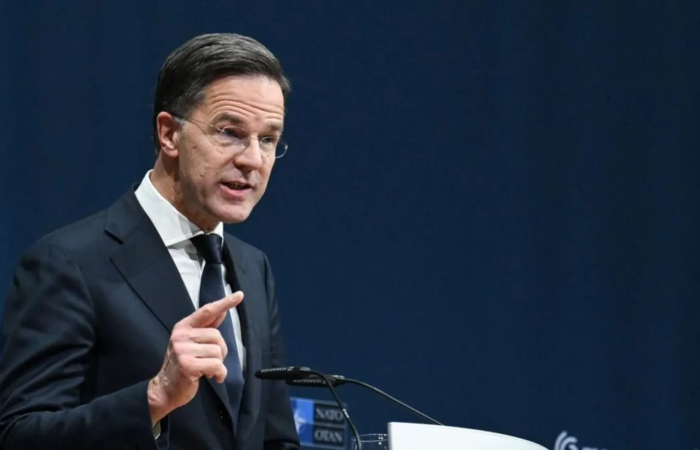
Russia could attack a NATO country within the next five years, the Secretary General of NATO, Mark Rutte, said in a stark new warning. "NATO's own defences can hold for now," Rutte warned in Berlin, but conflict was "next door" to Europe, and he feared "too many are quietly complacent, and too many don't feel the urgency, too many believe that time is on our side. "Russia is already escalating its covert campaign against our societies," Rutte said in a speech in Germany. "We must be prepared for the scale of war our grandparents or great-grandparents endured." Earlier this month, Russia's President Vladimir Putin said his country was not planning to go to war with Europe, but it was ready "right now" if Europe wanted to - or started a war. But similar reassurances were given by Moscow in 2022, just before 200,000 Russian troops crossed the border and invaded Ukraine. Putin has accused European countries of hindering US efforts to bring peace in Ukraine - a reference to the role Ukraine's European allies have recently played in trying to change a US peace plan to end the war, whose initial draft was seen as favouring Russia. But Putin was not sincere, Nato's secretary-general said in the German capital, Berlin. Supporting Ukraine, he added, was a guarantee for European security. "Just imagine if Putin got his way; Ukraine under the boot of Russian occupation, his forces pressing against a longer border with Nato, and the significantly increased risk of an armed attack against us." Russia's economy has been on a war footing for more than three years now - its factories churn out ever more supplies of drones, missiles and artillery shells. According to a recent report by the Kiel Institute for the World Economy, Russia has been producing each month around 150 tanks, 550 infantry fighting vehicles, 120 Lancet drones and more than 50 artillery pieces. The UK, and most of its Western allies, are simply not anywhere near this point. Analysts say it would take years for Western Europe's factories to come close to matching Russia's mass-production of weapons. "Allied defence spending and production must rise rapidly, our armed forces must have what they need to keep us safe," the Nato chief said.
Filter archive

Publication date
Editor's choice
Editorial
Kherson: The end of the beginning

Kherson: The end of the beginning

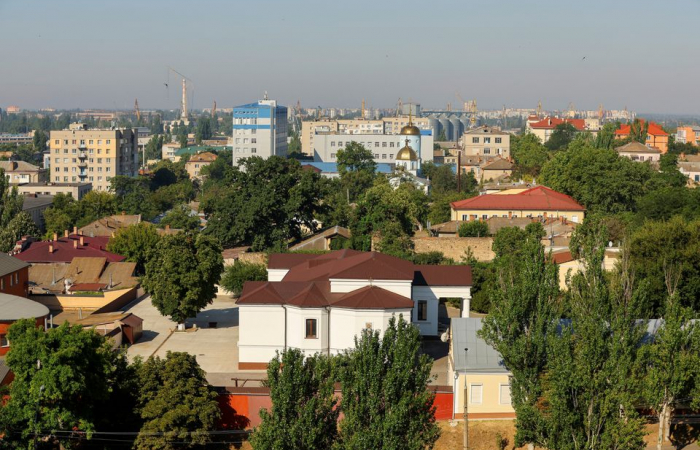
The withdrawal of the Russian army from the city of Kherson ends the first chapter of Vladimir Putin's misadventure in Ukraine, which started on 24 February when he ordered his army to invade. Ukrainians rightly celebrated, as the Ukrainian army returned to the city which Russia illegally annexed only a few weeks ago. Kherson was the only regional centre the Russians were able to occupy following their February invasion, which, let us not forget, initially aimed to take Kyiv and all other Ukrainian cities. But as the Ukrainian president, and other Ukrainian officials warned, the war is far from over yet. But the Russian army is still in Ukraine, and now consolidating its positions on the left bank of the Dnipro river.  The river will now serve as a natural defence barrier for the Russians in the face of Ukrainian attempts to liberate the rest of the territory under Russian occupation. And the coming winter may prove challenging for Ukraine in other ways too, given the Russian attempts to destroy key infrastructure and disrupt energy supplies. But still Kherson can be seen as the end of the beginning. The journey for the liberation of Ukraine will take longer. And after all Ukrainian territory is liberated, another journey will have to start: that of rebuilding Europe's security architecture on new foundations. Where Russia will stand in this is still not clear. Despite the facade of defiance and bravado, it is already evident that soul-searching has already started amongst the Russian elite about the Ukrainian adventure, and indeed about how Russia itself is governed. That, the Russian people will have to figure out by themselves, and the process is not likely to be either short, or easy.
Editor's choice
News
"Today Kherson, tomorrow Sevastopol"

"Today Kherson, tomorrow Sevastopol"

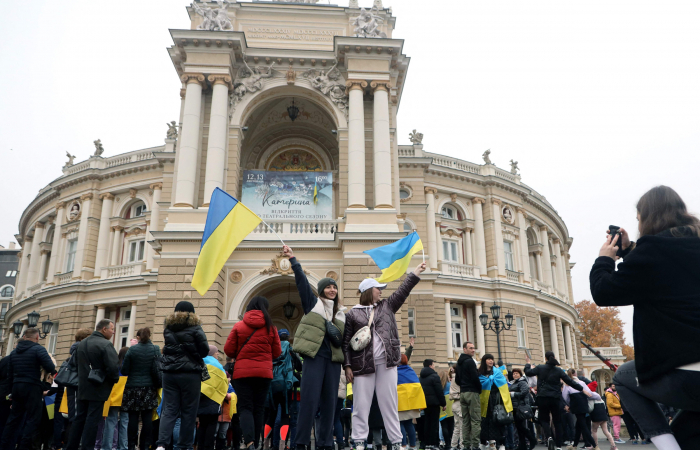
Russia's leadership has ordered its troops to withdraw from the Ukrainian city of Kherson. It was the only regional capital Russian forces were able to capture after invading in February. The news was welcomed cautiously in Ukraine, where the government said it will proceed carefully to avoid losses. Some commentators however are saying that it is the first step to forcing a complete Russian withdrawal from Ukrainian territory. "Today Kherson, tomorrow Sevatopol" is what many Ukrainians hope, referring to the port city on the Crimean peninsula. Russia's commander in Ukraine, Gen Sergei Surovikin, said on Wednesday (9 November) it was no longer possible to keep supplying the city. The withdrawal means Russian forces will pull out entirely from the western bank of the River Dnipro. The military's top brass announced the decision on Russian state TV, with Gen Surovikin reporting on the situation on the ground in Kherson. "In these circumstances, the most sensible option is to organise the defence along a barrier line along the river Dnipro," Gen Surovikin told the meeting. Russia's annexation of Kherson, and three other occupied regions, was announced with a lot of fanfare by president Putin at the end of September.