Region

South Caucasus

The South Caucasus – a region encompassing Armenia, Azerbaijan and Georgia - is one of strategic importance, not only for adjacent countries, such as Turkiye, Russia, Iran and the Central Asian states, but also for neighbours such as the European Union and the GCC states, and globally for the United States, India, China, Pakistan and Japan.

commonspace.eu team brings decades of experience of working in the South Caucasus and we are pleased to share our insights with our loyal readers through the website, and the sister newsletter, Caucasus Concise.

Editor's choice
Opinion
Opinion: A sustainable peace requires consistent long-term European involvement

Opinion: A sustainable peace requires consistent long-term European involvement

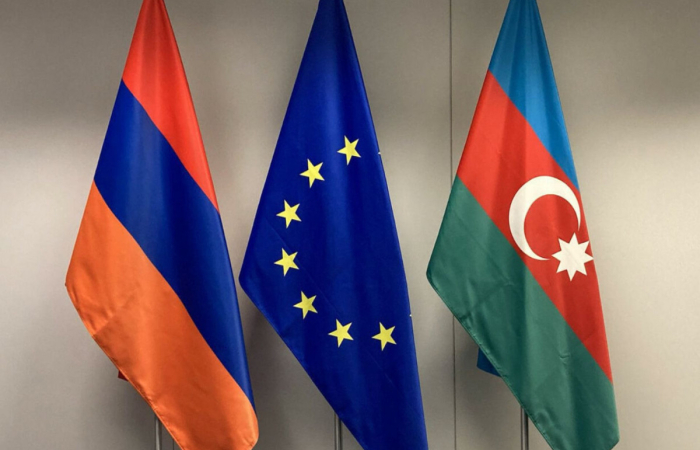
There is no denying that the EU, especially key member states acting in support, helped bring Baku and Yerevan closer to the Washington Declaration of August 8, 2025. But a declaration is not a treaty. Turning principles into a peace deal and eventually to a sustainable peace requires consistent long-term European involvement, writes Yalchin Mammadov in this-op-ed for commonspace.eu Before facilitating trust between Armenia and Azerbaijan, the EU is first expected to address its own credibility gap with Baku. A more balanced approach—such as including Azerbaijan, alongside Armenia, in the European Peace Facility—could be a useful first step. Diplomats can negotiate peace; societies must build peace. In this context, the EU can do what it does the best: long-term societal engagement. By expanding youth and academic exchange programmes, investing in cross-border civil society initiatives, and fostering people-to-people cooperation, Brussels can help shape a new generation equipped to sustain peace beyond political cycles. Such tools are slow and unglamorous, but if ignored, even the strongest treaty risks collapse. And obviously, these aspects require two-way engagement and genuine willingness by both governments to facilitate contact. If Brussels wants to remain influential, it needs to replace outdated one-size-fits-all policies with ambitious, interest-driven and differentiated approaches. Without a clear regional strategy, which appears to be the current situation, the South Caucasus will continue to sit at the margins of Europe’s security architecture—leaving space for other powers to take the lead. (You can read the op-ed in full by clicking the image.)
Editor's choice
Event
LFSC25: Yerevan meeting focuses on issues of landmines and remnants of war in Armenia and the South Caucasus

LFSC25: Yerevan meeting focuses on issues of landmines and remnants of war in Armenia and the South Caucasus

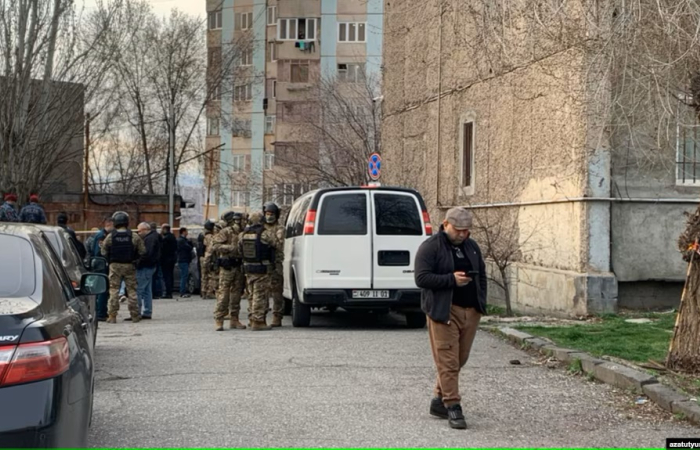
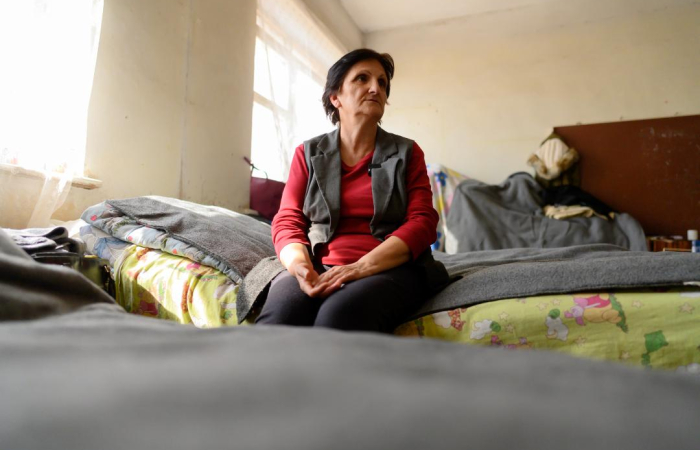
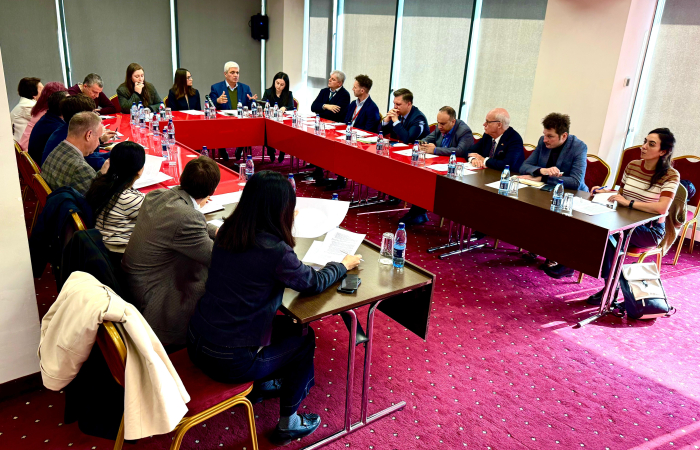
The meeting titled “The residue of conflict: Landmines and other remnants of war in the South Caucasus, and its victims” was held in Yerevan, Armenia, on Monday, 24 November 2025, in the framework of the 2025 regional campaign "Landmine Free South Caucasus" (LFSC25). Addressing the meeting, Mr Stepan Grigoryan, Chairman of the Armenian Analytical Center on Globalisation and Regional Cooperation, emphasized that the problem of landmines is mutual, and it exists in both Armenia and Azerbaijan. He argued that it is important in the peace process to address the humanitarian issues caused by landmines. In addition, he also stressed that it is important for experts to have conversations on the topic of demining, as often it is experts who begin the process that can then be taken further by governments. Stepan Grigoryan said he was happy to be collaborating with LINKS Europe on this important issue, and was glad to associate himself with the LFSC 25 appeal. Anahit Poghosyan, Adviser to the Secretary of the RA Security Council also spoke at the event. Ms Anahit Poghosyan said that the problem of landmines exists in Armenia, and that already around 800 people have been injured or killed due to landmine contamination. The border regions are highly affected, and around 200000 people live in proximity of contaminated areas. She stressed that landmine contamination is an important issue to solve. In addition, she added that Armenia remains committed to humanitarian principles and that experts have been involved in checking the contamination maps to ensure reliability. She ended on an important note that landmines undermine peace and development and pose a grave humanitarian situation in the region. (read more by clicking the image)

Filter archive

Publication date
Editor's choice
News
4 April is International Landmine Awareness Day

4 April is International Landmine Awareness Day

On 8 December 2005, the UN General Assembly declared that 4 April of each year shall be observed as the International Day for Mine Awareness and Assistance in Mine Action. This initiative continues to be supported by countries, organisations, and communities around the world. This year, the theme is “Protecting Lives. Building Peace.” — reminds us of the need to safeguard those at particular risk, including people living with disabilities, women, children and other vulnerable groups. This is a particularly poignant theme in the South Caucasus where the problem of landmines is acute, and the region is now identified as among the ones with the highest contamination of landmines in the world. In his message on the occasion of this year’s International Landmine Awareness Day, UN Secretary-General António Guterres said: “Even after the fighting ends, these deadly devices can contaminate communities for decades to come, posing a daily and deadly danger to women, men and children alike, and blocking vital humanitarian and development assistance.” In his message, the UN Secretary-General urged Member States to ratify and fully implement the Anti-Personnel Mine Ban Convention, the Convention on Cluster Munitions, and the Convention on Certain Conventional Weapons. LINKS Europe Statement on International Day for Mine Awareness and Assistance in Mine Action 2024 In a statement from its offices in The Hague, LINKS Europe Foundation, said that on a daily basis, people are becoming victims of landmines in different parts of the South Caucasus. International Day for Mine Awareness and Assistance in Mine Action provides us with an opportunity to focus on this problem and ensure that it does not simply become just another daily inconvenience. We regret that as yet the international community has failed to recognise the enormity of the problem, and to respond accordingly.
Editor's choice
Commentary
Remain focused on peace between Armenia and Azerbaijan!

Remain focused on peace between Armenia and Azerbaijan!

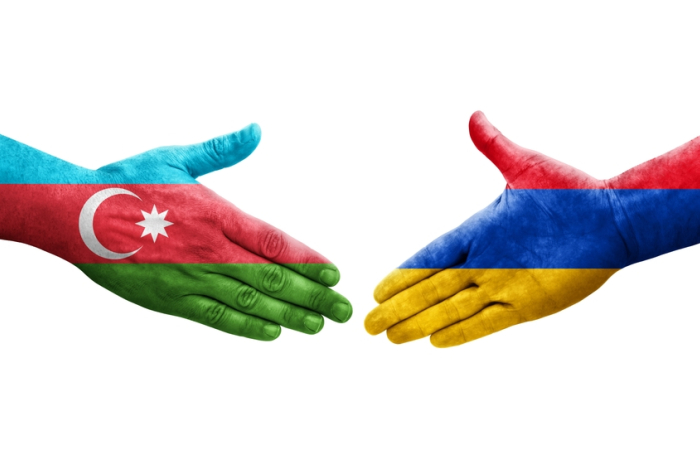
On Friday, 5 April Prime Minister Pashinyan will meet in Brussels with US Secretary of State Antony Blinken and European Commission President, Ursula von der Leyen. Excitement about this meeting in Yerevan is at a fever pitch. Azerbaijan has declared that this meeting is aimed against it, and asked that it be postponed. That will not happen but amongst more sober elements in Brussels and Washington, there is a realisation that misperception may lead to a more complicated situation. Blinken spoke to Azerbaijani president Ilham Aliyev on Wednesday (3 April) to try to reassure him – unsuccessfully it seems – but that was the right thing to do. From Friday’s meeting, Armenia will get comfort from some reassuring statements, and a handsome package of assistance. It will be a boost for Pashinyan, but that will not stop his critics in saying that what was received was not enough. Russia may become even more aggressive. Which is why the most important issue remains that of a peace agreement. This will enable a whole set of other developments, including the opening of borders, to come into play. Aliyev and Pashinyan must remain focused on finishing the job. And the first and most important task of the international community is to support them in this. Anything done or said that harms the prospects for peace, even if it is well-intentioned, should be avoided.
Editor's choice
News
Dunya Mijatovic: "Entrenched harmful stereotypes and prejudice against LGBTI people still prevail in segments of Georgian society, including some politicians"

Dunya Mijatovic: "Entrenched harmful stereotypes and prejudice against LGBTI people still prevail in segments of Georgian society, including some politicians"

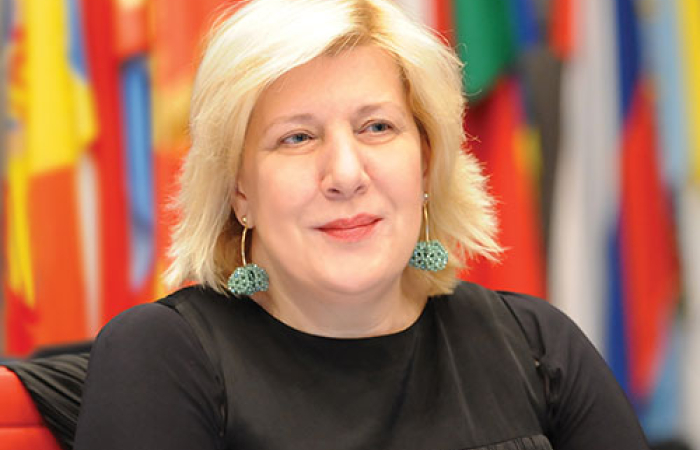
On March 27, the Council of Europe Commissioner for Human Rights, Dunja Mijatović, issued a statement calling on the Georgian government to “fully respect” its human rights obligations as a Council of Europe member state, “including with regard to the protection of the human rights of LGBTI people,” in response to the ruling party’s initiation of two draft constitutional laws on “family values and the protection of minors.” “I am concerned about the present political discourse in Georgia, as illustrated by the announcement made by the Georgian Dream Party of their initiative to amend the Constitution and to adopt a new constitutional law on ‘Protection of Family Values and Underaged Persons’. It is reflective of entrenched harmful stereotypes and prejudice against LGBTI people which still prevail in segments of Georgian society, including some politicians, and is capable of having a strong, negative impact on the human rights, safety and well-being of LGBTI people and defenders of their rights. It also represents the political manipulation of LGBTI-phobia in the run-up to elections, which I have previously condemned, and which should have no place in a democratic society, based on the rule of law and respect for human rights of everyone.
Editor's choice
News
In Yerevan, Stoltenberg says that stability in the South Caucasus matters for NATO

In Yerevan, Stoltenberg says that stability in the South Caucasus matters for NATO

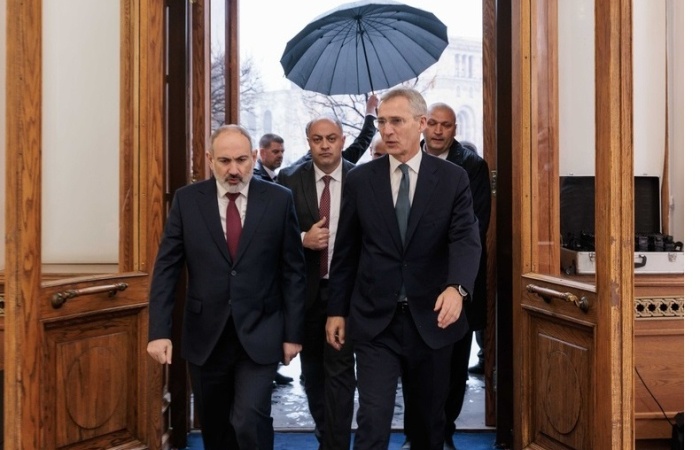
The Secretary General urged Armenia and Azerbaijan to reach an agreement to pave the way for the normalisation of relations and a durable peace. “This matters for Euro-Atlantic security as we face a more dangerous world,” he emphasised, reiterating that “NATO supports Armenian sovereignty and territorial integrity, and your peaceful aspirations.”  Mr Stoltenberg praised Armenia for its long-standing partnership and contributions to NATO operations, including increased troop numbers in KFOR’s peacekeeping mission. “For nearly 20 years, Armenia has been a key partner in NATO’s KFOR peacekeeping mission, helping to ensure a safe and secure environment for all communities in Kosovo,” he said. During his visit, the Secretary General discussed the progress in Armenia’s domestic reforms. He highlighted Armenia’s commitment to ensuring democratic control of its armed forces, including by participating in NATO’s building integrity programme. “You have also shown a real commitment to tackling corruption, strengthening your democratic institutions, and upholding the rule of law,” he stated. The Secretary General warned that “Russia’s war in Ukraine is a sobering reminder that we cannot take peace for granted… If Putin succeeds in Ukraine, there is a real risk that his aggression will not stop there and other authoritarian actors will be emboldened,” he said. Mr Stoltenberg called on all NATO partners to “do what they can to ensure Putin does not win his war of aggression.” “The situation on the battlefield remains difficult, but this is a reason to step up, not to scale back our support,” he said. NATO Secretary General Jens Stoltenberg visited the three South Caucasus countries from 17-19 March for meetings with the leadership of the three countries and as an expression of support for their independence, sovereignty and territorial integrity.
Editor's choice
News
In Tbilisi, Stoltenberg reaffirms NATO support for Georgia's territorial integrity

In Tbilisi, Stoltenberg reaffirms NATO support for Georgia's territorial integrity

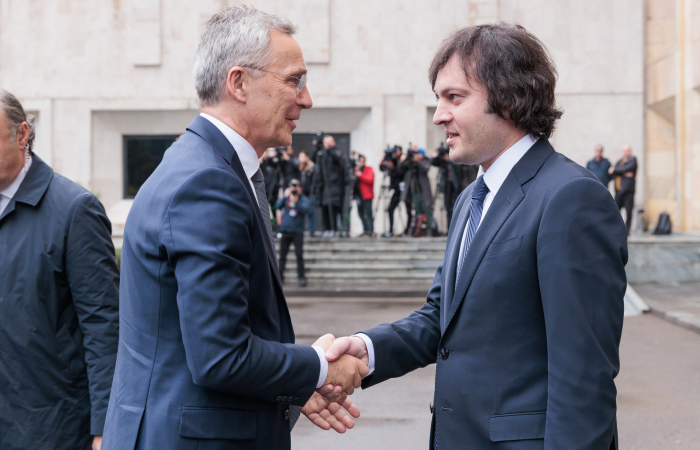
NATO Secretary General Jens Stoltenberg continued his tour of the South Caucasus on Monday (18 March 2024), meeting with President Salome Zourabichvili and Prime Minister Irakli Kobakhidze of Georgia in Tbilisi. “Georgia is one of NATO’s closest partners. We highly appreciate your substantial contributions to NATO missions and operations and we fully support Georgia’s sovereignty and territorial integrity. South Ossetia and Abkhazia are part of Georgia,” Mr Stoltenberg said. He called on Russia to reverse the recognition of Georgian territories South Ossetia and Abkhazia as independent states and added that Russia’s organisation of elections in occupied parts of Georgia and Ukraine is completely illegal. “Russia’s presidential election was clearly neither free nor fair,” Mr Stoltenberg said. The Secretary General welcomed Georgia’s substantial contributions to NATO operations and support to Ukraine. Georgia is hosting thousands of Ukrainian refugees and providing crucial humanitarian and financial aid. “Russia persists in its pursuit of imperial ambitions. And in Ukraine, the situation on the battlefield remains difficult,” he said. “But, with our support, Ukraine has pushed back - destroying or damaging a significant part of Russia’s Black Sea fleet,” allowing Ukraine to re-open grain shipping that is vital for their economy and for global food security. The Secretary General will conclude his three day visit to the South Caucasus in Yerevan on Tuesday, meeting with President Vahagn Khachaturyan and Prime Minister Nikol Pashinyan of Armenia. On Sunday and Monday, he met Azerbaijan’s leadership in Baku.
Editor's choice
News
NATO Secretary General in Baku at the start of South Caucasus tour

NATO Secretary General in Baku at the start of South Caucasus tour

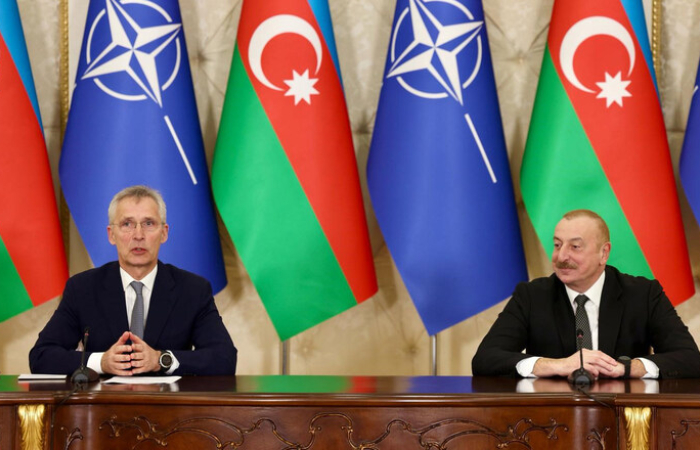
NATO Secretary General Jens Stoltenberg arrived in Baku in Sunday (17 March) at the start of a three-day, tri-nation tour of the South Caucasus. Meeting with President Ilham Aliyev, the Secretary-General welcomed Azerbaijan’s long-standing collaboration with the Alliance, saying he looked forward to further strengthening the partnership. On the situation in the South Caucasus, the Secretary-General underlined that “peace and stability is not only important here but for security more broadly”. He said: “Armenia and Azerbaijan now have an opportunity to achieve an enduring peace after years of conflict.”  He added: “I can just encourage you to seize this opportunity to reach a lasting peace agreement with Armenia”. On Ukraine, Mr Stoltenberg welcomed the much-needed support provided by Azerbaijan, and called on all countries in the region to step up: “more support is needed because the situation in Ukraine is extremely difficult.” The Secretary-General called the upcoming COP29 Global Climate Summit in Azerbaijan an important milestone: “It is important for everyone concerned about climate change but also important for our security because those issues are closely interlinked.”
Editor's choice
News
Kobakhidze in Baku as Georgia pushes its regional role

Kobakhidze in Baku as Georgia pushes its regional role

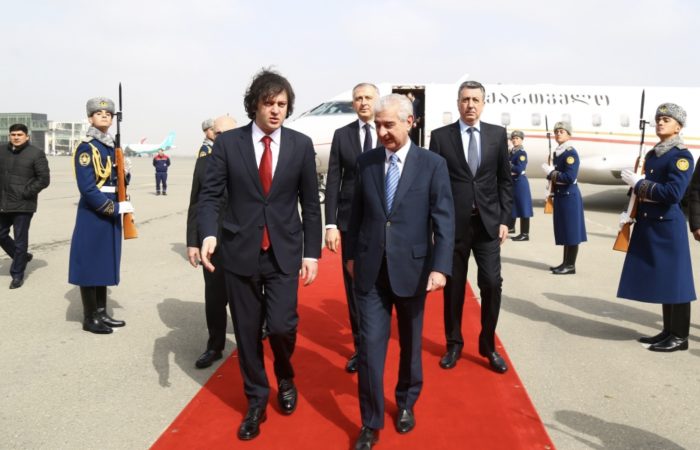
The recently appointed prime minister of Georgia, Irakli Kobakhidze, has arrived in Baku for talks with the Azerbaijani leadership. In the few days during which he has been prime minister Kobakhidze has given a lot of importance to relations with the country's two immediate neighbours, Armenia and Azerbaijan, meeting separately with the Ambassadors of the two countries and receiving visiting delegations. Georgia is keen to promote its regional role and to support the process of peace and reconciliation between Armenia and Azerbaijan. This is likely to be one of the topics on Kobakhidze's agenda in Baku. The Georgian prime minister is also expected to visit Armenia next week,