Region

Russia

Stories under this heading cover Russia, as well as countries in the eastern part of the European continent, such as Belarus, Ukraine, and Moldova.

Editor's choice
News
Germany accuses Russia of cyberattacks and disinformation campaign

Germany accuses Russia of cyberattacks and disinformation campaign

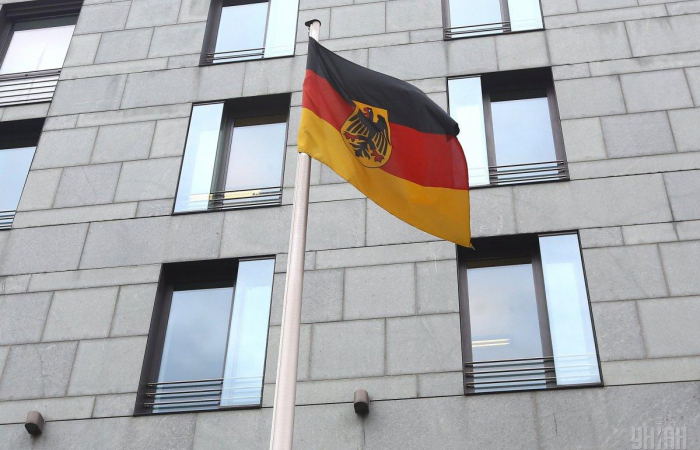
The German government holds Russia responsible for a cyberattack on German air traffic control, and for targeted disinformation campaigns before the last federal election. According to the German Foreign Office in Berlin, the incidents could be clearly attributed to the Russian military intelligence service, the GRU. In response, the Russian ambassador to Berlin was summoned to the Foreign Ministry. "We have been observing a massive increase in threatening hybrid activities by Russia for some time now," a spokesperson for the Foreign Ministry stated. These range from disinformation campaigns and espionage to cyberattacks and sabotage attempts. The aim is to divide society, sow distrust, and undermine confidence in democratic institutions. The spokesperson added that with these actions, Russia is "very concretely threatening our security, not only through its war of aggression against Ukraine, but also here in Germany."  The Foreign Ministry spokesperson explained that the cyberattack on air traffic control in August 2024 was clearly attributed to the hacker collective "APT28," known as "Fancy Bear," and to the responsibility of the Russian military intelligence service, the GRU. Furthermore, it could now be "conclusively stated" that Russia had attempted "to influence and destabilize both the last Federal election and the ongoing internal affairs of the Federal Republic of Germany." There was "absolutely irrefutable evidence" for this". The so-called "Storm 1516" campaign, which has been running since 2024, is allegedly backed by "reliable information" that the Moscow-based think tank "Center for Geopolitical Expertise" is behind it. The Center is also said to be supported by Russian military intelligence. Its primary aim is to influence democratic elections in the West. (Click the image to read more).
Editor's choice
News
NATO Chief says war is on Europe's doorstep, and warns against complacency

NATO Chief says war is on Europe's doorstep, and warns against complacency

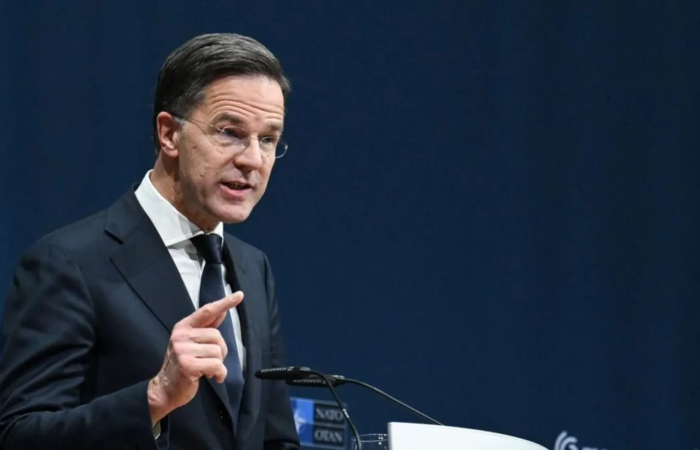
Russia could attack a NATO country within the next five years, the Secretary General of NATO, Mark Rutte, said in a stark new warning. "NATO's own defences can hold for now," Rutte warned in Berlin, but conflict was "next door" to Europe, and he feared "too many are quietly complacent, and too many don't feel the urgency, too many believe that time is on our side. "Russia is already escalating its covert campaign against our societies," Rutte said in a speech in Germany. "We must be prepared for the scale of war our grandparents or great-grandparents endured." Earlier this month, Russia's President Vladimir Putin said his country was not planning to go to war with Europe, but it was ready "right now" if Europe wanted to - or started a war. But similar reassurances were given by Moscow in 2022, just before 200,000 Russian troops crossed the border and invaded Ukraine. Putin has accused European countries of hindering US efforts to bring peace in Ukraine - a reference to the role Ukraine's European allies have recently played in trying to change a US peace plan to end the war, whose initial draft was seen as favouring Russia. But Putin was not sincere, Nato's secretary-general said in the German capital, Berlin. Supporting Ukraine, he added, was a guarantee for European security. "Just imagine if Putin got his way; Ukraine under the boot of Russian occupation, his forces pressing against a longer border with Nato, and the significantly increased risk of an armed attack against us." Russia's economy has been on a war footing for more than three years now - its factories churn out ever more supplies of drones, missiles and artillery shells. According to a recent report by the Kiel Institute for the World Economy, Russia has been producing each month around 150 tanks, 550 infantry fighting vehicles, 120 Lancet drones and more than 50 artillery pieces. The UK, and most of its Western allies, are simply not anywhere near this point. Analysts say it would take years for Western Europe's factories to come close to matching Russia's mass-production of weapons. "Allied defence spending and production must rise rapidly, our armed forces must have what they need to keep us safe," the Nato chief said.

Filter archive

Publication date
Editor's choice
Commentary
Commentary: Putin’s partial mobilisation exposes how weak he really is

Commentary: Putin’s partial mobilisation exposes how weak he really is

Speaking in a pre-recorded speech that was originally scheduled for the evening before, Russian President Vladimir Putin announced on Wednesday morning (21 September) a partial mobilisation of 300,000 reservists to boost his faltering invasion of Ukraine. Far from being a demonstration of strength, however, his announcement exposes how weak a position Russia currently finds itself in, and on a number of levels too, writes commonspace.eu Deputy Editor Patrick Norén. The Russian President finds himself hamstrung across three fronts: his narrative of "everything is going according to plan" is imploding; the risks of doing nothing or declaring a full mobilisation have resulted in an unsatisfactory fudge that does not address the root cause of the problem; and Russia's far-right, furious at the disastrous invasion of Ukraine, is baying for blood.
Editor's choice
News
Russia mobilises 300,000 reservists in a desperate effort to reverse setbacks in Ukraine

Russia mobilises 300,000 reservists in a desperate effort to reverse setbacks in Ukraine

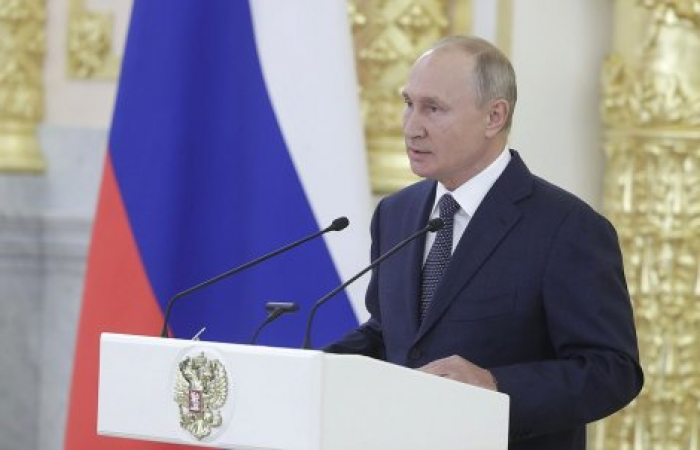
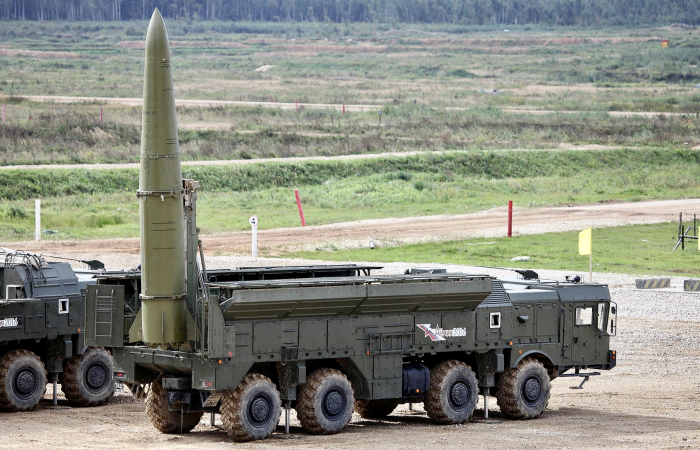
Russian president Vladimir Putin has ordered a partial mobilisation as part of an effort to boost its military effort in Ukraine. Putin made the announcement during a pre-recorded television speech which was first scheduled to be aired on Wednesday evening, but was eventually delayed until Thursday morning. After the speech was aired, Russia's defence minister, Sergei Shoigu gave further details on the partial military mobilisation, saying 300,000 reservists will be conscripted into the armed forces. Sergei Shoigu said that number represented a small fraction of Russia's available resources, while students and those who had already served as conscripts would not be called up. He said all those being conscripted would be given military training before being sent to Ukraine. In his speech Vladimir Putin said the decision, which followed the announcement of referendums to pave the way for the formal annexation of swathes of Ukraine, is meant to "protect our Motherland and our territorial integrity." Claiming the West was threatening Russia with nuclear weapons, Mr Putin said: "We have lots of weapons to reply - it is not a bluff."
Editor's choice
News
Xi sets the tone, and Putin answers questions

Xi sets the tone, and Putin answers questions

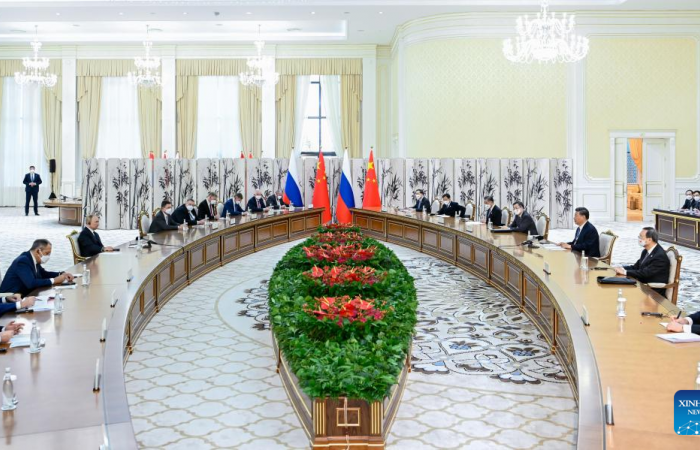
Chinese President Xi chose Central Asia for his first foray overseas after a long hiatus due to the Covid pandemic, travelling to Kazakhstan, and then onwards to Samarkand to attend the meeting of the Shanghai Co-operation Organisation (SCO) and have various bilateral meetings. Chinese protocol these days demand that all meetings with Xi are fully masked, and so attired delegations troded in to meet the Chinese leader: Azerbaijan President Ilham Aliyev was early in queue. There was Uzbekistan's president Miriyzoyev, who for good measure gave President Xi Uzbekistan's "Order of Friendship", and Belarus President Lukashenko. But most interest was focused on when Putin's turn came. Increasingly the Russian leader is starting to look like the junior partner in the relationship with Xi. Certainly the official language was all proper and correct, but there was something in the body language that showed Putin's awkwardness at the new situation.Putin said Russia will consolidate and deepen bilateral and multilateral communication and collaboration with China, and expand cooperation in key areas such as economy, trade and energy. “We highly value the balanced position of our Chinese friends when it comes to the Ukraine crisis,” Putin said in televised remarks to Xi. “We understand your questions and concern about this. During today’s meeting, we will, of course, explain our position.” "Questions and concern" - not exactly enthusiastic support then by China for Putin's adventure in Ukraine.
Editor's choice
News
Russia attacks power stations and civilian infrastructure in Ukraine

Russia attacks power stations and civilian infrastructure in Ukraine

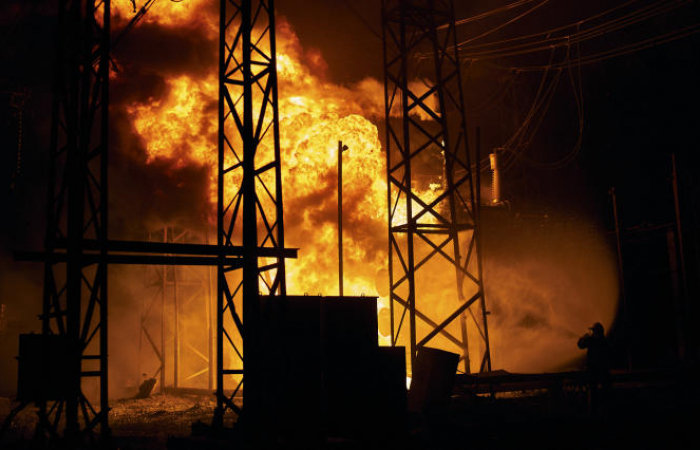
Russia attacked power stations and other civilian infrastructure in Ukraine on Sunday (11 September), causing widespread outages across the country as Kyiv’s forces pressed a swift counteroffensive that has driven Moscow’s troops from large swaths of territory it had occupied in the northeast. The bombardment ignited a massive fire at a power station on Kharkiv’s western outskirts and killed at least one person. President Volodymyr Zelensky denounced the “deliberate and cynical missile strikes” against civilian targets as acts of terrorism. Ukraine’s second-largest city of Kharkiv appeared to be without power Sunday night. Cars drove through darkened streets, and the few pedestrians used flashlights or mobile phones to light their way. Separately, the Zaporizhzhia Nuclear Power Plant in the Russia-occupied south completely shut down in a bid to prevent a radiation disaster as fighting raged nearby.
Editor's choice
News
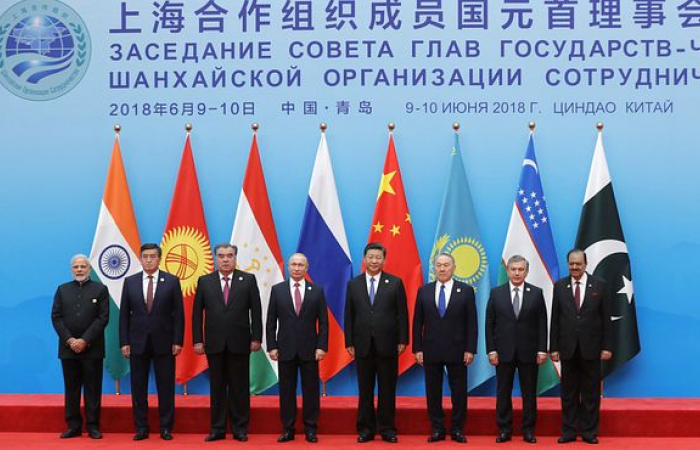
Opinion: The role of the Shanghai Cooperation Organisation goes beyond managing Russia-China relations in Central Asia

Opinion: The role of the Shanghai Cooperation Organisation goes beyond managing Russia-China relations in Central Asia

"As the world comes closer to multi-polarity, the role of such organizations as SCO will grow further. Russia and China will seek to use them as a counterbalance to western dominated international political and economic organizations, such as G7, the EU, the World Bank and IMF", writes Benyamin Poghosyan in this op-ed. He argues that in the present context of emerging great power competition, the SCO started to be viewed less as a tool to manage Russia – China relations in Central Asia, or counter terrorist threats from Afghanistan, and more as a significant grouping of non-western powers in the emerging multipolar world.