Region

Russia

Stories under this heading cover Russia, as well as countries in the eastern part of the European continent, such as Belarus, Ukraine, and Moldova.

Editor's choice
News
Germany accuses Russia of cyberattacks and disinformation campaign

Germany accuses Russia of cyberattacks and disinformation campaign

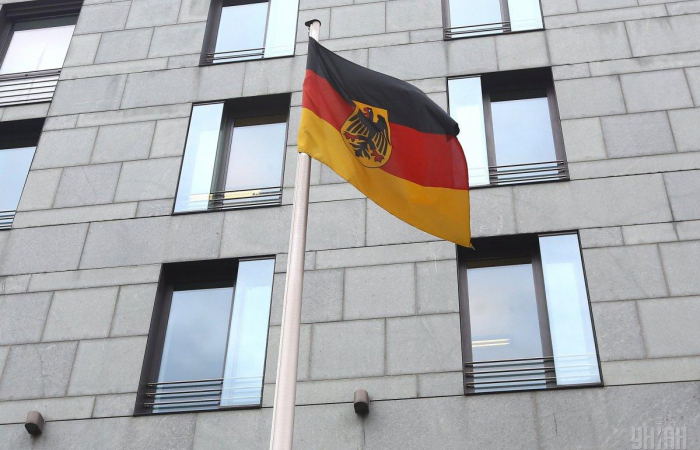
The German government holds Russia responsible for a cyberattack on German air traffic control, and for targeted disinformation campaigns before the last federal election. According to the German Foreign Office in Berlin, the incidents could be clearly attributed to the Russian military intelligence service, the GRU. In response, the Russian ambassador to Berlin was summoned to the Foreign Ministry. "We have been observing a massive increase in threatening hybrid activities by Russia for some time now," a spokesperson for the Foreign Ministry stated. These range from disinformation campaigns and espionage to cyberattacks and sabotage attempts. The aim is to divide society, sow distrust, and undermine confidence in democratic institutions. The spokesperson added that with these actions, Russia is "very concretely threatening our security, not only through its war of aggression against Ukraine, but also here in Germany."  The Foreign Ministry spokesperson explained that the cyberattack on air traffic control in August 2024 was clearly attributed to the hacker collective "APT28," known as "Fancy Bear," and to the responsibility of the Russian military intelligence service, the GRU. Furthermore, it could now be "conclusively stated" that Russia had attempted "to influence and destabilize both the last Federal election and the ongoing internal affairs of the Federal Republic of Germany." There was "absolutely irrefutable evidence" for this". The so-called "Storm 1516" campaign, which has been running since 2024, is allegedly backed by "reliable information" that the Moscow-based think tank "Center for Geopolitical Expertise" is behind it. The Center is also said to be supported by Russian military intelligence. Its primary aim is to influence democratic elections in the West. (Click the image to read more).
Editor's choice
News
NATO Chief says war is on Europe's doorstep, and warns against complacency

NATO Chief says war is on Europe's doorstep, and warns against complacency

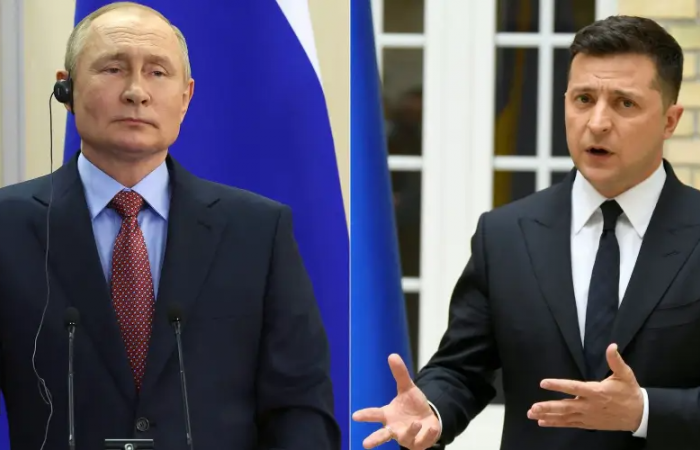
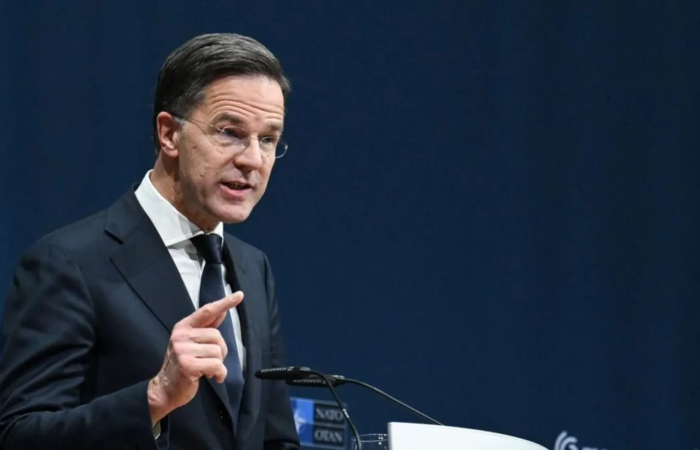
Russia could attack a NATO country within the next five years, the Secretary General of NATO, Mark Rutte, said in a stark new warning. "NATO's own defences can hold for now," Rutte warned in Berlin, but conflict was "next door" to Europe, and he feared "too many are quietly complacent, and too many don't feel the urgency, too many believe that time is on our side. "Russia is already escalating its covert campaign against our societies," Rutte said in a speech in Germany. "We must be prepared for the scale of war our grandparents or great-grandparents endured." Earlier this month, Russia's President Vladimir Putin said his country was not planning to go to war with Europe, but it was ready "right now" if Europe wanted to - or started a war. But similar reassurances were given by Moscow in 2022, just before 200,000 Russian troops crossed the border and invaded Ukraine. Putin has accused European countries of hindering US efforts to bring peace in Ukraine - a reference to the role Ukraine's European allies have recently played in trying to change a US peace plan to end the war, whose initial draft was seen as favouring Russia. But Putin was not sincere, Nato's secretary-general said in the German capital, Berlin. Supporting Ukraine, he added, was a guarantee for European security. "Just imagine if Putin got his way; Ukraine under the boot of Russian occupation, his forces pressing against a longer border with Nato, and the significantly increased risk of an armed attack against us." Russia's economy has been on a war footing for more than three years now - its factories churn out ever more supplies of drones, missiles and artillery shells. According to a recent report by the Kiel Institute for the World Economy, Russia has been producing each month around 150 tanks, 550 infantry fighting vehicles, 120 Lancet drones and more than 50 artillery pieces. The UK, and most of its Western allies, are simply not anywhere near this point. Analysts say it would take years for Western Europe's factories to come close to matching Russia's mass-production of weapons. "Allied defence spending and production must rise rapidly, our armed forces must have what they need to keep us safe," the Nato chief said.

Filter archive

Publication date
Editor's choice
News
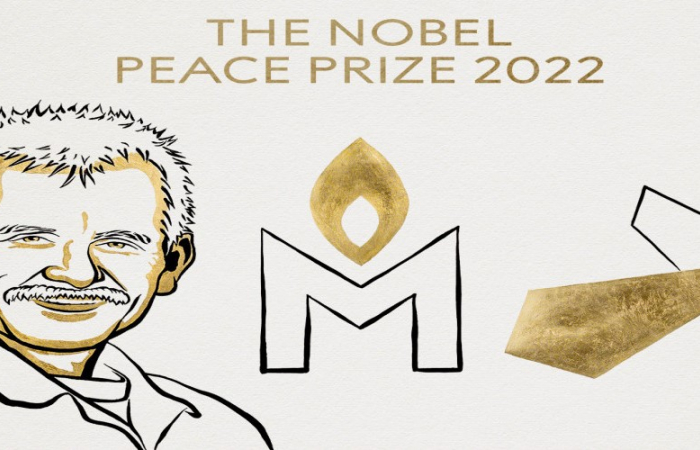
Eastern European civil society activists awarded the 2022 Nobel Peace Prize

Eastern European civil society activists awarded the 2022 Nobel Peace Prize

The 2022 Peace Prize has been awarded to human rights advocate Ales Bialiatski from Belarus, the Russian human rights organisation Memorial and the Ukrainian human rights organisation Center for Civil Liberties. A statement published on the official website of the Norwegian Nobel Peace Committee in Oslo said The Peace Prize laureates represent civil society in their home countries. They have for many years promoted the right to criticise power and protect the fundamental rights of citizens. They have made an outstanding effort to document war crimes, human right abuses and the abuse of power. Together they demonstrate the significance of civil society for peace and democracy.
Editor's choice
Monday Commentary
Opinion: Preparing for the worst, whilst working to avoid it

Opinion: Preparing for the worst, whilst working to avoid it

Putin’s annexation of parts of Ukraine takes the world to the verge of War, but a stronger and more united global condemnation of Russian aggression can still make Putin step back. Monday Commentary is back. Every Monday, commonspace.eu Managing Editor, Dennis Sammut discusses a hot topic on the European and international agenda. This week he weighs the implications of Russia’s annexation of parts of Ukraine, and the dilemma it poses to the rest of the world. He argues that it takes the world to the verge of a world war involving nuclear-armed states. But this can still be avoided if there is more global unity in condemnation of the Russian aggression.
Editor's choice
News
All together, for now

All together, for now

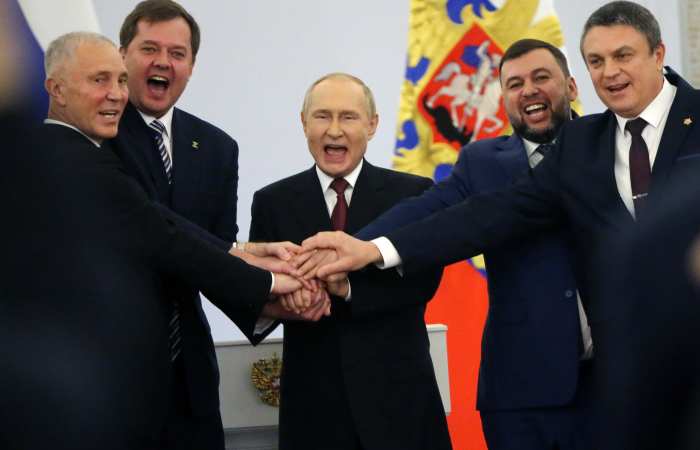
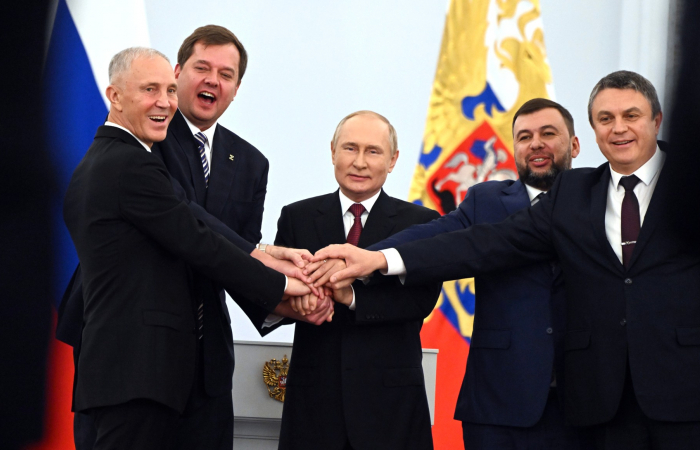
Russian President Vladimir Putin presided over a ceremony at the Kremlin on Friday, (30 September) to formally annex Donetsk, Luhansk, Zaporizhzhia and Kherson regions of Ukraine into the Russian Federation. "Congratulations! You have successfully cast your vote. I want the Kyiv authorities and their real masters in the West to hear me. People living in Luhansk and Donetsk, Kherson and Zaporizhzhia are becoming our citizens. Forever." "We call on the Kyiv regime to immediately end hostilities, end the war that they unleashed back in 2014 and return to the negotiating table. We are ready for this ... But we will not discuss the choice of the people in Donetsk, Luhansk, Zaporizhzhia and Kherson. That has been made. Russia will not betray them", Putin told an audience of dignatries in the Kremlin. The official annexation was widely expected following the votes that wrapped up on Tuesday in the areas under Russian occupation. Moscow claimed residents overwhelmingly supported that their areas should formally become a part of Russia. The EU, US and other countries have denounced the referendums as "illegal and rigged", saying they were clearly orchestrated by Kremlin. United Nations chief Antonio Guterres said it was a "dangerous escalation" that would jeopardise prospects for peace.  With the formal annexation of Kherson, Zaporizhzhia, Donetsk and Luhansk, nearly 15% of Ukraine's territory will become Russian territory, for now. Ukraine and western countries have vowed never to accept the annexation.
Editor's choice
Editorial
Editorial: A dark day in the history of Europe

Editorial: A dark day in the history of Europe

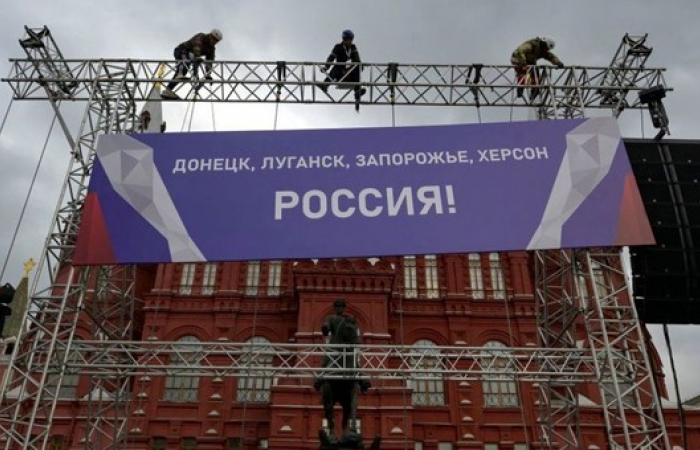
Friday, 30 September 2022 will for a long time be remembered as a sad and dark day for Europe. This afternoon, at 15:00 (12:00 GMT) in the St George Hall of the Grand Kremlin Palace president Vladimir Putin will hold a signing ceremony annexing four more regions of Ukraine into the Russian Federation. The events in Europe in the 1930 are repeating themselves with an eerie familiarity: a big country invades a smaller neighbouring country, organises a sham referendum in parts or all of that country, after which it claims the moral authority to annex that territory or country.  In an act of cynicism late on Thursday, the Russian president signed two decrees recognising Zaporizhzhia and Kherson as independent territories. Their so called independence will last for only a few hours, before they are absorbed into Russia. The documents, shared on Russian state media, say the independence of the two regions is being recognised in accordance with international law and "enshrined in the Charter of the United Nations". However, UN Secretary General António Guterres has said any annexation of a country's territory based on the use of force violates the UN Charter and international law. Europeans thought that those times were over, and that the lessons had been learnt. Apparently not. Russia's invasion of Ukraine last February set the stage for what will take place in the Kremlin today. After votes in Luhansk and Donetsk in the east of Ukraine, and in Zaporizhzhia and Kherson in the south, Russia will annexe them, in defiance of the wish of the Ukrainian people and their legitimate government, and of most of the international community. It has already acted in this way once, when in 2014, in similar circumstances it occupiued and annexed Crimea. Today's events are being hailed as a victiory by the Kremlin. A stage has already been set up in Moscow's Red Square, with billboards proclaiming the four regions as part of Russia and a concert planned for the evening in celebration. Some Russians may decide to follow the misguided steps of their leaders, but for the rest of Europe today is a sad and dark day.
Editor's choice
Editorial
Editorial: Lukashenko's trip to Abkhazia is another act in Putin's nefarious plan

Editorial: Lukashenko's trip to Abkhazia is another act in Putin's nefarious plan

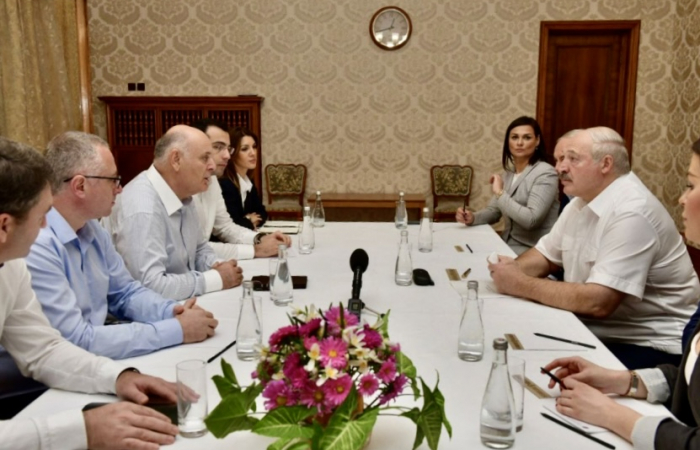
The president of Belarus, Alexandre Lukashenko, made a surprise appearance in Abkhazia on Wednesday (28 September), in a move that many see as being part of the Kremlin’s present strategy to further distabilise Eurasia to help achieve the ultimate aim, which is complete Russian hegemony on the post-Soviet Space. For sure, Lukashenko did not go to Sukhumi to have a last dip in the Black Sea before winter sets in. This was a calculated political move, typical of Lukashenko. So why did he go, and why now? Lukashenko has long been a tool of the Kremlin, not only when it comes to affairs in his own Belarus, but more broadly on the international stage. Yet he has also tried to cultivate the image of being independent-minded, not the sort to take orders from Vladimir Putin, but rather one that is able to influence the Kremlin and its policies. This visit proves that in fact he is simply a stooge.
Editor's choice
News
Biggest prisoner exchange between Ukraine and Russia, including Azov battalion fighters

Biggest prisoner exchange between Ukraine and Russia, including Azov battalion fighters

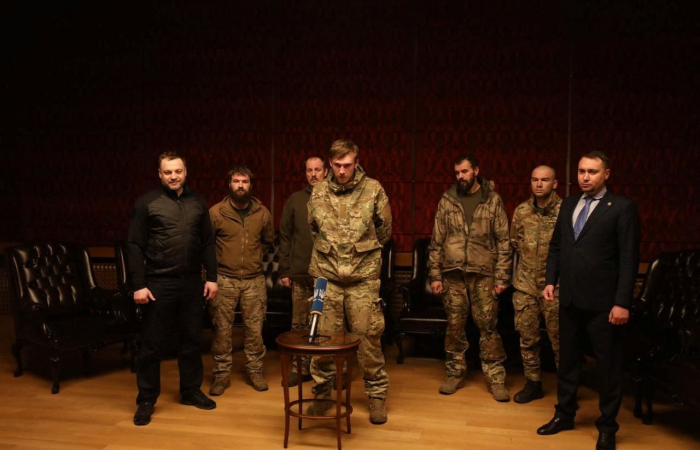
In a surprise move, Russia and Ukraine on the night from Wednesday to Thursday (22 September) implemented the biggest prisoner exchange since the start of the war between them in February Russia released over a hundred captured Ukrainian fighters in a prisoner exchange, including fighters from the Azov battalion.  In numerical terms, the prisoner swap represents a major victory for Ukrainian morale. Among others, Ukraine got back three commanders who led the last Ukrainian resistance in the port city of Mariupol and over 100 more members of the battalion. A total of 215 Ukrainians have been released. Among them are policemen, border guards, soldiers and pregnant fighters. In a seperate move ten foreigners who were fighting for the Ukrainian side and were captured by the Russians, were released thanks to the mediation of Crown Prince Mohamed bin Salman of Saudi Arabia.