Region

Global

Stories in this section cover various issues and stories from all around the world.

Editor's choice
News
NATO Chief says war is on Europe's doorstep, and warns against complacency

NATO Chief says war is on Europe's doorstep, and warns against complacency

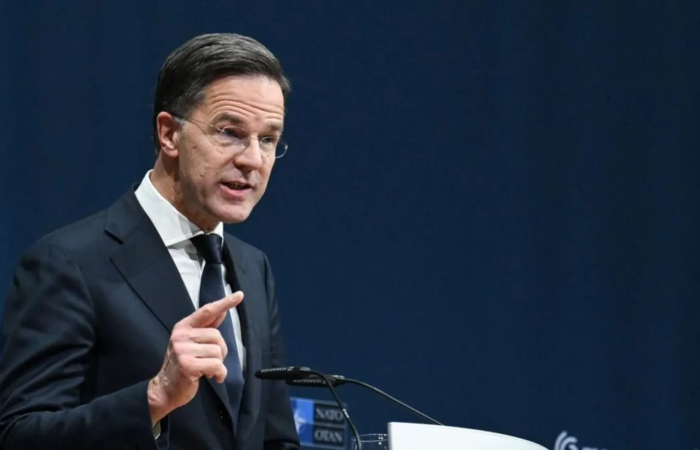
Russia could attack a NATO country within the next five years, the Secretary General of NATO, Mark Rutte, said in a stark new warning. "NATO's own defences can hold for now," Rutte warned in Berlin, but conflict was "next door" to Europe, and he feared "too many are quietly complacent, and too many don't feel the urgency, too many believe that time is on our side. "Russia is already escalating its covert campaign against our societies," Rutte said in a speech in Germany. "We must be prepared for the scale of war our grandparents or great-grandparents endured." Earlier this month, Russia's President Vladimir Putin said his country was not planning to go to war with Europe, but it was ready "right now" if Europe wanted to - or started a war. But similar reassurances were given by Moscow in 2022, just before 200,000 Russian troops crossed the border and invaded Ukraine. Putin has accused European countries of hindering US efforts to bring peace in Ukraine - a reference to the role Ukraine's European allies have recently played in trying to change a US peace plan to end the war, whose initial draft was seen as favouring Russia. But Putin was not sincere, Nato's secretary-general said in the German capital, Berlin. Supporting Ukraine, he added, was a guarantee for European security. "Just imagine if Putin got his way; Ukraine under the boot of Russian occupation, his forces pressing against a longer border with Nato, and the significantly increased risk of an armed attack against us." Russia's economy has been on a war footing for more than three years now - its factories churn out ever more supplies of drones, missiles and artillery shells. According to a recent report by the Kiel Institute for the World Economy, Russia has been producing each month around 150 tanks, 550 infantry fighting vehicles, 120 Lancet drones and more than 50 artillery pieces. The UK, and most of its Western allies, are simply not anywhere near this point. Analysts say it would take years for Western Europe's factories to come close to matching Russia's mass-production of weapons. "Allied defence spending and production must rise rapidly, our armed forces must have what they need to keep us safe," the Nato chief said.
Editor's choice
News
Thai-Cambodia border clashes enter fourth day

Thai-Cambodia border clashes enter fourth day

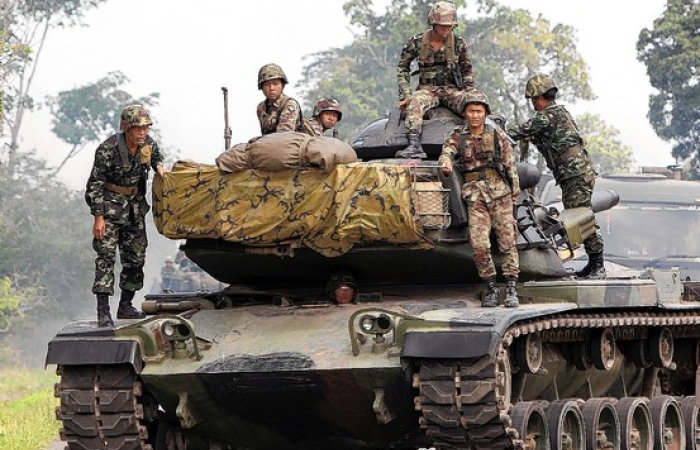
Renewed fighting between Thailand and Cambodia has entered its fourth day, with both sides accusing one another of violating international law, as they await a promised phone call from United States President Donald Trump. Cambodia’s Ministry of Defence accused Thailand’s military of carrying out numerous attacks within the country in the early hours of Thursday morning, including deploying tanks and artillery to strike targets in the country’s Pursat, Banteay Meanchey, and Oddar Meanchey provinces. In one such attack, Cambodia accused Thai soldiers of violating international humanitarian law by firing on civilians in Prey Chan village in Banteay Meanchey province. In another, it accused Thai forces of shelling “into Khnar Temple area”, and said Thai forces had also “fired artillery and support fire into the O’Smach area”. “Cambodia urges that Thailand immediately stop all hostile activities and withdraw its forces from Cambodia’s territorial integrity, and avoid acts of aggression that threaten peace and stability in the region,” the Defence Ministry said. Clashes took place on Wednesday at more than a dozen locations along the contested colonial-era demarcated 817-kilometre (508-mile) Thai-Cambodian border, with some of the most intense fighting being reported since a five-day battle in July, which saw dozens killed on both sides. Cambodia’s Ministry of the Interior said homes, schools, roads, Buddhist pagodas and ancient temples had been damaged by “Thailand’s intensified shelling and F-16 air strikes targeting villages and civilian population centres up to 30km [18.6 miles] inside Cambodian territory”. (click the image to read the full story).

Filter archive

Publication date
Editor's choice
News
In Tbilisi, Stoltenberg reaffirms NATO support for Georgia's territorial integrity

In Tbilisi, Stoltenberg reaffirms NATO support for Georgia's territorial integrity

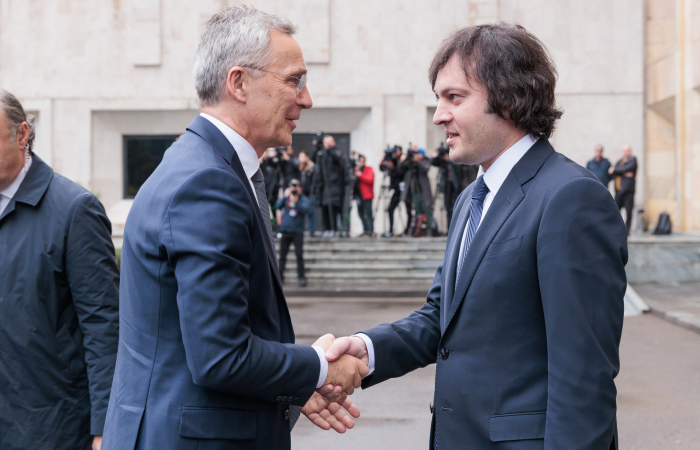
NATO Secretary General Jens Stoltenberg continued his tour of the South Caucasus on Monday (18 March 2024), meeting with President Salome Zourabichvili and Prime Minister Irakli Kobakhidze of Georgia in Tbilisi. “Georgia is one of NATO’s closest partners. We highly appreciate your substantial contributions to NATO missions and operations and we fully support Georgia’s sovereignty and territorial integrity. South Ossetia and Abkhazia are part of Georgia,” Mr Stoltenberg said. He called on Russia to reverse the recognition of Georgian territories South Ossetia and Abkhazia as independent states and added that Russia’s organisation of elections in occupied parts of Georgia and Ukraine is completely illegal. “Russia’s presidential election was clearly neither free nor fair,” Mr Stoltenberg said. The Secretary General welcomed Georgia’s substantial contributions to NATO operations and support to Ukraine. Georgia is hosting thousands of Ukrainian refugees and providing crucial humanitarian and financial aid. “Russia persists in its pursuit of imperial ambitions. And in Ukraine, the situation on the battlefield remains difficult,” he said. “But, with our support, Ukraine has pushed back - destroying or damaging a significant part of Russia’s Black Sea fleet,” allowing Ukraine to re-open grain shipping that is vital for their economy and for global food security. The Secretary General will conclude his three day visit to the South Caucasus in Yerevan on Tuesday, meeting with President Vahagn Khachaturyan and Prime Minister Nikol Pashinyan of Armenia. On Sunday and Monday, he met Azerbaijan’s leadership in Baku.
Editor's choice
News
Sombre mood across the Islamic world as Muslims think of Gaza at the start of Ramadan

Sombre mood across the Islamic world as Muslims think of Gaza at the start of Ramadan

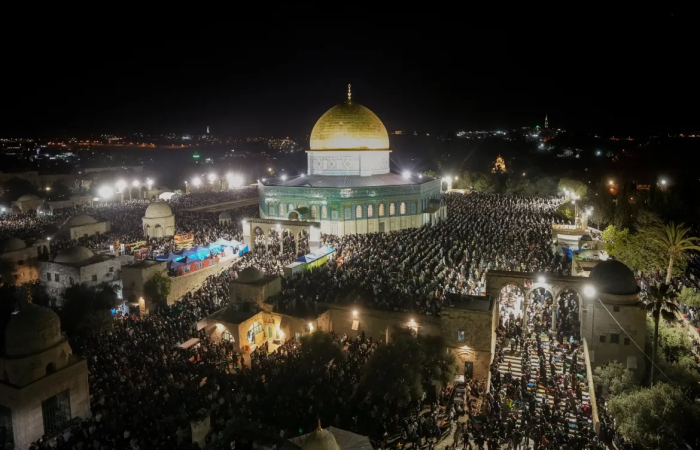
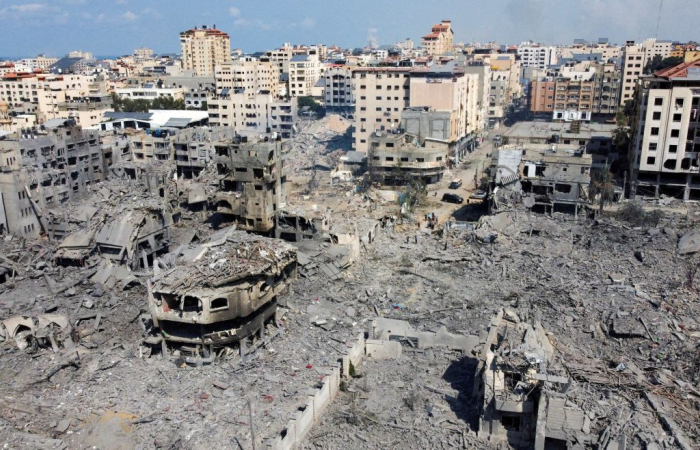
Muslims round the world today marked the first day of fasting at the start of the Islamic Holy month of Ramadan in a sombre mood, as communities reflected on the suffering of the Palestinian people in Gaza. In Gaza the population is on the verge of starvation, and in other Palestinian territories the shadow of war is not far away either, with tensions high in East Jerusalem. Thousands of Israeli police have been deployed around the narrow streets of the Old City in Jerusalem, where tens of thousands of worshippers are expected every day at the Al Aqsa mosque compound, one of the holiest sites in Islam. Israel's relentless campaign in Gaza has caused increasing alarm across the world as the growing risk of famine threatens to add to a death toll that has already passed 31,000. In the ruins of Gaza itself, where half the 2.3 million population is squeezed into the southern city of Rafah, many living under plastic tents and facing a severe shortage of food, the mood was correspondingly sombre. "We made no preparations to welcome Ramadan because we have been fasting for five months now," said Maha, a mother of five, who would normally have filled her home with decorations and stocked her refrigerator with supplies for the evening Iftar celebrations when people break their fast. "There is no food, we only have some canned food and rice, most of the food items are being sold for imaginary high prices," she said via chat app from Rafah, where she is sheltering with her family.
Editor's choice
News
Swedish flag flies at NATO headquarters

Swedish flag flies at NATO headquarters

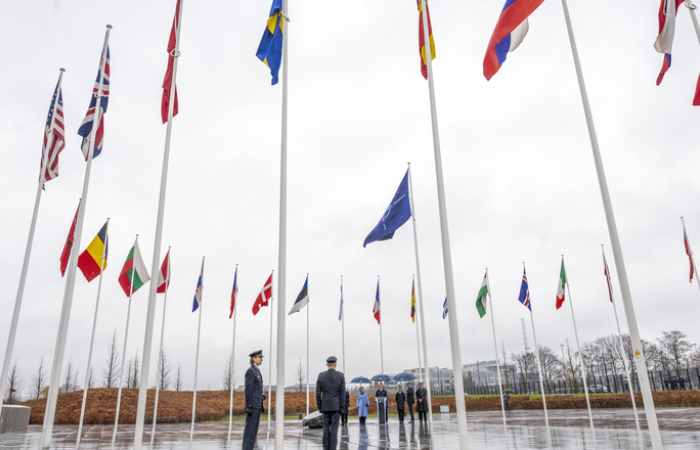
The Swedish flag was raised at NATO Headquarters for the first time on Monday (11 March) in a ceremony to mark the country’s membership of the Alliance. Sweden became NATO’s 32nd Ally on 7 March upon depositing its instrument of accession to the North Atlantic Treaty with the United States government in Washington D.C. NATO's Secretary General, Jens Stoltenberg, welcomed Prime Minister Ulf Kristersson to NATO Headquarters for a flag-raising ceremony to mark Sweden’s accession. Speaking ahead of the ceremony, the Secretary General thanked Prime Minister Kristersson for his strong personal leadership and commitment to leading Sweden into NATO. He said: “Sweden has taken its rightful place at NATO’s table under the shield of Article 5 protection – the ultimate guarantee of our freedom and security. All for one and one for all.” Sweden’s flag was hoisted to join the flags of the other 31 Allies, as the Swedish national anthem and the NATO hymn were played. Flag-raising ceremonies took place simultaneously at Allied Command Operations (SHAPE) in Mons (Belgium) and Allied Command Transformation in Norfolk, Virginia (United States). Standing alongside Prime Minister Kristersson, the Secretary General said: “Sweden’s accession shows again that NATO’s door remains open. No one can close it. Every nation has the right to choose its own path, and we all choose the path of freedom and democracy.” Noting that NATO will mark its 75th anniversary this year, Mr Stoltenberg underlined that the transatlantic bond between Europe and North America has ensured our freedom and security. Sweden will help to build an even stronger NATO at a critical time for Euro-Atlantic security, he said, adding that “joining NATO is good for Sweden, good for stability in the North, and good for the security of our whole Alliance.”
Editor's choice
News
Anger across the Muslim world and the Global South as US vetoes Gaza cease fire resolution for the 4th time

Anger across the Muslim world and the Global South as US vetoes Gaza cease fire resolution for the 4th time

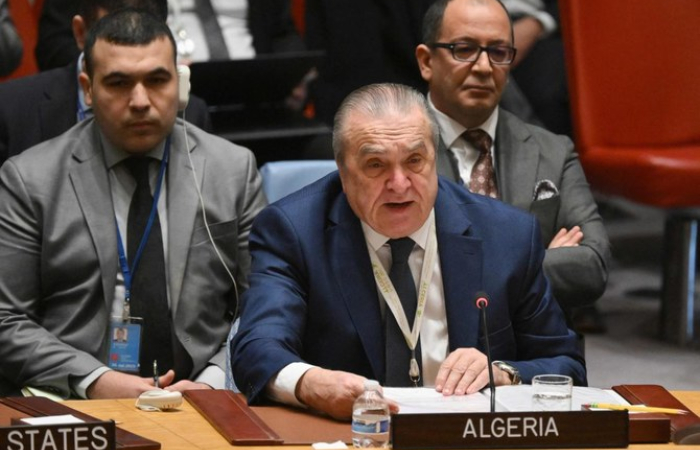
Commentators and opinion shapers across the Muslim world and the global south on Wednesday (21 February) were unanimous in their condemnation of the American veto of an Algerian resolution in the UN Security Council which called for an immediate cease fire in Gaza. Many commentators in Western countries were similarly appalled after for the fourth time since the start of the war in Gaza, the US on Tuesday vetoed a draft UN Security Council resolution demanding an immediate ceasefire in the embattled territory. It said such a resolution would interfere with ongoing, “sensitive” negotiations, led by Washington, that are attempting to broker an end to the hostilities. Thirteen of the 15 council members voted in favor of the resolution, which was drafted by Algeria. The UK abstained. In addition to the call for an immediate ceasefire, the Arab-backed draft resolution did also demand the immediate release of all hostages. It also rejected the forced displacement of Palestinian civilians, called for the unrestricted flow of humanitarian aid to the people of Gaza, and reiterated council demands that both Israel and Hamas “scrupulously comply” with the rules of international law, especially in relation to the protection of civilians. It also condemned “all acts of terrorism,” without explicitly naming either side.
Editor's choice
News
Africa honours the memory of "Mwalimu" Julius Nyerere

Africa honours the memory of "Mwalimu" Julius Nyerere

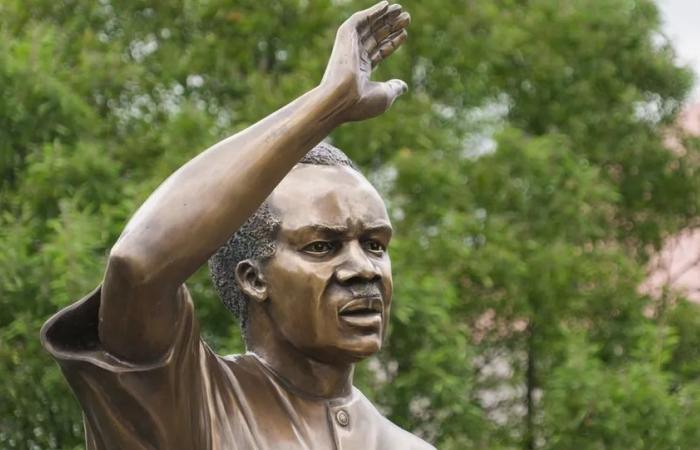
Africa has honoured the memory of Julius Nyerere, founder and first president of Tanzania and an icon for Africa's quest for freedom from colonialism and apartheid. A statue of Nyrere has been unveiled outside the African Union offices in Addis Ababa. Known as Mwalimu, Swahili for teacher, he was a committed pan-Africanist and hosted independence fighters opposed to white minority rule in southern Africa. He played a key role in the creation of the Organisation of African Unity, which later became the African Union. Nyrere was president of Tanzania (initially called Tanganiyka) from 1961 to 1985. Unveiling the statue at a ceremony attended by numerous African heads of state, AU Commission leader Moussa Faki Mahamat said: "The legacy of this remarkable leader encapsulates the essence of Pan Africanism, profound wisdom, and service to Africa." He recalled Nyerere's own comments at the inaugural OAU summit in 1963. "Our continent is one, and we are all Africans." But when he became prime minister of what was then Tanganyika in 1961, his first task was to unite the new country, made up of more than 120 different ethnic groups, including Arab, Asian and European minorities. He managed to do this, by promoting the use of Swahili as a common language and through his vision of "African Socialism" or ujamaa (familyhood). In 1964, Tanganyika united with the Zanzibar archipelago to form Tanzania. Paying her tribute to Nyerere, Tanzania's President Samia Suluhu Hassan said: "To him, Africa's wellbeing came first, before popular approval, personal fortune or country wellbeing." He was a trained teacher and became the first person from Tanganyika to study at a British university, when he went to study in Edinburgh in 1949, according to the Encyclopaedia Britannica. He died in 1999, aged 77, and the anniversary of his death, 14 October, is a public holiday.
Editor's choice
News
Busy time for Aliyev and Pashinyan at the Munich Security Conference

Busy time for Aliyev and Pashinyan at the Munich Security Conference

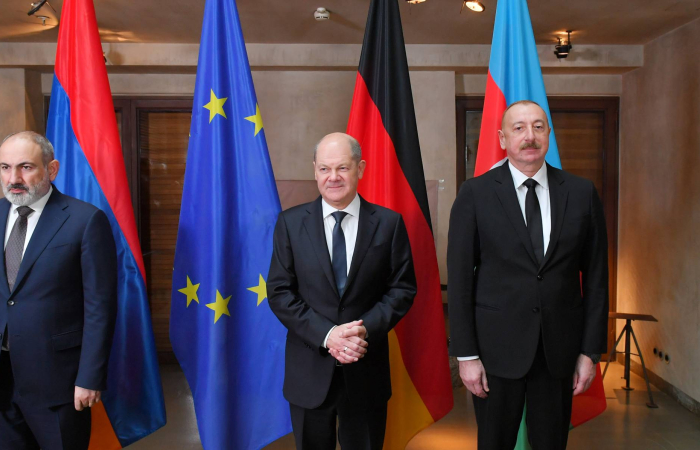
Armenian prime minister, Nikol Pashinyan, and Azerbaijani president, Ilham Aliyev, are this weekend both attending the Munich Security Conference. On the margins of the big event the two leaders have held a series of bilateral meetings with world leaders and statesmen. Of special significance however was their own bilateral meeting, which followed a trilateral meeting hosted by the German Chancellor, Olaf Scholz. In a short read out of the Aliyev-Pashinyan meeting, the website of the Azerbaijani president said "Negotiations on the peace treaty between the two countries, normalization of relations, border delimitation issues were discussed at the meeting. The Ministries of Foreign Affairs were instructed to hold a meeting on the peace agreement and a meeting of the border delimitation commission soon. The mutual compromises and progress achieved during COP29 between the two countries were positively evaluated." The website of the Armenian prime minister makes no mention of the bilateral meeting but highlights the meeting with Scholz, adding that "the process of regulating Armenia-Azerbaijan relations and steps aimed at ensuring peace and stability in the region were discussed. It was agreed to continue the work on the peace treaty." Both Aliyev and Pashinyan have also had bilateral meetings with the German Chancellor, as well as with US Secretary of State, Antony Blinken, and OSCE Chairman-in-Office, Minister of Foreign Affairs of Malta Ian Borg. The meetings highlight the interest of the international community to support Armenia and Azerbaijan in their quest for peace, despite on-going problems and incidents on the ground. For Azerbaijan the meetings in Munich are also an opportunity to prepare for COP29 - the Climate Convention framework meeting which is scheduled to be held in Baku in November. Aliyev met with US Special Envoy on Climate, John Kerry, and also invited him for the Baku event.
Editor's choice
News
Oil markets jittery after Israel rejects Gaza ceasefire

Oil markets jittery after Israel rejects Gaza ceasefire

Oil prices were little changed on Friday, staying on track for weekly gains, but the markets remained jittery with tensions persisting in the Middle East after Israel rejected a ceasefire offer from Hamas, according to Reuters. Brent crude futures slipped 1 cent to $81.62 a barrel by 6:34 a.m. Saudi time, while US West Texas Intermediate crude futures rose 3 cents to $76.25 a barrel. Both benchmarks rose about 3 percent in the previous session as Israeli forces bombed the southern border city of Rafah on Thursday after Prime Minister Benjamin Netanyahu rejected a proposal to end the war in the Palestinian enclave. The tensions have kept oil prices elevated, with Brent and WTI both set to gain more than 5 percent for the week. “The move yesterday seemed a bit excessive on the back of not very much at least in terms of fundamentals,” ING’s head of commodities research Warren Patterson said. “I still expect the rangebound trading that we have become accustomed to recently will continue given the comfortable oil balance.” US officials made their most pointed criticism so far of Israel’s civilian casualties in Gaza as it turned the focus of its offensive to Rafah. A Hamas delegation arrived in Cairo on Thursday for ceasefire talks with mediators Egypt and Qatar. While the conflict has propped up prices, there has been no impact on oil production. Non-Organization of the Petroleum Exporting Countries output from Norway and Guyana is increasing while Russia is exporting more crude in February than it planned following a combination of drone attacks and technical outages at its refineries that could undermine its pledge to curb sales under a pact from OPEC and its allies, known as OPEC+ Under the deal, Russia committed to capping crude output at 9.5 million barrels per day. It is also voluntarily cutting crude exports by 300,000 bpd and fuel exports by 200,000 bpd from the average May-June level.
Editor's choice
News
800 western officials say the policies of their governments on Gaza "are contributing to grave violations of international law, war crimes and even ethnic cleansing or genocide"

800 western officials say the policies of their governments on Gaza "are contributing to grave violations of international law, war crimes and even ethnic cleansing or genocide"

The BBC is reporting that more than 800 serving officials in the US and Europe have signed a statement warning that their own governments' policies on the Israel-Gaza war could amount to "grave violations of international law". Many are describing the statement as an unprecedented move that reflects great concern in official circles in western countries about the the position of their governments on the situation in Gaza. The "transatlantic statement", a copy of which was passed to the BBC, says their administrations risk being complicit in "one of the worst human catastrophes of this century" but that their expert advice has been sidelined. It is the latest sign of significant levels of dissent within the governments of some of Israel's key Western allies. One signatory to the statement, a US government official with more than 25 years' national security experience, told the BBC of the "continued dismissal" of their concerns. "The voices of those who understand the region and the dynamics were not listened to," said the official. "What's really different here is we're not failing to prevent something, we're actively complicit. That is fundamentally different from any other situation I can recall," added the official, who spoke on condition of anonymity. The statement is signed by civil servants from the US, the EU and 11 European countries including the UK, France and Germany.