Azerbaijan Calls for Deeper Cooperation within the Organization of Turkic States

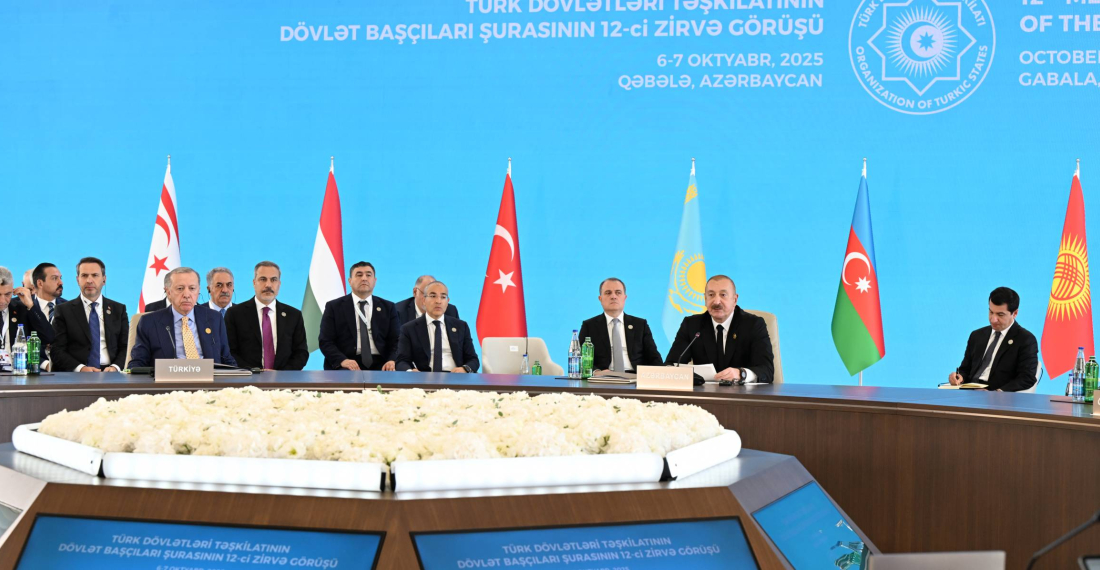
The 12th Summit of the Organization of Turkic States (OTS), held on 7 October 2025 in Gabala, Azerbaijan, marked a decisive stage in the evolution of integration within the Turkic world. Under the theme “Regional Peace and Security,” the summit, chaired by President Ilham Aliyev, brought together leaders from Azerbaijan, Kazakhstan, Kyrgyzstan, Türkiye, Uzbekistan, and observer states Hungary, Turkmenistan, and the Turkish Republic of Northern Cyprus. Gabala’s historical symbolism as a crossroads of the Caucasus and Central Asia reflected the OTS’s broader vision of unity, connectivity, and shared destiny.

The Gabala Declaration, adopted at the conclusion of the meeting, reaffirmed the commitment of member states to peace, prosperity, and regional integration as outlined in the foundational documents of the OTS and the Turkic World Vision–2040. Building on the achievements of the earlier years, President Aliyev underscored the need to transform the OTS into a more cohesive and influential international actor capable of shaping global developments rather than merely adapting to them.

A central highlight of the summit was President Aliyev’s proposal to organize the first-ever joint military exercises of the Turkic states in 2026. He emphasized that this initiative was not aimed against any country, but rather intended to strengthen coordination, interoperability, and readiness to address regional threats, including terrorism, border insecurity, and hybrid warfare. For Azerbaijan, which has emerged as a regional leader in defense modernization and strategic coordination, this proposal signalled an important step toward developing the OTS as a meaningful center of collective strength.

The importance of this transformation lies not in militarization, but in institutional maturity. For decades, the Turkic world was viewed primarily through cultural and linguistic lenses, often overshadowed by larger geopolitical powers surrounding it. However, the global environment today is defined by fragmentation, regionalization, and the emergence of multipolarity. The countries of the Turkic world, stretching from the Mediterranean to Central Asia and commanding crucial energy, trade, and transport routes, are uniquely positioned to emerge as a distinct pole of power. By building robust mechanisms for defense cooperation, coordinated diplomacy, and shared economic governance, the OTS could consolidate this vast geographic space into a coherent political community with global relevance.

This is not a pursuit of dominance, but of autonomy. The Turkic states, located at the heart of Eurasia, have long experienced the consequences of external rivalries — whether between East and West, or North and South. Their growing economic potential, demographic dynamism, and shared cultural heritage now provide an opportunity to turn geography from a source of vulnerability into a source of collective advantage. For Azerbaijan, the host of the Gabala Summit, deepening cooperation within the OTS is a strategic priority that reflects its broader foreign policy goal of advancing regional self-reliance, connectivity, and stability.

The summit also highlighted remarkable progress in economic and technological cooperation. Between the Bishkek Summit of 2024 and Gabala 2025, the organization expanded its cooperation areas to more than forty fields, including trade, energy, digital transformation, and sustainable development. Intra-Turkic trade grew from 3 to 7 percent of total trade volume, driven by the OTS Trade Facilitation Committee and new mechanisms such as the Turkic Investment Fund, the Turkic Green Finance Council, and the Turkic Insurance Union. These frameworks are gradually creating the financial and institutional backbone of a more integrated Turkic economic space.

Sustainable development was another central topic in Gabala. The signing of the Agreement on Strategic Partnership in the Field of Development and Transmission of Green Energy between Azerbaijan, Kazakhstan, and Uzbekistan laid the foundation for the Central Asia–Azerbaijan Green Energy Corridor, designed to export renewable electricity from Central Asia to Europe. Other member states were invited to join this initiative, which aligns with the global transition toward green economies. Complementary efforts such as the OTS Partnership for Climate, Innovation, Green Economy, and Trade, and the Joint Declaration on Climate-Resilient Villages ahead of COP29 in Baku, demonstrate the Turkic world’s determination to take a proactive role in addressing climate challenges.

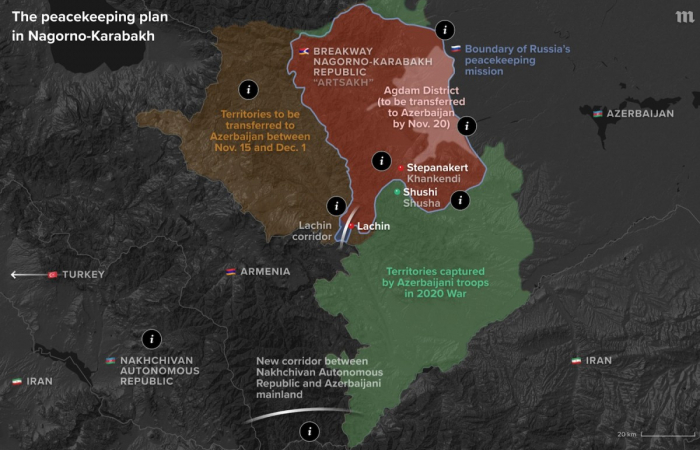
Connectivity — both physical and digital — remains the cornerstone of the OTS agenda. The Washington agreement on the Zangezur corridor between Azerbaijan’s mainland and the Nakhchivan Autonomous Republic in August 2025 was hailed as a breakthrough for regional integration. It will facilitate trade flows along the Trans-Caspian International East-West Middle Corridor, linking Asia to Europe through Turkic territories. The Gabala Declaration called for the acceleration of the Zangazur Corridor, modernization of the Baku-Tbilisi-Kars railway, and operationalization of the China-Kyrgyzstan-Uzbekistan railroad. Together, these projects represent not only economic corridors but also the arteries of a new geopolitical geography where the Turkic world serves as a bridge of stability across Eurasia.

Beyond infrastructure and trade, the summit emphasized the need for the OTS to project its collective voice more confidently on global platforms. The new “OTS+” mechanism will enable flexible engagement with external partners and international organizations, including the United Nations, the Organization of Islamic Cooperation, the League of Arab States, and the African Union. This initiative reflects a growing ambition: to transform the OTS from a regional grouping into a credible global actor capable of influencing multilateral decision-making. Strengthening the organization’s institutional capacity — through the adoption of the Treaty on Strategic Partnership, the creation of a unified digital database, and the launch of its first satellite, OTS-SAT, in 2026 — will provide the practical tools needed for this transformation.

Cultural and educational collaboration remains an integral part of this process. Initiatives such as the Orkhun exchange framework and the Union of Turkic Universities (TURKUNIB) reinforce the intellectual and social foundations of integration. These initiatives nurture a sense of shared identity among younger generations, ensuring that the political and economic cooperation of today is sustained by genuine societal solidarity tomorrow.

The 12th OTS Summit in Gabala demonstrated that the Turkic world has entered a new era — one defined not by rhetoric, but by results. Under Azerbaijan’s chairmanship over the next year, the organization is set to move beyond its cultural foundations to become a multidimensional political, economic, and strategic bloc. As global power centers diversify, the OTS has the potential to stand as a model of self-reliant regionalism — grounded in shared values, sustained by economic interdependence, and protected by collective strength. In this emerging world order, transforming the OTS into a strong and substantial global power center is not merely a choice for the Turkic states; it is an imperative for safeguarding their sovereignty, stability, and prosperity in the decades ahead.
Source: Dr Vasif Huseynov, is a Senior Advisor at the Center of Analysis of International Relations (AIR Center) and Adjunct Lecturer at Khazar University in Baku, Azerbaijan. Photo: The 12th Summit of the Organization of Turkic States (OTS), held on 7 October 2025 in Gabala, Azerbaijan. source: Office of the President of Azerbaijan.
The views expressed in opinion pieces and commentaries do not necessarily reflect the position of commonspace.eu or its partners

Related articles

Editor's choice
News
Key European countries back Denmark in the face of Trump's continuing insistence on taking over Greenland

Key European countries back Denmark in the face of Trump's continuing insistence on taking over Greenland

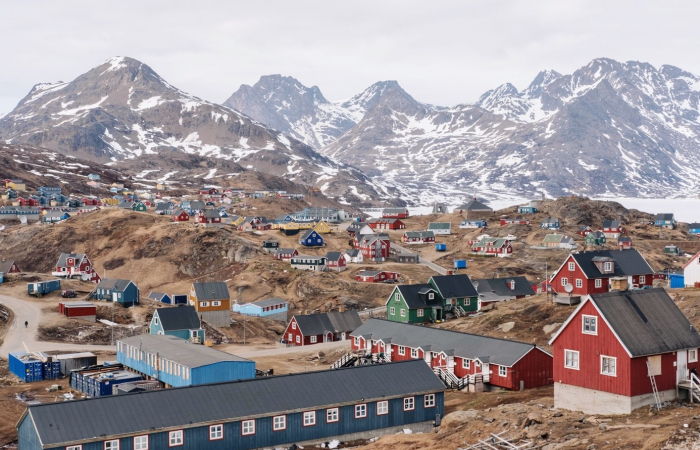
 Six major European countries have declared their support to Denmark following renewed insistence by the US that it must have control over Greenland. "Greenland belongs to its people, and only Denmark and Greenland can decide on matters concerning their relations," said the leaders of the UK, France, Germany, Italy, Poland, and Spain, in a joint statement, issued on Tuesday (6 January), together with Denmark. On Sunday, Donald Trump said the US "needed" Greenland - a semi-autonomous region of fellow Nato member Denmark - for security reasons. He has refused to rule out the use of force to take control of the territory, and Danish Prime Minister Mette Frederiksen warned on Monday that an attack by the US would spell the end of Nato. The issue of Greenland's future resurfaced in the wake of the US military intervention in Venezuela, during which elite troops went in to seize the country's President Nicolás Maduro and take him to face drugs and weapons charges in New York. Following the raid, Trump said the US would "run" Venezuela for an unspecified period of time. He also said the US was returning to an 1823 policy of US supremacy in its sphere of influence in the Western hemisphere - and he warned a number of countries the US could turn its attention to them. The US military raid in Venezuela has reignited fears that the US may consider using force to secure control of Greenland. A day after the raid, Katie Miller - the wife of one of Trump's senior aides - posted on social media a map of Greenland in the colours of the American flag, alongside the word "SOON". On Monday, her husband Stephen Miller said it was "the formal position of the US government that Greenland should be part of the US". In an interview with CNN, he also said the US "is the power of Nato. For the US to secure the Arctic region, to protect and defend Nato and Nato interests, obviously Greenland should be part of the US." Asked repeatedly whether the US would rule out using force to annex it, Miller responded: "Nobody's going to fight the US over the future of Greenland." Stressing they were as keen as the US in Arctic security, the seven European signatories of Tuesday's joint statement said this must be achieved by Nato allies, including the US "collectively" - whilst "upholding the principles of the UN Charter, including sovereignty, territorial integrity and the inviolability of borders". Greenland's Prime Minister Jens-Frederik Nielsen welcomed the statement and called for "respectful dialogue". "The dialogue must take place with respect for the fact that Greenland's status is rooted in international law and the principle of territorial integrity," Nielsen said. Trump has claimed that making Greenland part of the US would serve American security interests due to its strategic location and its abundance of minerals critical to high-tech sectors. Greenland, which has a population of 57,000 people, has had extensive self-government since 1979, though defence and foreign policy remain in Danish hands. While most Greenlanders favour eventual independence from Denmark, opinion polls show overwhelming opposition to becoming part of the US.
Editor's choice
News
Donald Tusk: "One for all, and all for one! Otherwise we are finished."

Donald Tusk: "One for all, and all for one! Otherwise we are finished."

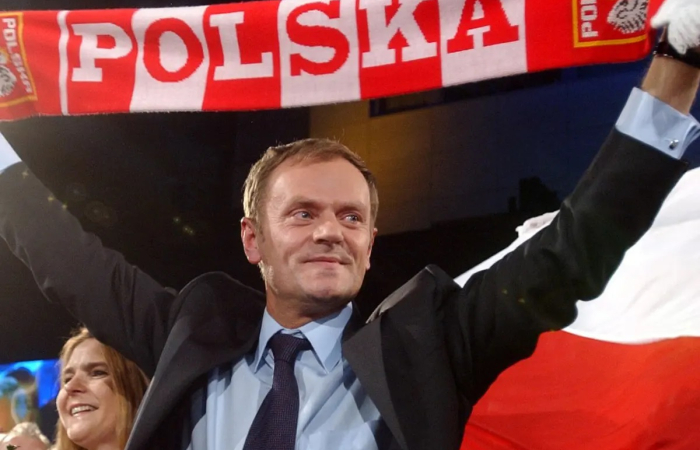
Europe is rattled by events in Venezuela, and there are serious concerns that US disregard for international law may have consequences close to home.  The BBC diplomatic correspondent, James Landale, said, the question is how Europe may respond in the longer term to America's military operation in Venezuela. Will it provide a catalyst for the continent to take greater responsibility for its own security in the face of so much instability from what many see as an unreliable ally? Polish prime minister, Donald Tusk, appears to have answered the question, saying on social media: "No-one will take seriously a weak and divided Europe: neither enemy nor ally. It is already clear now. "We must finally believe in our own strength, we must continue to arm ourselves, we must stay united like never before. One for all, and all for one. Otherwise, we are finished." The US seizing of Venezuela's leader has faced strong criticism from both America's friends and foes at an emergency meeting of the United Nations Security Council, held on Monday, 5 January. Many member states agreed with the US that Nicolás Maduro had been an illegitimate and repressive leader. But many also condemned the US military action as a breach of international law and the UN Charter, and they demanded a democratic transition that reflected the will of the Venezuelan people. (click the image to read the full article).

Popular

Editor's choice
News
Key European countries back Denmark in the face of Trump's continuing insistence on taking over Greenland

Key European countries back Denmark in the face of Trump's continuing insistence on taking over Greenland

 Six major European countries have declared their support to Denmark following renewed insistence by the US that it must have control over Greenland. "Greenland belongs to its people, and only Denmark and Greenland can decide on matters concerning their relations," said the leaders of the UK, France, Germany, Italy, Poland, and Spain, in a joint statement, issued on Tuesday (6 January), together with Denmark. On Sunday, Donald Trump said the US "needed" Greenland - a semi-autonomous region of fellow Nato member Denmark - for security reasons. He has refused to rule out the use of force to take control of the territory, and Danish Prime Minister Mette Frederiksen warned on Monday that an attack by the US would spell the end of Nato. The issue of Greenland's future resurfaced in the wake of the US military intervention in Venezuela, during which elite troops went in to seize the country's President Nicolás Maduro and take him to face drugs and weapons charges in New York. Following the raid, Trump said the US would "run" Venezuela for an unspecified period of time. He also said the US was returning to an 1823 policy of US supremacy in its sphere of influence in the Western hemisphere - and he warned a number of countries the US could turn its attention to them. The US military raid in Venezuela has reignited fears that the US may consider using force to secure control of Greenland. A day after the raid, Katie Miller - the wife of one of Trump's senior aides - posted on social media a map of Greenland in the colours of the American flag, alongside the word "SOON". On Monday, her husband Stephen Miller said it was "the formal position of the US government that Greenland should be part of the US". In an interview with CNN, he also said the US "is the power of Nato. For the US to secure the Arctic region, to protect and defend Nato and Nato interests, obviously Greenland should be part of the US." Asked repeatedly whether the US would rule out using force to annex it, Miller responded: "Nobody's going to fight the US over the future of Greenland." Stressing they were as keen as the US in Arctic security, the seven European signatories of Tuesday's joint statement said this must be achieved by Nato allies, including the US "collectively" - whilst "upholding the principles of the UN Charter, including sovereignty, territorial integrity and the inviolability of borders". Greenland's Prime Minister Jens-Frederik Nielsen welcomed the statement and called for "respectful dialogue". "The dialogue must take place with respect for the fact that Greenland's status is rooted in international law and the principle of territorial integrity," Nielsen said. Trump has claimed that making Greenland part of the US would serve American security interests due to its strategic location and its abundance of minerals critical to high-tech sectors. Greenland, which has a population of 57,000 people, has had extensive self-government since 1979, though defence and foreign policy remain in Danish hands. While most Greenlanders favour eventual independence from Denmark, opinion polls show overwhelming opposition to becoming part of the US.