


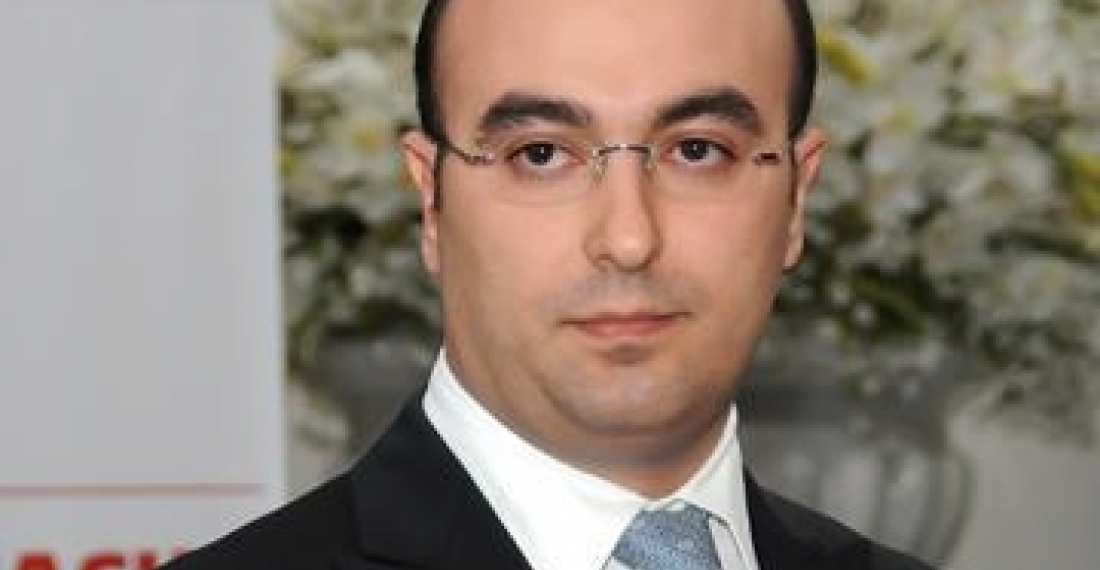
Opinion: ELNUR ASLANOV: “A just way to an ideal world. How to work out the legal status of NK based on a similar European experience"

This article was first published in the Russian Newspaper Nezavisimaya Gazeta. The English version is reproduced from News.az.

The student’s ability to perceive knowledge often depends on the teacher’s manner to explain a complex formula. But when the basic truth is repeated without any effect for the fifteenth time, the problem is rather about the student than the teacher and there is a risk that this student will lag behind in his development.

Beginning from December 1991 the world community has been constantly explaining the basics of international law to both the regime in the occupied lands of Azerbaijan and the political leadership in Yerevan. The main point of the lesson is that the process of dominant satisfaction of personal needs cannot be called elections especially against the backdrop of the termination and deportation of a significant part of the aboriginal population. The lesson that it is inappropriate to present the so-called NKR as an independent member of the world community has continued for more than 20 years.

The map of the region makes it clear that the political system of the society cannot function normally without the due economic provision of the political process. For two out of the three countries, the state changed in the late 1990’s: in the case with Georgia this happened through the social blast, through revolutions and in the case with Azerbaijan it happened evolutionally through transformations and modernization.

The situation with Armenia, its shaky socioeconomic state of the population is a different issue. Meanwhile, the percent correlation of the gross foreign debt of Armenia to the nominal GDP of the country which makes 72% is a subject of a separate study.

Thanks to the competent use of mutual connection and mutual dependence, political and economic system of the society, Azerbaijan has grown from a passive player into a regional leader. However, the illegal presence of the Armenian armed forces in Azerbaijan seems too inappropriate against the backdrop of such a positive development.

Some attempts of ‘politicians’ to present their own position in support of legitimization of the established state, in particular, the elections of the so-called president of the occupational regime can be heard recently. They attempt hard to forget the fact of recognition and support for the sovereignty and territorial integrity of Azerbaijan on the basis of principles of international law, UN charter and Helsinki final act. Both international organizations, and separate states are unanimous in this position while supporting official Baku in the resolution of the Armenian-Azerbaijani conflict over Nagorno Karabakh.

However, the attempts to legitimize separatism causing nothing but regret can be seen even in the information space of the strategic partner country of Azerbaijan-Russia, which repeatedly voiced the official position of the Kremlin that supports the territorial integrity of Azerbaijan.

These attempts cause regret and raise questions. Let’s distance from the fact of the forced cessation of the internationally recognized lands of Azerbaijan with the million of refugees and IDPs. Thanks to pseudo-politicians and semiexperts, the theory of the presence of the ‘self-sufficient and independent state’ is still wandering around the world.

The information ground for this article was formed by the note ‘A heavy road to peace’ of 29 August in Nezavisimaya Gazeta by Viktor Sheynis. According to the author, who practically rejected all possible norms of international law, it is possible to say that “ the basis must be the ‘real’ situation rather than the medieval right of a neighbor state for lands, which it considers its property without respect to the will of people living there’

The author prefers not to mention the real essence of this situation. A man of science cannot confuse historical facts in an attempt to set up Armenian wishes for the reality. It is not good for a professor to make such loud statements as ‘the right of the people of Karabakh for freedom and independent choice cannot be a subject of negotiations’.Since this firm obstinacy not to notice the approaching disaster costs much to the population in Karabakh, the regime in Khankandi almost fully terminated the future young generation.

However, there is still a way out of this situation-Azerbaijani side always sought a constructive dialogue and peaceful resolution of the conflict and has already proposed to start working on a peaceful treaty for already several times, but Yerevan does not even want to hear about such a document. Yerevan’s stance does not only complicate any positive perspective of regional development but also reduce to zero the internal resources of the contemporary Armenian public.

Ideally, the legal status of Nagorno Karabakh will be worked out with respect to a similar European experience, once the occupied lands are liberated. For example, as a variant of the legal status of the region, we study the experience of Southern Tirol, develop mechanisms of the peaceful coexistence of Azerbaijani and Armenian communities, economic, social and cultural development of the region.

It would be ideal if Yerevan accepted the axiom of the return of the occupied lands under the full control of Azerbaijan. It would be ideal if the Armenian and pro-Armenian politicians contribute to the development of the plan of joint coexistence of the Armenian and Azerbaijani communities in the Nagorno Karabakh region of Azerbaijan... However, the situation is far from being ideal.

It is September now, the start of the new academic year. It became new for many, but for some who lagged behind for the second year (here - the second decade), it has become only a repetition of an old programme. The real situation can be spoken of much. It is even possible to speak referring to the more than twenty-year-old lessons of both international law, history and simple routine logic. However, if the basic truth is repeated for the 15th time, the problem should be sought in other places...

Elnur Aslanov is the Head of the Department for Political Analysis and Information Support of the Azerbaijani Presidential Administration.

Related articles

Editor's choice
News
Israeli parliament votes to bring back the death penalty, but only for Palestinians

Israeli parliament votes to bring back the death penalty, but only for Palestinians

srael’s parliament approved a bill on Monday that would allow the execution of Palestinians convicted on terror charges for deadly attacks, a move that has been criticized as discriminatory and immediately drew a court challenge. Sixty-two lawmakers, including Prime Minister Benjamin Netanyahu, voted in favor and 48 against the bill, championed by far-right National Security Minister Itamar Ben Gvir. There was one abstention and the rest of the lawmakers were not present. Ben Gvir in the run-up to the vote had worn a lapel pin in the shape of a noose, symbolising his support for the legislation. “We made history!!! We promised. We delivered,” he posted on X after the vote. The bill would make the death penalty the default punishment for Palestinians in the Israeli-occupied West Bank found guilty of intentionally carrying out deadly attacks deemed “acts of terrorism” by an Israeli military court. The bill says that the sentence may be reduced to life imprisonment under “special circumstances.” Palestinians in the West Bank are automatically tried in Israeli military courts. Meanwhile, under the bill, in Israeli criminal courts anyone “who intentionally causes the death of a person with the aim of harming an Israeli citizen or resident out of an intention to put an end to the existence of the State of Israel shall be sentenced to death or life imprisonment.” Criminal courts try Israeli nationals, including Palestinian citizens and residents of east Jerusalem. The bill sets the execution method as hanging, adding that it should be carried out within 90 days of the sentencing, with a possible postponement of up to 180 days. - ‘Parallel tracks’ - The bill appears to conflict with Israel’s Basic Laws, which prohibit arbitrary discrimination, and shortly after it was passed, a leading human rights group announced that it had filed a petition with the Supreme Court demanding the legislation’s annulment. “The law creates two parallel tracks, both designed to apply to Palestinians,” the Association for Civil Rights in Israel said in a statement. “In military courts — which have jurisdiction over West Bank Palestinians — it establishes a near-mandatory death sentence,” the rights group said. In civilian courts, the law’s stipulation that defendants must have acted “with the aim of negating the existence” of Israel “structurally excludes Jewish perpetrators,” the group added. The association argued the law should be annulled on both jurisdictional and constitutional grounds. During the debate in parliament, opposition lawmaker and former deputy Mossad director, Ram Ben Barak, expressed outrage at the legislation. “Do you understand what it means that there is one law for Arabs in Judea and Samaria, and a different law for the general public for which the State of Israel is responsible?” he asked fellow parliamentarians, using the Israeli name for the West Bank. “It says that Hamas has defeated us. It has defeated us because we have lost all our values.” - ‘Discriminatory application’ - Lawmaker Limor Son Har-Melech from Ben Gvir’s party, who years ago survived an attack by Palestinian militants in which her husband was killed, urged fellow parliamentarians to approve the bill. “For years, we endured a cruel cycle of terror, imprisonment, release in reckless deals, and the return of these human monsters to murder Jews again ... And today, my friends, this cycle has come full circle.” The Palestinian Authority condemned the law’s adoption, saying that “Israel has no sovereignty over Palestinian land.” “This law once again reveals the nature of the Israeli colonial system, which seeks to legitimize extrajudicial killing under legislative cover,” it added. In February, Amnesty International had urged Israeli lawmakers to reject the legislation, citing its “discriminatory application against Palestinians.” On Sunday, Britain, France, Germany and Italy expressed “deep concern” over the bill, which they said risked “undermining Israel’s commitments with regards to democratic principles.” While the death penalty exists for a small number of crimes in Israel, it has become a de facto abolitionist country — the Nazi Holocaust perpetrator Adolf Eichmann was the last person to be executed in 1962. Israel has occupied the West Bank since 1967 and violence there has soared since Hamas’s October 7, 2023 attack on Israel triggered the Gaza war. (read more by clicking the image above).

Popular

Editor's choice
Interview
Thursday Interview: Murad Muradov

Thursday Interview: Murad Muradov

Today, commonspace.eu starts a new regular weekly series. THURSDAY INTERVIEW, conducted by Lauri Nikulainen, will host  persons who are thinkers, opinion shapers, and implementors in their countries and spheres. We start the series with an interview with Murad Muradov, a leading person in Azerbaijan's think tank community. He is also the first co-chair of the Action Committee for a new Armenian-Azerbaijani Dialogue. Last September he made history by being the first Azerbaijani civil society activist to visit Armenia after the 44 day war, and the start of the peace process. Speaking about this visit Murad Muradov said: "My experience was largely positive. My negative expectations luckily didn’t play out. The discussions were respectful, the panel format bringing together experts from Armenia, Azerbaijan, and Turkey was particularly valuable during the NATO Rose-Roth Seminar in Yerevan, and media coverage, while varied in tone, remained largely constructive. Some media outlets though attempted to represent me as more of a government mouthpiece than an independent expert, which was totally misleading.  Overall, I see these initiatives as important steps in rebuilding trust and normalising professional engagement. The fact that soon a larger Azerbaijani civil society visits to Armenia followed, reinforces the sense that this process is moving in the right direction." (click the image to read the interview in full)

