


Talks between Taliban and the Afghanistan government set to open in Doha

The Government of Afghanistan and the Taliban start talks in Doha on Saturday (12 September) in an effort to end fighting in the country which has lasted for nearly two decades.

These intra-Afghan talks were envisaged in the US-brokered peace deal signed by the Taliban in February 2020. The agreement also promised a complete withdrawal of the roughly 12,000 US troops stationed on Afghan territory by April 2021 if the Taliban committed to not attacking the US or its Allies. This process is already underway, with America having reduced its presence to around 8,600 in June.

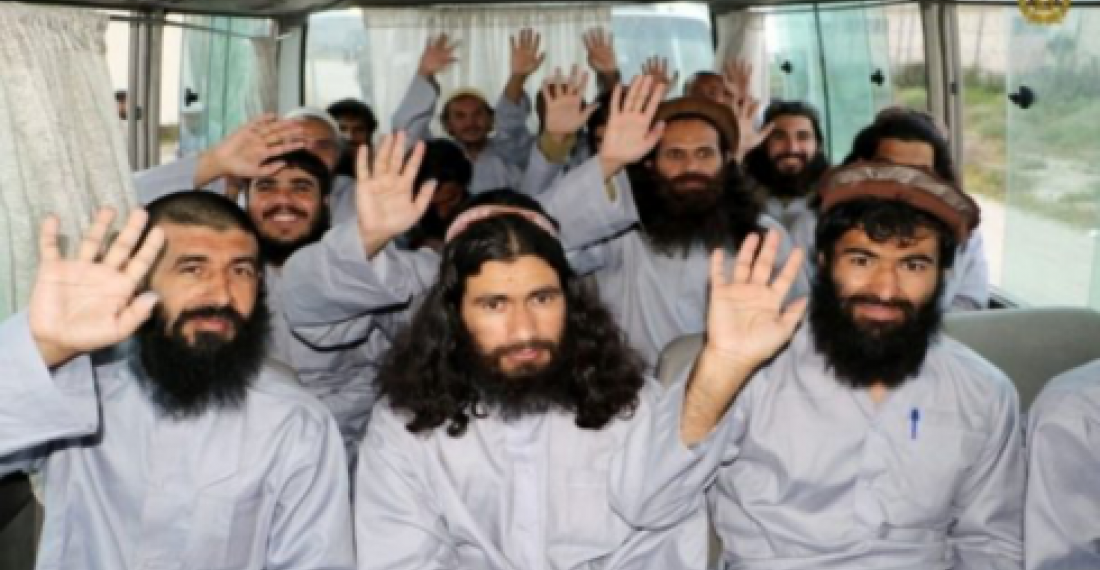
However, the talks, originally scheduled to begin in March, were delayed due to continued disputes surrounding prisoner swaps. This week the deadlock was finally broken when an agreement was reached that six Taliban members held by the Afghan government would be transferred to Qatar and held in custody there. Shortly after the prisoners arrived, both sides formally announced that they would be attending the peace talks.

"The Islamic Emirate of Afghanistan would like to declare its readiness to take part in the inauguration ceremony of the intra-Afghan negotiations that shall be held in Qatar on September 12," the Taliban said in a statement.

There remains a long way to go in the negotiation process given the history of violence and mistrust between both groups and their opposed views on issues such as women's rights. Nevertheless, these talks offer a rare chance at peace and mark a historic step in the right direction of dialogue, mediation and compromise - Saturday will be the first time since 2001 that the Taliban and the Afghan government have officially sat down together.

US Forces led an international coalition in overthrowing the Taliban rule in Afghanistan in 2001 following the deadly 9/11 al-Qaeda attacks in the United States. The Taliban, who protected al-Qaeda leader Osama Bin Laden, had refused to hand him over.

President Trump announced on Thursday (10/09) that Mike Pompeo would also attend the talks. The U.S. secretary of state added, "This opportunity must not be squandered... I urge the negotiators to demonstrate the pragmatism, restraint, and flexibility this process will require to succeed."

source: commonspace.eu with agencies

photo: Taliban prisoners about to be released after a deal with the United States in March (archive picture)


 

Related articles

Editor's choice
News
The leaders of the states of the Eurasian Economic Union issued a tough statement warning fellow-member state Armenia of the consequences of its desire to join the European Union.

The leaders of the states of the Eurasian Economic Union issued a tough statement warning fellow-member state Armenia of the consequences of its desire to join the European Union.

The leaders of the states of the Eurasian Economic Union (EEAS) issued a tough statement warning fellow-member state Armenia of the consequences of its desire to join the European Union. The stark, sharply worded,  warning, comes days before crucial parliamentary elections in Armenia, scheduled for 7 June. The full statement said, “We, the Presidents of the Republic of Belarus, the Republic of Kazakhstan, the Kyrgyz Republic and the Russian Federation, Taking into account the actions of the Republic of Armenia aimed at joining the European Union, including the approval in 2025 by the National Assembly of the Republic of Armenia and the signing by the President of the Republic of Armenia of the Law of the Republic of Armenia "On the Start of the Process of Accession of the Republic of Armenia to the European Union", as well as the confirmation by the European Union of the European aspirations of the Government of the Republic of Armenia, expressed in the joint declaration following the first Armenia-European Union summit, adopted on 5 May 2026, Taking into account the significant risks to the economic security of the member states of the Eurasian Economic Union (hereinafter referred to as the Union) arising in connection with the preparation of the Republic of Armenia for accession to the European Union, as well as the need to prevent the associated damage to the member states of the Union: decided that the members of the Eurasian Intergovernmental Council from the Republic of Belarus, the Republic of Kazakhstan, the Kyrgyz Republic and the Russian Federation will report at the next meeting of the Supreme Eurasian Economic Council in December 2026 on the possible consequences of the suspension of the Treaty on the Eurasian Economic Union with respect to the Republic of Armenia. We share the position on the need to hold a national referendum in the Republic of Armenia as soon as possible on joining the European Union or continuing to be part of the Eurasian Economic Union. Astana, May 29, 2026” A meeting of the Supreme Eurasian Economic Council was held in Astana, Kazakhstan, on May 29, 2026. The meeting of the Supreme Eurasian Economic Council in a restricted format was attended by Russian President Vladimir Putin, Belarusian President Alexander Lukashenko , Kazakh President Kassym-Jomart Tokayev , Kyrgyz President Sadyr Japarov , Armenian Deputy Prime Minister Mher Grigoryan, and Chairman of the Board of the Eurasian Economic Commission Bakytzhan Sagintayev. From the Russian side, the meeting was also attended by Deputy Prime Minister and member of the Council of the Eurasian Economic Commission Alexey Overchuk and Presidential Aide Yury Ushakov . The heads of delegations from EAEU observer states, including President of Uzbekistan Shavkat Mirziyoyev , Vice President of Cuba Salvador Valdés Mesa, Minister of Industry, Mines, and Trade of Iran Mohammad Atabak, and CIS Secretary General Sergei Lebedev, joined the expanded meeting . Following the meeting of the Supreme Eurasian Economic Council, a number of documents were signed .

Popular

Editor's choice
Interview
Thursday Interview: Murad Muradov

Thursday Interview: Murad Muradov

Today, commonspace.eu starts a new regular weekly series. THURSDAY INTERVIEW, conducted by Lauri Nikulainen, will host  persons who are thinkers, opinion shapers, and implementors in their countries and spheres. We start the series with an interview with Murad Muradov, a leading person in Azerbaijan's think tank community. He is also the first co-chair of the Action Committee for a new Armenian-Azerbaijani Dialogue. Last September he made history by being the first Azerbaijani civil society activist to visit Armenia after the 44 day war, and the start of the peace process. Speaking about this visit Murad Muradov said: "My experience was largely positive. My negative expectations luckily didn’t play out. The discussions were respectful, the panel format bringing together experts from Armenia, Azerbaijan, and Turkey was particularly valuable during the NATO Rose-Roth Seminar in Yerevan, and media coverage, while varied in tone, remained largely constructive. Some media outlets though attempted to represent me as more of a government mouthpiece than an independent expert, which was totally misleading.  Overall, I see these initiatives as important steps in rebuilding trust and normalising professional engagement. The fact that soon a larger Azerbaijani civil society visits to Armenia followed, reinforces the sense that this process is moving in the right direction." (click the image to read the interview in full)

