South Caucasus leaders sound optimistic note in new year messages

The leaders of Armenia, Azerbaijan and Georgia sent new year greetings to their respective populations in traditional messages broadcast minutes before the end of the old year, hailing achievements in 2017 and sounding an optimistic note for the year ahead.

President Serzh Sargsyan of Armenia hailed the conduct of parliamentary elections in 2017.  "The political competition was hot, but the atmosphere was constructive. We avoided hostility and separation of the opposing camps. It is much more important than the percent of votes" he said, adding that "mutual respect, tolerance and solidarity are now the constant guidelines of Armenia's political life."

Referring to constitutional changes that will come into force at the end of his term as President in April 2018, President Sargsyan said "at the end of next year, we will finish our work on a new government system."

He added:

"It is a wonderful coincidence that we will celebrate the 100th anniversary of the founding of the Republic of Armenia in 2018. We can confidently say that this date is approaching with stronger and more developed state and non-governmental organizations. Together we will return our relatives who have left Armenia. They will come because they will see a bigger area for working and expressing themselves in Armenia. The purpose of our work is to open new opportunities, to create a wider field of activity for every citizen of Armenia."

There was hardly any reference to Nagorno-Karabakh in the Armenian President's speech, except for a general commitment to "continue to safeguard the rights and interests of Artsakh". In conclusion the Armenian President stated, "Let the Armenian-Artsakh-Diaspora trinity continue to strengthen in 2018, let our borders be secure and our homes hospitable."

In his longer and more wide-ranging address, Azerbaijani President Ilham Aliyev spoke about the Azerbaijani economy and on the government's success in maintaining stability in the country. He highlighted achievements in foreign policy and referred to the 20 official visits he conducted to foreign countries in 2017. The president dedicated a considerable part of his address to the Karabakh issue.

He said that the key issue of Azerbaijan's foreign policy was the Armenia-Azerbaijan conflict over Nagorno-Karabakh, adding that "the entire world community recognizes Nagorno-Karabakh as an integral part of Azerbaijan. And this is only natural. Nagorno-Karabakh is our historically native land. The people of Azerbaijan have lived, built and created on this land for centuries. Our insidious neighbors have simply destroyed our historical and religious monuments, and these lands have been under occupation for many years." President Aliyev said that "Armenia has joined the negotiations without any preconditions, although it did put forward conditions. None of the preconditions put forward by Armenia after the April defeat was accepted. The negotiations were resumed without any preconditions. I do hope that we can achieve a settlement of the issue through negotiations. Of course, our strong economic and military potential further reinforce our position in the talks. Armenia has yet to recover from the April defeat. I think that this defeat should be a good lesson for them. It should demonstrate to the whole world again that Azerbaijan will never put up with this occupation."

The Azerbaijani president hailed the capabilities of the armed forces. "We have provided the army with everything it needs. All international ratings show today that the Azerbaijani army is ranked among the strongest armies not only in the region but also in the world."

The Azerbaijani leader also hailed successes in the economic sector in 2017, and said that the country's foreign currency reserves have increased by more than 4.5 billion dollars. "These are our strategic reserves. This is one of the factors providing and strengthening both our economic and our political independence."

In their new year's messages Georgian President Giorgi Margvelashvili and Prime Minister Giorgi Kvirikashvili both made references to Abkhazia and South Ossetia. "Our supreme goal is to have Georgia united with the Abkhazian and Ossetian people" Georgian President Giorgi Margvelashvili said while sending his wishes to everyone in his New Year message. Prime Minister Kvirikashvili extended new year greetings to the Abkhazian and Ossetian people. "I really believe that we can restore trust and together we will build a joint future for ourselves and our children", he said.  The Georgian president and prime Minister referred to the fact that Georgia will in 2018 celebrate the 100th anniversary of the establishment of the first Georgian Republic. Kvirikashvili who sent his New Year wishes from the winter resort of Bakuriani,  said that this was the place that for many Georgians has many sweet childhood memories, but that was now an important part of the country's future development.

Source: commonspace.eu with agencies

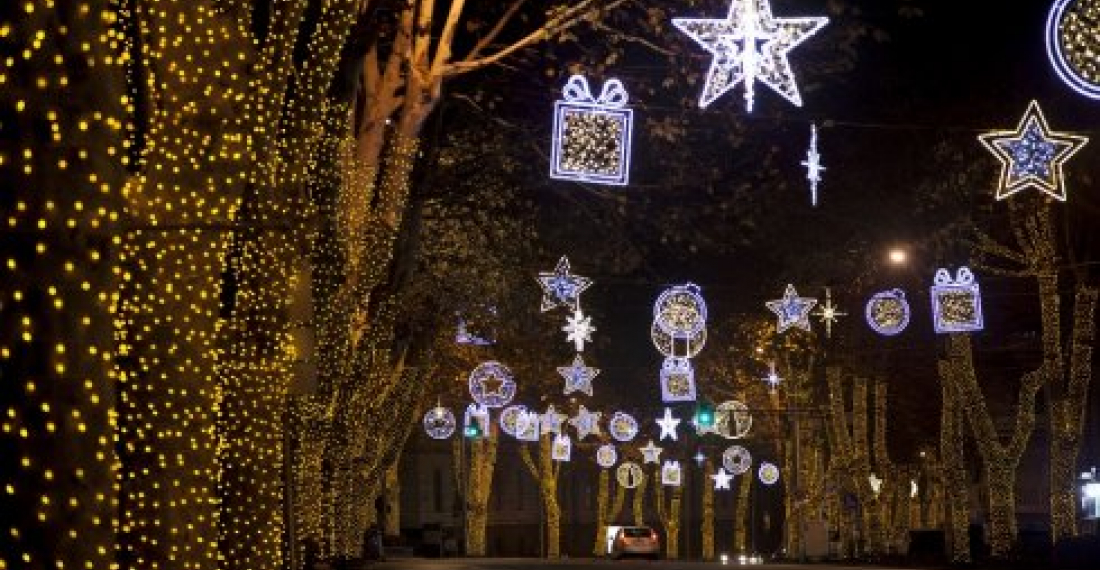
Photo: Tbilisi holiday decorations (Picture courtesy of agenda.eg)
Related articles

Editor's choice
News
Council of Europe launches new International Claims Commission for Ukraine

Council of Europe launches new International Claims Commission for Ukraine

Thirty-four countries and the European Union have signed a new convention establishing an International Claims Commission for Ukraine at a diplomatic conference co-hosted by the 46-nation Council of Europe and the Netherlands in the Hague. The diplomatic conference was attended by leaders and high-level representatives from over 50 states, including the President of Ukraine, Volodymyr Zelenskyy, the President of the Republic of Moldova, Maia Sandu, and the Prime Minister of the Netherlands, Dick Schoof.  “Today marks a major step forward in ensuring accountability for Ukraine. The International Claims Commission represents justice and hope for tens of thousands of victims—our determination that those who have suffered will not be forgotten. I call for quick ratifications so we can get the commission rapidly up and running for the people of Ukraine,” said Council of Europe Secretary General Alain Berset. Ukrainian President Volodymyr Zelenskyy said: “We expect that every mechanism for compensation from the Register of Damage and Claims Commission to the actual payments – will start working and receive strong and sufficient international support, so that people can truly feel that any kind of damage caused by the war can be compensated. This war, and Russia’s responsibility for it, MUST become a clear example – so that others learn not to choose aggression.” “Accountability is about creating the conditions for peace that endures. And therefore, accountability is a condition of security – today and for the future. But accountability is not only about Ukraine. And it is not only about one aggressor and one victim. Accountability is about Europe. About every country in Europe. It is about whether Europe, as a whole, is willing to defend its peace,” said Maia Sandu, President of the Republic of Moldova, which currently holds the Presidency of the Council of Europe’s Committee of Ministers. The Prime Minister of the Netherlands, Dick Schoof, said: “Every day Russia is deliberately bombarding homes, destroying businesses and damaging infrastructure in Ukraine. Russia must compensate Ukraine for the damage caused. That is why we have launched the International Claims Commission for Ukraine and we are honoured to host it.” The International Claims Commission will be the second part of a comprehensive compensation mechanism related to Russia’s war of aggression, building on the existing Register of Damage for Ukraine. The claims commission will be established within the framework of the Council of Europe and will also be open to other countries. The Register of Damage for Ukraine, created in 2023, collects and records compensation claims submitted by individuals, organisations and public bodies in Ukraine. Forty-four states and the European Union have so far joined the Register, which has already received 86,000 claims. The International Claims Commission will review, assess and decide upon claims submitted to the Register of Damage for Ukraine and determine the amount of compensation, if any, which is due in each case. The convention establishing the commission will enter into force once it has been ratified by 25 signatories, as long as sufficient funds have been secured to support its initial work.

Popular

Editor's choice
News
Council of Europe launches new International Claims Commission for Ukraine

Council of Europe launches new International Claims Commission for Ukraine

Thirty-four countries and the European Union have signed a new convention establishing an International Claims Commission for Ukraine at a diplomatic conference co-hosted by the 46-nation Council of Europe and the Netherlands in the Hague. The diplomatic conference was attended by leaders and high-level representatives from over 50 states, including the President of Ukraine, Volodymyr Zelenskyy, the President of the Republic of Moldova, Maia Sandu, and the Prime Minister of the Netherlands, Dick Schoof.  “Today marks a major step forward in ensuring accountability for Ukraine. The International Claims Commission represents justice and hope for tens of thousands of victims—our determination that those who have suffered will not be forgotten. I call for quick ratifications so we can get the commission rapidly up and running for the people of Ukraine,” said Council of Europe Secretary General Alain Berset. Ukrainian President Volodymyr Zelenskyy said: “We expect that every mechanism for compensation from the Register of Damage and Claims Commission to the actual payments – will start working and receive strong and sufficient international support, so that people can truly feel that any kind of damage caused by the war can be compensated. This war, and Russia’s responsibility for it, MUST become a clear example – so that others learn not to choose aggression.” “Accountability is about creating the conditions for peace that endures. And therefore, accountability is a condition of security – today and for the future. But accountability is not only about Ukraine. And it is not only about one aggressor and one victim. Accountability is about Europe. About every country in Europe. It is about whether Europe, as a whole, is willing to defend its peace,” said Maia Sandu, President of the Republic of Moldova, which currently holds the Presidency of the Council of Europe’s Committee of Ministers. The Prime Minister of the Netherlands, Dick Schoof, said: “Every day Russia is deliberately bombarding homes, destroying businesses and damaging infrastructure in Ukraine. Russia must compensate Ukraine for the damage caused. That is why we have launched the International Claims Commission for Ukraine and we are honoured to host it.” The International Claims Commission will be the second part of a comprehensive compensation mechanism related to Russia’s war of aggression, building on the existing Register of Damage for Ukraine. The claims commission will be established within the framework of the Council of Europe and will also be open to other countries. The Register of Damage for Ukraine, created in 2023, collects and records compensation claims submitted by individuals, organisations and public bodies in Ukraine. Forty-four states and the European Union have so far joined the Register, which has already received 86,000 claims. The International Claims Commission will review, assess and decide upon claims submitted to the Register of Damage for Ukraine and determine the amount of compensation, if any, which is due in each case. The convention establishing the commission will enter into force once it has been ratified by 25 signatories, as long as sufficient funds have been secured to support its initial work.