Religious leaders promise "to defend peacekeeping initiatives to resolve the Nagorno Karabakh conflict"

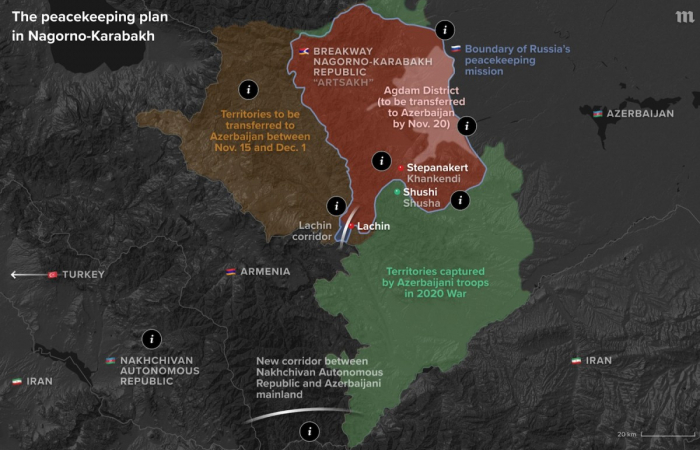
The most senior religious leaders of Armenia and Azerbaijan have committed to protect the Karabakh peace efforts after meeting in Moscow under the auspices of the Patriarch of Moscow and All Russia.

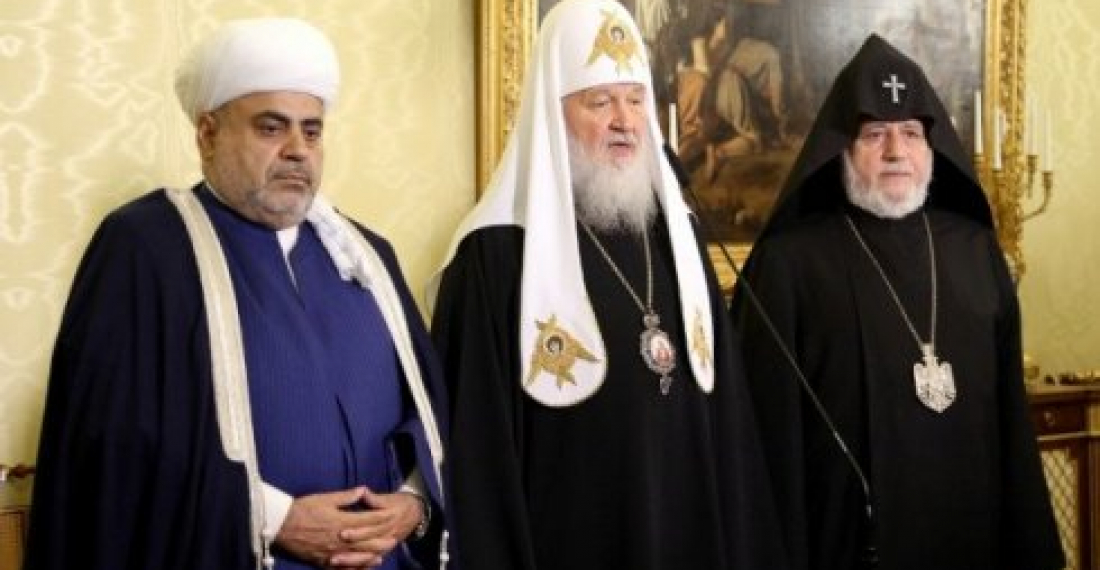
The meeting, focusing on ways to resolve the Nagorno-Karabakh conflict was held on 8 September in the Danilov Monastery in Moscow and was attended  by Sheikh-ul-Islam Allahshukur Pashazadeh, Chairman of the Caucasus Muslims Office and Supreme Patriarch and Catholicos of All Armenians Karekin II.  

The press service of the Moscow Patriarchate said that the meeting was the latest in a series of peace efforts on the Nagorno-Karabakh problem that have been ongoing since 1988. "The first tripartite peacekeeping meeting of the heads of the three religious communities was held in May 1993 in the Moscow Danilov Monastery. Previous tripartite meetings of religious leaders of Russia and Transcaucasia took place within the framework of interreligious forums in 2010 in Baku and 2011 in Yerevan", it stated.

Addressing the meeting, the Patriarch Kirill, the head of the Russian Orthodox Church said "The very fact that this meeting is taking place is the most important testimony to our peoples of the peacekeeping potential of our religions". "Religion can and, I am sure, will play a unifying and reconciling role for the people."

Following the meeting, the sides signed a joint declaration. The declaration says:

"Today, we the spiritual leaders of Azerbaijani and Armenia, once again met in Moscow at the invitation of Patriarch Kirill of Moscow and All Russia, to discuss ways of a peaceful settlement of the Karabakh conflict, without which it is impossible to achieve reconciliation and comprehensive security in the Caucasus.

We attach a special significance to the consistent development of the peacekeeping dialogue, the continuation of the negotiations, and the international community's mediatory efforts which will help to achieve a comprehensive settlement of the conflict.

We are convinced that disagreements can be overcome, relying on the moral values of kindness, love for thy neighbour, mutual forgiveness, and benevolence; propagated by the principles of good-neighbourliness and traditional religions.

The Armenian and Azeri peoples will always live side-by-side, therefore there is no alternative to peace and cooperation. Facing many challenges, we, the spiritual leaders of our nations, are obliged to seek joint responses.

Together, we are called to care for the poor and the afflicted, to testify about the spiritual and moral values, and seek a peaceful and just way of resolving conflicts.

We appeal to our people to bring up and educate the youth in the spirit of goodwill and mutual respect, peace and traditional morality.

We, as spiritual leaders, express our readiness to defend the peacekeeping initiatives to resolve the Nagorno Karabakh conflict. The history of the trilateral meetings of the spiritual leaders testifies to the positive impact of such contacts on the conflict settlement process, which should never turn into a religious conflict. We have great hopes in the negotiation process. The responsibility and duty towards our people motivate us to pursue tireless and consistent efforts for the long-awaited victory of the ideals of peace and goodness. We are ready to use all available opportunities for the peace in the region.

We convey to all our community children peace, welfare and success in their endeavours. We offer our prayers to the Almighty to overcome disagreements and to protect our people from evil and sin. May on the ancient and sacred land of the Caucasus be established blessed peace, and the people of our countries will live in peace and harmony and by God-given moral laws.

The delegation of the Armenian Apostolic Holy Church, led by His Holiness Karekin II, Supreme Patriarch and Catholicos of All Armenians; and the delegation of the Caucasus Muslims Administration, led by Sheikh ul-Islam Allahshukur Pashazade; express special gratitude to the Russian Orthodox Church and Patriarch Kirill of Moscow and All Russia for the organization of the trilateral meeting for the important contribution to a peace settlement in the Caucasus and wish His Holiness the support of the Almighty to continue this godly mission."

source: commonspace.eu with the press service of the Patriarchate of Moscow and All Russia and agencies
Related articles

Editor's choice
News
Council of Europe launches new International Claims Commission for Ukraine

Council of Europe launches new International Claims Commission for Ukraine

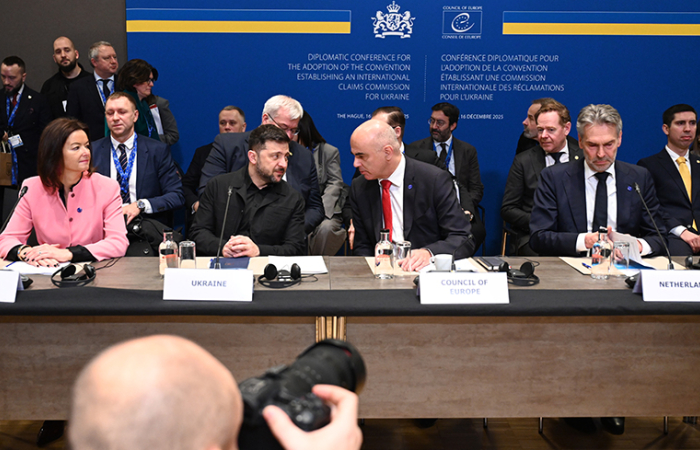
Thirty-four countries and the European Union have signed a new convention establishing an International Claims Commission for Ukraine at a diplomatic conference co-hosted by the 46-nation Council of Europe and the Netherlands in the Hague. The diplomatic conference was attended by leaders and high-level representatives from over 50 states, including the President of Ukraine, Volodymyr Zelenskyy, the President of the Republic of Moldova, Maia Sandu, and the Prime Minister of the Netherlands, Dick Schoof.  “Today marks a major step forward in ensuring accountability for Ukraine. The International Claims Commission represents justice and hope for tens of thousands of victims—our determination that those who have suffered will not be forgotten. I call for quick ratifications so we can get the commission rapidly up and running for the people of Ukraine,” said Council of Europe Secretary General Alain Berset. Ukrainian President Volodymyr Zelenskyy said: “We expect that every mechanism for compensation from the Register of Damage and Claims Commission to the actual payments – will start working and receive strong and sufficient international support, so that people can truly feel that any kind of damage caused by the war can be compensated. This war, and Russia’s responsibility for it, MUST become a clear example – so that others learn not to choose aggression.” “Accountability is about creating the conditions for peace that endures. And therefore, accountability is a condition of security – today and for the future. But accountability is not only about Ukraine. And it is not only about one aggressor and one victim. Accountability is about Europe. About every country in Europe. It is about whether Europe, as a whole, is willing to defend its peace,” said Maia Sandu, President of the Republic of Moldova, which currently holds the Presidency of the Council of Europe’s Committee of Ministers. The Prime Minister of the Netherlands, Dick Schoof, said: “Every day Russia is deliberately bombarding homes, destroying businesses and damaging infrastructure in Ukraine. Russia must compensate Ukraine for the damage caused. That is why we have launched the International Claims Commission for Ukraine and we are honoured to host it.” The International Claims Commission will be the second part of a comprehensive compensation mechanism related to Russia’s war of aggression, building on the existing Register of Damage for Ukraine. The claims commission will be established within the framework of the Council of Europe and will also be open to other countries. The Register of Damage for Ukraine, created in 2023, collects and records compensation claims submitted by individuals, organisations and public bodies in Ukraine. Forty-four states and the European Union have so far joined the Register, which has already received 86,000 claims. The International Claims Commission will review, assess and decide upon claims submitted to the Register of Damage for Ukraine and determine the amount of compensation, if any, which is due in each case. The convention establishing the commission will enter into force once it has been ratified by 25 signatories, as long as sufficient funds have been secured to support its initial work.

Popular

Editor's choice
News
Council of Europe launches new International Claims Commission for Ukraine

Council of Europe launches new International Claims Commission for Ukraine

Thirty-four countries and the European Union have signed a new convention establishing an International Claims Commission for Ukraine at a diplomatic conference co-hosted by the 46-nation Council of Europe and the Netherlands in the Hague. The diplomatic conference was attended by leaders and high-level representatives from over 50 states, including the President of Ukraine, Volodymyr Zelenskyy, the President of the Republic of Moldova, Maia Sandu, and the Prime Minister of the Netherlands, Dick Schoof.  “Today marks a major step forward in ensuring accountability for Ukraine. The International Claims Commission represents justice and hope for tens of thousands of victims—our determination that those who have suffered will not be forgotten. I call for quick ratifications so we can get the commission rapidly up and running for the people of Ukraine,” said Council of Europe Secretary General Alain Berset. Ukrainian President Volodymyr Zelenskyy said: “We expect that every mechanism for compensation from the Register of Damage and Claims Commission to the actual payments – will start working and receive strong and sufficient international support, so that people can truly feel that any kind of damage caused by the war can be compensated. This war, and Russia’s responsibility for it, MUST become a clear example – so that others learn not to choose aggression.” “Accountability is about creating the conditions for peace that endures. And therefore, accountability is a condition of security – today and for the future. But accountability is not only about Ukraine. And it is not only about one aggressor and one victim. Accountability is about Europe. About every country in Europe. It is about whether Europe, as a whole, is willing to defend its peace,” said Maia Sandu, President of the Republic of Moldova, which currently holds the Presidency of the Council of Europe’s Committee of Ministers. The Prime Minister of the Netherlands, Dick Schoof, said: “Every day Russia is deliberately bombarding homes, destroying businesses and damaging infrastructure in Ukraine. Russia must compensate Ukraine for the damage caused. That is why we have launched the International Claims Commission for Ukraine and we are honoured to host it.” The International Claims Commission will be the second part of a comprehensive compensation mechanism related to Russia’s war of aggression, building on the existing Register of Damage for Ukraine. The claims commission will be established within the framework of the Council of Europe and will also be open to other countries. The Register of Damage for Ukraine, created in 2023, collects and records compensation claims submitted by individuals, organisations and public bodies in Ukraine. Forty-four states and the European Union have so far joined the Register, which has already received 86,000 claims. The International Claims Commission will review, assess and decide upon claims submitted to the Register of Damage for Ukraine and determine the amount of compensation, if any, which is due in each case. The convention establishing the commission will enter into force once it has been ratified by 25 signatories, as long as sufficient funds have been secured to support its initial work.