


Problems between Mali and Mauritania are spoiling relations

The disappearance of several Mauritanian livestock breeders in Malian territory is causing renewed tensions between the two neighbouring Sahel countries.

Reported missing for three days, local sources claim that they were killed by Malian soldiers, but these accusations have not been confirmed.

Mauritanian Foreign Minister Ismaïl Ould Cheikh Ahmed issued a statement on Tuesday afternoon (8 March) accusing the Malian army of "recurrent crimes against its nationals".

These are forceful words considering the current context between the neighbouring countries. While the Malian authorities have moved closer to Nouakchott after the embargo imposed by ECOWAS - the Economic Community of West African States - Mr Ould Cheikh Ahmed stated in his declaration that the lives of his fellow citizens would remain above all other considerations.

After the Mauritanian Interior Ministry had already expressed concern about the disappearances on Monday evening, the secretary general of the Foreign Ministry spoke the next day with the Malian ambassador and complained about the lack of coordination between the two parties: "We call your authorities in Bamako, and they don't even pick up the phone," according to a diplomatic source relayed by RFI news.

Several dozen people also demonstrated yesterday afternoon in front of the Mauritanian Ministry of the Interior where signs could be seen condemning "the Malian army's aggressions", in the border area south of Adel Bagrou, in the east of Mali.

A feeling of insecurity seems to be mounting among Mauritanians due to the recurrence of this type of security incident. This is the third security incident involving Mauritanian nationals in two months.

In mid-January, the bodies of seven Mauritanian herders were found near the town of Nara in Mali, and on Saturday (5 March), two Mauritanian merchants were shot and injured on their way back to Abel Bagrou.

Although an investigation was opened over the January case, nothing from the investigation was made public because the Malian authorities deemed that there was no basis to incriminate their armed forces.

This worrying news adds to tensions between Mauritania and Mali. However the increasingly isolated Bamako, which demanded the departure of French and European troops from Malian soil last month, has no interest in quarrelling with its Mauritanian neighbour, a privileged economic partner since the West African bloc's sanctions, notably with regard to Malian cotton exports.


Sources: CommonSpace.eu with RFI (Île-de-France), Jeune Afrique (Paris), AFP and other media outlets
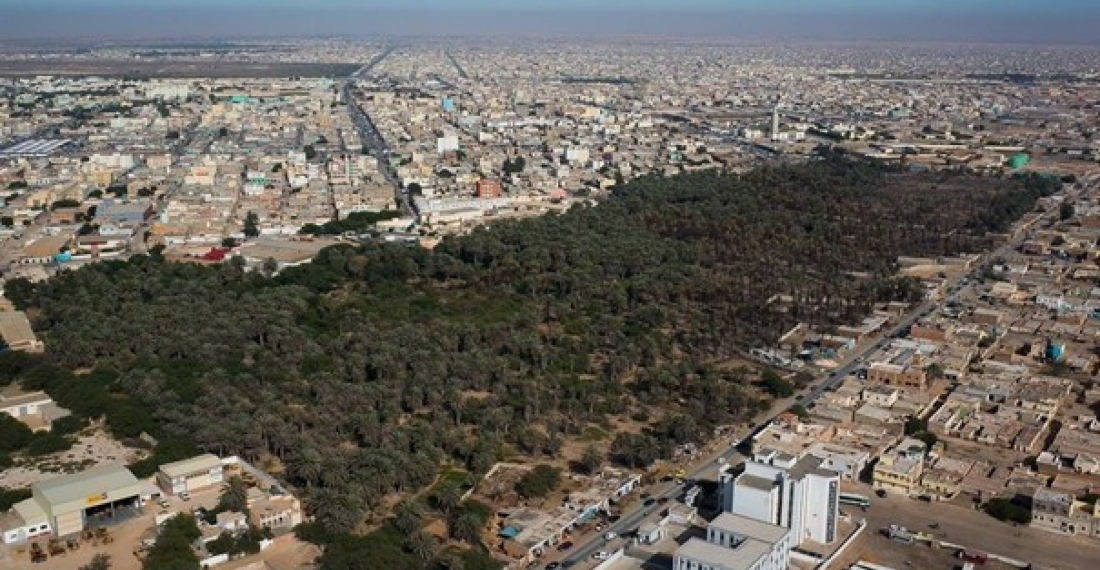
Picture: The city of Nouakchott, where the demonstrations occurred; Twitter: @DrumChronicles

Related articles

Editor's choice
News
Council of Europe launches new International Claims Commission for Ukraine

Council of Europe launches new International Claims Commission for Ukraine

Thirty-four countries and the European Union have signed a new convention establishing an International Claims Commission for Ukraine at a diplomatic conference co-hosted by the 46-nation Council of Europe and the Netherlands in the Hague. The diplomatic conference was attended by leaders and high-level representatives from over 50 states, including the President of Ukraine, Volodymyr Zelenskyy, the President of the Republic of Moldova, Maia Sandu, and the Prime Minister of the Netherlands, Dick Schoof.  “Today marks a major step forward in ensuring accountability for Ukraine. The International Claims Commission represents justice and hope for tens of thousands of victims—our determination that those who have suffered will not be forgotten. I call for quick ratifications so we can get the commission rapidly up and running for the people of Ukraine,” said Council of Europe Secretary General Alain Berset. Ukrainian President Volodymyr Zelenskyy said: “We expect that every mechanism for compensation from the Register of Damage and Claims Commission to the actual payments – will start working and receive strong and sufficient international support, so that people can truly feel that any kind of damage caused by the war can be compensated. This war, and Russia’s responsibility for it, MUST become a clear example – so that others learn not to choose aggression.” “Accountability is about creating the conditions for peace that endures. And therefore, accountability is a condition of security – today and for the future. But accountability is not only about Ukraine. And it is not only about one aggressor and one victim. Accountability is about Europe. About every country in Europe. It is about whether Europe, as a whole, is willing to defend its peace,” said Maia Sandu, President of the Republic of Moldova, which currently holds the Presidency of the Council of Europe’s Committee of Ministers. The Prime Minister of the Netherlands, Dick Schoof, said: “Every day Russia is deliberately bombarding homes, destroying businesses and damaging infrastructure in Ukraine. Russia must compensate Ukraine for the damage caused. That is why we have launched the International Claims Commission for Ukraine and we are honoured to host it.” The International Claims Commission will be the second part of a comprehensive compensation mechanism related to Russia’s war of aggression, building on the existing Register of Damage for Ukraine. The claims commission will be established within the framework of the Council of Europe and will also be open to other countries. The Register of Damage for Ukraine, created in 2023, collects and records compensation claims submitted by individuals, organisations and public bodies in Ukraine. Forty-four states and the European Union have so far joined the Register, which has already received 86,000 claims. The International Claims Commission will review, assess and decide upon claims submitted to the Register of Damage for Ukraine and determine the amount of compensation, if any, which is due in each case. The convention establishing the commission will enter into force once it has been ratified by 25 signatories, as long as sufficient funds have been secured to support its initial work.

Popular

Editor's choice
News
Council of Europe launches new International Claims Commission for Ukraine

Council of Europe launches new International Claims Commission for Ukraine

Thirty-four countries and the European Union have signed a new convention establishing an International Claims Commission for Ukraine at a diplomatic conference co-hosted by the 46-nation Council of Europe and the Netherlands in the Hague. The diplomatic conference was attended by leaders and high-level representatives from over 50 states, including the President of Ukraine, Volodymyr Zelenskyy, the President of the Republic of Moldova, Maia Sandu, and the Prime Minister of the Netherlands, Dick Schoof.  “Today marks a major step forward in ensuring accountability for Ukraine. The International Claims Commission represents justice and hope for tens of thousands of victims—our determination that those who have suffered will not be forgotten. I call for quick ratifications so we can get the commission rapidly up and running for the people of Ukraine,” said Council of Europe Secretary General Alain Berset. Ukrainian President Volodymyr Zelenskyy said: “We expect that every mechanism for compensation from the Register of Damage and Claims Commission to the actual payments – will start working and receive strong and sufficient international support, so that people can truly feel that any kind of damage caused by the war can be compensated. This war, and Russia’s responsibility for it, MUST become a clear example – so that others learn not to choose aggression.” “Accountability is about creating the conditions for peace that endures. And therefore, accountability is a condition of security – today and for the future. But accountability is not only about Ukraine. And it is not only about one aggressor and one victim. Accountability is about Europe. About every country in Europe. It is about whether Europe, as a whole, is willing to defend its peace,” said Maia Sandu, President of the Republic of Moldova, which currently holds the Presidency of the Council of Europe’s Committee of Ministers. The Prime Minister of the Netherlands, Dick Schoof, said: “Every day Russia is deliberately bombarding homes, destroying businesses and damaging infrastructure in Ukraine. Russia must compensate Ukraine for the damage caused. That is why we have launched the International Claims Commission for Ukraine and we are honoured to host it.” The International Claims Commission will be the second part of a comprehensive compensation mechanism related to Russia’s war of aggression, building on the existing Register of Damage for Ukraine. The claims commission will be established within the framework of the Council of Europe and will also be open to other countries. The Register of Damage for Ukraine, created in 2023, collects and records compensation claims submitted by individuals, organisations and public bodies in Ukraine. Forty-four states and the European Union have so far joined the Register, which has already received 86,000 claims. The International Claims Commission will review, assess and decide upon claims submitted to the Register of Damage for Ukraine and determine the amount of compensation, if any, which is due in each case. The convention establishing the commission will enter into force once it has been ratified by 25 signatories, as long as sufficient funds have been secured to support its initial work.

