Pope joins appeal by the Latin and Orthodox Patriarchs of Jerusalem for Peace in Gaza

The Latin and Greek Orthodox Patriarchs of Jerusalem released a joint appeal for peace in Gaza on Tuesday, August 26, after their visit to the territory, saying there is no reason to justify “the deliberate and forcible mass displacement of civilians.”

On Wednesday, Pope Leo XIV joined his voice to theirs :

“Today I renew a strong appeal both to the parties involved and to the international community, that an end be put to the conflict in the Holy Land, which has caused so much terror, destruction, and death”.

He also called for the safe entry of humanitarian aid into Gaza and the protection of civilians.

“I appeal for all hostages to be freed, a permanent ceasefire to be reached, the safe entry of humanitarian aid to be facilitated, and humanitarian law to be fully respected—especially the obligation to protect civilians and the prohibitions against collective punishment, the indiscriminate use of force, and the forced displacement of populations,” he added.

After the Israeli government announced its security cabinet approved a plan to take control of Gaza City, the Greek Orthodox Patriarchate and the Latin Patriarchate of Jerusalem have issued a joint statement, with the first line taken from Proverbs 12:28: “In the path of righteousness there is life, and in its pathway there is no death.”

“The gates of hell will open”

The statement recounts the events of recent days as a large-scale military mobilization and preparations for an offensive are at the forefront of everyone's minds.

Moreover, reports state the people of Gaza City—where nearly one million civilians, including the Christian community, live—are supposed to be evacuated and moved to the southern part of the Gaza Strip.

For the entirety of the war, the Greek Orthodox compound of St. Porphyrius and the Latin compound of the Holy Family have served as safe places for hundreds of civilians seeking a refuge from the violence.   (AFP or licensors)

“At the time of this statement, evacuation orders have already been issued for several neighborhoods in Gaza City.” Heavy bombing continues as the death toll and destruction only grow.

The statement points out that an earlier warning from the Israeli government—that “the gates of hell will open”—appears to be becoming the reality.

The Patriarchates stress that this warning was “not merely a threat—it is a reality already underway.” The Israeli government’s declared intentions, past military operations in Gaza, and the reports from the ground are evidence of this.

What are we supposed to do?

For the entirety of the war, the Greek Orthodox compound of St. Porphyrius and the Latin compound of the Holy Family Catholic Church have served as safe places for hundreds of civilians seeking a refuge from the violence.

The statement continues by highlighting that the Latin compound provides shelter for people with disabilities, who are cared for by the Missionaries of Charity Sister

But now, all residents in Gaza City—including those who have been displaced—have a choice to make. Do they remain in the city, or do they evacuate?

The Latin and Greek Patriarchates say that “leaving Gaza City and attempting to flee south would, for many, be a death sentence,” as they are weak and malnourished.

That is why the priests and religious sisters have decided to stay and care for those who will also choose to remain in Gaza City.

This is not the right path

What will happen to the Christian community and the entire population of Gaza is unclear, the statement notes. So, it reiterates what has already been said: “There can be no future built on imprisonment, forced displacement of Palestinians, or vengeance.

As more than half a million people in Gaza are facing famine and over 60,000 people have been killed since October 2023, the two Patriarchates issue a clear and direct statement: “This is not the right path. There is no justification for the deliberate and forced displacement of civilians.”

“It is time to end this cycle of violence, to end the war, and to prioritize the common good,” the joint statement continues.

Both sides have experienced destruction, it says, in the land and people’s lives. The Latin and Greek Patriarchates call for the opportunity for families on all sides—“who have suffered for far too long”—to be able to start moving towards healing.

With a sense of urgency, the statement calls “on the international community to act to end this senseless and devastating war, and to ensure that the missing and the Israeli hostages can safely return home.”

The Patriarchates close with a prayer that the hearts of all mankind will be transformed and that we may all walk on the path of justice and life—“for Gaza, and for all the Holy Land.”


Source: commonspace.eu with Radio Vaticana (Vatican City)

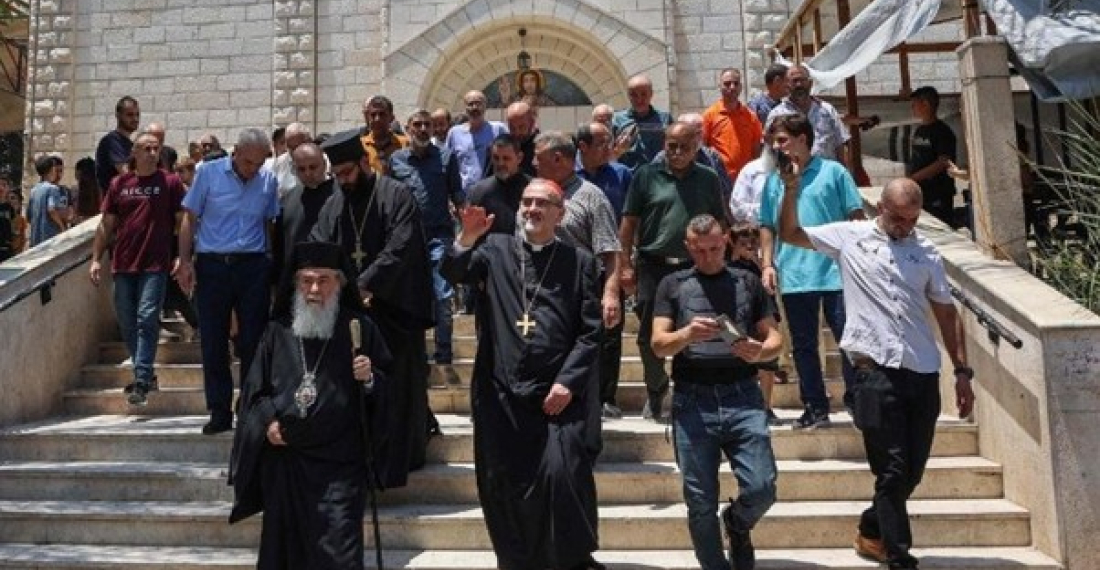
Photo:  Latin Patriarch of Jerusalem Archbishop Pierbattista Pizzaballa and Greek Orthodox Patriarch of Jerusalem, Theophilos III visit the Church of the Holy Family in Gaza City   (picture courtesy of Radio Vaticana, Vatican City)
 

Related articles

Editor's choice
News
UAE says it will withdraw from Yemen, but division emerges in Yemeni presidential council

UAE says it will withdraw from Yemen, but division emerges in Yemeni presidential council

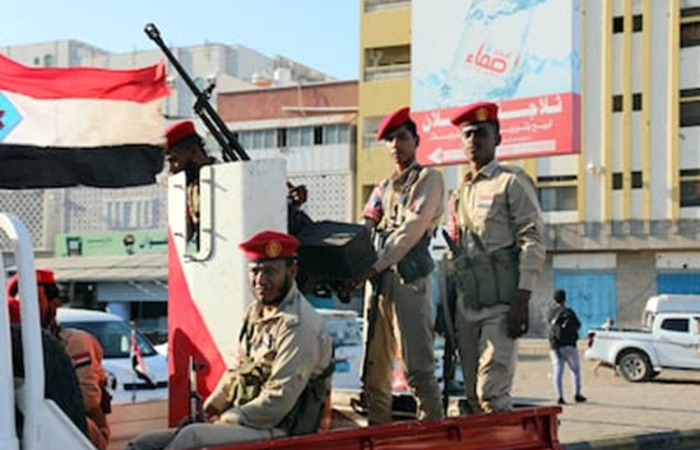
In a move seen as an attempt to de-escalate a crises with Saudi Arabia, the United Arab Emirates, on Tuesday (30th December) announced that it was heeding a call to withdraw its troops from Southern Yemen. UAE says that its presence included counter-terrorism teams that were crucial in fighting against Islamist groups. UAE sources said that parts of Yemen not controlled by the Houthis have had Al Qaeda in the Arab Peninsula (AQAP) operatives using the territory to launch attacks on Europe, the US and Middle East. UAE teams have co-ordinated with American and British special forces and intelligence. The sources added that Emirati forces and their Yemeni allies also helped reverse Houthi gains in the south. including the liberation of Aden port. The small UAE contingent has remained in place since the UAE withdrew most of its military personnel in 2019. The leading English-language newspaper in Abu Dhabi, The National, said that the main UAE force was based at Riyan Mukalla International Airport, with access to fixed-wing aircraft and helicopters, but also operated smaller contingents in the port town Balhaf and Shabwa. "It is understood it also flew a number of drones from the airbase that were able to track terrorist movements, pass information back to its allies and assisted special forces' missions." Meanwhile a division has emerged in Yemen's presidential council after four members denounced what they called the 'unilateral decisions' by the chairman. Four of Yemen’s eight Presidential Leadership Council members on Tuesday denounced an announcement by the council’s chairman accusing him of breaching the governing agreement. Tension between Yemeni leaders has been rising for weeks, underscoring the fragility of the country's already fractured political landscape and further complicating efforts to confront the Iran-backed Houthi rebels. The latest rift took an unprecedented turn on Tuesday morning, marked by a Saudi-led coalition “limited operation” striking combat vehicles Riyadh linked to the Southern Transitional Council, which has three members in the PLC. The PLC Chairman, Rashad al Alimi, on Tuesday said that he was seeking to cancel the joint defence agreement with the UAE. “What has been issued … constitutes a clear violation of the Declaration of the Transfer of Power [agreement], which explicitly stipulates that the Presidential Leadership Council is a collective body whose decisions are taken by consensus, or by majority when consensus is not possible,” the statement by the four members said. “It does not, under any circumstances, allow for unilateral decision-making on sovereign, military, or major political matters." The statement was signed by STC chief Aidarous Al Zubaidi, Faraj Al Bahsani, Tariq Saleh and Abu Zaraa al Muharrami. (click the picture to read the full article).

Popular

Editor's choice
News
UAE says it will withdraw from Yemen, but division emerges in Yemeni presidential council

UAE says it will withdraw from Yemen, but division emerges in Yemeni presidential council

In a move seen as an attempt to de-escalate a crises with Saudi Arabia, the United Arab Emirates, on Tuesday (30th December) announced that it was heeding a call to withdraw its troops from Southern Yemen. UAE says that its presence included counter-terrorism teams that were crucial in fighting against Islamist groups. UAE sources said that parts of Yemen not controlled by the Houthis have had Al Qaeda in the Arab Peninsula (AQAP) operatives using the territory to launch attacks on Europe, the US and Middle East. UAE teams have co-ordinated with American and British special forces and intelligence. The sources added that Emirati forces and their Yemeni allies also helped reverse Houthi gains in the south. including the liberation of Aden port. The small UAE contingent has remained in place since the UAE withdrew most of its military personnel in 2019. The leading English-language newspaper in Abu Dhabi, The National, said that the main UAE force was based at Riyan Mukalla International Airport, with access to fixed-wing aircraft and helicopters, but also operated smaller contingents in the port town Balhaf and Shabwa. "It is understood it also flew a number of drones from the airbase that were able to track terrorist movements, pass information back to its allies and assisted special forces' missions." Meanwhile a division has emerged in Yemen's presidential council after four members denounced what they called the 'unilateral decisions' by the chairman. Four of Yemen’s eight Presidential Leadership Council members on Tuesday denounced an announcement by the council’s chairman accusing him of breaching the governing agreement. Tension between Yemeni leaders has been rising for weeks, underscoring the fragility of the country's already fractured political landscape and further complicating efforts to confront the Iran-backed Houthi rebels. The latest rift took an unprecedented turn on Tuesday morning, marked by a Saudi-led coalition “limited operation” striking combat vehicles Riyadh linked to the Southern Transitional Council, which has three members in the PLC. The PLC Chairman, Rashad al Alimi, on Tuesday said that he was seeking to cancel the joint defence agreement with the UAE. “What has been issued … constitutes a clear violation of the Declaration of the Transfer of Power [agreement], which explicitly stipulates that the Presidential Leadership Council is a collective body whose decisions are taken by consensus, or by majority when consensus is not possible,” the statement by the four members said. “It does not, under any circumstances, allow for unilateral decision-making on sovereign, military, or major political matters." The statement was signed by STC chief Aidarous Al Zubaidi, Faraj Al Bahsani, Tariq Saleh and Abu Zaraa al Muharrami. (click the picture to read the full article).