


On Nagorno-Karabakh, the EU compliments the work of the co-Chairmen of the Minsk Process with support for civil society activities.

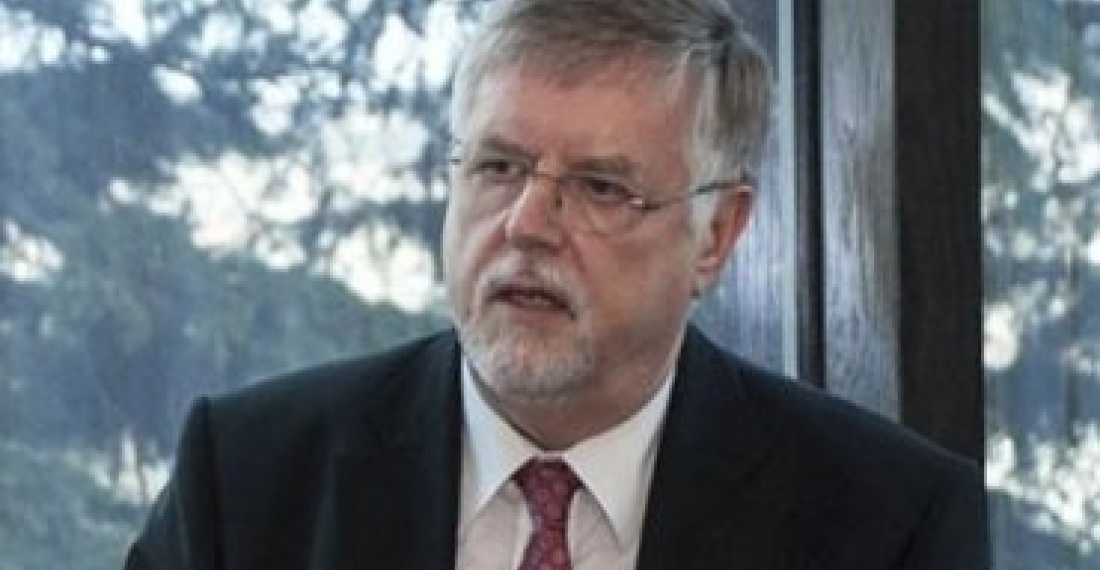
The European Union Special representative to the South Caucasus, Ambassador Herbert Salber has reiterated the support of the EU to the efforts of the co-Chairmen of the OSCE Minsk Group dealing with the Nagorno-Karabakh conflict. Speaking in an interview with the Armenpress news agency at the end of his visit to Armenia last week Ambassador Salber stated that the EU was also "complementing their efforts through its support for civil society peacebuilding activities".

"Already for several years, the EU has been funding an important people-to-people project entitled "The European Partnership for the Peaceful Settlement of the conflict over Nagorno Karabakh" ("EPNK"). It is geared towards conflict transformation and peace-building. Through this project, which has recently entered its third phase, we aim at creating and maintaining contacts and exchanges between civil society actors across the conflict divide. As such, it also involves civil society participants from Nagorno Karabakh. EU's further involvement is contingent on progress in the conflict settlement and agreements reached in the course of this process spearheaded by the OSCE Minsk Group and its Co-Chairs", Salber added

Speaking about incidents around the line of contact in the conflict zone, Ambassador Salber said that "given the frequent ceasefire violations and casualties reported, we consider the situation around the Nagorno Karabakh conflict to be very volatile". The EU Special Representative added,

"Tragic incidents, like the most recent one that happened on July 4 and led to civilian casualties, are unacceptable. Violence must stop. This is a matter of serious concern, given the security risks that it entails for the region and the suffering for the people. The European Union has consistently been calling on the sides to strictly respect the ceasefire regime, avoid provocations and confrontational rhetoric, and engage in meaningful negotiations. There is a clear need to create an atmosphere of mutual trust to enable progress toward the desired political settlement at the earliest opportunity.

The European Union has been urging the parties to the conflict to show restraint, stick to the ceasefire and pursue a political settlement. This is something I also always recall in my contacts with the leaderships here as well as in Baku. We also urged the sides to move forward on the implementation of the agreements reached by the Presidents of Armenia and Azerbaijan in Vienna and St. Petersburg last year. Expanding the OSCE Monitoring Mission and introducing an investigation mechanism could be useful instruments to establish the much needed trust between the sides. In parallel, engaging in exchanges and comprehensive negotiations to resolve the conflict on the basis of the OSCE Minsk Group Co-Chairs' proposals on the negotiation table would also be important. We fully support the efforts of the Co-Chairs in this regard."

During his visit to Armenia, Ambassador Herbert Salber met with the Armenian President, Serzh Sargsyan and other Armenian officials.

source: commonspace.eu with Armenpress news agency, Yerevan.

Related articles

Editor's choice
News
Borrell tells the European Parliament that the situation in Afghanistan was critical, but the EU will remain engaged

Borrell tells the European Parliament that the situation in Afghanistan was critical, but the EU will remain engaged

Borrell underlined that the European Union will make every effort to support the peace process and to remain a committed partner to the Afghan people. "Of course, we will have to take into account the evolving situation, but disengagement is not an option.  We are clear on that: there is no alternative to a negotiated political settlement, through inclusive peace talks.
Editor's choice
News
Germany accuses Russia of cyberattacks and disinformation campaign

Germany accuses Russia of cyberattacks and disinformation campaign

The German government holds Russia responsible for a cyberattack on German air traffic control, and for targeted disinformation campaigns before the last federal election. According to the German Foreign Office in Berlin, the incidents could be clearly attributed to the Russian military intelligence service, the GRU. In response, the Russian ambassador to Berlin was summoned to the Foreign Ministry. "We have been observing a massive increase in threatening hybrid activities by Russia for some time now," a spokesperson for the Foreign Ministry stated. These range from disinformation campaigns and espionage to cyberattacks and sabotage attempts. The aim is to divide society, sow distrust, and undermine confidence in democratic institutions. The spokesperson added that with these actions, Russia is "very concretely threatening our security, not only through its war of aggression against Ukraine, but also here in Germany."  The Foreign Ministry spokesperson explained that the cyberattack on air traffic control in August 2024 was clearly attributed to the hacker collective "APT28," known as "Fancy Bear," and to the responsibility of the Russian military intelligence service, the GRU. Furthermore, it could now be "conclusively stated" that Russia had attempted "to influence and destabilize both the last Federal election and the ongoing internal affairs of the Federal Republic of Germany." There was "absolutely irrefutable evidence" for this". The so-called "Storm 1516" campaign, which has been running since 2024, is allegedly backed by "reliable information" that the Moscow-based think tank "Center for Geopolitical Expertise" is behind it. The Center is also said to be supported by Russian military intelligence. Its primary aim is to influence democratic elections in the West. (Click the image to read more).

Popular

Editor's choice
News
Germany accuses Russia of cyberattacks and disinformation campaign

Germany accuses Russia of cyberattacks and disinformation campaign

The German government holds Russia responsible for a cyberattack on German air traffic control, and for targeted disinformation campaigns before the last federal election. According to the German Foreign Office in Berlin, the incidents could be clearly attributed to the Russian military intelligence service, the GRU. In response, the Russian ambassador to Berlin was summoned to the Foreign Ministry. "We have been observing a massive increase in threatening hybrid activities by Russia for some time now," a spokesperson for the Foreign Ministry stated. These range from disinformation campaigns and espionage to cyberattacks and sabotage attempts. The aim is to divide society, sow distrust, and undermine confidence in democratic institutions. The spokesperson added that with these actions, Russia is "very concretely threatening our security, not only through its war of aggression against Ukraine, but also here in Germany."  The Foreign Ministry spokesperson explained that the cyberattack on air traffic control in August 2024 was clearly attributed to the hacker collective "APT28," known as "Fancy Bear," and to the responsibility of the Russian military intelligence service, the GRU. Furthermore, it could now be "conclusively stated" that Russia had attempted "to influence and destabilize both the last Federal election and the ongoing internal affairs of the Federal Republic of Germany." There was "absolutely irrefutable evidence" for this". The so-called "Storm 1516" campaign, which has been running since 2024, is allegedly backed by "reliable information" that the Moscow-based think tank "Center for Geopolitical Expertise" is behind it. The Center is also said to be supported by Russian military intelligence. Its primary aim is to influence democratic elections in the West. (Click the image to read more).


