From the Kremlin to Rustavi 2, hysterical reactions pose a threat to Georgia

An already tense situation in Georgia got worse on Sunday evening when the main opposition television station, Rustavi 2, broadcast a program in which one of its more famous journalists, Giorgi Gabunia, used one of its prime time TV shows, "Postscriptum" to unleash an attack against Russia and its president Vladimir Putin, using foul language and swear words. The words, which are too vile to be reprinted here, shocked an already traumatised nation, and threathened to further escalate tensions between Russia and Georgia.

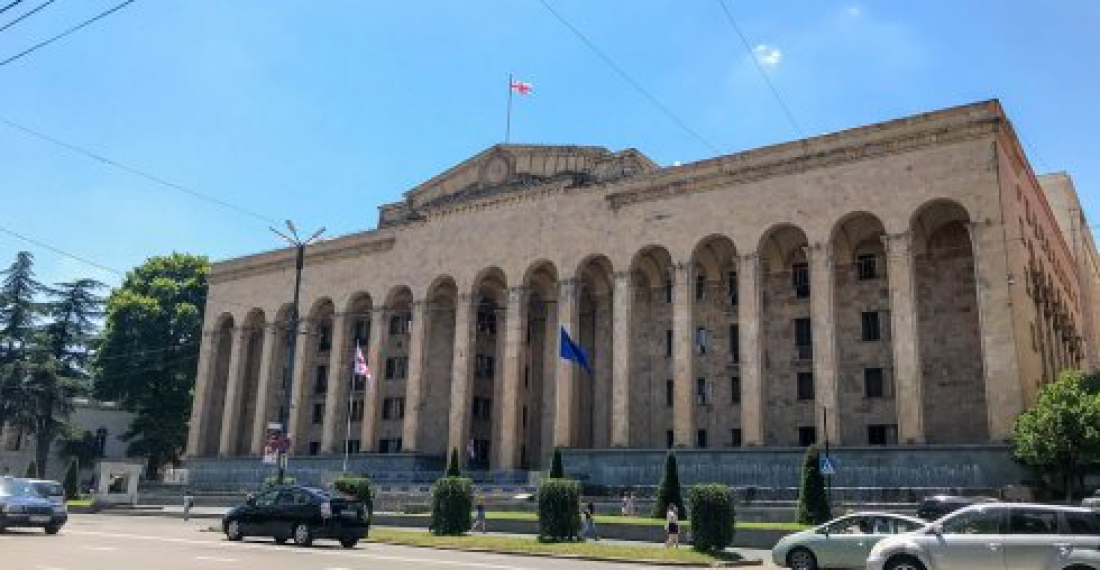
This was the latest in a series of events that followed from an incident in the Georgian parliament on 20 June involving a Russian member of parliament, which quickly escalated into a riot outside parliament, and a a diplomatic incident between Russia and Georgia.

related content: Commentary: A sad day in Georgian politics

Following the outbursts on Rustavi 2 on Sunday evening Georgian government officials condemned the incident in strong words, and even opposition personalities tried to distance themselves from the words of the journalist. But Rustavi 2 is a tightly run operation, and it is difficult to believe that the journalist acted at his own behest on such a sensitive subject at such a sensitive time. Some protestors gathered in front of Rustavi 2 during the night, and the station went off the air for two hours, but resumed broadcasts later saying it had gone of the air to protect its staff.

This is the latest act of political hysteria in a shameful episode. It follows a decision of the Russian government to cut air links to Georgia and advise its citizens not to visit the country, taken by president Putin and his National Security Council hours after the 20 June incident. The Russian government decision has been condemned as being completely out of proportion, and yet another attempt of Russia to exert pressure on its smaller neighbour, which over the last thirty years has experienced unprecedented levels of Russian interference and aggression.

Commonspace.eu political editor said in a comment that ''the hysterical outbursts of the last three weeks - from the Kremlin's sanctions  to Rustavi 2's rants - create a serious situation which needs to de-escalate as soon as possible, because immense harm is being done to Georgia, and regional peace is now threatened.

Georgian politicians of all persuasions, who constantly wrap themselves up in EU and NATO flags, have been acting in a way which makes Georgia look like an unstable banana republic not an aspirant for EU or NATO membership.  There has been very little reaction from the international community in the last days, at least in public. Correctly so perhaps because this is a domestic issue. But in Georgia there is a very fine line between the domestic and the international, and a response is now necessary to avoid further damage.  There seems to be no one in Georgia who is able to exercise restraint on a political class that has got used to shooting from the hip, creating a highly polorised, divided and disillusioned society. The international community, and particularly Georgia's friends in the west - the European Union, NATO, the United States, the United Kingdom, Germany and others, need now to step in and step up. 

The international friends of Georgia need to speak to Georgian politicians, government as well as opposition, bluntly and firmly. The message needs to be clear: Stop now and get back to proper discussions on Georgia's political future, otherwise the goodwill that Georgia has built up with western institutions thanks to successive governments is going to burn out very quickly!"

source: commonspace.eu

photo: The Georgian parliament building in Tbilisi (archive picture).
Related articles

Editor's choice
News
Borrell tells the European Parliament that the situation in Afghanistan was critical, but the EU will remain engaged

Borrell tells the European Parliament that the situation in Afghanistan was critical, but the EU will remain engaged

Borrell underlined that the European Union will make every effort to support the peace process and to remain a committed partner to the Afghan people. "Of course, we will have to take into account the evolving situation, but disengagement is not an option.  We are clear on that: there is no alternative to a negotiated political settlement, through inclusive peace talks.
Editor's choice
News
NATO Chief says war is on Europe's doorstep, and warns against complacency

NATO Chief says war is on Europe's doorstep, and warns against complacency

Russia could attack a Nato country within the next five years, the Secretary General of NATO, Mark Rutte, said in a stark new warning. "Nato's own defences can hold for now," Rutte warned in Berlin, but conflict was "next door" to Europe and he feared "too many are quietly complacent, and too many don't feel the urgency, too many believe that time is on our side. "Russia is already escalating its covert campaign against our societies," Rutte said in a speech in Germany. "We must be prepared for the scale of war our grandparents or great-grandparents endured." Earlier this month, Russia's President Vladimir Putin said his country was not planning to go to war with Europe, but it was ready "right now" if Europe wanted to - or started a war. But similar reassurances were given by Moscow in 2022, just before 200,000 Russian troops crossed the border and invaded Ukraine. Putin has accused European countries of hindering US efforts to bring peace in Ukraine - a reference to the role Ukraine's European allies have recently played in trying to change a US peace plan to end the war, whose initial draft was seen as favouring Russia. But Putin was not sincere, Nato's secretary-general said in the German capital, Berlin. Supporting Ukraine, he added, was a guarantee for European security. "Just imagine if Putin got his way; Ukraine under the boot of Russian occupation, his forces pressing against a longer border with Nato, and the significantly increased risk of an armed attack against us." Russia's economy has been on a war footing for more than three years now - its factories churn out ever more supplies of drones, missiles and artillery shells. According to a recent report by the Kiel Institute for the World Economy, Russia has been producing each month around 150 tanks, 550 infantry fighting vehicles, 120 Lancet drones and more than 50 artillery pieces. The UK, and most of its Western allies, are simply not anywhere near this point. Analysts say it would take years for Western Europe's factories to come close to matching Russia's mass-production of weapons. "Allied defence spending and production must rise rapidly, our armed forces must have what they need to keep us safe," the Nato chief said.

Popular

Editor's choice
News
NATO Chief says war is on Europe's doorstep, and warns against complacency

NATO Chief says war is on Europe's doorstep, and warns against complacency

Russia could attack a Nato country within the next five years, the Secretary General of NATO, Mark Rutte, said in a stark new warning. "Nato's own defences can hold for now," Rutte warned in Berlin, but conflict was "next door" to Europe and he feared "too many are quietly complacent, and too many don't feel the urgency, too many believe that time is on our side. "Russia is already escalating its covert campaign against our societies," Rutte said in a speech in Germany. "We must be prepared for the scale of war our grandparents or great-grandparents endured." Earlier this month, Russia's President Vladimir Putin said his country was not planning to go to war with Europe, but it was ready "right now" if Europe wanted to - or started a war. But similar reassurances were given by Moscow in 2022, just before 200,000 Russian troops crossed the border and invaded Ukraine. Putin has accused European countries of hindering US efforts to bring peace in Ukraine - a reference to the role Ukraine's European allies have recently played in trying to change a US peace plan to end the war, whose initial draft was seen as favouring Russia. But Putin was not sincere, Nato's secretary-general said in the German capital, Berlin. Supporting Ukraine, he added, was a guarantee for European security. "Just imagine if Putin got his way; Ukraine under the boot of Russian occupation, his forces pressing against a longer border with Nato, and the significantly increased risk of an armed attack against us." Russia's economy has been on a war footing for more than three years now - its factories churn out ever more supplies of drones, missiles and artillery shells. According to a recent report by the Kiel Institute for the World Economy, Russia has been producing each month around 150 tanks, 550 infantry fighting vehicles, 120 Lancet drones and more than 50 artillery pieces. The UK, and most of its Western allies, are simply not anywhere near this point. Analysts say it would take years for Western Europe's factories to come close to matching Russia's mass-production of weapons. "Allied defence spending and production must rise rapidly, our armed forces must have what they need to keep us safe," the Nato chief said.