Israel’s strikes in Yemen kill at least thirty-five people

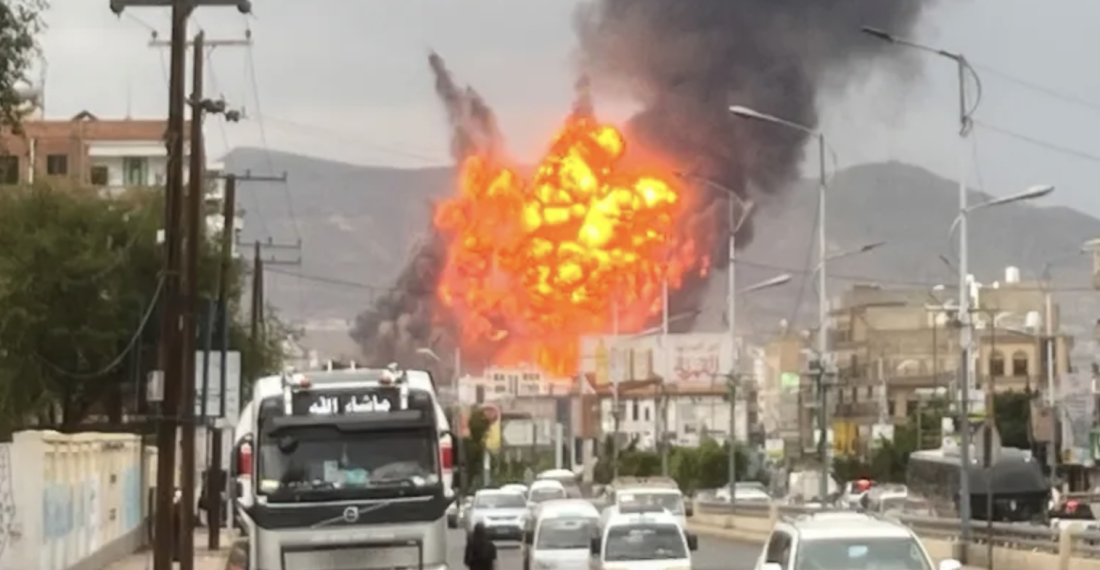
On Wednesday (10 September), Israeli jets targeted Sanaa, the capital of Yemen, as well as al-Jawf province. Houthi authorities reported that there are at least 35 dead and 131 wounded, although later figures suggested 46 fatalities and 165 people injured. Strikes in Sanaa’s al-Tahrir neighbourhood damaged residential areas, a medical facility, and the national museum, while in al-Jawf, government compounds were hit. The damage to civilian infrastructure has drawn widespread condemnation, with UNESCO warning of irreparable losses to cultural heritage.

The Israeli government has defended the strikes as retaliatory measures following a drone attack by the Houthis that struck an Israeli airport earlier this week. However, the Houthis and their allies insist that Israel is disproportionately hitting civilians and vital infrastructure, acts they argue breach international law. The attacks in Yemen, in particular, have exacerbated an already dire humanitarian situation, disrupting medical services and displacing civilians in areas already devastated by years of conflict.

Israel’s attack on Yemen came amid a wider campaign of strikes that, in the last week alone, have reached six sovereign nations. On Tuesday (9 September), Israeli operations extended to Qatar, where a strike on Doha killed six people, including a Qatari security officer. Israel claimed the target was a Hamas leadership compound, while Qatar accused Israel of violating its sovereignty and called for a collective regional response. The UN Security Council released on Thursday (11 September) a statement agreed upon by all 15 members, including the United States, condemning the strike on Qatar but without mentioning Israel.

On Monday (8 September), Lebanon reported strikes in the Bekaa and Hermel districts, where Israeli forces said they targeted Hezbollah weapons depots, leaving at least five people dead. Syria and Tunisia also came under attack earlier this week, with Israel framing the operations as part of a campaign against groups aligned with Iran and Hamas. Israel continues to attack Gaza, targeting high-rise residential buildings in Gaza City. The Palestinian Ministry of Health reported on Wednesday (10 September) that at least 64,656 people have been confirmed dead, of whom at least 404 have died from starvation, while thousands of others remain buried under rubble.

As the conflict continues to spread, international concern is mounting over both the humanitarian consequences and the implications for regional stability. While appeals for stronger diplomatic efforts continue to grow, the conflict is moving towards deeper entanglement across the Middle East, with civilians once again paying the highest price.
Source: Commonspace.eu with AP news and other agencies

Related articles

Editor's choice
News
Situation in South Yemen strains relations between Saudi Arabia and UAE

Situation in South Yemen strains relations between Saudi Arabia and UAE

The relations between Saudi Arabia and the United Arab Emirates (UAE) are increasingly strained as a result of the different approach of the two countries towards Yemen. Whilst both countries were initially together in resisting the Houthi take over in Yemen, the UAE subsequently focused on the South of the country, backing the Southern Movement (STC), which seeks to restore the independence of South Yemen. South Yemen became an independent country in 1967, at the end of British rule, and only unified with the north in 1990. The Saudi-led “Coalition to Support Legitimacy in Yemen” on Tuesday, 30 December, said it conducted a “limited” airstrike targeting two ships “that smuggled weapons and other military hardware into Mukalla in southern Yemen”. The ships originated in the UAE port of Furjeirah. In a statement carried by the Saudi Press Agency (SPA), the Coalition Forces spokesman, Major General Turki Al-Maliki, said that two ships coming from the port of Fujairah in the United Arab Emirates entered the Port of Mukalla in Hadramaut without obtaining official permits from the Joint Forces Command of the Coalition. He stressed the Coalition's "continued commitment to de-escalation and enforcing calm in the governorates of Hadramawt and Al-Mahra, and to prevent any military support from any country to any Yemeni faction without coordination with the legitimate Yemeni government and the Coalition. The Southern Transitional Council (STC), launched a sweeping military campaign early in December, seizing the governorates of Hadramaut along the Saudi border and the eastern governorate of Al-Mahra in Yemen’s border with Oman. The UAE-backed STC forces captured the city of Seiyun, including its international airport and the presidential palace. They also took control of the strategic PetroMasila oilfields, which account for a massive portion of Yemen’s remaining oil wealth. (click the image to read the article in full).

Popular

Editor's choice
News
Situation in South Yemen strains relations between Saudi Arabia and UAE

Situation in South Yemen strains relations between Saudi Arabia and UAE

The relations between Saudi Arabia and the United Arab Emirates (UAE) are increasingly strained as a result of the different approach of the two countries towards Yemen. Whilst both countries were initially together in resisting the Houthi take over in Yemen, the UAE subsequently focused on the South of the country, backing the Southern Movement (STC), which seeks to restore the independence of South Yemen. South Yemen became an independent country in 1967, at the end of British rule, and only unified with the north in 1990. The Saudi-led “Coalition to Support Legitimacy in Yemen” on Tuesday, 30 December, said it conducted a “limited” airstrike targeting two ships “that smuggled weapons and other military hardware into Mukalla in southern Yemen”. The ships originated in the UAE port of Furjeirah. In a statement carried by the Saudi Press Agency (SPA), the Coalition Forces spokesman, Major General Turki Al-Maliki, said that two ships coming from the port of Fujairah in the United Arab Emirates entered the Port of Mukalla in Hadramaut without obtaining official permits from the Joint Forces Command of the Coalition. He stressed the Coalition's "continued commitment to de-escalation and enforcing calm in the governorates of Hadramawt and Al-Mahra, and to prevent any military support from any country to any Yemeni faction without coordination with the legitimate Yemeni government and the Coalition. The Southern Transitional Council (STC), launched a sweeping military campaign early in December, seizing the governorates of Hadramaut along the Saudi border and the eastern governorate of Al-Mahra in Yemen’s border with Oman. The UAE-backed STC forces captured the city of Seiyun, including its international airport and the presidential palace. They also took control of the strategic PetroMasila oilfields, which account for a massive portion of Yemen’s remaining oil wealth. (click the image to read the article in full).