Houthis in Yemen abduct social media influencers in a crackdown on dissent

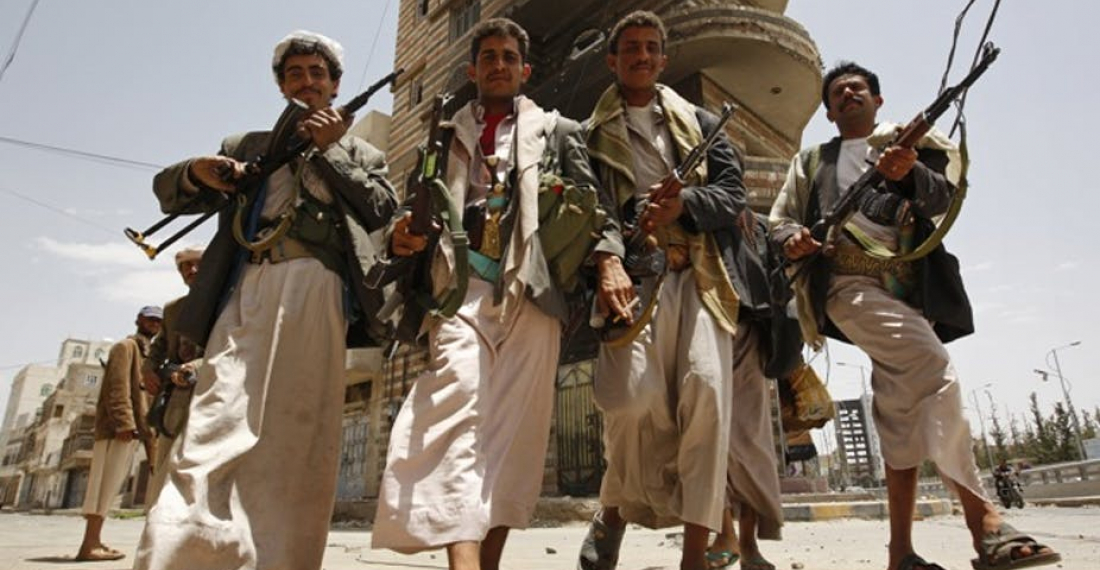
Stories continue to emerge of ongoing gross abuses by the Yemeni Houthi movement against Yemeni civil society activists in the capital Sanaa, and in other areas under their control.

This week, three well-known Yemeni YouTubers have been kidnapped by Houthis in Sanaa, as the militia steps up its crackdown on online influencers who expose its leaders’ flaws, according to the newspaper Arab News, published on Wednesday,(4 January).

Activists reported that Houthis abducted Mustafa Al-Mumari, Hamoud Al-Mesbahi, and Ahmed Elaw for posting videos on social media which support prominent YouTuber Ahmed Hajar, who was seized from a Sanaa street more than 10 days ago.

The social media posts also criticized widespread corruption and the failure to address famine.

Al-Mumari is a popular social media personality in Yemen with more than 2 million YouTube subscribers and tens of thousands of Facebook fans.

He had earlier appeared in a video in which he sharply criticized the Houthis for kidnapping his friend, Hajar.

He urged the Houthis to combat rampant institutional corruption, and named some “corrupt” Houthi leaders.

He added: “If you are trustworthy and searching for the corrupt, I will provide you with evidence.

“If my claims are untrue, put me to death; if they are genuine, hold those (corrupt officials) responsible.”

Al-Mumari and Al-Mesbahi were kidnapped from a street in Sanaa and taken to a security facility shortly after the video was posted.

Elaw had made a video on his channel three days ago demanding the release of his detained friends, and warning the Houthis against ignoring corruption or popular unrest.

He said: “We shall not forget our imprisoned brethren and will continue to advocate for their release.”

The Houthis quickly stormed his home and kidnapped him.

The abductions came as a Yemeni attorney in Sanaa said on Tuesday that Houthi intelligence, security personnel and prosecutors had begun interrogating Hajar in preparation for his trial.

Lawyer Abdul Majeed Sabra told the Saudi newspaper Arab News: “The specialized criminal prosecution is now interrogating Ahmed Hajar at the Shamlan building of the Security and Intelligence Service.”

The Houthis have not yet claimed responsibility for the abduction of the recent set of YouTubers, but their supporters claimed their social media posts had been backed by the militia’s adversaries.

Abdulsalam Jahaf, a member of the Houthi Shoura Council, said: “Anyone who serves the enemy is an enemy, and the security services are tasked with apprehending anyone who attempts to compromise our security.”

Yemeni officials and analysts believe that the campaign by the Houthis against social media influencers is aimed at silencing prominent figures who can reach millions of Yemenis.

Yemen’s Minister of Information Muammar Al-Eryani said the Houthis fear an uprising owing to their repressive rule, inability to pay public wages, and failure to provide services.

He added: “These frantic campaigns serve as confirmation of the hysteria that has engulfed the Houthi militia’s leaders following calls for a popular uprising to remove this scourge.”

He condemned the Houthi policy of “poverty and starvation against residents” in the areas it controlled “that destroyed everything lovely in Yemen in order to further the goals of its Iranian overlords.”

The Houthi's, a militant group supported by Iran, seized control of the Yemeni capital Sanaa, and large swaths of the country's territory in 2014 and unseated the legitimate government, resulting in a civil war that neither side appears able to win.

source: commonspace.eu with Arab News (Jeddah) and agencies.
 

Related articles

Editor's choice
News
Borrell tells the European Parliament that the situation in Afghanistan was critical, but the EU will remain engaged

Borrell tells the European Parliament that the situation in Afghanistan was critical, but the EU will remain engaged

Borrell underlined that the European Union will make every effort to support the peace process and to remain a committed partner to the Afghan people. "Of course, we will have to take into account the evolving situation, but disengagement is not an option.  We are clear on that: there is no alternative to a negotiated political settlement, through inclusive peace talks.
Editor's choice
News
NATO Chief says war is on Europe's doorstep, and warns against complacency

NATO Chief says war is on Europe's doorstep, and warns against complacency

Russia could attack a Nato country within the next five years, the Secretary General of NATO, Mark Rutte, said in a stark new warning. "Nato's own defences can hold for now," Rutte warned in Berlin, but conflict was "next door" to Europe and he feared "too many are quietly complacent, and too many don't feel the urgency, too many believe that time is on our side. "Russia is already escalating its covert campaign against our societies," Rutte said in a speech in Germany. "We must be prepared for the scale of war our grandparents or great-grandparents endured." Earlier this month, Russia's President Vladimir Putin said his country was not planning to go to war with Europe, but it was ready "right now" if Europe wanted to - or started a war. But similar reassurances were given by Moscow in 2022, just before 200,000 Russian troops crossed the border and invaded Ukraine. Putin has accused European countries of hindering US efforts to bring peace in Ukraine - a reference to the role Ukraine's European allies have recently played in trying to change a US peace plan to end the war, whose initial draft was seen as favouring Russia. But Putin was not sincere, Nato's secretary-general said in the German capital, Berlin. Supporting Ukraine, he added, was a guarantee for European security. "Just imagine if Putin got his way; Ukraine under the boot of Russian occupation, his forces pressing against a longer border with Nato, and the significantly increased risk of an armed attack against us." Russia's economy has been on a war footing for more than three years now - its factories churn out ever more supplies of drones, missiles and artillery shells. According to a recent report by the Kiel Institute for the World Economy, Russia has been producing each month around 150 tanks, 550 infantry fighting vehicles, 120 Lancet drones and more than 50 artillery pieces. The UK, and most of its Western allies, are simply not anywhere near this point. Analysts say it would take years for Western Europe's factories to come close to matching Russia's mass-production of weapons. "Allied defence spending and production must rise rapidly, our armed forces must have what they need to keep us safe," the Nato chief said.

Popular

Editor's choice
News
NATO Chief says war is on Europe's doorstep, and warns against complacency

NATO Chief says war is on Europe's doorstep, and warns against complacency

Russia could attack a Nato country within the next five years, the Secretary General of NATO, Mark Rutte, said in a stark new warning. "Nato's own defences can hold for now," Rutte warned in Berlin, but conflict was "next door" to Europe and he feared "too many are quietly complacent, and too many don't feel the urgency, too many believe that time is on our side. "Russia is already escalating its covert campaign against our societies," Rutte said in a speech in Germany. "We must be prepared for the scale of war our grandparents or great-grandparents endured." Earlier this month, Russia's President Vladimir Putin said his country was not planning to go to war with Europe, but it was ready "right now" if Europe wanted to - or started a war. But similar reassurances were given by Moscow in 2022, just before 200,000 Russian troops crossed the border and invaded Ukraine. Putin has accused European countries of hindering US efforts to bring peace in Ukraine - a reference to the role Ukraine's European allies have recently played in trying to change a US peace plan to end the war, whose initial draft was seen as favouring Russia. But Putin was not sincere, Nato's secretary-general said in the German capital, Berlin. Supporting Ukraine, he added, was a guarantee for European security. "Just imagine if Putin got his way; Ukraine under the boot of Russian occupation, his forces pressing against a longer border with Nato, and the significantly increased risk of an armed attack against us." Russia's economy has been on a war footing for more than three years now - its factories churn out ever more supplies of drones, missiles and artillery shells. According to a recent report by the Kiel Institute for the World Economy, Russia has been producing each month around 150 tanks, 550 infantry fighting vehicles, 120 Lancet drones and more than 50 artillery pieces. The UK, and most of its Western allies, are simply not anywhere near this point. Analysts say it would take years for Western Europe's factories to come close to matching Russia's mass-production of weapons. "Allied defence spending and production must rise rapidly, our armed forces must have what they need to keep us safe," the Nato chief said.