


Georgian film with gay theme takes Cannes by storm

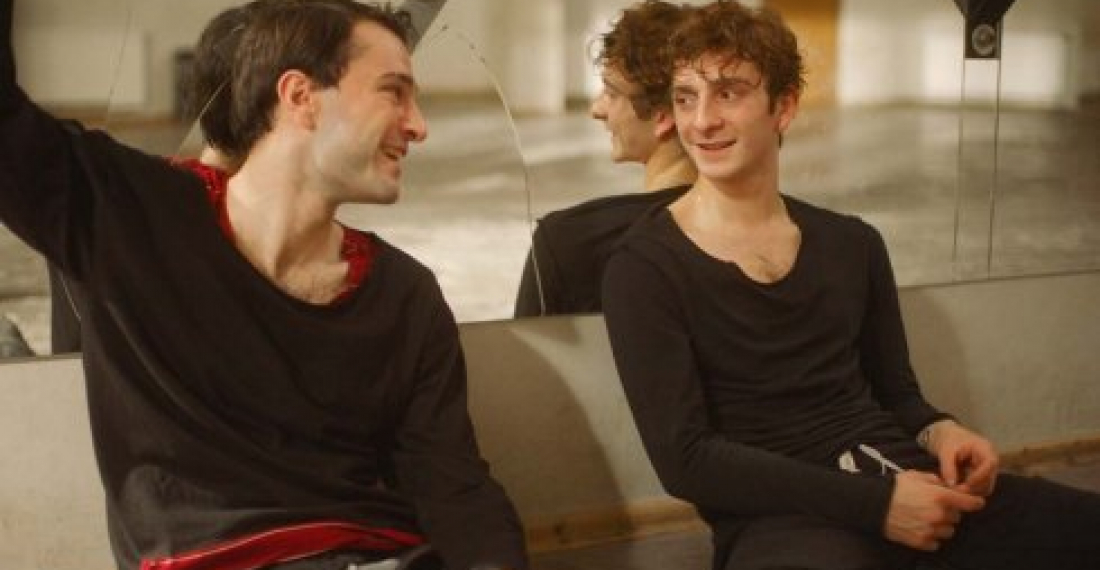
A Georgian film with a gay theme has taken the Cannes Film Festival by storm. The audience gave it a standing ovation on Thursday (16 May) at its debut. The film, "And then we danced", directed by Levan Akin, a Swedish born with a Georgian ancestry deals with a love that in Georgia is yet to dare say its name. As the official summary of the plot goes, "Merab has been training since a young age at the National Georgian Ensemble with his dance partner Mary. His world is suddenly turned upside down when the charismatic and carefree Irakli arrives and becomes both his strongest rival and desire. In this conservative setting Merab finds himself having to break free and risk it all."

 This is Levan Akin's third film. "With this film I find myself really going back to my roots as a filmmaker, working in an organic way, where the real lives of the people in the film and what's going on in Georgia now affects the story," wrote Akin in a director's statement. "It is ever evolving. Telling the story of young LGBT+ people and their struggles on a smaller scale but also showing the history and situation of Georgia today on a larger scale. This film will not only be a very interesting look into a part of the world not so many people are familiar with but also a heartfelt movie about the importance of being free."

There are reports that Georgian official structures distanced themselves from the film when it was being shot, once they became aware that it had a gay theme. Bachi Valishvili who plays the role of Irakli in the film "And Then We Danced"  said that on the other hand the reaction for the movie in Cannes was overwhelmingly positive: "We received so much positive feedback. I want to thank everybody who has supported us and have said good things. It creates a balance with the comments coming from the other side."

You can watch the film official trailer on You Tube, here

source: commonspace.eu

photo: Bachi Valishvili plays the role of Irakli and  Levan Gelbakhiani plays the role of Merab in the film "And then we danced which premiered at the Cannes Film Festivasl on 16 May (picture courtesy of the Cannes Film Festival)


Related articles

Editor's choice
News
Russian attacks on Kyiv and other Ukrainian cities highlights need of strengthening European resolve

Russian attacks on Kyiv and other Ukrainian cities highlights need of strengthening European resolve

Ukrainian President Volodymyr Zelensky condemned the attack, writing on X that it proved that US and European sanctions against Russia should not be weakened. Russia launched more than 700 drones and missiles at Ukraine in multiple waves overnight from Wednesday to Thursday, killing at least 18 people in what local officials said was the deadliest attack in months. Ukraine's air force said on Thursday morning that Russia had launched 659 drones and 44 cruise and ballistic missiles in the prior 24 hours. It said that 636 drones and 31 missiles had been shot down - but there had been direct hits in 26 locations. (click picture to read more)

Popular

Editor's choice
Interview
Thursday Interview: Murad Muradov

Thursday Interview: Murad Muradov

Today, commonspace.eu starts a new regular weekly series. THURSDAY INTERVIEW, conducted by Lauri Nikulainen, will host  persons who are thinkers, opinion shapers, and implementors in their countries and spheres. We start the series with an interview with Murad Muradov, a leading person in Azerbaijan's think tank community. He is also the first co-chair of the Action Committee for a new Armenian-Azerbaijani Dialogue. Last September he made history by being the first Azerbaijani civil society activist to visit Armenia after the 44 day war, and the start of the peace process. Speaking about this visit Murad Muradov said: "My experience was largely positive. My negative expectations luckily didn’t play out. The discussions were respectful, the panel format bringing together experts from Armenia, Azerbaijan, and Turkey was particularly valuable during the NATO Rose-Roth Seminar in Yerevan, and media coverage, while varied in tone, remained largely constructive. Some media outlets though attempted to represent me as more of a government mouthpiece than an independent expert, which was totally misleading.  Overall, I see these initiatives as important steps in rebuilding trust and normalising professional engagement. The fact that soon a larger Azerbaijani civil society visits to Armenia followed, reinforces the sense that this process is moving in the right direction." (click the image to read the interview in full)

