EU Foreign Policy Chief Kaja Kallas ends visit to Yerevan aimed at strengthening partnership with Armenia

EU High Representative for Foreign Affairs and Security Policy Kaja Kallas has ended her official visit to Armenia after signing a partnership agreement with authorities in Yerevan. Following talks with Armenian Foreign Minister Ararat Mirzoyan, a joint press conference was held in which the media was briefed about an agreement outlining Armenia’s participation in the European Union’s Common Security and Defence Policy crisis management operations. According to Kallas, the document envisions Armenia’s participation in EU missions around the world.

The agreement is a vivid example of mutual readiness to expand the Armenia-EU partnership agenda and it demonstrates Armenia’s commitment to making a constructive contribution to global security, stability, and peace, Mirzoyan stated during the press conference.

According to Armenia’s Minister of Foreign Affairs, in addition to the signing of the framework agreement, two more achievements have been recorded during the visit by Kallas. These are the completion of negotiations on the new partnership agenda, and the launch of consultations in the field of defense and security. The launch of defense and security consultations, he noted, is a “decisive step” as it aims to align cooperation with current challenges.

“In this context, I would like to particularly highlight cooperation aimed at strengthening Armenia’s defense capabilities, resilience, and the further development of democratic institutions, which also includes areas such as combating hybrid threats and disinformation”, Ararat Mirzoyan stated.

“Armenia and the European Union have successfully concluded negotiations on a new partnership agenda. This is an ambitious document that will complement and further deepen the bilateral Armenia-EU agenda through new areas of cooperation. At the same time, it will contribute to the effective implementation of the Comprehensive and Enhanced Partnership Agreement between Armenia and the EU”, Mirzoyan added.

According to the Kaja Kallas, the document outlines additional areas, directions, and instruments of cooperation. The new agenda defines our priorities in the areas of economic development, security, and resilience”, added Kallas.

The EU High Representative stated that she came to Yerevan with a clear message: the EU and Armenia have never been closer than they are now. Kaja Kallas emphasised the importance of Armenia’s continued commitment to democracy and freedom, especially in the face of hybrid threats and external interference. She stressed that the European Union is ready to support Armenia in this critical moment.

According to JAMnews, journalists asked her about the current status of the European Peace Facility assistance to Armenia and about Hungary’s position this time, after it vetoed the aid in 2024.“The EU consists of 27 democratic countries, which complicates the decision-making process. Sometimes a country can block a decision. Yes, we have not yet made a decision, that is true. But we are working on finding a solution to this problem,” Kallas replied.

During the press conference, Foreign Minister Mirzoyan said the discussions with the EU High Representative focused on possible realistic steps toward implementing the bill on Armenia’s accession to the EU as well as issues related to the visa liberalisation process. They also discussed programmes to deepen economic ties between Armenia and the EU. Mirzoyan said that talks also touched on regional and Middle Eastern developments and the Armenia-Azerbaijan peace negotiation process.

“We also discussed with the High Representative initiatives implemented with EU participation in the field of regional communications. I emphasised the comparability and potential complementarity of the ‘Global Gateways’ strategy and the Armenian government’s ‘Crossroads of Peace’ project,” Mirzoyan stated.

Media reports in Armenia also noted that Kallas urged her counterpart not to let his guard down and keep an eye on threats posed by neighbouring Russia, including the Kremlin’s disinformation and interference in the region, as seen in the electoral and political processes of a number of countries such as Georgia, Moldova and Romania.

Mirzoyan said he had instructing Moscow to stay out of Armenia’s domestic affairs and noted the arrest of Archbishop Bagrat Galstanyan, a prominent figure in the Armenian Apostolic Church and leader of the anti-government opposition, for his alleged involvement in a coup attempt that Yerevan does not exclude could be supported by the Kremlin.
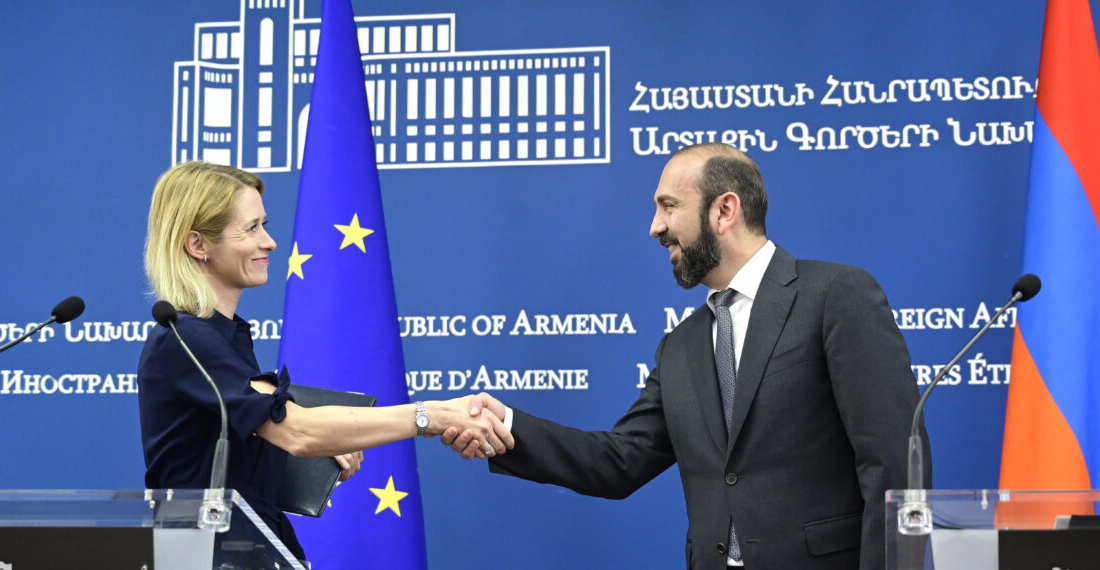
Source: commonspace.eu with agencies. Photo: High Representative of the European Union for Foreign Affairs and Security Policy Kaja Kallas and Armenian Foreign Minister Ararat Mirzoyan. Source: European Commission.

Related articles

Editor's choice
News
UAE says it will withdraw from Yemen, but division emerges in Yemeni presidential council

UAE says it will withdraw from Yemen, but division emerges in Yemeni presidential council

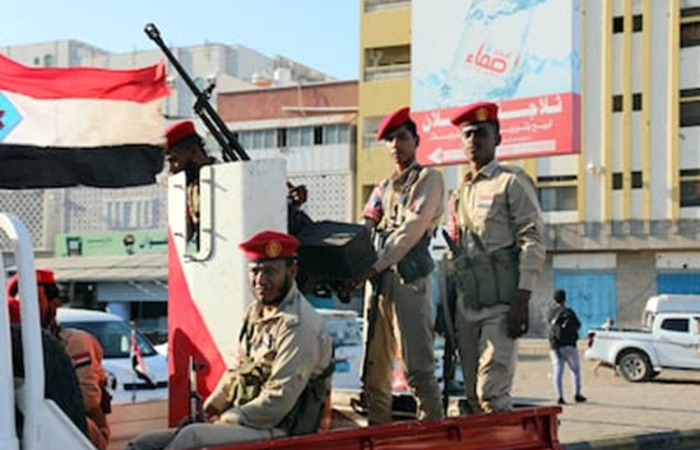
In a move seen as an attempt to de-escalate a crises with Saudi Arabia, the United Arab Emirates, on Tuesday (30th December) announced that it was heeding a call to withdraw its troops from Southern Yemen. UAE says that its presence included counter-terrorism teams that were crucial in fighting against Islamist groups. UAE sources said that parts of Yemen not controlled by the Houthis have had Al Qaeda in the Arab Peninsula (AQAP) operatives using the territory to launch attacks on Europe, the US and Middle East. UAE teams have co-ordinated with American and British special forces and intelligence. The sources added that Emirati forces and their Yemeni allies also helped reverse Houthi gains in the south. including the liberation of Aden port. The small UAE contingent has remained in place since the UAE withdrew most of its military personnel in 2019. The leading English-language newspaper in Abu Dhabi, The National, said that the main UAE force was based at Riyan Mukalla International Airport, with access to fixed-wing aircraft and helicopters, but also operated smaller contingents in the port town Balhaf and Shabwa. "It is understood it also flew a number of drones from the airbase that were able to track terrorist movements, pass information back to its allies and assisted special forces' missions." Meanwhile a division has emerged in Yemen's presidential council after four members denounced what they called the 'unilateral decisions' by the chairman. Four of Yemen’s eight Presidential Leadership Council members on Tuesday denounced an announcement by the council’s chairman accusing him of breaching the governing agreement. Tension between Yemeni leaders has been rising for weeks, underscoring the fragility of the country's already fractured political landscape and further complicating efforts to confront the Iran-backed Houthi rebels. The latest rift took an unprecedented turn on Tuesday morning, marked by a Saudi-led coalition “limited operation” striking combat vehicles Riyadh linked to the Southern Transitional Council, which has three members in the PLC. The PLC Chairman, Rashad al Alimi, on Tuesday said that he was seeking to cancel the joint defence agreement with the UAE. “What has been issued … constitutes a clear violation of the Declaration of the Transfer of Power [agreement], which explicitly stipulates that the Presidential Leadership Council is a collective body whose decisions are taken by consensus, or by majority when consensus is not possible,” the statement by the four members said. “It does not, under any circumstances, allow for unilateral decision-making on sovereign, military, or major political matters." The statement was signed by STC chief Aidarous Al Zubaidi, Faraj Al Bahsani, Tariq Saleh and Abu Zaraa al Muharrami. (click the picture to read the full article).

Popular

Editor's choice
News
UAE says it will withdraw from Yemen, but division emerges in Yemeni presidential council

UAE says it will withdraw from Yemen, but division emerges in Yemeni presidential council

In a move seen as an attempt to de-escalate a crises with Saudi Arabia, the United Arab Emirates, on Tuesday (30th December) announced that it was heeding a call to withdraw its troops from Southern Yemen. UAE says that its presence included counter-terrorism teams that were crucial in fighting against Islamist groups. UAE sources said that parts of Yemen not controlled by the Houthis have had Al Qaeda in the Arab Peninsula (AQAP) operatives using the territory to launch attacks on Europe, the US and Middle East. UAE teams have co-ordinated with American and British special forces and intelligence. The sources added that Emirati forces and their Yemeni allies also helped reverse Houthi gains in the south. including the liberation of Aden port. The small UAE contingent has remained in place since the UAE withdrew most of its military personnel in 2019. The leading English-language newspaper in Abu Dhabi, The National, said that the main UAE force was based at Riyan Mukalla International Airport, with access to fixed-wing aircraft and helicopters, but also operated smaller contingents in the port town Balhaf and Shabwa. "It is understood it also flew a number of drones from the airbase that were able to track terrorist movements, pass information back to its allies and assisted special forces' missions." Meanwhile a division has emerged in Yemen's presidential council after four members denounced what they called the 'unilateral decisions' by the chairman. Four of Yemen’s eight Presidential Leadership Council members on Tuesday denounced an announcement by the council’s chairman accusing him of breaching the governing agreement. Tension between Yemeni leaders has been rising for weeks, underscoring the fragility of the country's already fractured political landscape and further complicating efforts to confront the Iran-backed Houthi rebels. The latest rift took an unprecedented turn on Tuesday morning, marked by a Saudi-led coalition “limited operation” striking combat vehicles Riyadh linked to the Southern Transitional Council, which has three members in the PLC. The PLC Chairman, Rashad al Alimi, on Tuesday said that he was seeking to cancel the joint defence agreement with the UAE. “What has been issued … constitutes a clear violation of the Declaration of the Transfer of Power [agreement], which explicitly stipulates that the Presidential Leadership Council is a collective body whose decisions are taken by consensus, or by majority when consensus is not possible,” the statement by the four members said. “It does not, under any circumstances, allow for unilateral decision-making on sovereign, military, or major political matters." The statement was signed by STC chief Aidarous Al Zubaidi, Faraj Al Bahsani, Tariq Saleh and Abu Zaraa al Muharrami. (click the picture to read the full article).