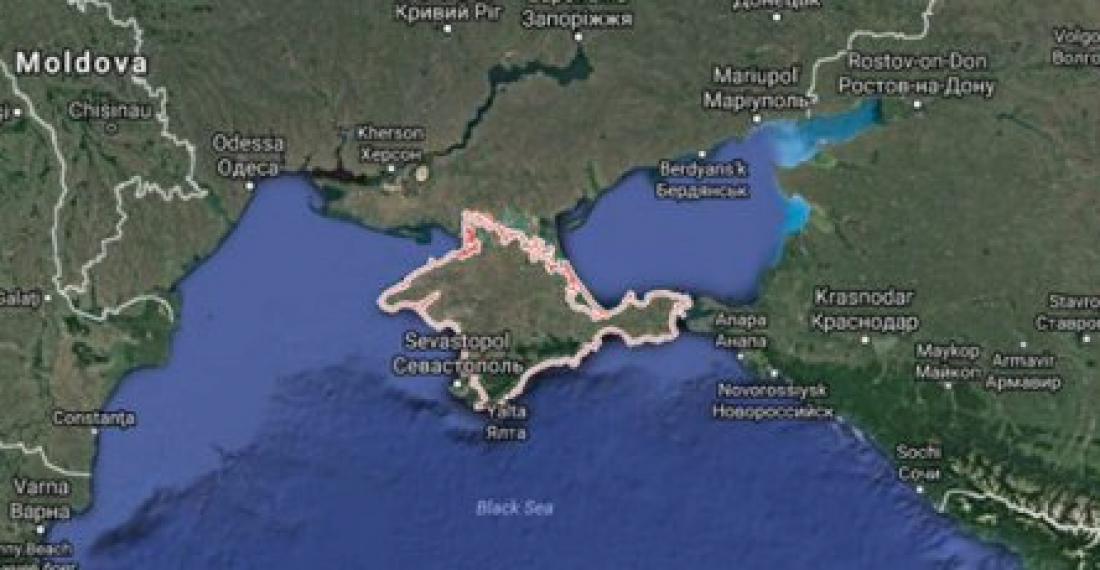
The European Union has issued a statement on the occasion of the sixth anniversary of the annexation of Crimnea by Russia. A declaration issued by the High Representative for Foreign and Security Policy, Josep Borrell Fontelles, stated that "six years on from the illegal annexation of the Autonomous Republic of Crimea and the city of Sevastopol by the Russian Federation, the European Union remains steadfast in its commitment to Ukraine's sovereignty and territorial integrity".
It adds:
The European Union reiterates that it does not recognise and continues to condemn this violation of international law. It remains a direct challenge to international security, with grave implications for the international legal order that protects the territorial integrity, unity and sovereignty of all States.
The European Union remains committed to fully implementing its non-recognition policy, including through restrictive measures. The European Union calls again on UN Member States to consider similar non-recognition measures in line with the UN General Assembly Resolution 68/262. The European Union does not and will not recognise the holding of elections by the Russian Federation in the Crimean peninsula.
The increasing militarisation of the peninsula continues to negatively impact the security situation in the Black Sea region. In violation of international humanitarian law, Russian citizenship and conscription in the armed forces of the Russian Federation have been imposed on Crimean residents. The unjustified use of force by Russia against Ukraine on 25 November 2018 is a reminder of the negative effects of the illegal annexation on regional stability. The return of the illegally-captured Ukrainian servicemen and vessels, as requested by the Order of the International Tribunal of the Law of the Sea and called by the EU, was long overdue when it eventually took place in the second half of 2019.
The European Union condemns the construction of the Kerch Bridge without Ukraine's consent and the recent opening of a railway section. These are yet further steps towards a forced integration of the illegally-annexed peninsula with Russia, and a further violation of Ukraine's sovereignty and territorial integrity. The EU expects Russia to ensure unhindered and free passage of all ships through the Kerch Strait to and from the Azov Sea, in accordance with international law. The illegal restrictions to such passage are still ongoing and have negative economic consequences for Ukraine's ports in the Azov Sea and the whole region.
Since the illegal annexation by the Russian Federation, the human rights situation in the Crimean peninsula has significantly deteriorated. Residents of the peninsula face systematic restrictions of fundamental freedoms, such as freedom of expression, religion or belief and association and the right to peaceful assembly. In accordance with UN General Assembly resolution 74/168 of 18 December 2019, it is crucial that the regional and international human rights monitoring mechanisms as well as the non-governmental human rights organisations have unimpeded access to Crimea and Sevastopol.
The rights of the Crimean Tatars have been gravely violated through the shutting down of Crimean Tatar media outlets, and the banning of the activities of the Mejlis, their self-governing body, and the persecution of its leaders and members of their community. The EU expects Russia to reverse these decisions and to end the pressure on the Crimean Tatar community. Crimean Tatars, Ukrainians and all ethnic and religious communities in the peninsula must be ensured the possibility to maintain and develop their culture, education, identity and cultural heritage traditions, which are currently threatened by the illegal annexation.
Furthermore, Russian Federation should stop changing the demographic structure of the population by transferring its own civilian population to the peninsula. Russia must also take measures to improve the environmental situation, which has considerably worsened since the illegal annexation.
The EU reiterates its call for the immediate release of Emir-Usein Kuku and his five co-defendants, Oleh Prykhodko and all others who have been detained in the Crimean peninsula and sentenced in breach of international law. The EU calls for full compliance with international human rights standards in the peninsula. Journalists, human rights defenders and defence lawyers should be able to work independently and without undue interference and intimidation. All pending cases of human rights violations and abuses, such as enforced disappearances, torture and killings, violence, politically motivated prosecutions, discrimination and harassment should be thoroughly investigated. Full, free and unrestricted access for international human rights actors to the whole territory of Ukraine, including Crimea and Sevastopol, continues to be paramount. The EU recalls UNGA Resolution 74/168 of 19 December 2019, and calls for its full implementation, including the Russian Federation's obligations under applicable international humanitarian law.
read the statement in Russian here
source: commonspace.eu with EEAS