Borrell briefs EU colleagues after damage limitation trip to Middle East

The foreign ministers of the 27 EU member states held an informal video conference on Monday (20 January) to hear from the EU High Representative for foreign and security policy, Josep Borrell, the results of his recent visit to the Middle East.  Borrell travelled to Israel, Palestine, Bahrain, Saudi Arabia, Qatar, and Jordan from 16-20 November.

A statement from his office in Brussels at the start of the visit said that “the visit will take place against the background of the war against Hamas and the deepening humanitarian crisis in Gaza, following the 7 October Hamas terrorist attacks against Israel, and in the context of EU’s regional outreach, following-up to the latest European Council and Foreign Affairs Council.” The statement added that “the mission will be an occasion to discuss all aspects of the situation in and around Gaza, including the European Union’s sustained flow of assistance to civilians, and wider political issues with regional leaders. The High Representative will advance diplomatic efforts with a view towards setting the conditions to reach a just and lasting peace between Israel, Palestine and in the region. The European Union is and will remain actively engaged with all its partners in order to work towards reviving a political process on the basis of the two-state solution.”

Since the Gaza crisis erupted in October, the European Union has appeared to be confused and undecided. Deep divisions in the position of many of the member states became evident in somewhat contradictory statements by leaders of the various EU institutions in the early days of the crisis, with some rushing to express solidarity with Israel, whilst others reminding of the long-suffering of the Palestinian people. The problem became more acute as the humanitarian crisis in Gaza escalated sharply following the launch of an Israeli military offensive. The divisions within the EU reached a climax at a vote at the UN General Assembly session on 28 October with some EU members voting for and others against a resolution on Gaza, whilst others simply abstained. Many saw this as a low point in the process of developing a “common foreign and security policy” for the EU, whilst others contemplated the damage that current EU positions were having on future relations with Arab and Muslim countries.

The situation improved somehow following a meeting of the Foreign Affairs Council, where some sort of compromise position emerged. On 16 November, EU member, Malta, was able to finally get the UN Security Council to adopt a resolution that highlighted some of the humanitarian aspects of the crisis, and all EU members of the Council also voted in favour.

Borrell’s visit to the Middle East in the last few days is seen as an attempt to try to reposition the EU back to the role of an honest broker. Coinciding with the visit Borrell published an op-ed on the Saudi newspaper Arab News in which he outlined the EU vision for the future of the Middle East, and interestingly the role of the EU in building up this future.

You can read the op-ed here: What the EU stands for in Gaza and the Israeli-Palestinian conflict

Borrell states:

“We need a greater involvement of the EU. Not only to help rebuild Gaza, as we have already done many times, but to help build a full sovereign Palestinian state, capable of restoring the rights of the Palestinians. The EU must help achieve the security and freedom of both Israel and Palestine.”

Borrell reiterated support for a two-state solution, stating that “for decades, the international community has formally committed itself to the two-state solution, but without sufficient commitment to achieve it effectively. Meanwhile, in both camps, the forces of denial grew, under the hubris of some and the desperation of others.

Over the last decades, the Palestinian territory has been divided into an archipelago of unconnected areas. The illegal settlements in the West Bank and violence against Palestinians have increased dramatically and have become even more brutal since the Hamas attack. With the Abraham Accords, many believed that the Israeli-Palestinian conflict could be circumvented. Oct. 7 dispelled that illusion.

This time, we must put an end to the vicious cycle of violence. Otherwise, it will be perpetuated from generation to generation, from funeral to funeral.

I discussed with our regional partners how to implement the two-state solution, building on the cooperation the EU established with Saudi Arabia, Egypt, Jordan and the Arab League last year to work on a comprehensive regional peace. We must now intensify our work. It will be difficult, but working together remains the only viable way to bring peace. This is our common goal and our commitment. We owe it to the thousands of Israeli and Palestinian victims who have died since October 7.”

Borrell is constrained in having to reflect not only his position, and that of the European External Action Service, which he leads, but also the view of all the other European institutions and all the 27 member states. No mean task. None of them however appear to fully comprehend the sense of anger and frustration in the Arab and Muslim world at ongoing events in Gaza. As one young Arab commentator put it,

the time the EU spoke from the moral high ground has gone, and will not come back. If the EU wants to communicate with the Arab and Muslim world in the future it has to find a new language.

Borrell has taken a step in this direction through his visit and his op-eds, but it is just a small step in what promises to be a long and unpleasant journey.

source: commonspace.eu
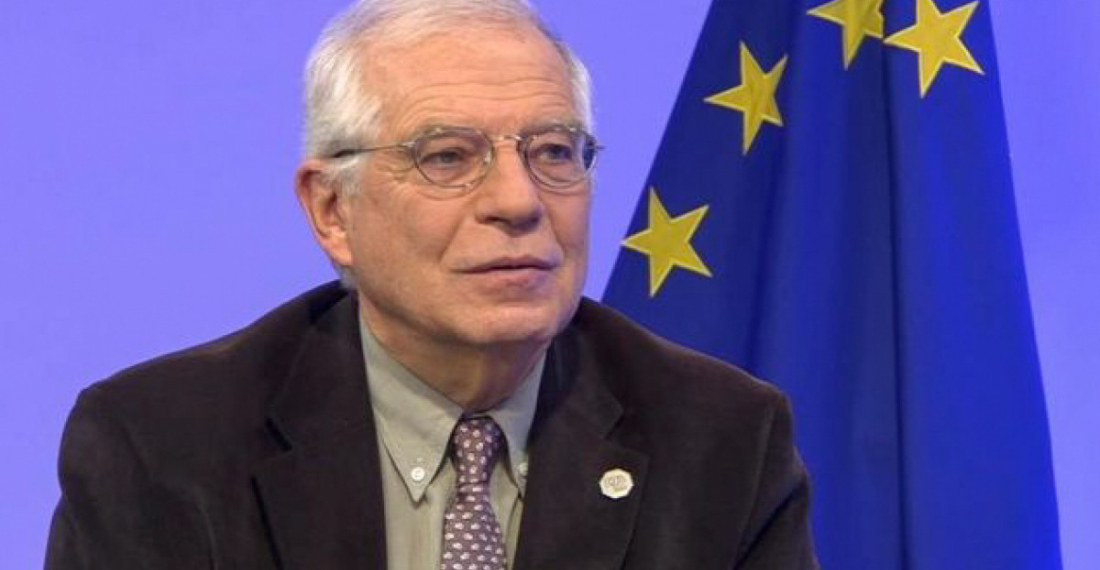
photo: EU High Representative Josep Borrell (archive picture)
 

Related articles

Editor's choice
News
UAE says it will withdraw from Yemen, but division emerges in Yemeni presidential council

UAE says it will withdraw from Yemen, but division emerges in Yemeni presidential council

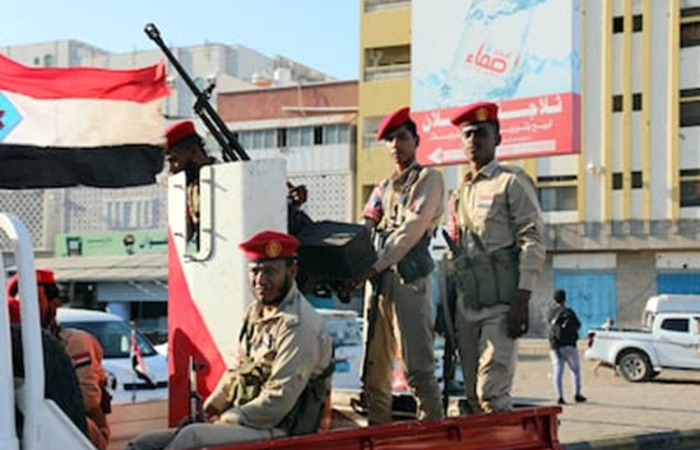
In a move seen as an attempt to de-escalate a crises with Saudi Arabia, the United Arab Emirates, on Tuesday (30th December) announced that it was heeding a call to withdraw its troops from Southern Yemen. UAE says that its presence included counter-terrorism teams that were crucial in fighting against Islamist groups. UAE sources said that parts of Yemen not controlled by the Houthis have had Al Qaeda in the Arab Peninsula (AQAP) operatives using the territory to launch attacks on Europe, the US and Middle East. UAE teams have co-ordinated with American and British special forces and intelligence. The sources added that Emirati forces and their Yemeni allies also helped reverse Houthi gains in the south. including the liberation of Aden port. The small UAE contingent has remained in place since the UAE withdrew most of its military personnel in 2019. The leading English-language newspaper in Abu Dhabi, The National, said that the main UAE force was based at Riyan Mukalla International Airport, with access to fixed-wing aircraft and helicopters, but also operated smaller contingents in the port town Balhaf and Shabwa. "It is understood it also flew a number of drones from the airbase that were able to track terrorist movements, pass information back to its allies and assisted special forces' missions." Meanwhile a division has emerged in Yemen's presidential council after four members denounced what they called the 'unilateral decisions' by the chairman. Four of Yemen’s eight Presidential Leadership Council members on Tuesday denounced an announcement by the council’s chairman accusing him of breaching the governing agreement. Tension between Yemeni leaders has been rising for weeks, underscoring the fragility of the country's already fractured political landscape and further complicating efforts to confront the Iran-backed Houthi rebels. The latest rift took an unprecedented turn on Tuesday morning, marked by a Saudi-led coalition “limited operation” striking combat vehicles Riyadh linked to the Southern Transitional Council, which has three members in the PLC. The PLC Chairman, Rashad al Alimi, on Tuesday said that he was seeking to cancel the joint defence agreement with the UAE. “What has been issued … constitutes a clear violation of the Declaration of the Transfer of Power [agreement], which explicitly stipulates that the Presidential Leadership Council is a collective body whose decisions are taken by consensus, or by majority when consensus is not possible,” the statement by the four members said. “It does not, under any circumstances, allow for unilateral decision-making on sovereign, military, or major political matters." The statement was signed by STC chief Aidarous Al Zubaidi, Faraj Al Bahsani, Tariq Saleh and Abu Zaraa al Muharrami. (click the picture to read the full article).

Popular

Editor's choice
News
UAE says it will withdraw from Yemen, but division emerges in Yemeni presidential council

UAE says it will withdraw from Yemen, but division emerges in Yemeni presidential council

In a move seen as an attempt to de-escalate a crises with Saudi Arabia, the United Arab Emirates, on Tuesday (30th December) announced that it was heeding a call to withdraw its troops from Southern Yemen. UAE says that its presence included counter-terrorism teams that were crucial in fighting against Islamist groups. UAE sources said that parts of Yemen not controlled by the Houthis have had Al Qaeda in the Arab Peninsula (AQAP) operatives using the territory to launch attacks on Europe, the US and Middle East. UAE teams have co-ordinated with American and British special forces and intelligence. The sources added that Emirati forces and their Yemeni allies also helped reverse Houthi gains in the south. including the liberation of Aden port. The small UAE contingent has remained in place since the UAE withdrew most of its military personnel in 2019. The leading English-language newspaper in Abu Dhabi, The National, said that the main UAE force was based at Riyan Mukalla International Airport, with access to fixed-wing aircraft and helicopters, but also operated smaller contingents in the port town Balhaf and Shabwa. "It is understood it also flew a number of drones from the airbase that were able to track terrorist movements, pass information back to its allies and assisted special forces' missions." Meanwhile a division has emerged in Yemen's presidential council after four members denounced what they called the 'unilateral decisions' by the chairman. Four of Yemen’s eight Presidential Leadership Council members on Tuesday denounced an announcement by the council’s chairman accusing him of breaching the governing agreement. Tension between Yemeni leaders has been rising for weeks, underscoring the fragility of the country's already fractured political landscape and further complicating efforts to confront the Iran-backed Houthi rebels. The latest rift took an unprecedented turn on Tuesday morning, marked by a Saudi-led coalition “limited operation” striking combat vehicles Riyadh linked to the Southern Transitional Council, which has three members in the PLC. The PLC Chairman, Rashad al Alimi, on Tuesday said that he was seeking to cancel the joint defence agreement with the UAE. “What has been issued … constitutes a clear violation of the Declaration of the Transfer of Power [agreement], which explicitly stipulates that the Presidential Leadership Council is a collective body whose decisions are taken by consensus, or by majority when consensus is not possible,” the statement by the four members said. “It does not, under any circumstances, allow for unilateral decision-making on sovereign, military, or major political matters." The statement was signed by STC chief Aidarous Al Zubaidi, Faraj Al Bahsani, Tariq Saleh and Abu Zaraa al Muharrami. (click the picture to read the full article).