


Nations prepare for conflict in the South Caucasus, just in case. Russia strengthens the preparedness of its military facilities in the region.

The Russian newspaper Nezavisimaya Gazeta has reported that the Russian government has been taking steps to strengthen its military presence in the South Caucasus.

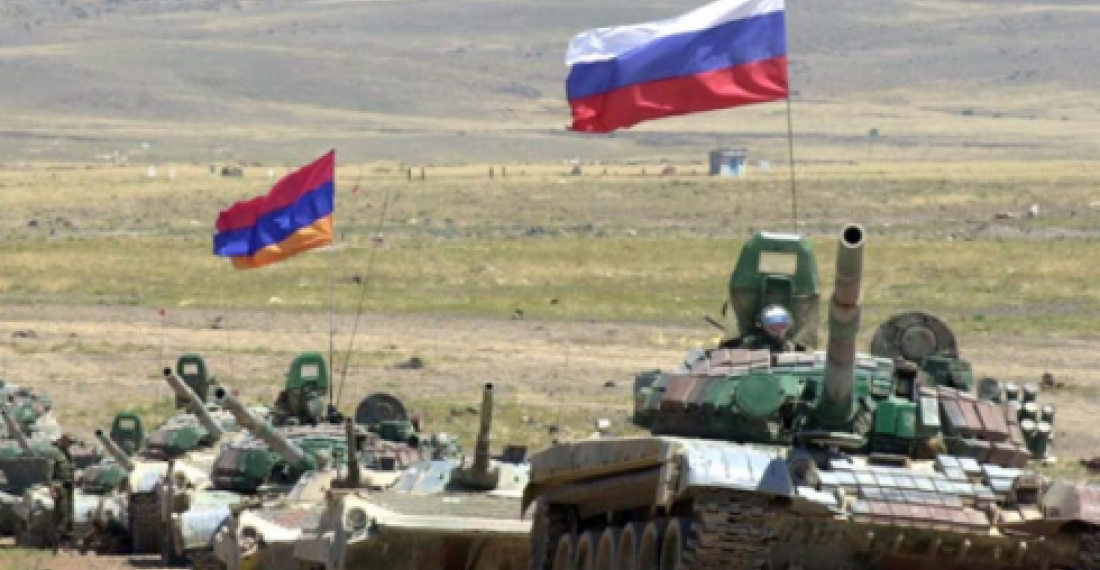
The newspaper reported that the number of personnel at the Russian military base in Gyumri in Armenia has increased two and half times over the last year, although the increase was mainly in locally enlisted personnel and the number of Russian troops remained stable at around 5000. The newspaper said that the Russian government had taken similar measures in its bases in Abkhazia and South Ossetia.. The newspaper cites possible escalation in the Nagorno-Karabakh conflict and a possible attack on Iran as reasons for the need to increase the state of military readiness of the bases in the South Caucasus.

In the meantime, a statement by the Press Service of the Southern Military District of the Russian Federation said earlier in the week that Russian military experts under the leadership of the commander of the brigade had been doing specialised training to work out practical steps to organize data exchange between users within common automated system management connections in the mountainous terrain of Armenia.

The training involved modern radio station based on KAMAZ-43114 and BTR-80, which were received by the Southern Military District in 2012, as part of the modernisation programme of the Russian Armed Forces.

The news comes at the same time that Azerbaijan has announced that it will increase its military budget this year to US$3.7 billion.

Tension between Armenia and Azerbaijan, who technically are still in a state of war with each other, is increasing around the issue of the opening of the airport in Nagorno-Karabakh.

On Friday the Cabinet of Ministers of Azerbaijan adopted a decision "On the use of airspace of Azerbaijan". According the the news agency APA the decision elaborates the procedure to be adopted by the Azerbaijani armed forces in case Azerbaijani airspace, which Azerbaijan interprets as including the airspace over Nagorno-Karabakh is violated. The decision permits the Armed Forces to shoot down a plane that violates the air space as a last resort. On the same day other reports in the Azerbaijani media stated that Mig 29 aircraft of the Azerbaijani Airforce were patrolling the airspace over the regions of Agdan and Terter that are currently occupied by Armenia.

Armenian Defence Minister Seyran Ohanyan said in Yerevan that Armenian Air Defence Forces will not tolerate the shooting down of planes and will ensure the security of civilian flights from Yerevan to Stepanakert. Ohanyan told reporters there is still a threat of hostilities between Armenia and Azerbaijan, but the analysis of the current situation shows there is little likelihood of a new war.

For the last four days Azerbaijani media has been reporting that Armenian forces had been shooting daily against Azerbaijani forces on the line of contact in the region of Agdam.

The situation in the region is being closely monitored by other parties. A senior official of the European Union said in Brussels last month that the EU had increased satellite monitoring of the military situation around the Nagorno-Karabakh conflict zone.

In a comment to APA, former senior US diplomat Mathew Bryza said

"I don't expect a war in the region as it is said in the reports of some non-governmental organizations. The war may start only after the deliberate decision of one of the parties. I think that Armenia and Azerbaijan are not interested in it. The establishment of confidence between the sides and coexistence of the two peoples are more acceptable than a war."

Commonspace.eu political editor said in a comment:

"It is difficult to reconcile the reality of what is happening on the ground, the bellicose statements of Armenian and Azerbaijani leaders and the true intentions of the parties. All sides are raising the stakes. In the meantime everybody seems to be taking precautions, just in case. This volatile situation is going to make 2013 a difficult one for the region unless there is a breakthrough in the peace negotiations."

source: commonspace.eu with agencies

photo: Russian and Armenian forces in a joint military exercise around the Russian militarty base in Gyumri.(archive picture courtesy of ArmeniaNow)
 

Related articles

Editor's choice
News
Borrell tells the European Parliament that the situation in Afghanistan was critical, but the EU will remain engaged

Borrell tells the European Parliament that the situation in Afghanistan was critical, but the EU will remain engaged

Borrell underlined that the European Union will make every effort to support the peace process and to remain a committed partner to the Afghan people. "Of course, we will have to take into account the evolving situation, but disengagement is not an option.  We are clear on that: there is no alternative to a negotiated political settlement, through inclusive peace talks.
Editor's choice
News
NATO Chief says war is on Europe's doorstep, and warns against complacency

NATO Chief says war is on Europe's doorstep, and warns against complacency

Russia could attack a Nato country within the next five years, the Secretary General of NATO, Mark Rutte, said in a stark new warning. "Nato's own defences can hold for now," Rutte warned in Berlin, but conflict was "next door" to Europe and he feared "too many are quietly complacent, and too many don't feel the urgency, too many believe that time is on our side. "Russia is already escalating its covert campaign against our societies," Rutte said in a speech in Germany. "We must be prepared for the scale of war our grandparents or great-grandparents endured." Earlier this month, Russia's President Vladimir Putin said his country was not planning to go to war with Europe, but it was ready "right now" if Europe wanted to - or started a war. But similar reassurances were given by Moscow in 2022, just before 200,000 Russian troops crossed the border and invaded Ukraine. Putin has accused European countries of hindering US efforts to bring peace in Ukraine - a reference to the role Ukraine's European allies have recently played in trying to change a US peace plan to end the war, whose initial draft was seen as favouring Russia. But Putin was not sincere, Nato's secretary-general said in the German capital, Berlin. Supporting Ukraine, he added, was a guarantee for European security. "Just imagine if Putin got his way; Ukraine under the boot of Russian occupation, his forces pressing against a longer border with Nato, and the significantly increased risk of an armed attack against us." Russia's economy has been on a war footing for more than three years now - its factories churn out ever more supplies of drones, missiles and artillery shells. According to a recent report by the Kiel Institute for the World Economy, Russia has been producing each month around 150 tanks, 550 infantry fighting vehicles, 120 Lancet drones and more than 50 artillery pieces. The UK, and most of its Western allies, are simply not anywhere near this point. Analysts say it would take years for Western Europe's factories to come close to matching Russia's mass-production of weapons. "Allied defence spending and production must rise rapidly, our armed forces must have what they need to keep us safe," the Nato chief said.

Popular

Editor's choice
News
NATO Chief says war is on Europe's doorstep, and warns against complacency

NATO Chief says war is on Europe's doorstep, and warns against complacency

Russia could attack a Nato country within the next five years, the Secretary General of NATO, Mark Rutte, said in a stark new warning. "Nato's own defences can hold for now," Rutte warned in Berlin, but conflict was "next door" to Europe and he feared "too many are quietly complacent, and too many don't feel the urgency, too many believe that time is on our side. "Russia is already escalating its covert campaign against our societies," Rutte said in a speech in Germany. "We must be prepared for the scale of war our grandparents or great-grandparents endured." Earlier this month, Russia's President Vladimir Putin said his country was not planning to go to war with Europe, but it was ready "right now" if Europe wanted to - or started a war. But similar reassurances were given by Moscow in 2022, just before 200,000 Russian troops crossed the border and invaded Ukraine. Putin has accused European countries of hindering US efforts to bring peace in Ukraine - a reference to the role Ukraine's European allies have recently played in trying to change a US peace plan to end the war, whose initial draft was seen as favouring Russia. But Putin was not sincere, Nato's secretary-general said in the German capital, Berlin. Supporting Ukraine, he added, was a guarantee for European security. "Just imagine if Putin got his way; Ukraine under the boot of Russian occupation, his forces pressing against a longer border with Nato, and the significantly increased risk of an armed attack against us." Russia's economy has been on a war footing for more than three years now - its factories churn out ever more supplies of drones, missiles and artillery shells. According to a recent report by the Kiel Institute for the World Economy, Russia has been producing each month around 150 tanks, 550 infantry fighting vehicles, 120 Lancet drones and more than 50 artillery pieces. The UK, and most of its Western allies, are simply not anywhere near this point. Analysts say it would take years for Western Europe's factories to come close to matching Russia's mass-production of weapons. "Allied defence spending and production must rise rapidly, our armed forces must have what they need to keep us safe," the Nato chief said.

