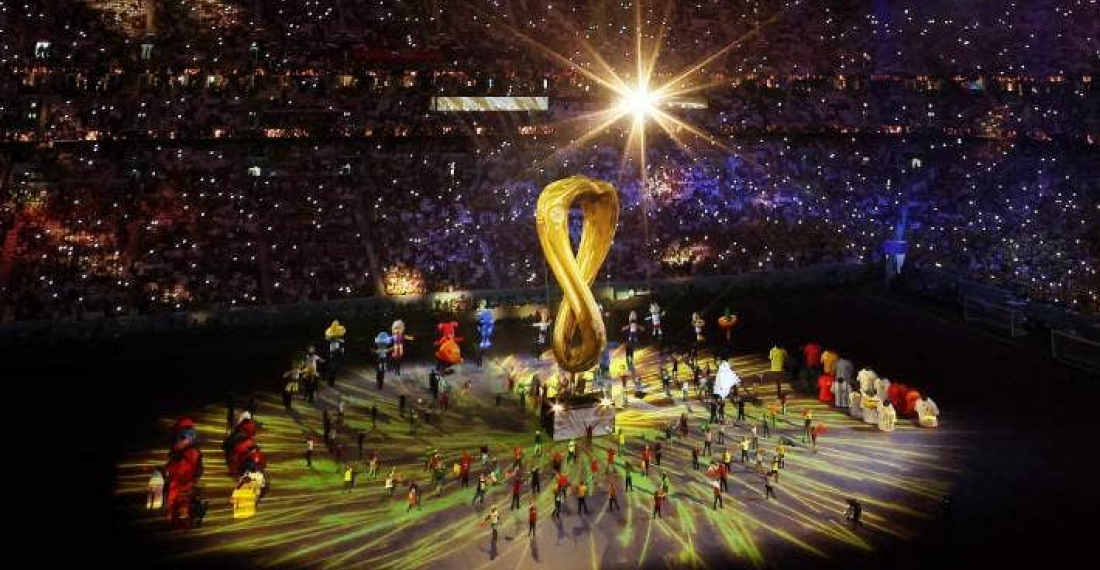
The 2022 FIFA World Cup opened in Doha on Sunday (20 November) with a lavish half an hour opening ceremony full of music and colour. It will be followed by weeks of football extravaganza that millions are looking forward to watching.
It was a proud moment for the small Arab Gulf country which has put a lot of effort and resources towards making the event a success, writes Dennis Sammut in today's Monday Commentary on commonspace.eu. Ever since it was decided to hold the FIFA world cup in Qatar there have been those who questioned the decision. Some said the climate was too hot; others criticised the working conditions of the labour force that built the facilities; others questioned Qatar's human rights record, especially on gay rights. Some of the criticism was justified. The World Cup helped put attention to such problems and that is how it should be. But frankly, a lot of the criticism of Qatar went over the top and reeked of racism. It is of course easy to say that sports and politics do not mix. Since sports is an expression of human talent and human feelings, politics cannot be excluded. It needs to be managed. People watching football do not need expressions of political opinions shoved down their throats. Many even find such expressions as an insult to their intelligence. But that does not mean that the occasion of a global sports event cannot be a way of transmitting a dignified message with political connotations.
One such example happened yesterday when the captain of the Iranian team sent a message to his compatriots back home.
The 2022 FIFA World Cup opened in Doha on Sunday (20 November) with a lavish half an hour opening ceremony full of music and colour. It will be followed by weeks of football extravaganza that millions are looking forward to watching.
It was a proud moment for the small Arab Gulf country which has put a lot of effort and resources towards making the event a success. Over the next weeks football enthusiasts from all over the world will congregate in Qatar to watch the games. Millions more will watch it on television. The World Cup is one of those events that everyone, even those who are not the least interested in football, will have to factor in before planning events of their own over the coming weeks. Before a day and time for any meeting is set, the question is often asked if there is a clash with a World Cup game. Such is the power of sports, particularly football.
Some of the criticism of Qatar reeked of racism
Ever since it was decided to hold the FIFA world cup in Qatar there have been those who questioned the decision. Some said the climate was too hot; others criticised the working conditions of the labour force that built the facilities; others questioned Qatar's human rights record, especially on gay rights. Some of the criticism was justified. The world cup helped put attention to such problems and that is how it should be. But frankly, a lot of the criticism of Qatar went over the top and reeked of racism. Qatar has its shortcomings, but the hundreds of thousands of people who flock there to work, and others who just visit, appreciate it for what it is: a young nation that is trying to play a positive role in the world and to offer opportunity for work and business to whomever wants to work with it.
Sports can be divisive. Nations rally around their teams. The opponents on the playing field all of a sudden become enemies. Insults are hurled, and in Latin America even some small wars started as a result of an argument over football. This should not be the case. Football, and indeed all other sports, are a beautiful expression of talent. It should unite humanity. The fact that young people from many nations congregate together for a competition is in itself a beautiful thing. Unnecessary rivalry often spoils the party. It needs to be toned down, and sports must not become an excuse for nationalist chauvinism.
Sports and politics
It is of course easy to say that sports and politics do not mix. Since sports is an expression of human talent and human feelings, politics cannot be excluded. It needs to be managed. People watching football do not need expressions of political opinions shoved down their throats. Many even find such expressions as an insult to their intelligence. But that does not mean that the occasion of a global sports event cannot be a way of transmitting a dignified message with political connotations.
One such example happened yesterday when the captain of the Iranian team sent a message to his compatriots back home. Iran is currently passing through a time of huge internal turmoil. Hundreds of unarmed protestors have been killed by the security forces of the Iranian clerical regime. Iran captain Ehsan Hajsafi spoke out against the situation in his home country before his nation's opening game against England at the World Cup. Speaking to reporters ahead of Monday's game in Qatar, the 32-year-old said the players "support" those who have died. "We have to accept that the conditions in our country are not right and our people are not happy," he said.
"Before anything else, I would like to express my condolences to all of the bereaved families in Iran," defender Hajsafi said at the start of the news conference.
"They should know that we are with them, we support them and we sympathise with them...We cannot deny the conditions, the conditions in my country are not good and the players know it also. We are here but it does not mean that we should not be their voice, or we must not respect them.
"Whatever we have is from them. We have to fight, we have to perform the best we can and score goals, and present the brave people of Iran with the results. And I hope that the conditions change to the expectations of the people."
Iran is next door to Qatar. It is a country where football is very important. The words of the Iranian football team captain matter, and it took a lot of courage for him to express it. That kind of mix between sports and politics is difficult to criticise. Others who have plenty of other ways of making their voices heard should keep out of sports.
I wish Qatar success with the 2022 World Cup; I wish football enthusiasts hours of enjoyment. Let this be a positive moment of the celebration of sports talent, and an expression of human solidarity.
Source: Dr Dennis Sammut is Managing Editor of commonspace.eu and Director of LINKS Europe based in The Hague. He writes regularly on European and international security issues, the EU’s policy and strategy towards its neighbourhood and Gulf affairs. (director@links-europe.eu)
Photo: The opening ceremony of the 2022 FIFA World Cup was held in Doha, Qatar on 20 November 2022.
Monday Commentary is a personal opinion, and does not necessarily reflect the views of commonspace.eu or its partners and supporters